Kirjojen hintavertailu – 12 903 725 kirjaa ja 27 kauppaa

Kirjailija

Leslie Haddon

Kirjat ja teokset yhdessä paikassa: 10 kirjaa, julkaisuja vuosilta 2004–2026, suosituimpiin kuuluu Mobile Communications. Vertaile teosten hintoja ja tarkista saatavuus suomalaisista kirjakaupoista.

10 kirjaa

Kirjojen julkaisuvuodet: 2004–2026.

Digital Media Use in Early Childhood

Digital Media Use in Early Childhood

Lelia Green; Leslie Haddon; Sonia Livingstone; Brian O’Neill; Kylie Stevenson; Donell Holloway

BLOOMSBURY PUBLISHING PLC
2026
nidottu
The easy interface of touchscreen technologies like tablets and smartphones has enabled children to access the digital world from a very young age. But while some commentators are enthusiastic about how this can open a new world for fun, learning, and developing digital skills, others see the dangers of yet more screens, inauthentic play, and time spent isolated with electronic babysitters that detract from interaction with parents and learning social skills. Taking five as the age when children transition into formal education, this book draws on a three-year research project examining the realities of under six-year-olds’ experiences of these technologies in the UK and Australia. With a theoretical context including Vygotsky, Bruner, Bronfenbrenner and Flewitt, the book examines how parents of young children evaluate the opportunities and risks of children’s digital media use in the context of other significant influences such as children’s time with grandparents, early childhood care and education. Drawing on in-depth interviews with 22 families, and rich ethnographic data from observation and exchanges with their 29 children, aged four months to five years, the book reveals how digital technologies complement and challenge important aspects of daily life for infants, toddlers and preschoolers.
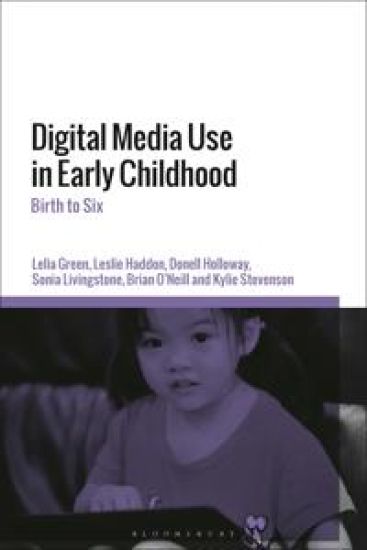
Digital Media Use in Early Childhood

Digital Media Use in Early Childhood

Lelia Green; Leslie Haddon; Sonia Livingstone; Brian O’Neill; Kylie Stevenson; Donell Holloway

BLOOMSBURY PUBLISHING PLC
2024
sidottu
The easy interface of touchscreen technologies like tablets and smartphones has enabled children to access the digital world from a very young age. But while some commentators are enthusiastic about how this can open a new world for fun, learning, and developing digital skills, others see the dangers of yet more screens, inauthentic play, and time spent isolated with electronic babysitters that detract from interaction with parents and learning social skills. Taking five as the age when children transition into formal education, this book draws on a three-year research project examining the realities of under six-year-olds’ experiences of these technologies in the UK and Australia. With a theoretical context including Vygotsky, Bruner, Bronfenbrenner and Flewitt, the book examines how parents of young children evaluate the opportunities and risks of children’s digital media use in the context of other significant influences such as children’s time with grandparents, early childhood care and education. Drawing on in-depth interviews with 22 families, and rich ethnographic data from observation and exchanges with their 29 children, aged four months to five years, the book reveals how digital technologies complement and challenge important aspects of daily life for infants, toddlers and preschoolers.
The Social Dynamics of Information and Communication Technology
What shapes the role of Information and Communication Technologies in our everyday life? Despite the speed with which information and communication technologies such as the PC, mobile telephone and internet have found their way into society, there remains a good deal of debate surrounding their adoption and use. Through empirical studies covering a broad range of everyday life and work settings, this volume provides grounded insights into the social dynamics influencing how ICTs are both shaped and experienced. Specifically, the book examines the contributions of diverse disciplines to our understanding of these processes, the symbolic nature of technologies, the influence of design on the experience of ICTs, the role of users in influencing that design, the social constraints affecting the use of those technologies, and strategies for evaluating the social consequences of ICT innovations.
Generational Use of New Media

Generational Use of New Media

Leslie Haddon; Enid Mante-Meijer

Routledge
2016
nidottu
Generational Use of New Media examines and contrasts how younger and older people, representing different generations, engage with the new media that they increasingly encounter in everyday life. Exploring the various assumptions about the degrees to which younger and older people are more or less willing to use, or are capable of using, new media, the social circumstances under which they do so and the very design of those media, this book critically examines the gap that is assumed to exist between younger users of new media and older non-users. Thematically organised and offering comparative analyses of the generational use of new media and technology, this timely volume presents the latest research and rich new empirical material gathered in the EU, USA and Hong Kong, to reflect on societal practices and the practical implications of building a more inclusive information society.
Generational Use of New Media

Generational Use of New Media

Leslie Haddon; Enid Mante-Meijer

Ashgate Publishing Limited
2012
sidottu
Generational Use of New Media examines and contrasts how younger and older people, representing different generations, engage with the new media that they increasingly encounter in everyday life. Exploring the various assumptions about the degrees to which younger and older people are more or less willing to use, or are capable of using, new media, the social circumstances under which they do so and the very design of those media, this book critically examines the gap that is assumed to exist between younger users of new media and older non-users. Thematically organised and offering comparative analyses of the generational use of new media and technology, this timely volume presents the latest research and rich new empirical material gathered in the EU, USA and Hong Kong, to reflect on societal practices and the practical implications of building a more inclusive information society.
Mobile Communications

Mobile Communications

Nicola Green; Leslie Haddon

Berg Publishers
2009
nidottu
The mobile phone has achieved a global presence faster than any other form of information and communication technology. A global multi-billion dollar industry, this small, mundane device is now an intrinsic part of our everyday life. This communications medium has had an immense social and cultural impact and continues to evolve. Talking, texting, photographing, videoing, connecting to a network of other media - the cellphone now seems essential. But, beyond the ways in which it has actively restructured our daily lives, the mobile has changed our sense of ourselves and the way we see the world. The relationship between public and private space, how we view time and space, how we rely on and negotiate social networks - all are increasingly centred on this small piece of technology. Mobile Communications presents a succinct, challenging, and accessible overview of the transformations and challenges presented by this most personal, yet most overlooked technology.
Mobile Communications

Mobile Communications

Nicola Green; Leslie Haddon

Berg Publishers
2009
sidottu
The mobile phone has achieved a global presence faster than any other form of information and communication technology. A global multi-billion dollar industry, this small, mundane device is now an intrinsic part of our everyday life. This communications medium has had an immense social and cultural impact and continues to evolve. Talking, texting, photographing, videoing, connecting to a network of other media - the cellphone now seems essential. But, beyond the ways in which it has actively restructured our daily lives, the mobile has changed our sense of ourselves and the way we see the world. The relationship between public and private space, how we view time and space, how we rely on and negotiate social networks - all are increasingly centred on this small piece of technology. Mobile Communications presents a succinct, challenging, and accessible overview of the transformations and challenges presented by this most personal, yet most overlooked technology.
The Social Dynamics of Information and Communication Technology
What shapes the role of Information and Communication Technologies in our everyday life? Despite the speed with which information and communication technologies such as the PC, mobile telephone and internet have found their way into society, there remains a good deal of debate surrounding their adoption and use. Through empirical studies covering a broad range of everyday life and work settings, this volume provides grounded insights into the social dynamics influencing how ICTs are both shaped and experienced. Specifically, the book examines the contributions of diverse disciplines to our understanding of these processes, the symbolic nature of technologies, the influence of design on the experience of ICTs, the role of users in influencing that design, the social constraints affecting the use of those technologies, and strategies for evaluating the social consequences of ICT innovations.
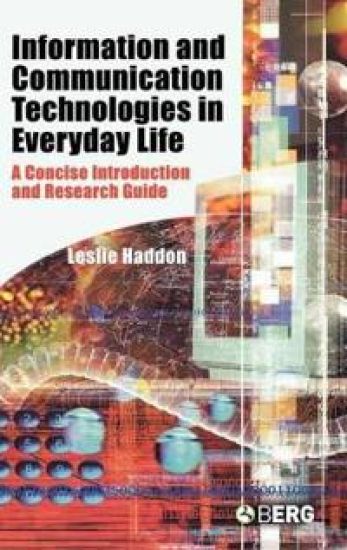
Information and Communication Technologies in Everyday Life
The internet, television, mobile phones, computer-based devices and other new forms of information technology are changing at a rapid pace with potentially profound but also subtle influences on social life. Yet, they also pose challenges and have to be managed. This book offers a succinct introduction to both the experience and implications of these information and communication technologies (ICTs) in everyday life. Bringing together empirical and theoretical research in a coherent way, the author offers a fresh approach to understanding ICTs and everyday life. He covers topics in key areas, such as the digital divide; children, youth and ICTs; the dynamics of ICTs within households; social networks and ICTs; and time, movement and public space in relationship to ICTs. Drawing on a broad variety of studies from different countries, the author considers the potential, or feared, social consequences of ICTs. Throughout, he analyzes what factors are shaping the debates surrounding information and communication technologies in daily life. With its concise, international approach, this book will be invaluable to professionals, policymakers and students who work in the field of ICTs.
Information and Communication Technologies in Everyday Life
The internet, television, mobile phones, computer-based devices and other new forms of information technology are changing at a rapid pace with potentially profound but also subtle influences on social life. Yet, they also pose challenges and have to be managed. This book offers a succinct introduction to both the experience and implications of these information and communication technologies (ICTs) in everyday life. Bringing together empirical and theoretical research in a coherent way, the author offers a fresh approach to understanding ICTs and everyday life. He covers topics in key areas, such as the digital divide; children, youth and ICTs; the dynamics of ICTs within households; social networks and ICTs; and time, movement and public space in relationship to ICTs. Drawing on a broad variety of studies from different countries, the author considers the potential, or feared, social consequences of ICTs. Throughout, he analyzes what factors are shaping the debates surrounding information and communication technologies in daily life. With its concise, international approach, this book will be invaluable to professionals, policymakers and students who work in the field of ICTs.