Kirjojen hintavertailu – 12 859 819 kirjaa ja 27 kauppaa

Kirjailija

Leslie Sklair

Kirjat ja teokset yhdessä paikassa: 13 kirjaa, julkaisuja vuosilta 1998–2025, suosituimpiin kuuluu The Anthropocene Working Group and the Global Debate Around a New Geological Epoch. Vertaile teosten hintoja ja tarkista saatavuus suomalaisista kirjakaupoista.

13 kirjaa

Kirjojen julkaisuvuodet: 1998–2025.

The Anthropocene Working Group and the Global Debate Around a New Geological Epoch

The Anthropocene Working Group and the Global Debate Around a New Geological Epoch

Martin Bohle; Boris Holzer; Leslie Sklair; Fabienne Will

Springer International Publishing AG
2025
sidottu
This book examines the role of the Anthropocene Working Group (AWG) in public and scholarly discussions of the meaning of the Anthropocene proposal. The status of the Anthropocene, both as a geoscientific concept and as a cultural concept becoming increasingly familiar in the public sphere, has been highly controversial. While geoscientists focus on possible geological markers and periodisation, the social sciences, environmental humanities, and creative arts have taken up the Anthropocene as a cultural concept to make sense of the planetary environmental crisis and contemporary society. This book documents intra-, inter-, and transdisciplinary debates, particularly, although not limited to, how different scholarly disciplines have responded to the Anthropocene proposal. The authors analyse how the AWG has become the focal point of a debate that straddles the boundaries between academic disciplines and public perceptions of science. The AWG thus serves as a case of the globalisation of science in terms of the global interconnectedness of scientific disciplines and the cultural significance of the Anthropocene proposal.

Social Theory and Methodology

Social Theory and Methodology

Leslie Sklair; Wsevolod W. Isajiw; Werner Stark; Quentin Gibson

Routledge
1998
muu
This comprehensive set introduces the fundamental principles of Sociology as propounded by such great figures as Gerth and Mills, Schlesinger, and Homans. Containing classic works of social theory and empirical research, volumes in this set bring together the British, European and American traditions. The whole body of sociological theory is presented in such a way that is valuable and accessible to both students and teachers of Sociology, Political Theory and Geography.
Projekt "Ikona". Arkhitektura, mista ta kapitalistichna globalizatsija
Arkhitektura - tse mistse, de zishtovkhujutsja fantazija i kholodnij rozrakhunok, a kozhna nova sporuda staje ikonoju, scho poklikana virazhati istoriju i rozkrivati kulturu krajini. Ale za ekskursijami, suvenirnimi jatkami j turistichnimi marshrutami prikhovano schos znachno bilshe. Opernij teatr u Sidneji, Ejfeleva vezha v Parizhi, Pikova vezha v Gonkonzi - tse lishe dekilka vidomikh na ves svit sporud, scho formujut obrazi svojikh mist i krajin. Tisjachi foto v sotsialnikh merezhakh peretvorjujut jikh na suchasni ikoni, jakimi zakhopljujutsja, i vodnochas voni stajut zasobami manipuljatsij i vplivu vladi. Jikh populjarnist - tse instrument brendingu: konturi j formi viklikajut stijki obrazi i tsim peretvorjujut arkhitekturni sporudi na ob'jekti modi i khajpu. Potsilunki na foni Ejfelevoji vezhi, kumedna "pidtrimka" Pizanskoji dzvinitsi, propozitsiji ruki i sertsja sered khmar Burdzh Khalifi - tse bilshe ne vidovischna krasa. Tse dvigun ekonomichnogo zrostannja. Sotsiolog Lesli Skler vluchno tsituje Vorgola ("usi magazini stanut muzejami, a vsi muzeji - magazinami") i vchit chitati kultovi budivli za linijami i detaljami, rozumiti, jak voni stali arkhivami pam'jati j instrumentami vladi. Vin po tseglinkakh rozkladaje osnovi kapitalizmu i dovodit, scho za arkhitekturoju stojit ne lishe stil ta istorija. Kniga "Projekt "Ikona" ne pro sporudi. Tse podorozh u svit emotsij, vrazhen i manipuljatsij mista, jake staje teatrom, de arkhitektura - tse aktori, a kozhna nova p'jesa - stsenarij, prodiktovanij ekonomikoju i vladoju. PerekladachOlena Oksenich
Proekt "Ikona". Arkhitektura, goroda i kapitalisticheskaja globalizatsija

Proekt "Ikona". Arkhitektura, goroda i kapitalisticheskaja globalizatsija

Leslie Sklair

Izdatelstvo studii Artemija Lebedeva
2022
sidottu
Kniga izvestnogo britanskogo sotsiologa Lesli Sklera predstavljaet soboj vseobemljuschij sotsiologicheskij analiz novogo tipa kultovoj arkhitektury, kotoraja stala shiroko rasprostranjatsja po vsemu miru nachinaja s poslednej chetverti KHKh veka. Eto masterskij obzor tvorchestva veduschikh arkhitektorov nashego vremeni i vydajuschikhsja arkhitekturnykh "ikon" v kontekste razvitija kapitalisticheskoj globalizatsii, kotoraja podderzhivaet i pooschrjaet sozdanie vse bolee masshtabnykh i ambitsioznykh proektov. S pozitsij sotsiologa, khorosho znakomogo s pruzhinami vlasti chastnogo kapitala i kommercheskimi trebovanijami, kotorye tot predjavljaet, avtor proslezhivaet triumfalnyj put globalnogo proekta "Ikona", porozhdajuschego i pooschrjajuschego klassovuju poljarizatsiju i giperpotreblenie v sovremennom obschestve. Chitateli vprave ne soglasitsja s zhestkoj kritikoj Sklera, no v ljubom sluchae poisk alternativnoj estetiki arkhitekturnogo proektirovanija i gradostroitelstva predstavljaet nesomnennyj interes. Perevodchik: Syrova Irina
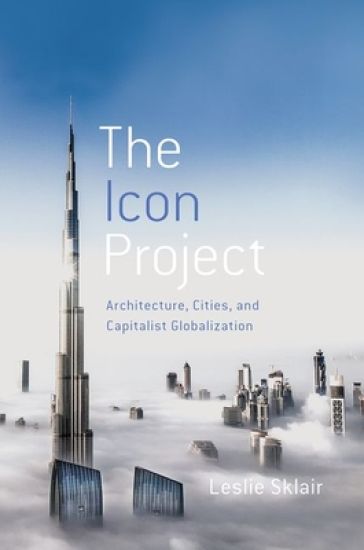
The Icon Project

The Icon Project

Leslie Sklair

Oxford University Press Inc
2019
nidottu
In the last quarter century, a new form of iconic architecture has appeared throughout the world's major cities. Typically designed by globe-trotting "starchitects" or by a few large transnational architectural firms, these projects are almost always funded by the private sector in the service of private interests. Whereas in the past monumental architecture often had a strong public component, the urban ziggurats of today are emblems and conduits of capitalist globalization. In The Icon Project, Leslie Sklair focuses on ways in which capitalist globalization is produced and represented all over the world, especially in globalizing cities. Sklair traces how the iconic buildings of our era-elaborate shopping malls, spectacular museums, and vast urban megaprojects--constitute the triumphal "Icon Project" of contemporary global capitalism, promoting increasing inequality and hyperconsumerism. Two of the most significant strains of iconic architecture--unique icons recognized as works of art, designed by the likes of Gehry, Foster, Koolhaas, and Hadid, as well as successful, derivative icons that copy elements of the starchitects' work--speak to the centrality of hyperconsumerism within contemporary capitalism. Along with explaining how the architecture industry organizes the social production and marketing of iconic structures, he also shows how corporations increasingly dominate the built environment and promote the trend towards globalizing, consumerist cities. The Icon Project, Sklair argues, is a weapon in the struggle to solidify capitalist hegemony as well as reinforce transnational capitalist control of where we live, what we consume, and how we think.
The Icon Project

The Icon Project

Leslie Sklair

Oxford University Press Inc
2017
sidottu
In the last quarter century, a new form of iconic architecture has appeared throughout the world's major cities. Typically designed by globe-trotting "starchitects" or by a few large transnational architectural firms, these projects are almost always funded by the private sector in the service of private interests. Whereas in the past monumental architecture often had a strong public component, the urban ziggurats of today are emblems and conduits of capitalist globalization. In The Icon Project, Leslie Sklair focuses on ways in which capitalist globalization is produced and represented all over the world, especially in globalizing cities. Sklair traces how the iconic buildings of our era -- elaborate shopping malls, spectacular museums, and vast urban megaprojects -- constitute the triumphal "Icon Project" of contemporary global capitalism, promoting increasing inequality and hyperconsumerism. Two of the most significant strains of iconic architecture -- unique icons recognized as works of art, designed by the likes of Gehry, Foster, Koolhaas, and Hadid, as well as successful, derivative icons that copy elements of the starchitects' work -- speak to the centrality of hyperconsumerism within contemporary capitalism. Along with explaining how the architecture industry organizes the social production and marketing of iconic structures, he also shows how corporations increasingly dominate the built environment and promote the trend towards globalizing, consumerist cities. The Icon Project, Sklair argues, is a weapon in the struggle to solidify capitalist hegemony as well as reinforce transnational capitalist control of where we live, what we consume, and how we think.
Assembling for Development

Assembling for Development

Leslie Sklair

Routledge
2013
nidottu
First published in 1989, this book focuses upon the phenomenon of export-led industrialisation fuelled by foreign investment and technology. He concentrates on Mexico, where US companies have been taking advantage of inexpensive labour to establish "maquila" factories that assemble US parts for export. Through this detailed study of the maquila industry, Sklair charts the progress from the political imperialism of colonial days to the economic imperialism of today.
Assembling for Development

Assembling for Development

Leslie Sklair

Routledge
2010
sidottu
First published in 1989, this book focuses upon the phenomenon of export-led industrialisation fuelled by foreign investment and technology. He concentrates on Mexico, where US companies have been taking advantage of inexpensive labour to establish "maquila" factories that assemble US parts for export. Through this detailed study of the maquila industry, Sklair charts the progress from the political imperialism of colonial days to the economic imperialism of today.
The Sociology of Progress

The Sociology of Progress

Leslie Sklair

Routledge
2007
nidottu
First published in 2002. Dr. Leslie Sklair is a Reader in Sociology at LSE. He took his BA (hons) in Sociology and Philosophy from Leeds University and his MA in Sociology from McMaster University in Canada. He received his PhD from LSE, and his thesis, Sociology of Progress, was published by Routledge in 1970.
Globalization

Globalization

Leslie Sklair

Oxford University Press
2002
nidottu
This title focuses on alternatives to global capitalism, arguing strongly that there are other alternative futures that retain and encourage the positive aspects of globalization whilst identifying what is wrong with capitalism.
The Transnational Capitalist Class

The Transnational Capitalist Class

Leslie Sklair

Blackwell Publishers
2000
nidottu
The Transnational Capitalist Class provides theoretically informed empirical research to explain the process of globalization from the viewpoint of the corporations themselves. Through personal interviews with executives and managers from over eighty Fortune Global 500 corporations, Sklair demonstrates how globalization works from the perspective of those who control and oppose the major globalizing corporations and their allies in government and the media. Sklair's unique approach brings a fresh perspective to what has become a key debate of our time.
The Transnational Capitalist Class

The Transnational Capitalist Class

Leslie Sklair

Blackwell Publishers
2000
sidottu
The Transnational Capitalist Class provides theoretically informed empirical research to explain the process of globalization from the viewpoint of the corporations themselves. Through personal interviews with executives and managers from over eighty Fortune Global 500 corporations, Sklair demonstrates how globalization works from the perspective of those who control and oppose the major globalizing corporations and their allies in government and the media. Sklair's unique approach brings a fresh perspective to what has become a key debate of our time.
The Sociology of Progress

The Sociology of Progress

Leslie Sklair

Routledge
1998
sidottu
First published in 2002. Dr. Leslie Sklair is a Reader in Sociology at LSE. He took his BA (hons) in Sociology and Philosophy from Leeds University and his MA in Sociology from McMaster University in Canada. He received his PhD from LSE, and his thesis, Sociology of Progress, was published by Routledge in 1970.