Kirjojen hintavertailu – 12 859 827 kirjaa ja 27 kauppaa

Kirjailija

Leslie Stephen

Kirjat ja teokset yhdessä paikassa: 337 kirjaa, julkaisuja vuosilta 1977–2026, suosituimpiin kuuluu Kävelyn ylistys ja muita kirjoituksia kävelystä. Vertaile teosten hintoja ja tarkista saatavuus suomalaisista kirjakaupoista.

337 kirjaa

Kirjojen julkaisuvuodet: 1977–2026.

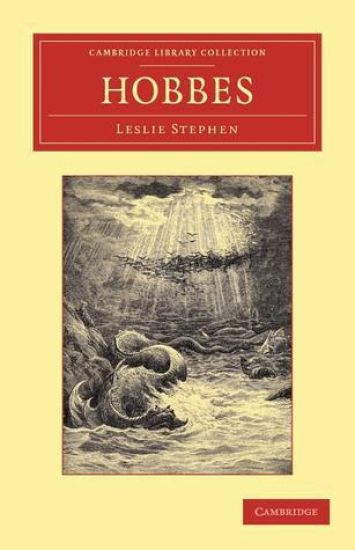
Hobbes

Hobbes

Leslie Stephen

Cambridge University Press
2012
pokkari
At the age of eighty-four, Thomas Hobbes (1588–1679) wrote an autobiography in Latin elegaics. Unsurprisingly, it was not as widely read as his two great philosophical works, Leviathan and Behemoth, in which he laid out a set of sociopolitical theories that enraged many of the philosophers and moralists of Europe. In this comprehensive biography, first published in 1904, Sir Leslie Stephen (1832–1904) charts the character and changes of Hobbes' thinking, from the scholasticism of his early Oxford education, to his later devotion to geometry and deductive science. With an emphasis on personal influences, Stephen sets Hobbes and his work in the historical context of Hobbes' often difficult patrons, the Civil War, and the Restoration, providing an insight into the life of the eminent philosopher and into the tenets of early twentieth-century biographical writing. An interesting text for students of both philosophy and English literature.
Essays on Freethinking and Plain Speaking

Essays on Freethinking and Plain Speaking

Leslie Stephen

Cambridge University Press
2012
pokkari
Sir Leslie Stephen (1832–1904), the founding Editor of the Dictionary of National Biography and writer on philosophy, ethics, and literature, was educated at Eton, King's College, London, and Trinity Hall, Cambridge, where he remained as a Fellow and tutor until 1864, becoming an ordained priest in 1859. Doubt concerning his religious convictions set in rapidly, although it was not until 1875 that he formally renounced his orders. First published in book form in 1873, these closely argued essays challenging the philosophy of religious doctrine were written originally for Fraser's Magazine and The Fortnightly Review. Despite its cautious reception, the work established his reputation as a leading writer on agnosticism, paving the way for his later work The Science of Ethics. His interest in eighteenth-century thinkers is reflected in this work, with chapters on Shaftesbury and Warburton, and contemporary debate is explored in the essay on Darwinism and Divinity.
An Agnostic's Apology

An Agnostic's Apology

Leslie Stephen

Cambridge University Press
2012
pokkari
The term 'agnostic' was probably coined by T. H. Huxley during a speech to the Metaphysical Society in 1869. From the Greek 'agnostos', 'unknown', it was derived from St Paul's mention of an Athenian altar inscribed 'to the unknown god'. With these overtones of ancient philosophy, agnosticism became the tag of an emergent school of thought which posited that the existence of anything beyond the material and measurable should be considered unknowable. In this collection of seven essays, first published as one volume in 1893, Leslie Stephen (1832–1904) makes a study of the 'unknown'. Across the essays, he presents arguments for the intrinsic agnosticism of many of the basic tenets of deism, explores the way in which humans construct dreams and realities, and examines the relationship between physics and philosophy. This readable and entertaining book will be of interest to students of both theology and philosophy.
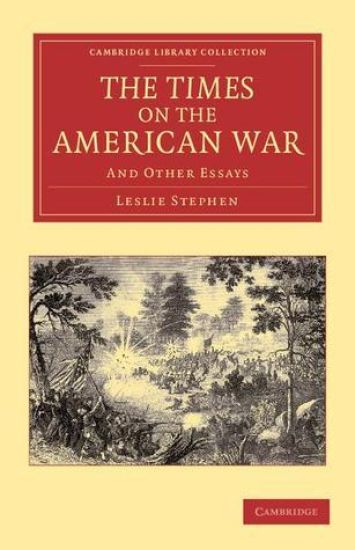
The Times on the American War

The Times on the American War

Leslie Stephen

Cambridge University Press
2012
pokkari
The biographer and writer on philosophy, ethics and literature Leslie Stephen (1832–1904) was educated at Eton, King's College, London, and then Trinity College, Cambridge, where he remained as a fellow and a tutor for his entire career. He served as the first editor (1885–91) of the Dictionary of National Biography and in 1871 he became editor of the Cornhill Magazine. In this short piece, published in 1865, Stephen takes issue with the portrayal of the American Civil War (1861–5) by The Times. Having travelled to the United States himself in 1863, Stephen argues that the newspaper's depiction of the events in America is inaccurate, and both misinforms the public in Britain and damages Britain's reputation abroad. Also included in this reissue is a short article on the poet John Byrom (1692–1763), and an obituary of Henry Sidgwick (1838–1900), Stephen's personal friend.
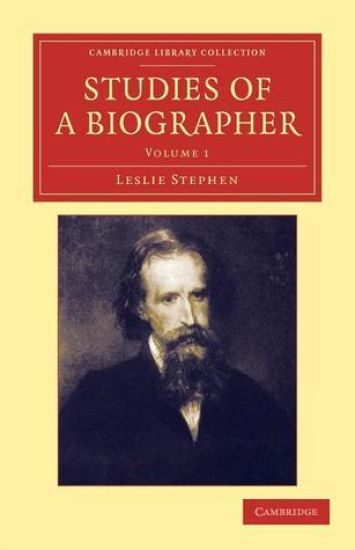
Studies of a Biographer

Studies of a Biographer

Leslie Stephen

Cambridge University Press
2012
pokkari
Sir Leslie Stephen (1832–1904) was founding Editor of the Dictionary of National Biography (DNB). Also a writer on philosophy, ethics, and literature, he was educated at Eton, King's College, London, and Trinity Hall, Cambridge, where he remained as a Fellow and a tutor for a number of years. Though a sickly child, he later became a keen and successful mountaineer, taking part in first ascents of nine peaks in the Alps. These biographical essays and critiques were written originally for the National Review and published as two two-volume sets in 1898 and 1902. These vignettes show that, despite the years of preparing material for the DNB to its particular editorial requirements, Stephen was still a master of the finely crafted depiction of the essence of his chosen subjects. Volume 1 includes a consideration of the art of biography, a critique of works on Johnson, and essays on Gibbon and Wordsworth.
Hours in a Library

Hours in a Library

Leslie Stephen

Cambridge University Press
2012
pokkari
This three-volume set brings together a diverse selection of essays by Sir Leslie Stephen (1832–1904), author, philosopher and literary critic. Educated at Eton and Cambridge, he was the founding editor of the Dictionary of National Biography and father of Virginia Woolf and Vanessa Bell. He wrote critiques of many authors and works, which were published in periodicals such as the Cornhill Magazine (of which he was editor from 1871), Fraser's Magazine and the Fortnightly Review. The First Series, published in 1874, includes commentaries on the works of Daniel Defoe, Samuel Richardson, Sir Walter Scott and Honoré de Balzac, and the poetry of Alexander Pope. Stephen sets each writer's work in its historical context, comparing it to that of other significant authors of its era and evaluating its philosophical and moral qualities. His articles remain of great interest to scholars of early modern, Romantic and Victorian literature.
Studies of a Biographer

Studies of a Biographer

Leslie Stephen

Cambridge University Press
2012
pokkari
Sir Leslie Stephen (1832–1904) was founding Editor of the Dictionary of National Biography (DNB). Also a writer on philosophy, ethics, and literature, he was educated at Eton, King's College, London, and Trinity Hall, Cambridge, where he remained as a Fellow and a tutor for a number of years. Though a sickly child, he later became a keen and successful mountaineer, taking part in first ascents of nine peaks in the Alps. These biographical essays and critiques were written originally for the National Review and published as two two-volume sets in 1898 and 1902. These vignettes show that, despite the years of preparing material for the DNB to its particular editorial requirements, Stephen was still a master of the finely crafted depiction of the essence of his chosen subjects. Volume 4 considers Shakespeare the man, Southey, Anthony Trollope and Robert Louis Stevenson, and includes a critique of recent works on Milton.
Studies of a Biographer

Studies of a Biographer

Leslie Stephen

Cambridge University Press
2012
pokkari
Sir Leslie Stephen (1832–1904) was founding Editor of the Dictionary of National Biography (DNB). Also a writer on philosophy, ethics, and literature, he was educated at Eton, King's College, London, and Trinity Hall, Cambridge, where he remained as a Fellow and a tutor for a number of years. Though a sickly child, he later became a keen and successful mountaineer, taking part in first ascents of nine peaks in the Alps. These biographical essays and critiques were written originally for the National Review and published as two two-volume sets in 1898 and 1902. These vignettes show that, despite the years of preparing material for the DNB to its particular editorial requirements, Stephen was still a master of the finely crafted depiction of the essence of his chosen subjects. Volume 3 includes essays on Donne, John Ruskin, the Brownings' letters and, in complete contrast, a chapter considering the pleasures of walking.

Hours in a Library (Third Series)

Hours in a Library (Third Series)

Leslie Stephen

Cambridge University Press
2012
pokkari
This three-volume set brings together a diverse selection of essays by Sir Leslie Stephen (1832–1904), author, philosopher and literary critic. Educated at Eton and Cambridge, he was the founding editor of the Dictionary of National Biography and father of Virginia Woolf and Vanessa Bell. He wrote critiques of many authors and works, which were published in periodicals such as the Cornhill Magazine (of which he was editor from 1871), Fraser's Magazine and the Fortnightly Review. The Third Series, first published in 1879, includes commentaries on the works of Henry Fielding, Charlotte Brontë, Charles Kingsley and Walter Savage Landor, and the poetry of William Wordsworth. Stephen sets each writer's work in its historical context, comparing it to that of other significant authors of its era and evaluating its philosophical and moral qualities. His articles remain of great interest to scholars of early modern, Romantic and Victorian literature.
Hours in a Library (Second Series)

Hours in a Library (Second Series)

Leslie Stephen

Cambridge University Press
2012
pokkari
This three-volume set brings together a diverse selection of essays by Sir Leslie Stephen (1832–1904), author, philosopher and literary critic. Educated at Eton and Cambridge, he was the founding editor of the Dictionary of National Biography and father of Virginia Woolf and Vanessa Bell. He wrote critiques of many authors and works, which were published in periodicals such as the Cornhill Magazine (of which he was editor from 1871), Fraser's Magazine and the Fortnightly Review. The Second Series, first published in 1876, includes commentaries on the works of Sir Thomas Browne, Samuel Johnson, Benjamin Disraeli and Horace Walpole, and the poetry of George Crabbe. Stephen sets each writer's work in its historical context, comparing it to that of other significant authors of its era and evaluating its philosophical and moral qualities. His articles remain of great interest to scholars of early modern, Romantic and Victorian literature.
Studies of a Biographer

Studies of a Biographer

Leslie Stephen

Cambridge University Press
2012
pokkari
Sir Leslie Stephen (1832–1904) was founding Editor of the Dictionary of National Biography (DNB). Also a writer on philosophy, ethics, and literature, he was educated at Eton, King's College, London, and Trinity Hall, Cambridge, where he remained as a Fellow and a tutor for a number of years. Though a sickly child, he later became a keen and successful mountaineer, taking part in first ascents of nine peaks in the Alps. These biographical essays and critiques were written originally for the National Review and published as two two-volume sets in 1898 and 1902. These vignettes show that, despite the years of preparing material for the DNB to its particular editorial requirements, Stephen was still a master of the finely crafted depiction of the essence of his chosen subjects. Volume 2 includes portraits of Walter Scott, Matthew Arnold and Pascal, and a study of the exploration of German literature in England.
The Life of Sir James Fitzjames Stephen

The Life of Sir James Fitzjames Stephen

Leslie Stephen

Cambridge University Press
2012
pokkari
Although James Fitzjames Stephen (1829–94) was a successful barrister, he also had a prolific journalistic and literary output throughout his legal career. He contributed more than three hundred essays on subjects such as law and ethics to the Saturday Review within the space of a decade, and more than eight hundred articles for the Pall Mall Gazette. This biography was written by his younger brother, the equally successful critic and editor Leslie Stephen (1832–1904), and published in 1895. Stephen paints an affectionate portrait of this leading Victorian legal and literary figure. He begins with a brief history of their influential family and his brother's early life and education, before discussing Fitzjames' professional successes, including his work on the Indian Viceroy's Council, the publication of his highly regarded History of the Criminal Law of England (1883) and his eventual appointment as a judge.
The Life and Letters of Leslie Stephen

The Life and Letters of Leslie Stephen

Frederic William Maitland; Leslie Stephen

Cambridge University Press
2012
pokkari
Leslie Stephen (1832–1904), the founding Editor of the Dictionary of National Biography, was one of the leading literary figures of the nineteenth century. Stephen, the father of artist Vanessa Bell and writer Virginia Woolf, began his career writing for London publications before being appointed Editor of The Cornhill Magazine in 1881. The magazine's proprietor approached him with the idea for the Dictionary, and the first volume appeared in 1885 to much acclaim - but by 1889 Stephen had collapsed from overwork and finally stepped down from his editorial role in 1891. However, he continued to write extensively not least, publishing the three-volume The English Utilitarians (also reissued in this series) in 1900. This biography, published in 1906, was written by family friend and legal historian Frederic Maitland (1850–1906), who drew extensively from Stephen's letters to give a detailed account of the life of a most influential Victorian.