Kirjojen hintavertailu – 12 903 724 kirjaa ja 27 kauppaa

Kirjailija

Leszek Kolakowski

Kirjat ja teokset yhdessä paikassa: 21 kirjaa, julkaisuja vuosilta 1973–2026, suosituimpiin kuuluu Neutrality and Impartiality. Vertaile teosten hintoja ja tarkista saatavuus suomalaisista kirjakaupoista.

21 kirjaa

Kirjojen julkaisuvuodet: 1973–2026.

Neutrality and Impartiality

Neutrality and Impartiality

Andrew Graham; Leszek Kolakowski; Charles Taylor; C. L. Ten; W. L. Weinstein; Louis Marin

Cambridge University Press
1973
pokkari
First published in 1975, this is a book of general intellectual interest about the role of the university in contemporary society and that of university teachers in relation to their subjects, their students, and their wider political commitments. Alan Montefiore offers preliminary analyses of the family of concepts most often invoked in discussions of these problems, taking the central dispute to be between those who hold a 'liberal' view of the university and those who regard this notion as illusory, dishonest or undesirable. Six academics, representing, discuss issues of substantive conflict in light of Montefiore's initial distinctions. The volume is of particular interest to students of political and social philosophy, and political and educational theory. It is also intended for a wider readership among those who care about the political status of the universities and recognize the importance and difficulty of the problems involved in this.
Why Is There Something Rather Than Nothing?: A History of Philosophy in 23 Questions
A renowned philosopher's guide to the history of Western philosophy "Written with a graceful simplicity that belies its profundity, this is a book that reconnects philosophy with perennial questions. . . . Kolakowski's work is exemplary and indispensable." ―John Gray, New York Review of Books Can nature make us happy? How can we know anything? What is justice? Why is there evil in the world? What is the source of truth? Does God exist? Can we really believe what we see? There are questions that have intrigued the world's great thinkers over the ages, which still touch a chord in all of us today. They are questions that can teach us about the way we live, work, love, and see the world. In this modern classic, the eminent philosopher Leszek Kolakowski explores the essence of these ideas, introducing figures from Socrates to Thomas Aquinas, Descartes to Nietzsche, and concentrating on one single important philosophical question from each of them. Whether reflecting on good and evil, truth and beauty, faith and the soul, or free will and consciousness, Kolakowski shows that these timeless ideas remain at the very core of our existence.
13 muinasjuttu lailonia kuningriigist suurtele ja väikestele ning teisi muinasjutte
Leszek Kolakowski (1927-2009) on tuntuim Poola filosoof, eesti keeles on ilmunud kogunisti seitse tema raamatut, nende hulgas ääretult populaarsed "Miniloengud maksiprobleemidest" ja "Mida küsivad meilt suured filosoofid". Käesolev raamatuke näitab Leszek Kolakowskit pisut teisest küljest - vaimuka jutuvestjana. Ehkki autor on määratlenud neid lugusid kui "muinasjutte suurtele ja väikestele", on need vististi siiski peamiselt "suurtele" suunatud (mis ei tähenda, et terasemad lapsed ei võiks neid lugeda).
Freedom, Fame, Lying And Betrayal

Freedom, Fame, Lying And Betrayal

Leszek Kolakowski

Routledge
2020
nidottu
Polish philosopher Leszek Kolakowski is renowned worldwide for wrestling with serious philosophical conundrums with dazzling elegance. In this new book, he turns his characteristic wit to important themes of ordinary life, from the need for freedom to the wheel of fortune, from the nature of God to the ambiguities of betrayal. Extremely lucid and l
Freedom, Fame, Lying and Betrayal

Freedom, Fame, Lying and Betrayal

Leszek Kolakowski

Routledge
2018
sidottu
Polish philosopher Leszek Kolakowski is renowned worldwide for wrestling with serious philosophical conundrums with dazzling elegance. In this new book, he turns his characteristic wit to important themes of ordinary life, from the need for freedom to the wheel of fortune, from the nature of God to the ambiguities of betrayal. Extremely lucid and lacking in intellectual pretension, these essays speak in everyday language, spurring the reader's own thoughts and providing a handle on which to debate and think about the themes. The eighteen essays cover the following topics: power, fame, equality, lying, toleration, travel, virtue, collective responsibility, the wheel of fortune, betrayal, violence, boredom, freedom, luxury, God, respect for nature, superstition, and national stereotypes.
Comment Etre Sociali: Credo

Comment Etre Sociali: Credo

Leszek Kolakowski

Les Belles Lettres
2017
nidottu
"AVANCEZ vers l'arriere s'il vous plait " Telle est la traduction approximative d'une injonction que j'entendis un jour dans un tramway de Varsovie. Je propose d'en faire le mot d'ordre d'une puissante Internationale qui n'existera jamais. Leszek Kolakowski (1927-2009) fut l'un des plus importants philosophes europeens du xxe siecle. Meconnu en France, ce dissident exile a Oxford pour fuir la dictature communiste fut l'auteur d'une trentaine de livres et de centaines d'articles. Salue de par le monde tant pour sa connaissance intime de Spinoza, Hume et Pascal que pour son histoire du marxisme, il eut une influence intellectuelle importante, qui va d'Isaiah Berlin a Geremek ou Pomian en passant par Raymond Aron. Comment etre socialiste-conservateur-liberal est le premier volume a reunir les principaux articles que l'elegante plume du penseur polonais a signes pour la revue Commentaire pendant trente ans (1978-2008).
REVOLUTSIOON KUI ILUS HAIGUS

REVOLUTSIOON KUI ILUS HAIGUS

Leszek Kolakowski; Hendrik Lindepuu

HENDRIK
2014
nidottu
Raamatutega "Miniloengud maksiprobleemidest" ja "Mida küsivad meilt suured filosoofid" Eestiski suure populaarsuse võitnud Poola filosoofi Leszek Kolakowski 26 esseed, kus kriitilise käsitluse all on nii totalitarism kui ka demokraatia. Aastatel 1956-2003 kirjutatud esseed näitavad ka marksistliku revisionisti ümberkujunemist konservatiivseks mõtlejaks.
Is God Happy?: Selected Essays

Is God Happy?: Selected Essays

Leszek Kolakowski

BASIC BOOKS
2013
sidottu
The late Leszek Kolakowski was one of the most influential philosophers of the twentieth century. A prominent anticommunist writer, Kolakowski was also a deeply humanistic thinker, and his meditations on society, religion, morality, and culture stand alongside his political writings as commentaries on intellectual--and everyday--life in the twentieth century. Kolakowski's extraordinary empathy, humor, and erudition are on full display in Is God Happy?, the first collection of his work to be published since his death in 2009. Accessible and wide ranging, these essays--many of them translated into English for the first time--testify to the remarkable scope of Kolakowski's work. From a provocative and deeply felt critique of Marxist ideology to the witty and self-effacing "In Praise of Unpunctuality" to a rigorous analysis of Erasmus' model of Christianity and the future of religion, these essays distill Kolakowski's lifelong engagement with the eternal problems of philosophy and some of the most vital questions of our age.
Is God Happy?

Is God Happy?

Leszek Kolakowski

Penguin Classics
2012
pokkari

Halvin toimitettuna 16,20 €

'The most esteemed philosopher to have produced a general introduction to his discipline since Bertrand Russell' Independent In these essays, one of the most important thinkers of the twentieth century writes about communism and socialism, the problem of evil, Erasmus and the reform of the Church, reason and truth, and whether God is happy. Accessible and absorbing, the essays in Is God Happy? deal with some of the eternal problems of philosophy and the most vital questions of our age. Leszek Kolakowski has also written on religion, Spinoza, Bergson, Pascal and seventeenth-century thought. He left communist Poland after his expulsion from Warsaw University for anti-communist activities. From 1970 he was a fellow of All Souls College, Oxford.'His distinctive mix of irony and moral seriousness, religious sensibility and epistemological scepticism, social engagement and political doubt was truly rare ... a true Central European intellectual-perhaps the last' Tony Judt, The New York Times Review of Books
Why is There Something Rather Than Nothing?

Why is There Something Rather Than Nothing?

Leszek Kolakowski

Penguin Books Ltd
2008
pokkari

Halvin toimitettuna 17,00 €

Can nature make us happy? How can we know anything? What is justice? Why is there evil in the world? What is the source of truth? Is it possible for God not to exist? Can we really believe what we see? There are questions that have intrigued the world's great thinkers over the ages, which still touch a cord in all of us today. They are questions that can teach us about the way we live, work, relate to each other and see the world. Here, one of the world's greatest living philosophers, Leszek Kolakowski, explores the essence of these ideas, introducing figures from Socrates to Thomas Aquinas, Descartes to Nietzsche and concentrating on one single important philosophical question from each of them. Whether reflecting on good and evil, truth and beauty, faith and the soul, or free will and consciousness, Kolakowski shows that these timeless ideas remain at the very core of our existence.
Main Currents of Marxism

Main Currents of Marxism

Leszek Kolakowski

WW Norton Co
2008
nidottu

Halvin toimitettuna 39,20 €

Renowned philosopher Leszek Kolakowski was one of the first scholars to reveal both the shortcomings and the dangers posed by communist regimes. He now presents, for the first time in one paperback volume, his definitive Main Currents of Marxism: “A prophetic work,” according to the Library of Congress, that provides “the most lucid and comprehensive history of the origins, structure, and posthumous development of the system of thought that had the greatest impact on the 20th century.”
Why Is There Something Rather Than Nothing?

Why Is There Something Rather Than Nothing?

Leszek Kolakowski; Agnieszka (TRN) Kolakowska; Leszek Kolakowski

Basic Books
2007
sidottu
Can nature make us happy? How can we know anything? What is justice? Why is there evil in the world? What is the source of truth? Is it possible for God not to exist? Can we really believe what we see? There are questions that have intrigued the world's great thinkers over the ages, which still touch a chord in all of us today. They are questions that can teach us about the way we live, work, relate to each other and see the world. Here Leszek Kolakowski explores the essence of these ideas, introducing figures from Socrates to Thomas Aquinas, Descartes to Nietzsche, and concentrating on one single important philosophical question from each of them. Whether reflecting on good and evil, truth and beauty, faith and the soul, or free will and consciousness, Leszek Kolakowski shows that these timeless ideas remain at the very core of our existence.
The Presence of Myth

The Presence of Myth

Leszek Kolakowski

University of Chicago Press
2001
nidottu
"[An] important essay by a philosopher who more convincingly than any other I can think of demonstrates the continuing significance of his vocation in the life of our culture."—Karsten Harries, The New York Times Book ReviewWith The Presence of Myth, Kolakowski demonstrates that no matter how hard man strives for purely rational thought, there has always been-and always will be-a reservoir of mythical images that lend "being" and "consciousness" a specifically human meaning." Kolakowski undertakes a philosophy of culture which extends to all realms of human intercourse—intellectual, artistic, scientific, and emotional. . . . [His] book has real significance for today, and may well become a classic in the philosophy of culture."—Anglican Theological Review
Metaphysical Horror

Metaphysical Horror

Leszek Kolakowski

University of Chicago Press
2001
nidottu
For over a century, philosophers have argued that philosophy is impossible or useless, or both. Although the basic notion dates back to the days of Socrates, there is still heated disagreement about the nature of truth, reality, knowledge, the good, and God. This leaves us with a feeling of radical uncertainty, a feeling described by Kolakowski as "metaphysical horror". "The horror is this" , he says, "if nothing truly exists except the Absolute, the Absolute is nothing; if nothing truly exists except myself, I am nothing". The aim of this book, for Kolakowski, is finding a way out of this seeming dead end. This book confronts these dilemmas through examinations of prominent Western philosophers including Descartes, Spinoza, Husserl, and many of the Neo-Platonists. He argues that philosophy may not provide definitive answers to the fundamental questions, yet the quest itself transforms our lives. It may undermine most of our certainties, yet it still leaves room for our spiritual yearnings and religious beliefs.
Husserl Search For Certitude

Husserl Search For Certitude

Leszek Kolakowski

St Augustine's Press
2001
nidottu
[Husserl] better than anybody, compelled us to realize the painful dilemma of knowledge: either consistent empiricism, with its relativistic, skeptical results (a standpoint which many regard discouraging, inadmissible, and in fact ruinous for culture) or transcendental dogmatism, which cannot really justify itself and remains in the end an arbitrary decision. I have to admit that although ultimate certitude is a goal that cannot be attained within the rationalist framework, our culture would be poor and miserable without people who keep trying to reach this goal, and it hardly could survive when left entirely in the hands of the skeptics. - From the author's conclusion.
Religion

Religion

Leszek Kolakowski

St Augustine's Press
2001
pokkari
Leszek Kolakowski discusses, in a highly original way, the arguments for and against the existence of God as they have been conducted through the ages. He examines the critiques of religious belief, from the Epicureans through Nietzsche to contemporary anthropological inquiry, the assumptions that underlie them, and the counter-arguments of such apologists as Descartes, Leibniz, and Pascal. His exploration of the philosophy of religion covers the historical discussions of the nature and existence of evil, the importance of the concepts of failure and eternity to the religious impulse, the relationship between skepticism and mysticism, and the place of reason, understanding, and in models of religious thought. He examines why people, throughout known history, have cherished the idea of eternity and existence after death, and why this hope has been dependent on the worship of an eternal reality. He confronts the problems of meaning in religious language.
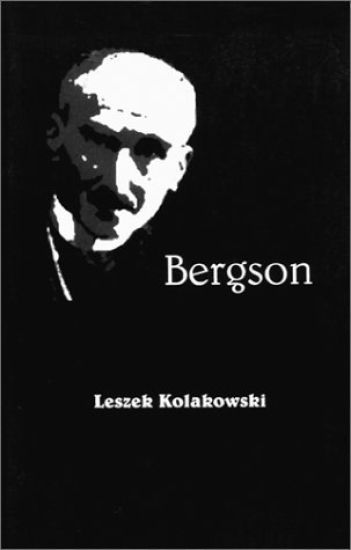
Bergson

Bergson

Leszek Kolakowski

St Augustine's Press
2001
nidottu
Leszek Kolakowski shows how Henri Bergson sought to reconcile Darwin's theory with his own beliefs about the nature of the universe. Bergson believed that time could be thought of in two different ways: as an abstract measuring device used for practical purposes, or as 'duree', the "real" time we actually experience. He also held that all matter is propelled by an internal 'elan vital', or life-drive, and that the life of the universe is constantly creative and unpredictable. On the basis of these ideas he constructed a system of thought that embraced his views on memory, matter, conscousness, movement, religious morality, and the nature of laughter. His pantheistic and dynamic vision of the universe, which emerged at a time of crisis in Western intellectual life, was symptomatic of the struggle between a rigid scientific derminism and the Christian tradition of a divine creation.
God Owes Us Nothing – A Brief Remark on Pascal`s Religion and on the Spirit of Jansenism
God Owes Us Nothing reflects on the centuries-long debate in Christianity: how do we reconcile the existence of evil in the world with the goodness of an omnipotent God, and how does God's omnipotence relate to people's responsibility for their own salvation or damnation. Leszek Kolakowski approaches this paradox as both an exercise in theology and in revisionist Christian history based on philosophical analysis. Kolakowski's unorthodox interpretation of the history of modern Christianity provokes renewed discussion about the historical, intellectual, and cultural omnipotence of neo-Augustinianism." Several books a year wrestle with that hoary conundrum, but few so dazzlingly as the Polish philosopher's latest."—Carlin Romano, Washington Post Book World"Kolakowski's fascinating book and its debatable thesis raise intriguing historical and theological questions well worth pursuing."—Stephen J. Duffy, Theological Studies"Kolakowski's elegant meditation is a masterpiece of cultural and religious criticism."—Henry Carrigan, Cleveland Plain Dealer
Modernity on Endless Trial

Modernity on Endless Trial

Leszek Kolakowski

University of Chicago Press
1997
nidottu

Halvin toimitettuna 40,60 €

Leszek Kolakowski delves into some of the most intellectually vigorous questions of our time in this remarkable collection of essays garnished with his characteristic wit. Ten of the essays have never appeared before in English. "Exemplary. . . . It should be celebrated." —Arthur C. Danto, New York Times Book Review"This book . . . express[es] Kolakowski's thought on God, man, reason, history, moral truth and original sin, prompted by observation of the dramatic struggle among Christianity, the Enlightenment and modern totalitarianism. It is a wonderful collection of topics." —Thomas Nagel, Times Literary Supplement"No better antidote to bumper-sticker thinking exists than this collection of 24 'appeals for moderation in consistency,' and never has such an antidote been needed more than it is now." —Joseph Coates, Chicago Tribune"Whether learned or humorous, these essays offer gems in prose of diamond hardness, precision, and brilliance." —Thomas D'Evelyn, The Christian Science MonitorA "Notable Books of the Year 1991" selection, New York Times Book Review—a "Noted with Pleasure" selection, New York Times Book Review—a "Summer Reading 1991" selection, New York Times Book Review—a "Books of the Year" selection, The Times.