Kirjojen hintavertailu – 12 859 828 kirjaa ja 27 kauppaa

Kirjailija

Lev Manovich

Kirjat ja teokset yhdessä paikassa: 7 kirjaa, julkaisuja vuosilta 2002–2020, suosituimpiin kuuluu Info-Aesthetics. Vertaile teosten hintoja ja tarkista saatavuus suomalaisista kirjakaupoista.

7 kirjaa

Kirjojen julkaisuvuodet: 2002–2020.

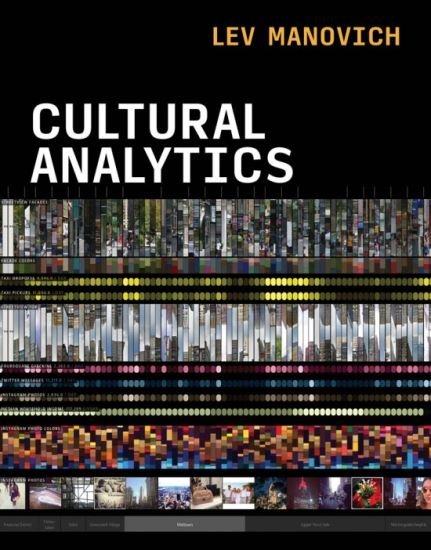
Cultural Analytics

Cultural Analytics

Lev Manovich

MIT Press
2020
sidottu

Halvin toimitettuna 51,60 €

A book at the intersection of data science and media studies, presenting concepts and methods for computational analysis of cultural data. How can we see a billion images? What analytical methods can we bring to bear on the astonishing scale of digital culture--the billions of photographs shared on social media every day, the hundreds of millions of songs created by twenty million musicians on Soundcloud, the content of four billion Pinterest boards? In Cultural Analytics, Lev Manovich presents concepts and methods for computational analysis of cultural data. Drawing on more than a decade of research and projects from his own lab, Manovich offers a gentle, nontechnical introduction to the core ideas of data analytics and discusses the ways that our society uses data and algorithms.
Info-Aesthetics

Info-Aesthetics

Lev Manovich

Bloomsbury Academic
2020
sidottu
Does new media represent a 'new avant-garde' of information? How can an information society be represented iconically if the activities that define it are all so dynamic? What are the cultural consequences of extending the internet into the physical world? In proposing software as modernity's new societal force, this book seeks to reclassify software as today's revitalized combustion engine, underpinning the logic of contemporary culture. Manovich investigates the ways in which the shift from an industrial to information society has resulted in new aesthetic sensibilities and representations. He describes software as the internal combustion engine of the information society, arguing that it is in software that the new cultural logic manifests itself most clearly. This is a cutting-edge and systematic examination of contemporary culture by the creator of the field of software studies.
Info-Aesthetics

Info-Aesthetics

Lev Manovich

Bloomsbury Academic
2020
nidottu
Does new media represent a 'new avant-garde' of information? How can an information society be represented iconically if the activities that define it are all so dynamic? What are the cultural consequences of extending the internet into the physical world? In proposing software as modernity's new societal force, this book seeks to reclassify software as today's revitalized combustion engine, underpinning the logic of contemporary culture. Manovich investigates the ways in which the shift from an industrial to information society has resulted in new aesthetic sensibilities and representations. He describes software as the internal combustion engine of the information society, arguing that it is in software that the new cultural logic manifests itself most clearly. This is a cutting-edge and systematic examination of contemporary culture by the creator of the field of software studies.
AI Aesthetics

AI Aesthetics

Lev Manovich

Strelka Press
2018
nidottu

Halvin toimitettuna 24,90 €

AI plays a crucial role in the global cultural ecosystem. It recommends what we should see, listen to, read, and buy. It determines how many people will see our shared content. It helps us make aesthetic decisions when we create media. In professional cultural production, AI has already been adapted to produce movie trailers, music albums, fashion items, product and web designs, architecture, etc. In this short book, Lev Manovich offers a systematic framework to help us think about cultural uses of AI today and in the future. He challenges existing ideas and gives us new concepts for understanding media, design, and aesthetics in the AI era.
Software Takes Command

Software Takes Command

Lev Manovich

Bloomsbury Academic USA
2013
nidottu
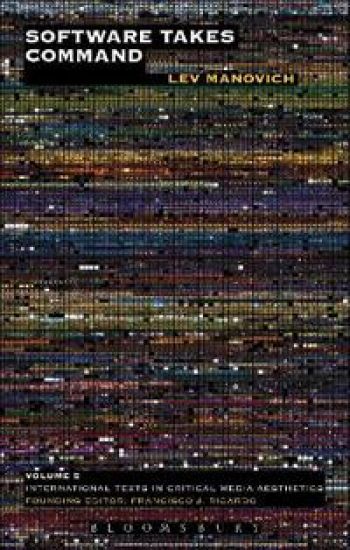
This book is available as open access through the Bloomsbury Open Access programme and is available on www.bloomsburycollections.com. Software has replaced a diverse array of physical, mechanical, and electronic technologies used before 21st century to create, store, distribute and interact with cultural artifacts. It has become our interface to the world, to others, to our memory and our imagination - a universal language through which the world speaks, and a universal engine on which the world runs. What electricity and combustion engine were to the early 20th century, software is to the early 21st century. Offering the the first theoretical and historical account of software for media authoring and its effects on the practice and the very concept of 'media,' the author of The Language of New Media (2001) develops his own theory for this rapidly-growing, always-changing field. What was the thinking and motivations of people who in the 1960 and 1970s created concepts and practical techniques that underlie contemporary media software such as Photoshop, Illustrator, Maya, Final Cut and After Effects? How do their interfaces and tools shape the visual aesthetics of contemporary media and design? What happens to the idea of a 'medium' after previously media-specific tools have been simulated and extended in software? Is it still meaningful to talk about different mediums at all? Lev Manovich answers these questions and supports his theoretical arguments by detailed analysis of key media applications such as Photoshop and After Effects, popular web services such as Google Earth, and the projects in motion graphics, interactive environments, graphic design and architecture. Software Takes Command is a must for all practicing designers and media artists and scholars concerned with contemporary media.

The Art of Participation

The Art of Participation

Rudolf Frieling; Boris Groys; Robert Atkins; Lev Manovich

Thames Hudson Ltd
2008
sidottu
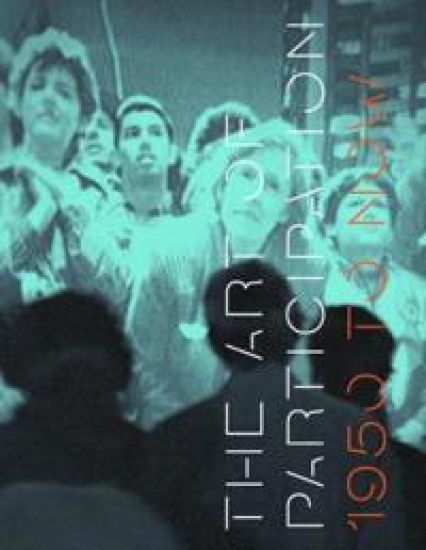
This new survey covers the rich and varied history of participatory art, from early happenings and performances to current practices that demand audience interaction. As the internet mindset – browsing, sharing, collecting, producing – increasingly permeates every aspect of society, this timely project reveals the ways in which artists and viewers have approached the creation of open works of art. Original essays identify seminal moments in participatory practice from the 1950s to the present day, while a rich array of plates reproduces the work of the movement’s major figures in vivid detail.
The Language of New Media

The Language of New Media

Lev Manovich

MIT Press
2002
pokkari
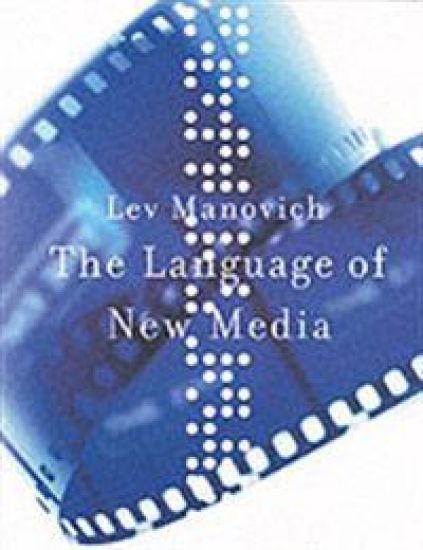
A stimulating, eclectic accountof new media that finds its origins in old media, particularly the cinema. In this book Lev Manovich offers the first systematic and rigorous theory of new media. He places new media within the histories of visual and media cultures of the last few centuries. He discusses new media's reliance on conventions of old media, such as the rectangular frame and mobile camera, and shows how new media works create the illusion of reality, address the viewer, and represent space. He also analyzes categories and forms unique to new media, such as interface and database. Manovich uses concepts from film theory, art history, literary theory, and computer science and also develops new theoretical constructs, such as cultural interface, spatial montage, and cinegratography. The theory and history of cinema play a particularly important role in the book. Among other topics, Manovich discusses parallels between the histories of cinema and of new media, digital cinema, screen and montage in cinema and in new media, and historical ties between avant-garde film and new media.