Kirjojen hintavertailu – 12 903 725 kirjaa ja 27 kauppaa

Kirjailija

Lewis Ayres

Kirjat ja teokset yhdessä paikassa: 6 kirjaa, julkaisuja vuosilta 2004–2024, suosituimpiin kuuluu The Trinity in the Book of Revelation. Vertaile teosten hintoja ja tarkista saatavuus suomalaisista kirjakaupoista.

6 kirjaa

Kirjojen julkaisuvuodet: 2004–2024.

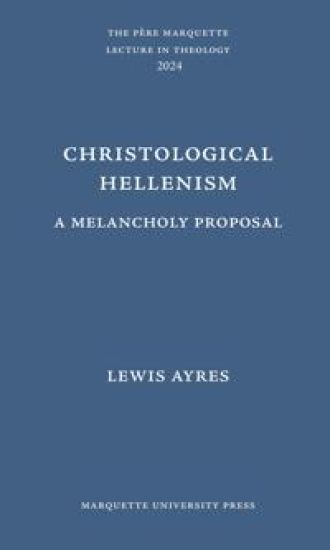
Christological Hellenism

Christological Hellenism

Lewis Ayres

Marquette University Press
2024
sidottu
Ayres examines the relationship between early Christian thought and Hellenic philosophical traditions by considering the extent to which fundamental Christian beliefs were formulated in a Hellenic context, questioning Fr Georges Florovsky's claim of "Hellenism" being "the perennial category and pattern of Christian thought and life." The author notes "The idea that Christianity underwent a "Hellenization" in its first few centuries is an idea long espoused, and equally long questioned, most astutely on the grounds that the term is used with great imprecision. We can justify use of the term, but only if we define it with some care. Here we take the term Hellenization to refer to the spread of Greek culture which began long before, but significantly accelerated after the rise of Alexander the Great's empire. This process involved the spread of language, educational and economic practices, structures of societal organization, religion, philosophy and art. We can give no clear terminus to this process, simply because it was a process that occurred in different ways in different places, reached different ends, and then intersected with a process that we might term "Romanization" which occurred through much of the near east as Roman influence came to be felt. The late Roman Empire in East and West, even in the many centuries where only the Eastern Empire survived, shows the complex interrelationship between the processes of Hellenization and Romanization. The tentative manner in which we use the term Hellenization does not mean that it is useless or can be simply ignored; but we should be both attentive to how we are using it in different contexts (temporal and geographical), and particularly attentive to the complex and confused history of the term among theologians.
The Trinity in the Book of Revelation

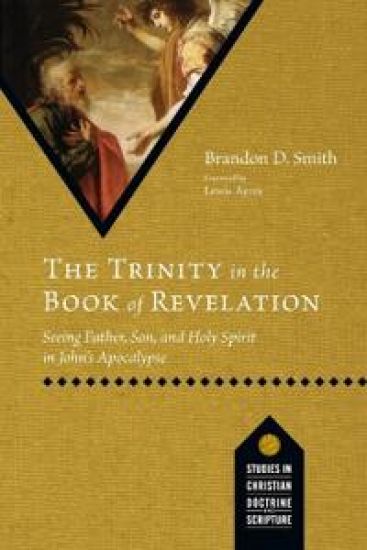
The Trinity in the Book of Revelation

Brandon D. Smith; Lewis Ayres

IVP Academic
2022
nidottu
How should we read the book of Revelation? Interpreting Scripture faithfully is a challenge with regard to any text and for any reader of the Bible. But perhaps no text confronts and confuses readers as much as the book of Revelation. With its vivid imagery and rich prophetic language, John's Apocalypse provokes and stirs our imaginations. Some have viewed it primarily as a first-century anti-imperial document. Others have read it as a book of prophecies or eschatological promises. Still others wonder why it is in the biblical canon at all. Theologian and biblical scholar Brandon Smith brings clarity to this question by reading the book of Revelation primarily as John's vision of the triune God. In conversation with early church theologians, including Irenaeus, Origen, Athanasius, and the Cappadocians, as well as modern biblical scholarship, Smith shows how John's vision can help us worship the one God who is Father, Son, and Holy Spirit. Studies in Christian Doctrine and Scripture, edited by Daniel J. Treier and Kevin J. Vanhoozer, promotes evangelical contributions to systematic theology, seeking fresh understanding of Christian doctrine through creatively faithful engagement with Scripture in dialogue with church tradition.
Augustine and the Trinity

Augustine and the Trinity

Lewis Ayres

Cambridge University Press
2014
pokkari

Halvin toimitettuna 61,60 €

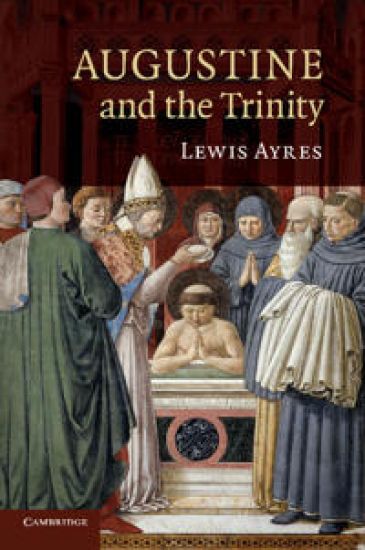
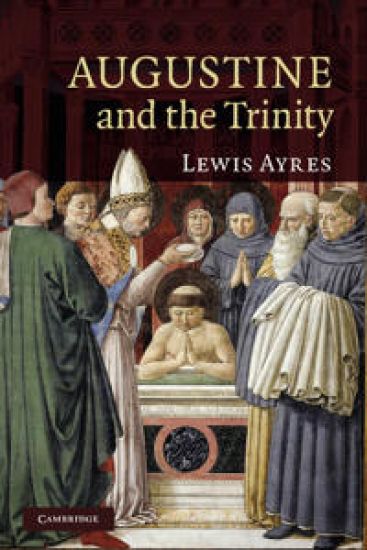
Augustine of Hippo (354–430) strongly influenced western theology, but he has often been accused of over-emphasizing the unity of God to the detriment of the Trinity. In Augustine and the Trinity, Lewis Ayres offers a new treatment of this important figure, demonstrating how Augustine's writings offer one of the most sophisticated early theologies of the Trinity developed after the Council of Nicaea (325). Building on recent research, Ayres argues that Augustine was influenced by a wide variety of earlier Latin Christian traditions which stressed the irreducibility of Father, Son and Spirit. Augustine combines these traditions with material from non-Christian Neoplatonists in a very personal synthesis. Ayres also argues that Augustine shaped a powerful account of Christian ascent toward understanding of, as well as participation in the divine life, one that begins in faith and models itself on Christ's humility.
Augustine and the Trinity

Augustine and the Trinity

Lewis Ayres

Cambridge University Press
2010
sidottu
Augustine of Hippo (354–430) strongly influenced western theology, but he has often been accused of over-emphasizing the unity of God to the detriment of the Trinity. In Augustine and the Trinity, Lewis Ayres offers a new treatment of this important figure, demonstrating how Augustine's writings offer one of the most sophisticated early theologies of the Trinity developed after the Council of Nicaea (325). Building on recent research, Ayres argues that Augustine was influenced by a wide variety of earlier Latin Christian traditions which stressed the irreducibility of Father, Son and Spirit. Augustine combines these traditions with material from non-Christian Neoplatonists in a very personal synthesis. Ayres also argues that Augustine shaped a powerful account of Christian ascent toward understanding of, as well as participation in the divine life, one that begins in faith and models itself on Christ's humility.
Nicaea and its Legacy

Nicaea and its Legacy

Lewis Ayres

Oxford University Press
2006
nidottu
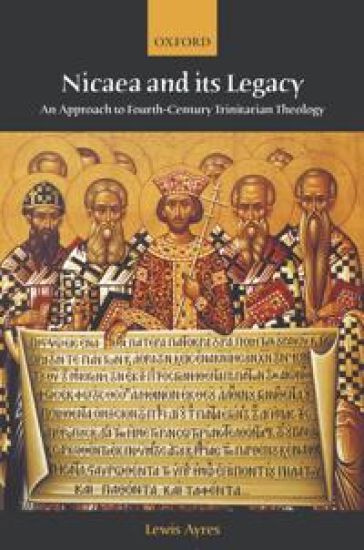
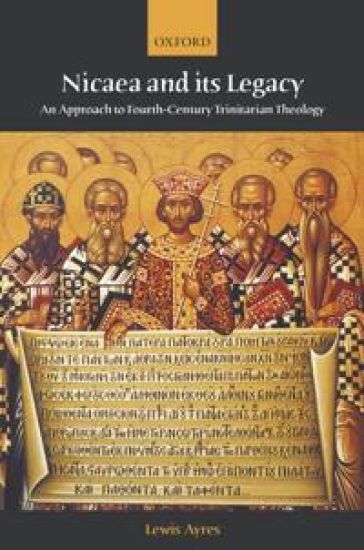
The first part of Nicaea and its Legacy offers a narrative of the fourth-century trinitarian controversy. It does not assume that the controversy begins with Arius, but with tensions among existing theological strategies. Lewis Ayres argues that, just as we cannot speak of one `Arian' theology, so we cannot speak of one `Nicene' theology either, in 325 or in 381. The second part of the book offers an account of the theological practices and assumptions within which pro-Nicene theologians assumed their short formulae and creeds were to be understood. Ayres also argues that there is no fundamental division between eastern and western trinitarian theologies at the end of the fourth century. The last section of the book challenges modern post-Hegelian trinitarian theology to engage with Nicaea more deeply.
Nicaea and its Legacy

Nicaea and its Legacy

Lewis Ayres

Oxford University Press
2004
sidottu
The first part of Nicaea and its Legacy offers a narrative of the fourth-century trinitarian controversy. It does not assume that the controversy begins with Arius, but with tensions among existing theological strategies. Lewis Ayres argues that, just as we cannot speak of one `Arian' theology, so we cannot speak of one `Nicene' theology either, in 325 or in 381. The second part of the book offers an account of the theological practices and assumptions within which pro-Nicene theologians assumed their short formulae and creeds were to be understood. Ayres also argues that there is no fundamental division between eastern and western trinitarian theologies at the end of the fourth century. The last section of the book challenges modern post-Hegelian trinitarian theology to engage with Nicaea more deeply.