Kirjojen hintavertailu – 12 859 824 kirjaa ja 27 kauppaa
Kirjailija
Lewis Carroll
Kirjat ja teokset yhdessä paikassa: 1 820 kirjaa, julkaisuja vuosilta 1865–2027, suosituimpiin kuuluu Alice's Adventures in Wonderland: Tove Jansson Edition. Vertaile teosten hintoja ja tarkista saatavuus suomalaisista kirjakaupoista.
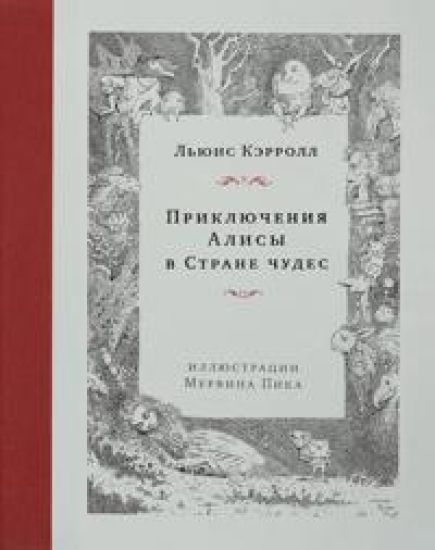
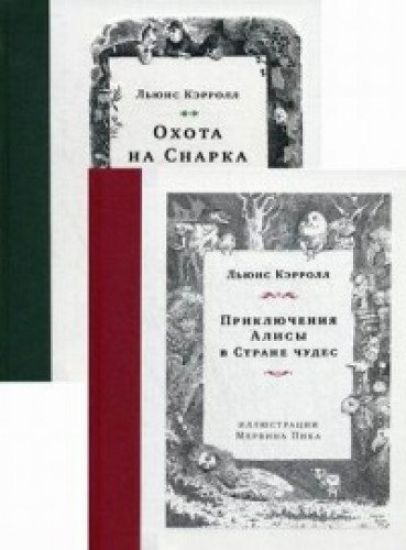
Anglijskij pisatel i dramaturg, avtor vsemirno izvestnoj trilogii "Gormengast", Mervin Pik byl takzhe udivitelno talantlivym illjustratorom. On sozdal illjustratsii dlja mnogikh knig, v tom chisle dlja "Prikljuchenija Alisy v Strane chudes" i "Okhota na Snarka" Ljuisa Kerrolla, "Ostrov sokrovisch" Roberta Ljuisa Stivensona, kotorye vojdut v seriju "Klassika v illjustratsijakh Mervina Pika". Otkryvaet seriju istorija pro prikljuchenija Alisy v Strane chudes. Risunki k etoj knige schitajutsja luchshimi rabotami Pika: v nikh voplotilos vsjo masterstvo khudozhnika i ego voobrazhenie. Ljogkimi shtrikhovymi risunkami, polnymi tonkoj igroj sveta i teni, Mervinu Piku udalos udivitelno tochno peredat fantasticheskij mir, sozdannyj Ljuisom Kerrollom. V nastojaschem izdanii tekst publikuetsja v klassicheskom perevode Niny Demurovoj. Perevodchik: Demurova Nina Mikhajlovna, Marshak Samuil Jakovlevich, Orlovskaja Dina Grigorevna, Sedakova Olga AleksandrovnaKhudozhnik: Pik Mervin
The original and classic story written by the beloved author Lewis Caroll and originally published in 1871. He tells the story of Alice and the strange and wonderful characters she meets including Tweedledum and Tweedledee, Humpty Dumpty and the Lion and the Unicorn in this topsy turvy world. A classic Carroll story brought to life through the pages of this book. Loved by both adults and children.
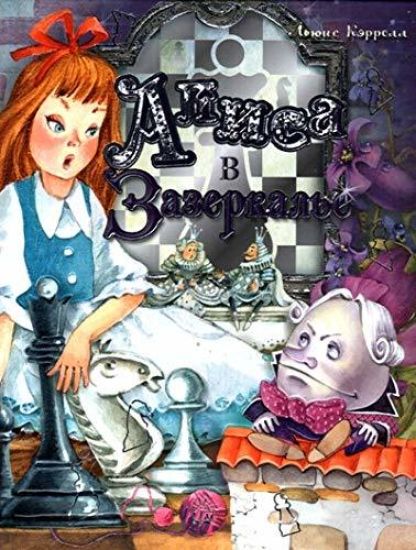
"Alisa v Zazerkale" - prodolzhenie knigi Ljuisa Kerrolla "Alisa v Strane Chudes". Na etot raz geroinja otpravitsja v mir Zazerkalja, gde stanovitsja peshkoj na skazochnoj shakhmatnoj doske. Chitatelej zhdet mnozhestvo udivitelnykh prikljuchenij s uchastiem fantasticheskikh zazerkalnykh geroev. Stikhi v perevodakh S. Ja. Marshaka, D. G. Orlovskoj, O. A. Sedakovoj. Perevodchik: Demurova Nina MikhajlovnaRedaktor: Zakharova Galina NikolaevnaKhudozhnik: Jakimova Irina Evgenevna, Zuev Igor Leonidovich
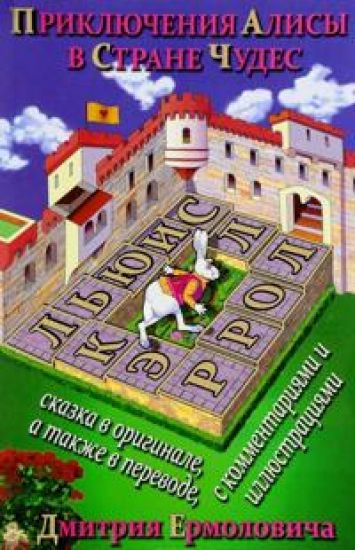
Kniga soderzhit originalnyj tekst znamenitoj skazki anglijskogo pisatelja Ljuisa Kerrolla parallelno s ee sovremennym professionalnym perevodom (v novoj redaktsii), vypolnennym lingvistom i perevodovedom, d-rom filol. nauk, professorom D. I. Ermolovichem, vmeste s ego illjustratsijami. D. I. Ermolovichem napisany takzhe predislovie i podrobnye kommentarii k knige s objasneniem avtorskikh priemov i podteksta i podrobnym analizom rjada starykh perevodov knigi.
Komplekt iz dvukh knig "Okhota na Snarka" i "Alisa v Strane Chudes" Ljuisa Kerrolla, kotorye dopolneny redkimi, berezhno vosstanovlennymi risunkami Pika. V Rossii illjustratsii publikujutsja vpervye. Serija klassiki s illjustratsijami Mervina Pika - schastlivaja vozmozhnost poznakomitsja s Pikom kak khudozhnikom redkogo i udivitelnogo talanta, odnim iz luchshikh illjustratorov svoego veka.
Anglijskij pisatel i dramaturg, avtor vsemirno izvestnoj trilogii "Gormengast" Mervin Pik byl takzhe udivitelno talantlivym illjustratorom. On sozdal illjustratsii dlja mnogikh knig, v tom chisle dlja "Okhoty na Snarka" i "Alisy v Strane Chudes" Ljuisa Kerrolla i "Ostrova sokrovisch" Roberta Ljuisa Stivensona, kotorye vojdut v seriju "Klassika v illjustratsijakh Mervina Pika". "Okhota na Snarka" - absurdnaja, vesjolaja poema v vosmi chastjakh pro neverojatnuju komandu, otpravivshujusja na poiski nevoobrazimogo suschestva - Snarka. Kto takoj Snark? Pochemu imena vsekh chlenov komandy nachinajutsja s bukvy "B"? I pochemu vse tak stremjatsja pojmat Snarka? Bolee sta let chitateli ischut otvety na eti voprosy. Mozhet byt, u vas poluchitsja? Sam Kerroll pisal: "Mne lichno bolshe vsego nravitsja, kogda Snarka schitajut allegoriej Pogoni za Schastem". Geroi Kerrolla v ispolnenii Pika - zhivye i khitrye, uprjamo iduschie k tseli. V knige sobrana kollektsija eskizov Pika k "Okhote na Snarka", v kotorykh vidno masterstvo etogo unikalnogo khudozhnika i protsess sozdanija illjustratsij. V nastojaschem izdanii tekst publikuetsja v perevode vydajuschegosja perevodchika i poeta Grigorija Kruzhkova.
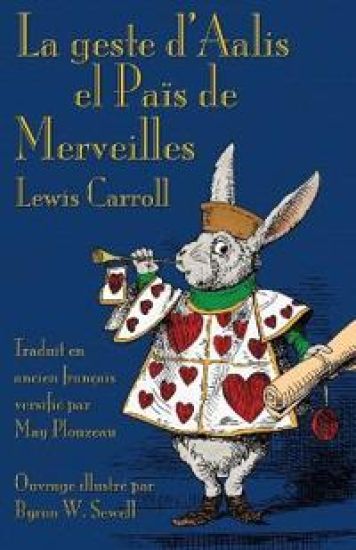
L'ancien franCais, qui se parla et s'Ecrivit, grossiErement, du milieu du 9e siEcle au milieu du 14e siEcle, connut de multiples variations selon temps et lieux, et nous en conservons des textes innombrables. --- Old French was spoken and/or written in many parts of what is now France, very roughly north of the Loire, and in parts of Belgium; it was also used in numerous circles in England, notably after the Norman conquest. It extended roughly from the middle of the ninth century to some time in the fourteenth century. It never stopped evolving, and there was much regional variation. Innumerable texts are written in that language, which gave birth to many literary genres.
Sylvie and Bruno, first published in 1889, and its second volume Sylvie and Bruno Concluded published in 1893, form the last novel by Lewis Carroll published during his lifetime. Both volumes were illustrated by Harry Furniss. The novel has two main plots: one set in the real world at the time the book was published (the Victorian era), the other in the fantasy world of Fairyland. While the latter plot is a fairy tale with many nonsense elements and poems, similar to Carroll's Alice books, the story set in Victorian Britain is a social novel, with its characters discussing various concepts and aspects of religion, society, philosophy and morality. Two short pieces, "Fairy Sylvie" and "Bruno's Revenge", originally appeared in Aunt Judy's Magazine in 1867. Some years later, in 1873 or 1874, Carroll had the idea to use these as the core for a longer story. 1] Much of the rest of the novel he compiled from notes of ideas and dialogue which he had collected over the years (and which he called "litterature" in the introduction to the first volume). Carroll initially intended for the novel to be published in one volume. However, due to its length, it was divided into two volumes, published in 1889 and 1893. 2] The novel is not nearly as well known as the Alice books. It was very poorly received and did not have many reprintings; modern commentators note that it lacks much of Carroll's characteristic humour. The poem The Mad Gardener's Song, widely reprinted elsewhere, is the best-known part of the book. The introductory poem contains a double acrostic on the name "Isa Bowman", one of Carroll's child friends. There are two strands to the plot: the conspiracy against the Warden of Outland, instigated by the Sub-Warden and Chancellor, and the love of a young doctor, Arthur, for Lady Muriel................. Charles Lutwidge Dodgson ( 27 January 1832 - 14 January 1898), better known by his pen name Lewis Carroll, was an English writer, mathematician, logician, Anglican deacon, and photographer. His most famous writings are Alice's Adventures in Wonderland, its sequel Through the Looking-Glass, which includes the poem "Jabberwocky", and the poem The Hunting of the Snark - all examples of the genre of literary nonsense. He is noted for his facility at word play, logic and fantasy. There are societies in many parts of the world dedicated to the enjoyment and promotion of his works and the investigation of his life. From a young age, Dodgson wrote poetry and short stories, contributing heavily to the family magazine Mischmasch and later sending them to various magazines, enjoying moderate success. Between 1854 and 1856, his work appeared in the national publications The Comic Times and The Train, as well as smaller magazines such as the Whitby Gazette and the Oxford Critic. Most of this output was humorous, sometimes satirical, but his standards and ambitions were exacting. "I do not think I have yet written anything worthy of real publication (in which I do not include the Whitby Gazette or the Oxonian Advertiser), but I do not despair of doing so some day," he wrote in July 1855. Sometime after 1850, he did write puppet plays for his siblings' entertainment, of which one has survived: La Guida di Bragia. In 1856, he published his first piece of work under the name that would make him famous. ...... Henry Furniss (March 26, 1854 - January 14, 1925) was an artist and illustrator, born in Wexford, Ireland. His father was English and his mother Scottish, Furniss identifying himself as English. He was educated in Wesley College.........
Alice finds herself once again in Wonderland-a place where everything is reversed. From talking flowers, to madcap kings and queens, Alice not only encounters fantastical creatures but finds herself a pawn in a game of chess with Humpty Dumpty, Tweedledee and Tweedledum, and many other bizarre and amusing characters from nursery-rhymes. "I followed Alice down the Rabbit Hole again...into a fantastical world called Wonderland"Included: Gallery of Original Illustrations by John Tenniel
One winter night, at half-past nine, Cold, tired, and cross, and muddy, I had come home, too late to dine, And supper, with cigars and wine, Was waiting in the study. There was a strangeness in the room, And Something white and wavy Was standing near me in the gloom -- I took it for the carpet-broom Left by that careless slavey. But presently the Thing began To shiver and to sneeze: On which I said "Come, come, my man That's a most inconsiderate plan. Less noise there, if you please " "I've caught a cold," the Thing replies, "Out there upon the landing." I turned to look in some surprise, And there, before my very eyes, A little Ghost was standing ....... Charles Lutwidge Dodgson ( 27 January 1832 - 14 January 1898), better known by his pen name Lewis Carroll, was an English writer, mathematician, logician, Anglican deacon, and photographer. His most famous writings are Alice's Adventures in Wonderland, its sequel Through the Looking-Glass, which includes the poem "Jabberwocky", and the poem The Hunting of the Snark - all examples of the genre of literary nonsense. He is noted for his facility at word play, logic and fantasy. There are societies in many parts of the world dedicated to the enjoyment and promotion of his works and the investigation of his life. From a young age, Dodgson wrote poetry and short stories, contributing heavily to the family magazine Mischmasch and later sending them to various magazines, enjoying moderate success. Between 1854 and 1856, his work appeared in the national publications The Comic Times and The Train, as well as smaller magazines such as the Whitby Gazette and the Oxford Critic. Most of this output was humorous, sometimes satirical, but his standards and ambitions were exacting. "I do not think I have yet written anything worthy of real publication (in which I do not include the Whitby Gazette or the Oxonian Advertiser), but I do not despair of doing so some day," he wrote in July 1855. Sometime after 1850, he did write puppet plays for his siblings' entertainment, of which one has survived: La Guida di Bragia. In 1856, he published his first piece of work under the name that would make him famous. A romantic poem called "Solitude" appeared in The Train under the authorship of "Lewis Carroll". This pseudonym was a play on his real name: Lewis was the anglicised form of Ludovicus, which was the Latin for Lutwidge, and Carroll an Irish surname similar to the Latin name Carolus, from which comes the name Charles. The transition went as follows: "Charles Lutwidge" translated into Latin as "Carolus Ludovicus". This was then translated back into English as "Carroll Lewis" and then reversed to make "Lewis Carroll". This pseudonym was chosen by editor Edmund Yates from a list of four submitted by Dodgson, the others being Edgar Cuthwellis, Edgar U. C. Westhill, and Louis Carroll. In 1856, Dean (i.e., head of the college) Henry Liddell arrived at Christ Church, bringing with him his young family, all of whom would figure largely in Dodgson's life over the following years, and would greatly influence his writing career. Dodgson became close friends with Liddell's wife Lorina and their children, particularly the three sisters Lorina, Edith, and Alice Liddell. He was widely assumed for many years to have derived his own "Alice" from Alice Liddell; the acrostic poem at the end of Through the Looking Glass spells out her name in full, and there are also many superficial references to her hidden in the text of both books. It has been noted that Dodgson himself repeatedly denied in later life that his "little heroine" was based on any real child, and he frequently dedicated his works to girls of his acquaintance, adding their names in acrostic poems at the beginning of the text. Gertrude Chataway's name appears in this form at the beginning of The Hunting of the Snark, and it is not suggested that this means that any of the characters in the narrative are based on her...........
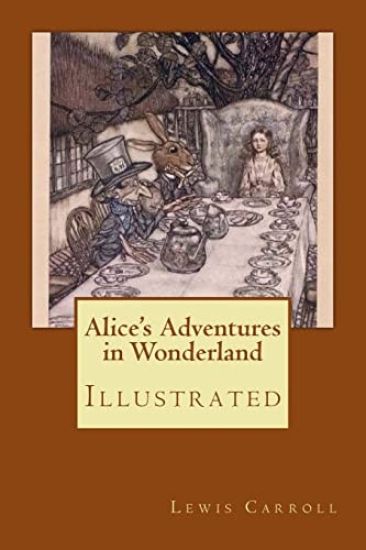
Alice's Adventures in Wonderland (commonly shortened to Alice in Wonderland) is an 1865 fantasy novel written by English mathematician Charles Lutwidge Dodgson under the pseudonym Lewis Carroll. It tells of a girl named Alice falling through a rabbit hole into a fantasy world populated by peculiar, anthropomorphic creatures. The tale plays with logic, giving the story lasting popularity with adults as well as with children. It is considered to be one of the best examples of the literary nonsense genre. Its narrative course and structure, characters and imagery have been enormously influential in both popular culture and literature, especially in the fantasy genre.
In 1865, English author Charles Lutwidge Dodgson (1832-1898), aka Lewis Carroll, wrote a fantastical adventure story for the young daughters of a friend. The adventures of Alice-named for one of the little girls to whom the book was dedicated-who journeys down a rabbit hole and into a whimsical underworld realm instantly struck a chord with the British public, and then with readers around the world.
Through the Looking-Glass, and What Alice Found There (1871) is a work of children's literature by Lewis Carroll (Charles Lutwidge Dodgson), generally categorized as literary nonsense. It is the sequel to Alice's Adventures in Wonderland (1865). Although it makes no reference to the events in the earlier book, the themes and settings of Through the Looking-Glass make it a kind of mirror image of Wonderland: the first book begins outdoors, in the warm month of May, on Alice's birthday (May 4), uses frequent changes in size as a plot device, and draws on the imagery of playing cards; the second opens indoors on a snowy, wintry night exactly six months later, on November 4 (the day before Guy Fawkes Night), uses frequent changes in time and spatial directions as a plot device, and draws on the imagery of chess. In it, there are many mirror themes, including opposites, time running backwards, and so on.
A Tangled Tale is a collection of 10 brief humorous stories by Lewis Carroll (Charles Lutwidge Dodgson), published serially between April 1880 and March 1885 in The Monthly Packet magazine. Arthur B. Frost added illustrations when the series was printed in book form. The stories, or Knots as Carroll calls them, present mathematical problems. In a later issue, Carroll gives the solution to a Knot and discusses readers' answers. The mathematical interpretations of the Knots are not always straightforward. The ribbing of readers answering wrongly - giving their names - was not always well received (see Knot VI below). In the December 1885 book preface Carroll writes: The writer's intention was to embody in each Knot (like medicine so dexterously, but ineffectually, concealed in the jam of our early childhood) one or more mathematical questions - in Arithmetic, Algebra, or Geometry, as the case might be - for the amusement, and possible edification, of the fair readers of that magazine. Describing why he was ending the series, Carroll writes to his readers that the Knots were "but a lame attempt." Others were more receptive: In 1888 Stuart Dodgson Collingwood wrote, "With some people, this is the most popular of all his books; it is certainly the most successful attempt he ever made to combine mathematics and humour." They have more recently been described as having "all the charm and wit of his better-known works"............ Arthur Burdett Frost (January 17, 1851 - June 22, 1928), usually cited as A. B. Frost, was an American illustrator, graphic artist and comics writer. He was also well known as a painter. Frost's work is well known for its dynamic representation of motion and sequence. Frost is considered one of the great illustrators in the "Golden Age of American Illustration". Frost illustrated over 90 books and produced hundreds of paintings; in addition to his work in illustrations, he is renowned for realistic hunting and shooting prints..... Charles Lutwidge Dodgson ( 27 January 1832 - 14 January 1898), better known by his pen name Lewis Carroll, was an English writer, mathematician, logician, Anglican deacon, and photographer. His most famous writings are Alice's Adventures in Wonderland, its sequel Through the Looking-Glass, which includes the poem "Jabberwocky", and the poem The Hunting of the Snark - all examples of the genre of literary nonsense. He is noted for his facility at word play, logic and fantasy. There are societies in many parts of the world dedicated to the enjoyment and promotion of his works and the investigation of his life. From a young age, Dodgson wrote poetry and short stories, contributing heavily to the family magazine Mischmasch and later sending them to various magazines, enjoying moderate success. Between 1854 and 1856, his work appeared in the national publications The Comic Times and The Train, as well as smaller magazines such as the Whitby Gazette and the Oxford Critic. Most of this output was humorous, sometimes satirical, but his standards and ambitions were exacting. "I do not think I have yet written anything worthy of real publication (in which I do not include the Whitby Gazette or the Oxonian Advertiser), but I do not despair of doing so some day," he wrote in July 1855. Sometime after 1850, he did write puppet plays for his siblings' entertainment, of which one has survived: La Guida di Bragia. In 1856, he published his first piece of work under the name that would make him famous. A romantic poem called "Solitude" appeared in The Train under the authorship of "Lewis Carroll". ....
Sylvie and Bruno, first published in 1889, and its second volume Sylvie and Bruno Concluded published in 1893, form the last novel by Lewis Carroll published during his lifetime. Both volumes were illustrated by Harry Furniss. The novel has two main plots: one set in the real world at the time the book was published (the Victorian era), the other in the fantasy world of Fairyland. While the latter plot is a fairy tale with many nonsense elements and poems, similar to Carroll's Alice books, the story set in Victorian Britain is a social novel, with its characters discussing various concepts and aspects of religion, society, philosophy and morality. Two short pieces, "Fairy Sylvie" and "Bruno's Revenge", originally appeared in Aunt Judy's Magazine in 1867. Some years later, in 1873 or 1874, Carroll had the idea to use these as the core for a longer story. 1] Much of the rest of the novel he compiled from notes of ideas and dialogue which he had collected over the years (and which he called "litterature" in the introduction to the first volume). Carroll initially intended for the novel to be published in one volume. However, due to its length, it was divided into two volumes, published in 1889 and 1893. 2] The novel is not nearly as well known as the Alice books. It was very poorly received and did not have many reprintings; modern commentators note that it lacks much of Carroll's characteristic humour. The poem The Mad Gardener's Song, widely reprinted elsewhere, is the best-known part of the book. The introductory poem contains a double acrostic on the name "Isa Bowman", one of Carroll's child friends.............. Charles Lutwidge Dodgson ( 27 January 1832 - 14 January 1898), better known by his pen name Lewis Carroll, was an English writer, mathematician, logician, Anglican deacon, and photographer. His most famous writings are Alice's Adventures in Wonderland, its sequel Through the Looking-Glass, which includes the poem "Jabberwocky", and the poem The Hunting of the Snark - all examples of the genre of literary nonsense. He is noted for his facility at word play, logic and fantasy. There are societies in many parts of the world dedicated to the enjoyment and promotion of his works and the investigation of his life. From a young age, Dodgson wrote poetry and short stories, contributing heavily to the family magazine Mischmasch and later sending them to various magazines, enjoying moderate success. Between 1854 and 1856, his work appeared in the national publications The Comic Times and The Train, as well as smaller magazines such as the Whitby Gazette and the Oxford Critic. Most of this output was humorous, sometimes satirical, but his standards and ambitions were exacting. "I do not think I have yet written anything worthy of real publication (in which I do not include the Whitby Gazette or the Oxonian Advertiser), but I do not despair of doing so some day," he wrote in July 1855. Sometime after 1850, he did write puppet plays for his siblings' entertainment, of which one has survived: La Guida di Bragia. In 1856, he published his first piece of work under the name that would make him famous. A romantic poem called "Solitude" appeared in The Train under the authorship of "Lewis Carroll". This pseudonym was a play on his real name: Lewis was the anglicised form of Ludovicus, which was the Latin for Lutwidge, and Carroll an Irish surname similar to the Latin name Carolus, from which comes the name Charles. The transition went as follows: "Charles Lutwidge" translated into Latin as "Carolus Ludovicus". This was then translated back into English as "Carroll Lewis" and then reversed to make "Lewis Carroll"..... Henry Furniss (March 26, 1854 - January 14, 1925) was an artist and illustrator, born in Wexford, Ireland. His father was English and his mother Scottish, Furniss identifying himself as English. He was educated in Wesley College....
Through the Looking-Glass, and What Alice Found There (1871) is a novel by Lewis Carroll (Charles Lutwidge Dodgson), the sequel to Alice's Adventures in Wonderland (1865). Set some six months later than the earlier book, Alice again enters a fantastical world, this time by climbing through a mirror into the world that she can see beyond it. Through the Looking-Glass includes such celebrated verses as "Jabberwocky" and "The Walrus and the Carpenter", and the episode involving Tweedledum and Tweedledee. The mirror which inspired Carroll remains displayed in Charlton Kings. Plot summary: Chapter One - Looking-Glass House: Alice is playing with a white kitten (who she calls "Snowdrop") and a black kitten (who she calls "Kitty")-the offspring of Dinah, Alice's cat in Alice's Adventures in Wonderland-when she ponders what the world is like on the other side of a mirror's reflection. Climbing up onto the fireplace mantel, she pokes at the wall-hung mirror behind the fireplace and discovers, to her surprise, that she is able to step through it to an alternative world. In this reflected version of her own house, she finds a book with looking-glass poetry, "Jabberwocky", whose reversed printing she can read only by holding it up to the mirror. She also observes that the chess pieces have come to life, though they remain small enough for her to pick up. Chapter Two - The Garden of Live Flowers: Upon leaving the house (where it had been a cold, snowy night), she enters a sunny spring garden where the flowers can speak; they perceive Alice as being a "flower that can move about". Elsewhere in the garden, Alice meets the Red Queen, who is now human-sized, and who impresses Alice with her ability to run at breathtaking speeds. This is a reference to the chess rule that queens are able to move any number of vacant squares at once, in any direction, which makes them the most "agile" of pieces. Chapter Three - Looking-Glass Insects: The Red Queen reveals to Alice that the entire countryside is laid out in squares, like a gigantic chessboard, and offers to make Alice a queen if she can move all the way to the eighth rank/row in a chess match. This is a reference to the chess rule of Promotion. Alice is placed in the second rank as one of the White Queen's pawns, and begins her journey across the chessboard by boarding a train that literally jumps over the third row and directly into the fourth rank, thus acting on the rule that pawns can advance two spaces on their first move................. Charles Lutwidge Dodgson ( 27 January 1832 - 14 January 1898), better known by his pen name Lewis Carroll, was an English writer, mathematician, logician, Anglican deacon, and photographer. His most famous writings are Alice's Adventures in Wonderland, its sequel Through the Looking-Glass, which includes the poem "Jabberwocky", and the poem The Hunting of the Snark - all examples of the genre of literary nonsense. He is noted for his facility at word play, logic and fantasy. There are societies in many parts of the world dedicated to the enjoyment and promotion of his works and the investigation of his life. From a young age, Dodgson wrote poetry and short stories, contributing heavily to the family magazine Mischmasch and later sending them to various magazines, enjoying moderate success... Sir John Tenniel (28 February 1820 - 25 February 1914) was an English illustrator, graphic humourist, and political cartoonist prominent in the second half of the 19th century. He was knighted for his artistic achievements in 1893. Tenniel is remembered especially as the principal political cartoonist for Punch magazine for over 50 years, and for his illustrations to Lewis Carroll's Alice's Adventures in Wonderland (1865) and Through the Looking-Glass, and What Alice Found There (1871)....