Kirjojen hintavertailu – 12 859 819 kirjaa ja 27 kauppaa
Kirjailija
Lewis Carroll
Kirjat ja teokset yhdessä paikassa: 1 820 kirjaa, julkaisuja vuosilta 1865–2027, suosituimpiin kuuluu Alice's Adventures in Wonderland: Tove Jansson Edition. Vertaile teosten hintoja ja tarkista saatavuus suomalaisista kirjakaupoista.
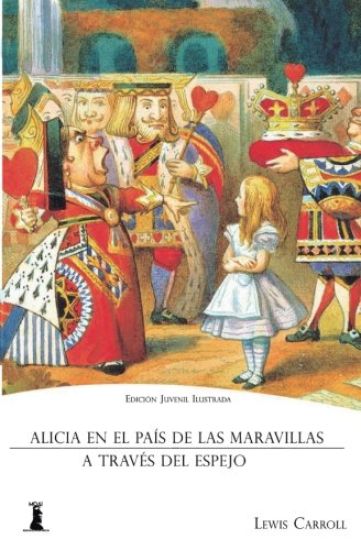
Hace m s de 150 a os, un brillante y t mido matem tico de Oxford cre una historia que comenzaba con un conejo blanco mirando un reloj de bolsillo y una ni a rubia cayendo por la madriguera del conejo. As comienza la historia de la que es tal vez la hero na m s popular de la literatura inglesa y un popular icono literario en todo el mundo. Acompa a a Alicia a visitar el Pa s de las Maravillas y el mundo a Trav s del Espejo y conoce a sus exc ntricos y peculiares amigos: La Reina de Corazones, el gato de Chesire, o el Sombrero Loco entre muchos otros. En esta edici n se presenta una versi n adaptada de los t tulos "Alicia en el Pa s de las Maravillas" y "A Trav s del Espejo". Ideal para introducir a los lectores m s j venes de la casa, ni os o j venes en el mundo de Alicia y se hagan part cipes de la s tira sobre el lenguaje, las alegor as y los sue os de la obra de Carroll. Y, por qu no? para que los adultos revisiten con los ojos de un ni o este moderno cuento de hadas. * Lewis Carroll (nacido Charles Lutwidge Dodgson, 1832-1898) fue un matem tico, fot grafo y escritor ingl s. Sus obras m s famosas son "Alicia en el pa s de las maravillas" y su secuela "A trav s del espejo", as como los poemas "La caza del Snark" y "Jabberwocky".
Alice was published in 1865, three years after Charles Lutwidge Dodgson and the Reverend Robinson Duckworth rowed in a boat on 4 July 1862 (this popular date of the "golden afternoon" might be a confusion or even another Alice-tale, for that particular day was cool, cloudy, and rainy) up the Isis with the three young daughters of Henry Liddell (the Vice-Chancellor of Oxford University and Dean of Christ Church): Lorina Charlotte Liddell (aged 13, born 1849, "Prima" in the book's prefatory verse); Alice Pleasance Liddell (aged 10, born 1852, "Secunda" in the prefatory verse); Edith Mary Liddell (aged 8, born 1853, "Tertia" in the prefatory verse). The journey began at Folly Bridge near Oxford and ended five miles away in the village of Godstow. During the trip, Dodgson told the girls a story that featured a bored little girl named Alice who goes looking for an adventure. The girls loved it, and Alice Liddell asked Dodgson to write it down for her. He began writing the manuscript of the story the next day, although that earliest version no longer exists. The girls and Dodgson took another boat trip a month later when he elaborated the plot to the story of Alice, and in November he began working on the manuscript in earnes Alice is playing with a white kitten (whom she calls "Snowdrop") and a black kitten (whom she calls "Kitty")-the offspring of Dinah, Alice's cat in Alice's Adventures in Wonderland-when she ponders what the world is like on the other side of a mirror's reflection. Climbing up on the fireplace mantel, she pokes at the wall-hung mirror behind the fireplace and discovers, to her surprise, that she is able to step through it to an alternative world. In this reflected version of her own house, she finds a book with looking-glass poetry, "Jabberwocky", whose reversed printing she can read only by holding it up to the mirror. She also observes that the chess pieces have come to life, though they remain small enough for her to pick up. Upon leaving the house (where it had been a cold, snowy night), she enters a sunny spring garden where the flowers have the power of human speech; they perceive Alice as being a "flower that can move about." Elsewhere in the garden, Alice meets the Red Queen, who is now human-sized, and who impresses Alice with her ability to run at breathtaking speeds. This is a reference to the chess rule that queens are able to move any number of vacant squares at once, in any direction, which makes them the most "agile" of pieces. The Red Queen reveals to Alice that the entire countryside is laid out in squares, like a gigantic chessboard, and offers to make Alice a queen if she can move all the way to the eighth rank/row in a chess match. This is a reference to the chess rule of Promotion. Alice is placed in the second rank as one of the White Queen's pawns, and begins her journey across the chessboard by boarding a train that literally jumps over the third row and directly into the fourth rank, thus acting on the rule that pawns can advance two spaces on their first move. Tenniel illustration of Tweedledum (centre) and Tweedledee (right) and Alice (left). 1871) Red King snoring, by John Tenniel She then meets the fat twin brothers Tweedledum and Tweedledee, whom she knows from the famous nursery rhyme. After reciting the long poem "The Walrus and the Carpenter", the Tweedles draw Alice's attention to the Red King-loudly snoring away under a nearby tree-and maliciously provoke her with idle philosophical banter that she exists only as an imaginary figure in the Red King's dreams (thereby implying that she will cease to exist the instant he wakes up). Finally, the brothers begin acting out their nursery-rhyme by suiting up for battle, only to be frightened away by an enormous crow, as the nursery rhyme about them predicts. Alice next meets the White Queen, who is very absent-minded but boasts of (and demonstrates) her ability to remember future events before they have happened.
Alicia en el pa s de las maravillas, es una obra de literatura creada por el matem tico, l gico y escritor brit nico Charles Lutwidge Dodgson, m s conocido bajo el seud nimo de Lewis Carroll. El cuento est lleno de alusiones sat ricas a los amigos de Dodgson, la educaci n inglesa y temas pol ticos de la poca. El Pa s de las Maravillas que se describe en la historia es creado b sicamente a trav s de juegos con la l gica, de una forma tan especial que la obra ha llegado a tener popularidad en los m s variados ambientes, desde ni os o matem ticos hasta psiconautas. En esta obra aparecen algunos de los personajes m s famosos de Carroll, como el Conejo Blanco, El Sombrerero, la Oruga azul, el Gato de Cheshire o la Reina de Corazones; quienes han cobrado importancia suficiente para ser reconocidos fuera del mundo de Alicia. S lo se conservan 23 copias de la primera edici n de 1865, de las cuales 17 pertenecen a distintas bibliotecas, y las restantes est n en manos privadas. El libro tiene una segunda parte, menos conocida, llamada A trav s del espejo y lo que Alicia encontr all . Varias adaptaciones cinematogr ficas combinan elementos de ambos libros. Mientras Alicia est meditando sobre c mo debe de ser el mundo al otro lado del espejo de su casa, se sorprende al comprobar que puede pasar a trav s de l y descubrir de primera mano lo que ah ocurre. As lo hace, y llega a una sala en la que las piezas de ajedrez parecen cobrar vida. En la sala encuentra as mismo un libro de poes a invertida, el Galimatazo, el cual s lo puede leer reflej ndolo en un espejo, y el cual habla de c mo un h roe afronta los peligros del bosque "tulgar": el p jaro Jubo-Jubo, el "frumioso" Zamarrajo y, c mo no, el "hedoroso" Galimatazo. El poema concluye cuando el h roe da muerte al monstruo "Jabberwocky" con la ayuda de la espada "vorpal". Confusa por la complejidad del poema, Alicia deja el libro y sale de la casa del espejo para entrar al mundo del espejo, en el que todo se hace al rev s.
Alice is playing with a white kitten (whom she calls "Snowdrop") and a black kitten (whom she calls "Kitty")-the offspring of Dinah, Alice's cat in Alice's Adventures in Wonderland-when she ponders what the world is like on the other side of a mirror's reflection. Climbing up on the fireplace mantel, she pokes at the wall-hung mirror behind the fireplace and discovers, to her surprise, that she is able to step through it to an alternative world. In this reflected version of her own house, she finds a book with looking-glass poetry, "Jabberwocky", whose reversed printing she can read only by holding it up to the mirror. She also observes that the chess pieces have come to life, though they remain small enough for her to pick up. Upon leaving the house (where it had been a cold, snowy night), she enters a sunny spring garden where the flowers have the power of human speech; they perceive Alice as being a "flower that can move about." Elsewhere in the garden, Alice meets the Red Queen, who is now human-sized, and who impresses Alice with her ability to run at breathtaking speeds. This is a reference to the chess rule that queens are able to move any number of vacant squares at once, in any direction, which makes them the most "agile" of pieces. The Red Queen reveals to Alice that the entire countryside is laid out in squares, like a gigantic chessboard, and offers to make Alice a queen if she can move all the way to the eighth rank/row in a chess match. This is a reference to the chess rule of Promotion. Alice is placed in the second rank as one of the White Queen's pawns, and begins her journey across the chessboard by boarding a train that literally jumps over the third row and directly into the fourth rank, thus acting on the rule that pawns can advance two spaces on their first move. Tenniel illustration of Tweedledum (centre) and Tweedledee (right) and Alice (left). 1871) Red King snoring, by John Tenniel She then meets the fat twin brothers Tweedledum and Tweedledee, whom she knows from the famous nursery rhyme. After reciting the long poem "The Walrus and the Carpenter", the Tweedles draw Alice's attention to the Red King-loudly snoring away under a nearby tree-and maliciously provoke her with idle philosophical banter that she exists only as an imaginary figure in the Red King's dreams (thereby implying that she will cease to exist the instant he wakes up). Finally, the brothers begin acting out their nursery-rhyme by suiting up for battle, only to be frightened away by an enormous crow, as the nursery rhyme about them predicts. Tenniel illustration of the White Knight. 1871 Alice next meets the White Queen, who is very absent-minded but boasts of (and demonstrates) her ability to remember future events before they have happened. Alice and the White Queen advance into the chessboard's fifth rank by crossing over a brook together, but at the very moment of the crossing, the Queen transforms into a talking Sheep in a small shop. Alice soon finds herself struggling to handle the oars of a small rowboat, where the Sheep annoys her with (seemingly) nonsensical shouting about "crabs" and "feathers". Unknown to Alice, these are standard terms in the jargon of rowing. Thus (for a change) the Queen/Sheep was speaking in a perfectly logical and meaningful way.
Alice was published in 1865, three years after Charles Lutwidge Dodgson and the Reverend Robinson Duckworth rowed in a boat on 4 July 1862 (this popular date of the "golden afternoon" might be a confusion or even another Alice-tale, for that particular day was cool, cloudy, and rainy) up the Isis with the three young daughters of Henry Liddell (the Vice-Chancellor of Oxford University and Dean of Christ Church): Lorina Charlotte Liddell (aged 13, born 1849, "Prima" in the book's prefatory verse); Alice Pleasance Liddell (aged 10, born 1852, "Secunda" in the prefatory verse); Edith Mary Liddell (aged 8, born 1853, "Tertia" in the prefatory verse). The journey began at Folly Bridge near Oxford and ended five miles away in the village of Godstow. During the trip, Dodgson told the girls a story that featured a bored little girl named Alice who goes looking for an adventure. The girls loved it, and Alice Liddell asked Dodgson to write it down for her. He began writing the manuscript of the story the next day, although that earliest version no longer exists. The girls and Dodgson took another boat trip a month later when he elaborated the plot to the story of Alice, and in November he began working on the manuscript in earnest. To add the finishing touches, he researched natural history for the animals presented in the book, and then had the book examined by other children-particularly the children of George MacDonald. He added his own illustrations but approached John Tenniel to illustrate the book for publication, telling him that the story had been well liked by children. On 26 November 1864, he gave Alice the handwritten manuscript of Alice's Adventures Under Ground, with illustrations by Dodgson himself, dedicating it as "A Christmas Gift to a Dear Child in Memory of a Summer's Day". Some, including Martin Gardner, speculate that there was an earlier version that was destroyed later by Dodgson when he wrote a more elaborate copy by hand. But before Alice received her copy, Dodgson was already preparing it for publication and expanding the 15,500-word original to 27,500 words, most notably adding the episodes about the Cheshire Cat and the Mad Tea-Party.
Alicia en el pa s de las maravillas, es una obra de literatura creada por el matem tico, l gico y escritor brit nico Charles Lutwidge Dodgson, m s conocido bajo el seud nimo de Lewis Carroll. El cuento est lleno de alusiones sat ricas a los amigos de Dodgson, la educaci n inglesa y temas pol ticos de la poca. El Pa s de las Maravillas que se describe en la historia es creado b sicamente a trav s de juegos con la l gica, de una forma tan especial que la obra ha llegado a tener popularidad en los m s variados ambientes, desde ni os o matem ticos hasta psiconautas. En esta obra aparecen algunos de los personajes m s famosos de Carroll, como el Conejo Blanco, El Sombrerero, la Oruga azul, el Gato de Cheshire o la Reina de Corazones; quienes han cobrado importancia suficiente para ser reconocidos fuera del mundo de Alicia. El libro tiene una segunda parte, menos conocida, llamada A trav s del espejo y lo que Alicia encontr all . Alice was published in 1865, three years after Charles Lutwidge Dodgson and the Reverend Robinson Duckworth rowed in a boat on 4 July 1862 (this popular date of the "golden afternoon" might be a confusion or even another Alice-tale, for that particular day was cool, cloudy, and rainy) up the Isis with the three young daughters of Henry Liddell (the Vice-Chancellor of Oxford University and Dean of Christ Church): Lorina Charlotte Liddell (aged 13, born 1849, "Prima" in the book's prefatory verse); Alice Pleasance Liddell (aged 10, born 1852, "Secunda" in the prefatory verse); Edith Mary Liddell (aged 8, born 1853, "Tertia" in the prefatory verse). The journey began at Folly Bridge near Oxford and ended five miles away in the village of Godstow. During the trip, Dodgson told the girls a story that featured a bored little girl named Alice who goes looking for an adventure. The girls loved it, and Alice Liddell asked Dodgson to write it down for her. He began writing the manuscript of the story the next day, although that earliest version no longer exists. The girls and Dodgson took another boat trip a month later when he elaborated the plot to the story of Alice, and in November he began working on the manuscript in earnest. To add the finishing touches, he researched natural history for the animals presented in the book, and then had the book examined by other children-particularly the children of George MacDonald. He added his own illustrations but approached John Tenniel to illustrate the book for publication, telling him that the story had been well liked by children. On 26 November 1864, he gave Alice the handwritten manuscript of Alice's Adventures Under Ground, with illustrations by Dodgson himself, dedicating it as "A Christmas Gift to a Dear Child in Memory of a Summer's Day". Some, including Martin Gardner, speculate that there was an earlier version that was destroyed later by Dodgson when he wrote a more elaborate copy by hand. But before Alice received her copy, Dodgson was already preparing it for publication and expanding the 15,500-word original to 27,500 words, most notably adding the episodes about the Cheshire Cat and the Mad Tea-Party.
Mientras Alicia est meditando sobre c mo debe de ser el mundo al otro lado del espejo de su casa, se sorprende al comprobar que puede pasar a trav s de l y descubrir de primera mano lo que ah ocurre. As lo hace, y llega a una sala en la que las piezas de ajedrez parecen cobrar vida. En la sala encuentra as mismo un libro de poes a invertida, el Galimatazo, el cual s lo puede leer reflej ndolo en un espejo, y el cual habla de c mo un h roe afronta los peligros del bosque "tulgar": el p jaro Jubo-Jubo, el "frumioso" Zamarrajo y, c mo no, el "hedoroso" Galimatazo. El poema concluye cuando el h roe da muerte al monstruo "Jabberwocky" con la ayuda de la espada "vorpal". Confusa por la complejidad del poema, Alicia deja el libro y sale de la casa del espejo para entrar al mundo del espejo, en el que todo se hace al rev s. Alice is playing with a white kitten (whom she calls "Snowdrop") and a black kitten (whom she calls "Kitty")-the offspring of Dinah, Alice's cat in Alice's Adventures in Wonderland-when she ponders what the world is like on the other side of a mirror's reflection. Climbing up on the fireplace mantel, she pokes at the wall-hung mirror behind the fireplace and discovers, to her surprise, that she is able to step through it to an alternative world. In this reflected version of her own house, she finds a book with looking-glass poetry, "Jabberwocky", whose reversed printing she can read only by holding it up to the mirror. She also observes that the chess pieces have come to life, though they remain small enough for her to pick up. Upon leaving the house (where it had been a cold, snowy night), she enters a sunny spring garden where the flowers have the power of human speech; they perceive Alice as being a "flower that can move about." Elsewhere in the garden, Alice meets the Red Queen, who is now human-sized, and who impresses Alice with her ability to run at breathtaking speeds. This is a reference to the chess rule that queens are able to move any number of vacant squares at once, in any direction, which makes them the most "agile" of pieces. The Red Queen reveals to Alice that the entire countryside is laid out in squares, like a gigantic chessboard, and offers to make Alice a queen if she can move all the way to the eighth rank/row in a chess match. This is a reference to the chess rule of Promotion. Alice is placed in the second rank as one of the White Queen's pawns, and begins her journey across the chessboard by boarding a train that literally jumps over the third row and directly into the fourth rank, thus acting on the rule that pawns can advance two spaces on their first move. Tenniel illustration of Tweedledum (centre) and Tweedledee (right) and Alice (left). 1871) Red King snoring, by John Tenniel She then meets the fat twin brothers Tweedledum and Tweedledee, whom she knows from the famous nursery rhyme. After reciting the long poem "The Walrus and the Carpenter", the Tweedles draw Alice's attention to the Red King-loudly snoring away under a nearby tree-and maliciously provoke her with idle philosophical banter that she exists only as an imaginary figure in the Red King's dreams (thereby implying that she will cease to exist the instant he wakes up). Finally, the brothers begin acting out their nursery-rhyme by suiting up for battle, only to be frightened away by an enormous crow, as the nursery rhyme about them predicts. Tenniel illustration of the White Knight. 1871 Alice next meets the White Queen, who is very absent-minded but boasts of (and demonstrates) her ability to remember future events before they have happened. Alice and the White Queen advance into the chessboard's fifth rank by crossing over a brook together, but at the very moment of the crossing, the Queen transforms into a talking Sheep in a small shop. Alice soon finds herself struggling to handle the oars of a small rowboat, where the Sheep annoys her with (seemingly) nonsensical shouting about "crabs
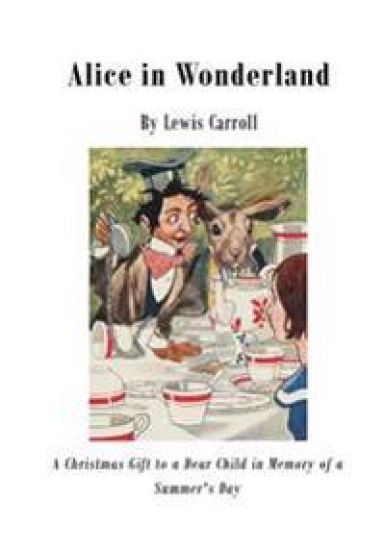
The Original Children's Adventure StoryALICE IN WONDERLANDOr Alice's Adventures in WonderlandBy Lewis CarrollA Christmas Gift to a Dear Child in Memory of a Summer's DayAlice's Adventures in Wonderland (commonly shortened to Alice in Wonderland) is an 1865 novel written by English author Charles Lutwidge Dodgson under the pseudonym Lewis Carroll. It tells of a girl named Alice falling through a rabbit hole into a fantasy world populated by peculiar, anthropomorphic creatures. The tale plays with logic, giving the story lasting popularity with adults as well as with children. It is considered to be one of the best examples of the literary nonsense genre. Its narrative course and structure, characters and imagery have been enormously influential in both popular culture and literature, especially in the fantasy genre. Alice was published in 1865, three years after Charles Lutwidge Dodgson and the Reverend Robinson Duckworth rowed in a boat on 4 July 1862 (this popular date of the "golden afternoon" might be a confusion or even another Alice-tale, for that particular day was cool, cloudy, and rainy) up the Isis with the three young daughters of Henry Liddell (the Vice-Chancellor of Oxford University and Dean of Christ Church): Lorina Charlotte Liddell (aged 13, born 1849, "Prima" in the book's prefatory verse); Alice Pleasance Liddell (aged 10, born 1852, "Secunda" in the prefatory verse); Edith Mary Liddell (aged 8, born 1853, "Tertia" in the prefatory verse). The journey began at Folly Bridge near Oxford and ended five miles away in the village of Godstow. During the trip, Dodgson told the girls a story that featured a bored little girl named Alice who goes looking for an adventure. The girls loved it, and Alice Liddell asked Dodgson to write it down for her. He began writing the manuscript of the story the next day, although that earliest version no longer exists. The girls and Dodgson took another boat trip a month later when he elaborated the plot to the story of Alice, and in November he began working on the manuscript in earnest. To add the finishing touches, he researched natural history for the animals presented in the book, and then had the book examined by other children--particularly the children of George MacDonald. He added his own illustrations but approached John Tenniel to illustrate the book for publication, telling him that the story had been well liked by children. On 26 November 1864, he gave Alice the handwritten manuscript of Alice's Adventures Under Ground, with illustrations by Dodgson himself, dedicating it as "A Christmas Gift to a Dear Child in Memory of a Summer's Day". Some, including Martin Gardner, speculate that there was an earlier version that was destroyed later by Dodgson when he wrote a more elaborate copy by hand. But before Alice received her copy, Dodgson was already preparing it for publication and expanding the 15,500-word original to 27,500 words, most notably adding the episodes about the Cheshire Cat and the Mad Tea-Party.
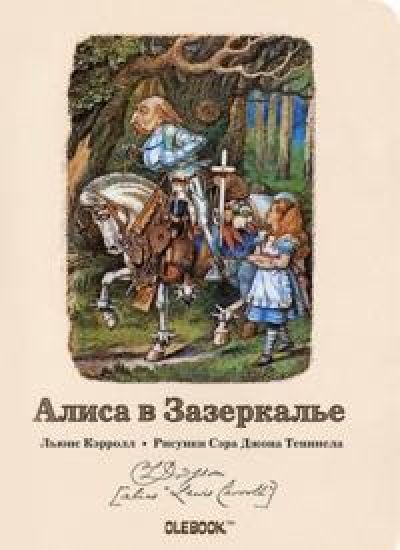
V sbornik voshli izbrannye proizvedenija anglijskogo pisatelja Ljuisa Kerrolla, prinesshie emu slavu narjadu so skazkami ob Alise, - "Okhota na Ugada", "Tri golosa", "Fotosjomka Gajavaty", "Zatjanuvsheesja svatovstvo" i drugie - v perevodakh i s kommentarijami lingvista i perevodchika, doktora filologicheskikh nauk D. I. Ermolovicha. Nekotorye proizvedenija vpervye publikujutsja v polnoj originalnoj versii i v professionalnom perevode na russkij jazyk. V razdel "Prilozhenie" vkljucheny obraztsy tvorchestva masterov anglijskoj poezii nonsensa E. Lira i A. Milna. Vse literaturnye teksty napechatany v knige parallelno na anglijskom i russkom jazykakh.
Vashemu vnimaniju predlagaetsja originalno oformlennyj bloknot v kletku po motivam knig L. Kerrolla. Bloknot so skruglennymi ugolkami otpechatan na plotnoj bumage, ukrashen tsvetnymi illjustratsijami. Na ego stranitsakh vy najdete izvestnye tsitaty iz knig ob Alise, stavshie krylatymi vo vsem mire i dokumentalnye fotografii nastojaschej Alisy Liddel, sdelannye Ljuisom Kerrollom.
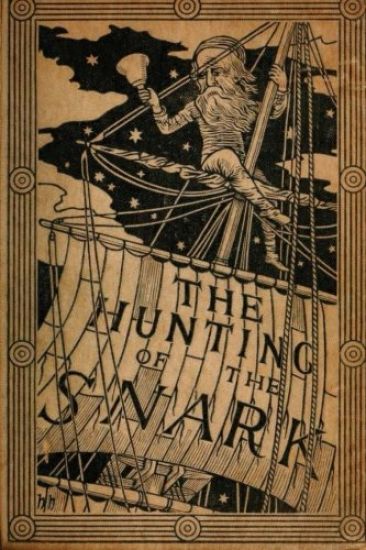
The nonsensical poem The Hunting of the Snark (An Agony in Eight Fits) was written by Lewis Carroll in 1874 and published in 1876. Describing "with infinite humor the impossible voyage of an improbable crew to find an inconceivable creature", the work borrows in-part from Carroll's Jabberwocky in Through the Looking-Glass.
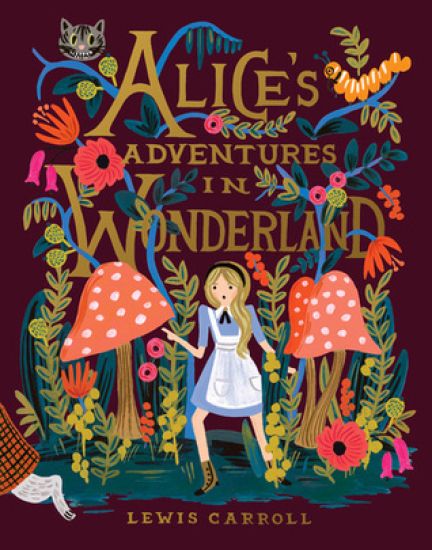
The complete and unabridged text of Alice's Adventures in Wonderland accompanied by Anna Bond's signature, whimsical style illustrations in full colour throughout.
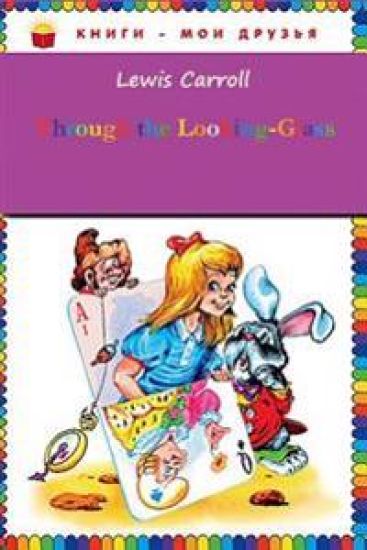
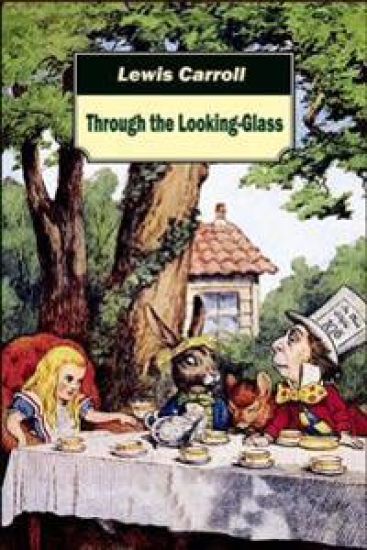
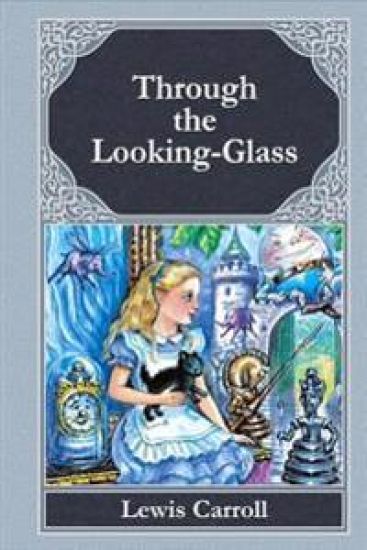
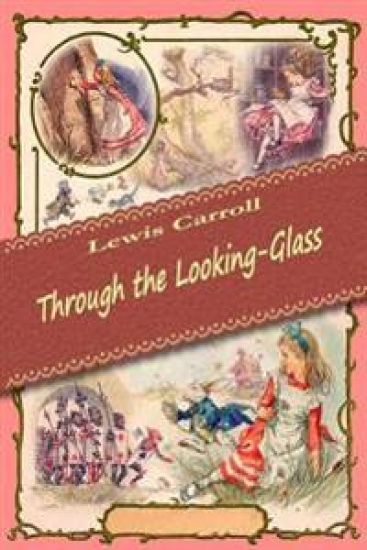
Through the Looking Glass is a sequel of sorts to Alice's Adventures in Wonderland, published seven years later. Alice, now slightly older, walks through a mirror into the Looking-Glass House and immediately becomes involved in a strange game of chess. Soon, she is exploring the rest of the house, and meets a sequence of characters now familiar to most: Tweedledum and Tweedledee, the Red Queen, Humpty Dumpty, and the Walrus just to name a few. Includes unique illustrations.
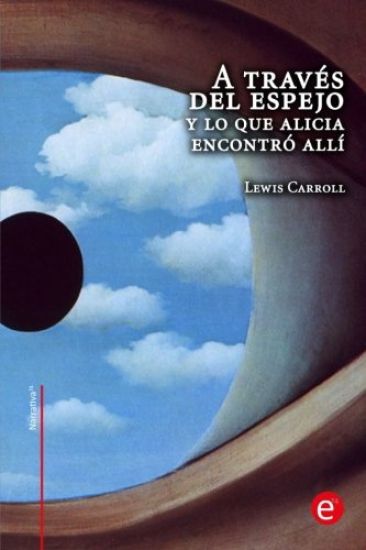
Mientras Alicia est meditando sobre c mo debe de ser el mundo al otro lado del espejo de su casa, se sorprende al comprobar que puede pasar a trav s de l y descubrir de primera mano lo que ah ocurre. As lo hace, y llega a una sala en la que las piezas de ajedrez parecen cobrar vida. En la sala encuentra as mismo un libro de poes a invertida, el Galimatazo, el cual s lo puede leer reflej ndolo en un espejo, y el cual habla de c mo un h roe afronta los peligros del bosque "tulgar": el p jaro Jubo-Jubo, el "frumioso" Zamarrajo y, c mo no, el "hedoroso" Galimatazo. El poema concluye cuando el h roe da muerte al monstruo "Jabberwocky" con la ayuda de la espada "vorpal". Confusa por la complejidad del poema, Alicia deja el libro y sale de la casa del espejo para entrar al mundo del espejo, en el que todo se hace al rev s.
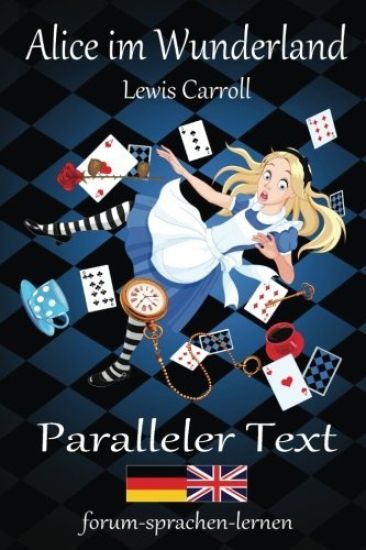
"Alice im Wunderland" wird von allen Kennern zu den Meisterwerken der Weltliteratur gez hlt und geh rt zu den von Le Monde gew hlten besten 100 B chern des zwanzigsten Jahrhunderts. Mit seinen lustigen und fantasievollen Dialogen entf hrt der Autor die Leser in eine komplett andere Welt. Getr nke die Alice gr er oder kleiner werden lassen ('Trink mich' - 'Drink me'), Kuchen die ganz aus Pfeffer bestehen, eine verr ckte Gerichtsverhandlung und vieles mehr regen die Fantasie des Lesers an. Dabei hat das Buch manchmal schon fast philosophische Z ge. So sagt die Grinsekatze als Alice sie nach dem Weg fragt: Das h ngt zum guten Teil davon ab, wohin du gehen willst -- That depends a good deal on where you want to get to. Nicht nur Kinderbuchautoren lie en sich von seinen B chern inspirieren, auch Maler wie den Surrealisten Max Ernst oder Andr Breton. Eine Geschichte, die auch beim mehrmaligen Lesen nicht langweilig wird, die Phantasie anregt und lustig ist: ideal zum Englisch lernen. Englisch lernen mit "Alice im Wunderland"Der englische Text und die deutsche bersetzung sind in diesem Buch in Spalten satzweise nebeneinander angeordnet (Paralleler Text, Zweisprachig, Bilingual). Ihre VorteileSie k nnen sofort kontrollieren ob Sie etwas verstanden haben ohne lange suchen zu m ssenJeder zweite Satz ist farbig hinterlegt, um die Zuordnung von Original und bersetzung noch schneller zu erm glichenSie k nnen so den englischen Text lesen und brauchen nur kurze Zeit um eine fehlende bersetzung zu finden. So geraten Sie nicht aus dem Lesefluss und k nnen die Geschichte wirklich genie en. Die sinngem e bersetzung orientiert sich dicht an der englischen Fassung. Dies macht eine Zuordnung von Deutsch zu Englisch einfach. Zum Englisch verbessern, Englisch auffrischen oder einfach Englisch lesen (Umfangreicher Wortschatz)Zum Wortschatz erweiternDas Buch ist zum Vorlesen geeignet. Sie k nnen zum Vorlesen die deutsche oder englische Variante w hlen, zwischen den Sprachen wechseln oder nur jeweils ein paar englische W rter beim Vorlesen einstreuenwegen des gro en Wortschatzes werden wichtige W rter automatisch wiederholt, da sie im Text fter vorkommen. Ein langweiligess Auswendiglernen entf llt. Extensives Lesen und Englisch lernen mit parallelen Texten: Warum? Extensives Lesen bedeutet hier Lesen, sehr viel Lesen in einer Fremdsprache. Dabei kommt es nicht darauf an jedes Wort zu verstehen sondern der Handlung zu folgen und herauszufinden was als n chstes passiert. Der Spa am Lesen steht im Vordergrund. Kato Lomb, eine ungarische Dolmetscherin die viele Sprachen flie end beherrschte, beschrieb in ihrem Buch "Wie lerne ich jede Sprache" wie sie extensives Lesen benutzte um schnell ihren Wortschatz zu erweitern. Der amerikanische Linguist Stephen Krashen bezeichnet extensives Lesen als das wirksamsten Mittel zum Spracherwerb und ver ffentlichte viele Artikel zu diesem Thema.