Kirjojen hintavertailu – 12 859 819 kirjaa ja 27 kauppaa
Kirjailija
Lewis Carroll
Kirjat ja teokset yhdessä paikassa: 1 820 kirjaa, julkaisuja vuosilta 1865–2027, suosituimpiin kuuluu Alice's Adventures in Wonderland: Tove Jansson Edition. Vertaile teosten hintoja ja tarkista saatavuus suomalaisista kirjakaupoista.
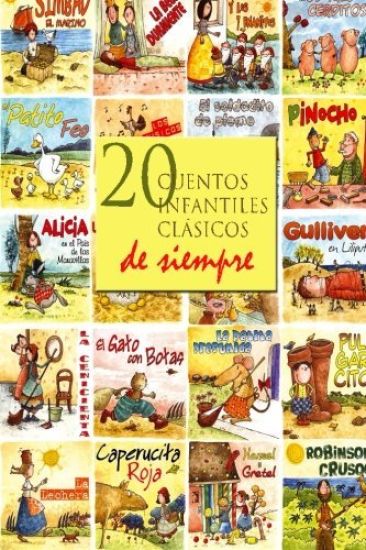
Adaptaci n para leer en voz alta de veinte de los mejores cuentos para ni os de todos los tiempos. Contiene: El patito feo (Hans Christian Andersen) Caperucita roja (Hermanos Grimm) Simbad el marino (An nimo, de los cuentos de las mil y una noches) Alicia en el pa s de las maravillas (Lewis Carroll) La Cenicienta (Charles Perrault) La lechera (F lix Mar a Samaniego) Gulliver en Lilliput (Jonathan Swift) El gato con botas (Charles Perrault) La ratita presumida (Charles Perrault) Pulgarcito (Charles Perrault) Hansel y Gretel (Hermanos Grimm) La bella durmiente (Charles Perrault) Los m sicos de Brema (Hermanos Grimm) La gallina de los huevos de oro (Jean de La Fontaine) El soldadito de plomo (Hans Christian Andersen) Pinocho (Claudio Collodi) Al Bab (An nimo, de los cuentos de las mil y una noches) Los tres cerditos (An nimo) Robinson Crusoe (Daniel Defoe) Una lectura imprescindible para los ni os de hoy y de siempre
Vollst ndiger, digital restaurierter Reprint der Originalausgabe von 1869 (dritte Auflage) mit exzellenter Aufl sung und hervorragender Lesbarkeit. Autorisierte Ausgabe aus dem Englischen. Mit 8 Vollbildern und zahlreichen Text-Illustrationen von John Tenniel. bersetzung aus dem Englischen von Antonie Zimmermann. Lewis Carroll (geboren am 27. Januar 1832 in Daresbury im County Cheshire, gestorben am 14. Januar 1898 in Guildford im County Surrey), b rgerlicher Name Charles Lutwidge Dodgson. Er war ein britischer Schriftsteller, Fotograf, Mathematiker und Diakon. Er ist der Autor der ber hmten Kinderb cher "Alice im Wunderland," "Alice hinter den Spiegeln" (oder "Alice im Spiegelland") und "The Hunting of the Snark." Mit seiner Bef higung f r Wortspiel, Logik und Fantasie schaffte er es, weite Leserkreise zu fesseln. Seine Werke, als sogenannte Nonsense-Literatur bezeichnet, sind bis heute popul r geblieben. Sir John Tenniel (geboren am 28. Februar 1820 in London, gestorben am 25. Februar 1914 in London). Er war ein britischer Illustrator und Aquarellist. Eine seiner ber hmtesten Karikaturen war "Dropping the Pilot" (deutsch "Der Lotse geht von Bord") zur Entlassung des deutschen Reichskanzlers Otto von Bismarck im Jahr 1890. Seine Illustrationen f r Lewis Carrolls "Alice im Wunderland" machten John Tenniel weltweit bekannt. Er wurde zum Mitglied des Royal Institute of Painters in Water Colours gew hlt.
Through the Looking-Glass, and What Alice Found There (1871) is a novel by Lewis Carroll (Charles Lutwidge Dodgson), the sequel to Alice's Adventures in Wonderland (1865). It is based on his meeting with another Alice, Alice Raikes. Set some six months later than the earlier book, Alice again enters a fantastical world, this time by climbing through a mirror into the world that she can see beyond it. Though not quite as popular as Wonderland, Through the Looking-Glass includes such celebrated verses as "Jabberwocky" and "The Walrus and the Carpenter", and the episode involving Tweedledum and Tweedledee.
Through the Looking-Glass, and What Alice Found There (1871) is a novel by Lewis Carroll (Charles Lutwidge Dodgson), the sequel to Alice's Adventures in Wonderland (1865). It is based on his meeting with another Alice, Alice Raikes. Set some six months later than the earlier book, Alice again enters a fantastical world, this time by climbing through a mirror into the world that she can see beyond it. Though not quite as popular as Wonderland, Through the Looking-Glass includes such celebrated verses as "Jabberwocky" and "The Walrus and the Carpenter", and the episode involving Tweedledum and Tweedledee.
Unabridged & Original version with all 184 pages Alice's Adventures in Wonderland (commonly shortened to Alice in Wonderland) is an 1865 novel written by English author Charles Lutwidge Dodgson under the pseudonym Lewis Carroll. It tells of a girl named Alice falling through a rabbit hole into a fantasy world populated by peculiar, anthropomorphic creatures. The tale plays with logic, giving the story lasting popularity with adults as well as with children. It is considered to be one of the best examples of the literary nonsense genre. Its narrative course and structure, characters and imagery have been enormously influential in both popular culture and literature, especially in the fantasy genre. About the story Chapter One - Down the Rabbit Hole: Alice is feeling bored and drowsy while sitting on the riverbank with her elder sister. She then notices a talking, clothed White Rabbit with a pocket watch run past. She follows it down a rabbit hole when suddenly she falls a long way to a curious hall with many locked doors of all sizes. She finds a small key to a door too small for her to fit through, but through it she sees an attractive garden. She then discovers a bottle on a table labelled "DRINK ME," the contents of which cause her to shrink too small to reach the key which she has left on the table. She eats a cake with "EAT ME" written on it in currants as the chapter closes. Chapter Two - The Pool of Tears: Chapter Two opens with Alice growing to such a tremendous size her head hits the ceiling. Alice is unhappy and, as she cries, her tears flood the hallway. After shrinking down again due to a fan she had picked up, Alice swims through her own tears and meets a Mouse, who is swimming as well. She tries to make small talk with him in elementary French (thinking he may be a French mouse) but her opening gambit "O est ma chatte?" ("Where is my cat?") offends the mouse and he tries to escape her. Chapter Three - The Caucus Race and a Long Tale: The sea of tears becomes crowded with other animals and birds that have been swept away by the rising waters. Alice and the other animals convene on the bank and the question among them is how to get dry again. The Mouse gives them a very dry lecture on William the Conqueror. A Dodo decides that the best thing to dry them off would be a Caucus-Race, which consists of everyone running in a circle with no clear winner. Alice eventually frightens all the animals away, unwittingly, by talking about her (moderately ferocious) cat. Chapter Four - The Rabbit Sends a Little Bill: The White Rabbit appears again in search of the Duchess's gloves and fan. Mistaking her for his maidservant, Mary Ann, he orders Alice to go into the house and retrieve them, but once she gets inside she starts growing. The horrified Rabbit orders his gardener, Bill the Lizard, to climb on the roof and go down the chimney. Outside, Alice hears the voices of animals that have gathered to gawk at her giant arm. The crowd hurls pebbles at her, which turn into little cakes. Alice eats them, and they reduce her again in size. Chapter Five - Advice from a Caterpillar: Alice comes upon a mushroom and sitting on it is a blue Caterpillar smoking a hookah. The Caterpillar questions Alice and she admits to her current identity crisis, compounded by her inability to remember a poem. Before crawling away, the caterpillar tells Alice that one side of the mushroom will make her taller and the other side will make her shorter.
Lewis Carroll's novels have entertained readers young and old for more than a century. Their magical worlds, amusing characters, clever dialogue and playfully logical illogic epitomise the whit and whimsy of Carroll's writing. Both stories feature the coloured classic illustrations of John Tenniel.
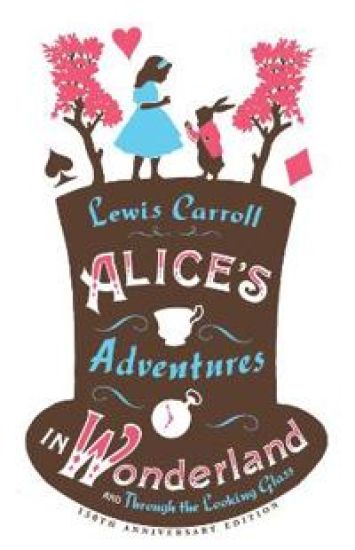
Originally conceived by its author as an entertaining story for Alice Liddell, the daughter of an Oxford dean, Alice’s Adventures in Wonderland, the fantastic tale of the young Alice’s encounters with the White Rabbit, the Cheshire Cat, the Mad Hatter and the Queen of Hearts, has captured the imaginations of young and old throughout the world since it was first published in 1865. In addition to the vivid and unforgettable characters, it is the book’s experimental style, linguistic inventiveness and myriad of jokes and puzzles that account for the timeless fascination it inspires. Published to coincide with Alice in Wonderland’s 150th anniversary, this volume includes John Tenniel’s iconic drawings, the sequel Through the Looking Glass and a facsimile of Alice’s Adventure’s Under Ground, the early manuscript version of the novel illustrated by Lewis Carroll himself.
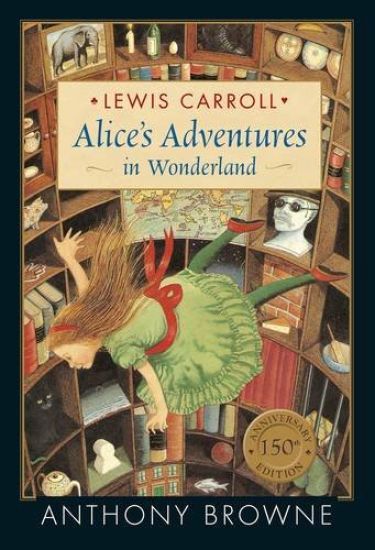
A dazzling anniversary edition of Lewis Carroll's classic story, illustrated by the award-winning Anthony Browne. Lewis Carroll's classic story is wonderfully re-imagined by award-winning and internationally bestselling illustrator Anthony Browne, in a special anniversary edition. The story of Alice and her adventures in Wonderland has enthralled generations of children since it was first published in 1865. Lewis Carroll's timeless masterpiece, now 150 years old, is richly visual in its telling and in this beautiful anniversary edition, Anthony Browne's dazzling illustrations are perfectly paired with the surreal quality of Carroll's writing, making this a book to treasure.