Kirjojen hintavertailu – 12 903 733 kirjaa ja 27 kauppaa
Kirjailija
Lewis Edwin Hahn
Kirjat ja teokset yhdessä paikassa: 7 kirjaa, julkaisuja vuosilta 1998–2001, suosituimpiin kuuluu The Philosophy of P. F. Strawson. Vertaile teosten hintoja ja tarkista saatavuus suomalaisista kirjakaupoista.
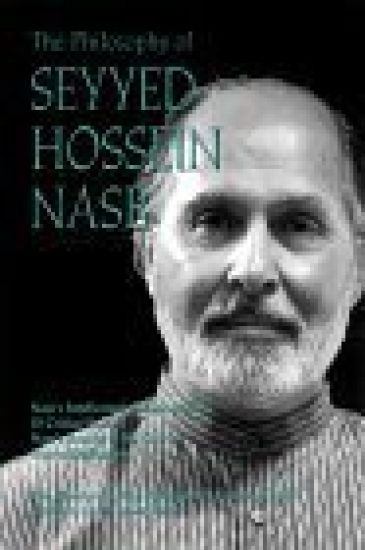
Seyyed Hossein Nasr, a Persian Sufist is the subject of volume 28 in the "Library of Living Philosophers" series. As in the other volumes of the series, the subject discusses his life and philosophical development in an intellectual autobiography. This is followed by 33 critical essays by various scholars and Nasr's replies to each of them. Nasr has been influential in the fields of comparative religion, theology and Islamic studies, as well as philosophy and comparative philosophy. He is also known for his writings on the history of art, the history of science and Sufism (Islamic Mysticism).
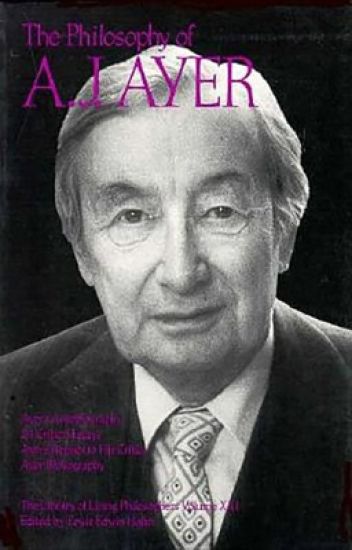
A. J. Ayer burst like a supernova upon the Anglo-American philosophical world in 1936, with "Language, truth and logic", an eloquent, uncompromising manifesto for logical positivism which transformed the thinking of a generation. Inside a few years, philosophers were retreating from the position set forth in "Language truth and logic" with Ayer himself leading the retreat. The ensuing vogue for "ordinary language" philosohpy was not admired by Ayer who became one of its most telling critics. In his subsequent writings he displayed a rare capacity for self-criticis, manifested in a readiness to admit that his earlier arguments had been inadequate. He modified his position on many issues, but remained to the end what he had been all along - an empiricist in the demanding tradition of Hume and Russell. Ayers's grace and clarity of style, his lack of pretentiousness, his logical rigor and his gift for penetrating to the heart of a problem are all exemplified in a succession of works, including "Thinking and meaning" (1947), "The problem of knowlegde" (1956), "Probability and evidence" (1973) and "Freedom and morality" (1985). This, the 21st volume in the "Library of living philosophy", is more than Sir Alfred Ayer's final word on the philosophical issues which preoccupied him for 60 years. The list of contributors is a roll-call of some of the greatest living figures in philosophy, each addressing a key problem arising from Ayer's work. Most of the critical papers are answered directly and in detail by Sir Alfred - he completed his replies to 20 of the 24 papers before his death.
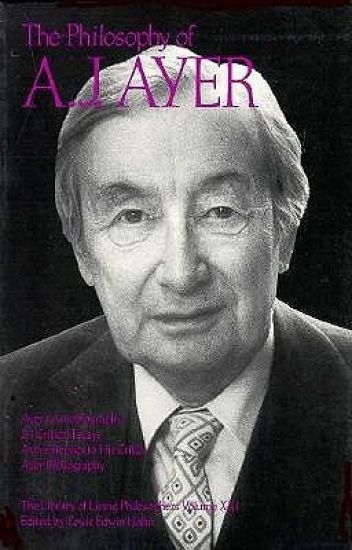
A. J. Ayer burst like a supernova upon the Anglo-American philosophical world in 1936, with "Language, Truth and Logic", an eloquent, uncompromising manifesto for logical positivism which transformed the thinking of a generation. Inside a few years, philosophers were retreating from the position set forth in "Language Truth and Logic" with Ayer himself leading the retreat. The ensuing vogue for "ordinary language" philosophy was not admired by Ayer who became one of its most telling critics. In his subsequent writings he displayed a rare capacity for self-criticism, manifested in a readiness to admit that his earlier arguments had been inadequate. He modified his position on many issues, but remained to the end what he had been all along - an empiricist in the demanding tradition of Hume and Russell. Ayers's grace and clarity of style, his lack of pretentiousness, his logical rigour and his gift for penetrating to the heart of a problem are all exemplified in a succession of works, including "Thinking and Meaning" (1947), "The Problem of Knowlegde" (1956), "Probability and Evidence" (1973) and "Freedom and Morality" (1985). This, the 21st volume in the "Library of Living Philosophy", is more than Sir Alfred Ayer's final word on the philosophical issues which preoccupied him for 60 years. The list of contributors is a roll-call of some of the greatest living figures in philosophy, each addressing a key problem arising from Ayer's work. Most of the critical papers are answered directly and in detail by Sir Alfred - he completed his replies to 20 of the 24 papers before his death.
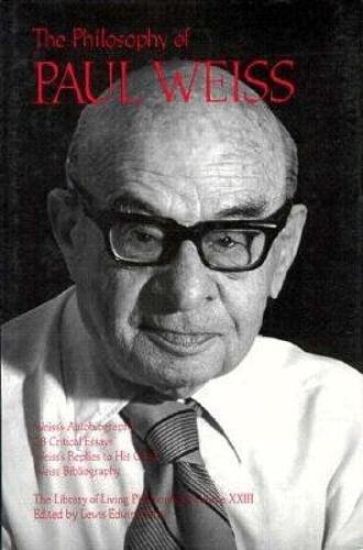
Born in 1901, Paul Weiss has made major contributions to several branches of philosophy, as well as to teaching and scholarly publishing. Alfred North Whitehead remarked: "The danger of philosophical teaching is that it may become dead-alive, but in Paul Weiss's presence that is impossible". Weiss is widely believed to be America's greatest living speculative metaphysician, but he has also made notable philosophical contributions to the discussion of sports, the arts, religion, logic, and politics. Professor Weiss has been highly productive: his Being and Other Realities (1995) was hailed as one of his most exciting books, and as this volume goes to press he is hard at work on yet another major treatise.
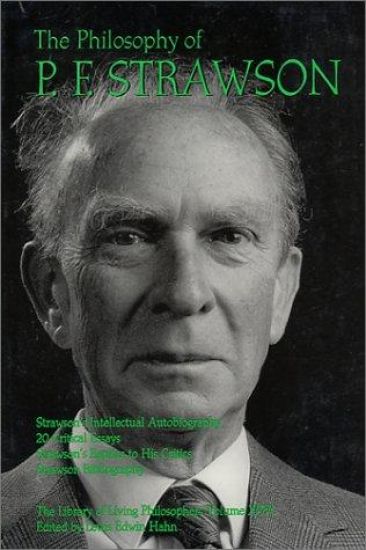
Born in 1919, Strawson was a leading proponent of ordinary language philosophy. He is the author of the early and extremely influential paper "On Referring" in which he criticized Russell's theory of definite descriptions. His most influential book, Individuals, helped to raise the status of metaphysics as a philosophical enterprise. Themes first addressed in this book continued to be of concern to him in his later work, including the possibility of objective knowledge, the subject-predicate distinction, the ontological status of persons, and the problem of individuation. Contributors to the book include: Ruth Garrett Millikan, Susan Haack, E. M. Adams, Panayot Butchvarov, Richard Behling, John McDowell, Simon Blackburn, Tadeusz Szubka, David Frederick Haight, Joseph S. Wu, Andrew G. Black, David Pears, Robert Boyd, Hilary Putnam, Paul F. Snowdon, Arindam Chakrabarti, Wenceslao J. Gonzalez, Ernest Sosa, Chung-M. Tse, John R. Searle, P. F. Strawson.
The twenty-sixth volume in the highly acclaimed Library of Living Philosophers series is devoted to the work of British philosopher of logic and metaphysician, P. F. Strawson. Following the Library of Living Philosophers series format, the volume contains an intellectual autobiography, twenty critical and descriptive essays by leading philosophers from around the world, Strawson's replies to the essays, and a bibliography of Strawson's works. Born in 1919, Strawson was a leading proponent of ordinary language philosophy. He is the author of the early and extremely influential paper "On Referring" in which he criticized Russell's theory of definite descriptions. His most influential book, Individuals, helped to raise the status of metaphysics as a philosophical enterprise. Themes first addressed in this book continued to be of concern to him in his later work, including the possibility of objective knowledge, the subject-predicate distinction, the ontological status of persons, and the problem of individuation. Contributors to the book include: Ruth Garrett Millikan, Susan Haack, E. M. Adams, Panayot Butchvarov, Richard Behling, John McDowell, Simon Blackburn, Tadeusz Szubka, David Frederick Haight, Joseph S. Wu, Andrew G. Black, David Pears, Robert Boyd, Hilary Putnam, Paul F. Snowdon, Arindam Chakrabarti, Wenceslao J. Gonzalez, Ernest Sosa, Chung-M. Tse, John R. Searle, P. F. Strawson.
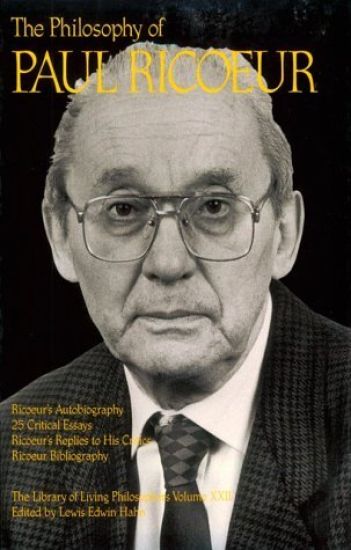
Paul Ricoeur is widely regarded as the foremost living phenomenologist. His writings cover a wide range of topics, from the history of philosophy, literary criticism and aesthetics, to metaphysics, ethics, religion, semiotics, linguistic structuralism, the humanistic sciences, psychoanalysis, Marxism, guilt and evil, and conflicts of interpretation. In similar format to the preceding 21 volumes of the "Library of Living Philosophers", this book contains Ricoeur's intellectual autobiography, critical essays by 25 leading philosophers, and Ricoeur's replies to these criticisms.