Kirjojen hintavertailu – 12 903 724 kirjaa ja 27 kauppaa

Kirjailija

Lewis Helfand

Kirjat ja teokset yhdessä paikassa: 8 kirjaa, julkaisuja vuosilta 2011–2021, suosituimpiin kuuluu Mother Teresa: Saint Of The Slums. Vertaile teosten hintoja ja tarkista saatavuus suomalaisista kirjakaupoista.

8 kirjaa

Kirjojen julkaisuvuodet: 2011–2021.

Orbit: The Sixties

Orbit: The Sixties

Lewis Helfand; Henry Simon

TidalWave Productions
2021
nidottu
In the 1960s, millions of young men and women were searching for a way to express their deepest desires and fears. And they found that in rock and roll as a host of musicians armed with nothing more than poetic lyrics and electric guitar riffs became the voice of a generation. This series has been featured in Rolling Stone magazine.
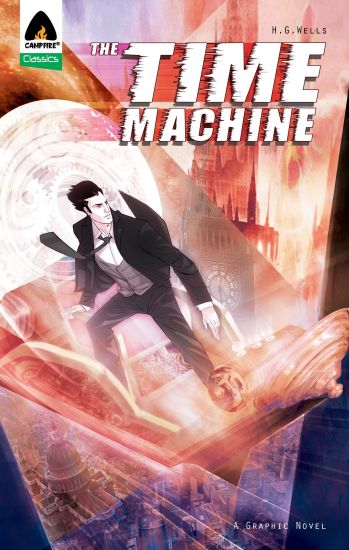
The Time Machine

The Time Machine

H.G. Wells; Lewis Helfand

Campfire
2020
nidottu
A concise, highly enjoyable adaptation of the classic novella; one of more than 85 titles Campfire has published since their introduction to North America in 2010. What would you do if you could travel in time? An intrepid adventurer, known simply as the Time Traveller, meets his friends for dinner one night. During the conversation, he baffles them with his wild ideas about moving forwards or backwards in time. His claims are met with disbelief. Even when he proves his theory with a real-life experiment, his associates simply claim that he is a trickster - a magician. Yet, a week later, he enthralls his acquaintances yet again. He tells a story so unbelievable that it can't be true... or can it? The Time Traveller's tale tells of our courageous explorer's discoveries in another time. Does he find intelligence and technology beyond his wildest dreams? Or is the world filled with dreaded monsters? There's only one way to find out...
The Industrial Revolution

The Industrial Revolution

Lewis Helfand

Campfire
2017
nidottu
While we all know that large-scale industrialization began in the eighteenth century, the Industrial Revolution truly began in Germany with Johannes Gutenberg and his printing press. His innovation made it possible to mass-produce books, which spread literacy and knowledge all across Europe. It was in the eighteenth century, however, that manual labor started being replaced by what we today know as machines. First in Europe came Thomas Newcomen and James Watt and the steam engine. Then came John Kay and his flying shuttle, which led to the development of the textile industry. Then, in the United States, there was Robert Fulton and his steamboat, and Eli Whitney and his cotton gin. Finally, it was Henry Ford whose mass-produced vehicles made cars affordable to all. The Industrial Revolution continues to this day as formerly less developed countries, especially in Asia, have taken to rapid industrialization to improve their economy. Lexile Reading Level 800L.
They Changed The World: Crick & Watson - The Discovery Of Dna
Since the dawn of civilization, we have searched for answers to what makes life possible, and in the mid-twentieth century we found them through the persistent efforts of James Watson and Francis Crick. Although the groundwork for the discovery had already been laid out, it was Watson and Crick's derivation of the three-dimensional, double-helical model for the structure of DNA that solved the final piece of the puzzle and won them the Nobel Prize in Physiology or Medicine in 1962. That is only a single moment of triumph, though, and the journey they took to get there was a long and arduous one. Find out how Crick and Watson beat their rivals to unlock the secrets of life itself as they unravelled the mystery behind DNA and changed not only science but the world we live in.
World War Two: Under The Shadow Of The Swastika

World War Two: Under The Shadow Of The Swastika

Lewis Helfand; Lalit Kumar Sharma

Campfire
2016
nidottu
This volume of Campfire's graphic history of World War II deals with the war in Europe from the rise of the Nazis through to May 1945 and VE Day. World War II shows the effects of the war on the soldiers, the refugees, the victims and protagonists of the most terrible conflict the world has ever known. In a world that is forgetting the lessons history has to teach, this book is a reminder of the horrors that come from intolerance. In the 1930s, a great evil was rising in the heart of Europe, a threat unlike any seen before. German leader Adolf Hitler, a madman bent on world domination, was raising an army and growing more violent by the day. The world knew that Hitler had to be stopped. But fearing a war, this growing threat of Hitler's Nazi army was left unchecked. The world simply watched as Germany sank into darkness. The world merely prayed that war would not breach their borders. The world waited. And they waited too long. As cities fell to ruin and millions were slaughtered, the growing darkness of Hitler and his Nazi empire branched out far beyond Europe--to Asia and Africa and America--and soon threatened to claim the entire world. France, England, Russia, the United States... no single nation had the strength to combat this darkness, at least not on their own. With the fate of the world hanging in the balance, the one final, desperate hope was that all of these nations united together might muster the strength to save humanity.

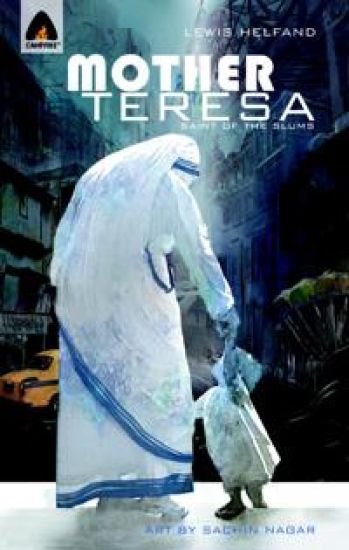
Mother Teresa: Saint Of The Slums
In the 1940's, Calcutta had become decimated by famine, poverty, war and unemployment. Slums began to surface throughout the city and thousands were homeless, dying of disease or starvation. Alone and forgotten, these poorest of the poor were desperate for someone, anyone, to recognize their plight and help them. That help arrived in the form of Mother Teresa. Albanian-born, Mother Teresa knew from a young age that she wanted to become a nun and devote her life to God. What she could not envision, however, was exactly where that service to God would take her. Sent to Calcutta to teach history and geography from within the safe confines of a convent, Mother Teresa could not ignore the plight of the homeless and the dying. So she chose to give up everything in her life to serve those most in need. With nothing but her faith to guide her, she took to the slums with the hope that she could make a difference in the lives of at least a few lost souls. And with her pure heart and beautiful spirit, she wound up touching millions.
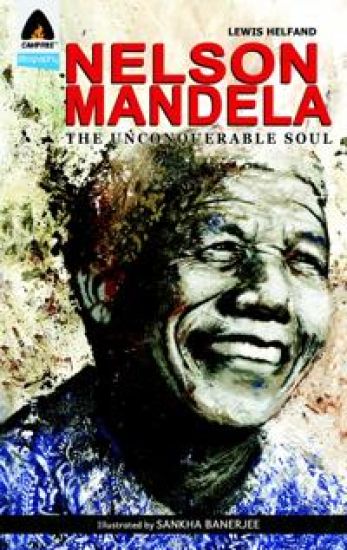
Nelson Mandela

Nelson Mandela

Lewis Helfand

Campfire
2012
nidottu
Nelson Mandela had very simple dreams as a young man growing up in a small South African village; he dreamed of being free to choose his own path in life. But being a black man in South Africa, even the simple dream of freedom could never become a reality. South Africa was a nation ruled by an oppressive and discriminatory set of laws known as apartheid. Black men and women could not have certain jobs or live in certain neighborhoods, or even walk down the street without being arrested or assaulted by the brutal police force. South Africans desperately needed their freedom and Nelson Mandela answered the call. He took the lead in the fight for the equality of all races, and the government of South Africa responded to his pleas for justice by trying to crush him. Nelson Mandela was stripped of his rights, and sent to the harshest prison in all of South Africa to die. But his spirit could not be broken. From his tiny prison cell, Mandela managed to rally the entire world. During this fight for justice, he taught even his opressors the value of tolerance and compassion. He brought freedom to an entire nation and set a shining example to the rest of the world.
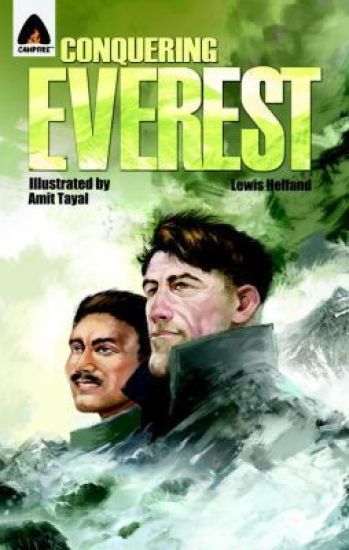
Conquering Everest: The Lives Of Edmund Hillary And Tenzing Norgay
Tenzing Norgay was the son of poor Tibetan immigrants living in Nepal. He longed to see the world but was told he could aspire to be little more than a servant. Edmund Hillary was a humble beekeeper from New Zealand, who spent his youth dreaming of adventures he could never hope to experience. And Everest was the ultimate adventure. The mountain's peak is the highest point on Earth, stretching beyond the clouds. So dangerous and challenging, Everest had never been successfully climbed and many had died trying. In 1953, Tenzing Norgay and Edmund Hillary joined a team of explorers determined to reach its top. Alone at the top of the world with their oxygen running low, they faced brutal elements and new dangers at every turn. And they were armed with little more than their courage, determination, and a belief in each other. But would that be enough to achieve the impossible, what no man had done before?