

Kirjailija
Li Guo
Kirjat ja teokset yhdessä paikassa: 15 kirjaa, julkaisuja vuosilta 1998–2025, suosituimpiin kuuluu A Flying Dad. Vertaile teosten hintoja ja tarkista saatavuus suomalaisista kirjakaupoista.
15 kirjaa
Kirjojen julkaisuvuodet: 1998–2025.





SummaryGUO, Li, this name has become a symbol in China's melamine-tainted infant formula incident, an ordinary man who works tirelessly for real justice and truth. His story is not only the personal experience of a Beijing father fighting for his child's health, but also a profound interrogation of social justice and the rule of law in China as a whole. GUO has recorded every detail of his rights defending process over the years in a book. This is a true brave and total disclosure, a comprehensive reflection on his own experience, and a serious criticism of Chinese current social situation. He told us from his suffering experience: even in the darkest times, never give up hope.

Writing Gender in Early Modern Chinese Women's Tanci Fiction
Li Guo
Purdue University Press
2021
sidottu
Women's tanci, or ""plucking rhymes,"" are chantefable narratives written by upper-class educated women from seventeenth-century to early twentieth-century China. Writing Gender in Early Modern Chinese Women's Tanci Fiction offers a timely study on early modern Chinese women's representations of gender, nation, and political activism in their tanci works before and after the Taiping Rebellion (1850 to 1864), as well as their depictions of warfare and social unrest. Women tanci authors' redefinition of female exemplarity within the Confucian orthodox discourses of virtue, talent, chastity, and political integrity could be bourgeoning expressions of female exceptionalism and could have foreshadowed protofeminist ideals of heroism. They establish a realistic tenor in affirming feminine domestic authority, and open up spaces for discussions of ""womanly becoming,"" female exceptionalism, and shifting family power structures. The vernacular mode underlying these texts yields productive possibilities of gendered self-representations, bodily valences, and dynamic performances of sexual roles. The result is a vernacular discursive frame that enables women's appropriation and refashioning of orthodox moral values as means of self-affirmation and self-realization. Validations of women's political activism and loyalism to the nation attest to tanci as a premium vehicle for disseminating progressive social incentives to popular audiences. Women's tanci marks early modern writers' endeavors to carve out a space of feminine becoming, a discursive arena of feminine appropriation, reinvention, and boundary-crossings. In this light, women's tanci portrays gendered mobility through depictions of a heroine's voyages or social ascent, and entails a forward-moving historical progression toward a more autonomous and vested model of feminine subjectivity.

Writing Gender in Early Modern Chinese Women's Tanci Fiction
Li Guo
Purdue University Press
2021
nidottu
Women's tanci, or ""plucking rhymes,"" are chantefable narratives written by upper-class educated women from seventeenth-century to early twentieth-century China. Writing Gender in Early Modern Chinese Women's Tanci Fiction offers a timely study on early modern Chinese women's representations of gender, nation, and political activism in their tanci works before and after the Taiping Rebellion (1850 to 1864), as well as their depictions of warfare and social unrest. Women tanci authors' redefinition of female exemplarity within the Confucian orthodox discourses of virtue, talent, chastity, and political integrity could be bourgeoning expressions of female exceptionalism and could have foreshadowed protofeminist ideals of heroism. They establish a realistic tenor in affirming feminine domestic authority, and open up spaces for discussions of ""womanly becoming,"" female exceptionalism, and shifting family power structures. The vernacular mode underlying these texts yields productive possibilities of gendered self-representations, bodily valences, and dynamic performances of sexual roles. The result is a vernacular discursive frame that enables women's appropriation and refashioning of orthodox moral values as means of self-affirmation and self-realization. Validations of women's political activism and loyalism to the nation attest to tanci as a premium vehicle for disseminating progressive social incentives to popular audiences. Women's tanci marks early modern writers' endeavors to carve out a space of feminine becoming, a discursive arena of feminine appropriation, reinvention, and boundary-crossings. In this light, women's tanci portrays gendered mobility through depictions of a heroine's voyages or social ascent, and entails a forward-moving historical progression toward a more autonomous and vested model of feminine subjectivity.

China's Belt And Road: The Initiative And Its Financial Focus
Xugang Yu; Cristiano Rizzi; Mario Tettamanti; Fabio Ziccardi; Li Guo
World Scientific Publishing Co Pte Ltd
2018
sidottu
This book aims at illustrating the OBOR Initiative (also known as 'Belt and Road Initiative' or BRI), its many facets, including its background, and how the Chinese government intends to develop this ambitious project. It describes in detail the role and involvement of Institutions (lenders, in particular) in the OBOR Initiative. It offers guidance on how interested parties can participate in the different projects connected to the Initiative. The views of the authors, on the main aspects of this Initiative, serve as suggestions to parties interested in taking part in this Initiative. The book provides an exceptional amount of information about how projects connected to the BRI Initiative are financed and developed. The involvement of UBS clearly shows that financial institutions are interested in financing the Initiative. There is a special focus on the relationship between China and the EU, because the scope of this Initiative is not only to boost trade relationships between the two regions but also create new opportunities for all the countries along the Silk Road.
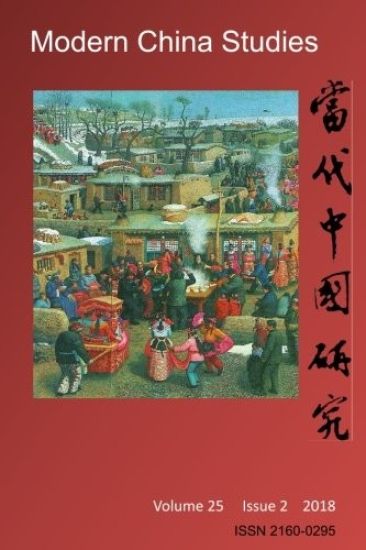
Modern China Studies
Li Chen; Li Guo; Xiaoyun Shen
Createspace Independent Publishing Platform
2018
nidottu
(1) From Public Critique to Secret Assistance: Divergence in and Response of the Party Central Committee to the Reforms and Open-Up Policies of Guangdong after the Two Provincial Conferences in 1982 (Li Chen); (2) Imagining the Crowd: Screening the Masses of China's Cultural Revolution (Li Guo); (3) "Mountain Heads" in the Military of the Chinese Communist Party and the Way Mao Governed the Military Since 1949 (Shen Xiaoyun); (4) Wang Jingwei before Fleeing and Chen Bijun in Prison: A Reading of The Diary of Chen Kewen (Bin Yang); (5) Frontier as Ruin: The National Allegory in Landscape (Wu Xueshan); (6) Uncanny, or "Old Ghosts Coming Again": Mirror Images and Visual Illusions in Modern China (Hongfeng Tang); (7) Cultural Interaction and Comparative Literature in Modern China: A Special Issue (Yao Dadui); (8) God vs. Dragon: On Samuel I. Woodbridge's English Translation (1895) of "Westward Journey Stories" Contained in a Script of Tongzi Drama (Wu Xiaofang); (9) The Circulation and Reproduction of World Literature: Aesop's Fables in Modern China (Yao Dadui); (10) Chinese Genres, Western Works: The Formation of the Idea of Foreign Literature in Late Qing China (Carlos Yu-Kai Lin)

Women’s Tanci Fiction in Late Imperial and Early Twentieth-Century China
Li Guo
Purdue University Press
2015
nidottu
In Women's Tanci Fiction in Late Imperial and Early Modern China, Li Guo presents the first book-length study in English of women's tanci fiction, the distinctive Chinese form of narrative written in rhymed lines during the late imperial to early modern period (related to, but different from, the orally performed version also called tanci). She explores the tradition through a comparative analysis of five seminal texts. Guo argues that Chinese women writers of the period position the personal within the diegesis in order to reconfigure their moral commitments and personal desires. By fashioning a “feminine” representation of subjectivity, tanci writers found a habitable space of self-expression in the male-dominated literary tradition. Through her discussion of the emergence, evolution, and impact of women's tanci, Guo shows how historical forces acting on the formation of the genre serve as the background for an investigation of cross-dressing, self-portraiture, and authorial self-representation. Further, Guo approaches anew the concept of “woman-oriented perspective” and argues that this perspective conceptualizes a narrative framework in which the heroine(s) are endowed with mobility to exercise their talent and power as social beings as men's equals. Such a woman-oriented perspective redefines normalized gender roles with an eye to exposing women's potentialities to transform historical and social customs in order to engender a world with better prospects for women.
This work offers a study, translation and partial edition of "Dhayl Mir'at al-Zaman", one of the most important early Mamluk sources. The work contributes to Mamluk history and also towards the ultimate goal of having the key texts of early Mamluk history accessible to scholars. It is intended for all those interested in pre-modern Islamic history and historiography, the history of the Crusades, the history of Syria and Egypt, the history of the Mongol campaigns in the Near East, military history, hadith literature and pre-modern Arabic literature.
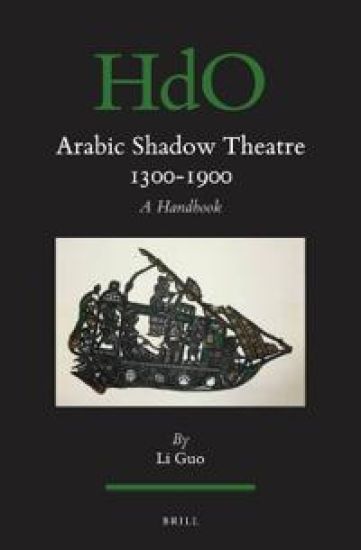
This handbook aims mainly at an analytical documentation of all the known textual remnants and the preserved artifacts of Arabic shadow theatre, a long-lived, and still living, tradition — from the earliest sightings in the tenth century to the turn of the twentieth century. The book consists of three main parts and a cluster of appendixes. Part One presents a history of Arab shadow theatre through a survey of medieval and premodern accounts and modern scholarship on the subject. Part Two takes stock of primary sources (manuscripts), published studies, and the current knowledge of various aspects of Arabic shadow theatre: language, style, terminology, and performance. Part Three offers an inventory of all known Arabic shadow plays. The documentation is based on manuscripts (largely unpublished), printed texts (scripts, excerpts), academic studies (in Arabic and Western languages), journalist reportage, and shadow play artifacts from collections worldwide.
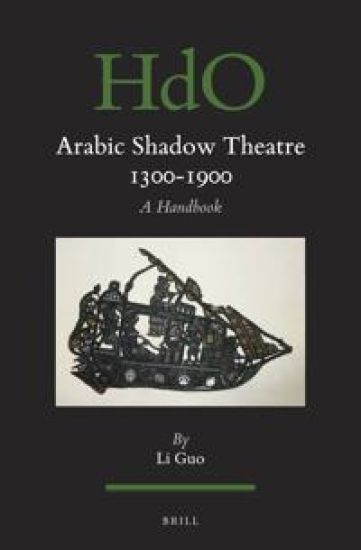
This handbook aims mainly at an analytical documentation of all the known textual remnants and the preserved artifacts of Arabic shadow theatre, a long-lived, and still living, tradition — from the earliest sightings in the tenth century to the turn of the twentieth century. The book consists of three main parts and a cluster of appendixes. Part One presents a history of Arab shadow theatre through a survey of medieval and premodern accounts and modern scholarship on the subject. Part Two takes stock of primary sources (manuscripts), published studies, and the current knowledge of various aspects of Arabic shadow theatre: language, style, terminology, and performance. Part Three offers an inventory of all known Arabic shadow plays. The documentation is based on manuscripts (largely unpublished), printed texts (scripts, excerpts), academic studies (in Arabic and Western languages), journalist reportage, and shadow play artifacts from collections worldwide.
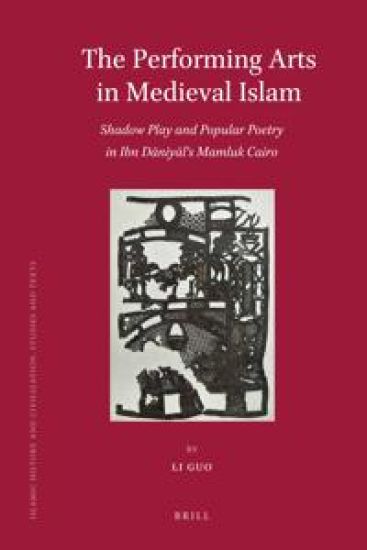
This is a study of the life and work of Ibn Daniyal (d. 1310), a Cairo-based eye doctor, poet, playwright, court jester, and arguably one of the most controversial cultural figures of his time. Drawing on medieval Arabic sources, many still in manuscript and some used for the first time, the author further contextualizes Ibn Daniyal’s work with respect to poetry production and popular culture in the Islamic Near East in the post-Mongol period. The book also presents the first full English translation of “The Phantom,” one of Ibn Daniyal’s three shadow plays, the only surviving pre-Ottoman Arabic theatrical texts.