Kirjojen hintavertailu – 12 903 724 kirjaa ja 27 kauppaa

Kirjailija

Liam Gearon

Kirjat ja teokset yhdessä paikassa: 13 kirjaa, julkaisuja vuosilta 2002–2018, suosituimpiin kuuluu Freedom of Expression and Human Rights. Vertaile teosten hintoja ja tarkista saatavuus suomalaisista kirjakaupoista.

13 kirjaa

Kirjojen julkaisuvuodet: 2002–2018.

State Religious Education and the State of Religious Life

State Religious Education and the State of Religious Life

Liam Gearon; Joseph Prud'homme

Pickwick Publications
2018
sidottu
This book explores recent calls to increase instruction of the Bible in American public schools. The work develops a distinctive philosophical and trans-Atlantic assessment of these proposals by critiquing European approaches to religious education and by reviewing the role of religion in contemporary democracies. The work will spark debate among political scientists, policy experts, Religious Education instructors, theologians, and social and educational theorists. ""Ignorance of the Bible cuts us off from our history and our cultural heritage. Yet state religious education carries dangers, not least for religion itself. This superb book, by two authors well-versed in these problems on both sides of the Atlantic, points a way forward."" --Roger Trigg, Ian Ramsey Centre, University of Oxford ""This book represents a sober and objective analysis of the movement to adopt Bible courses in the public schools. Those who are interested in the movement and church/state issues will find the work essential reading, as providing an invaluable source of information about the situation in America and Europe and a compelling argument that demands attention and some compromise from both sides of the debate in the present cultural war."" --Stephen Strehle, Professor, Christopher Newport University, VA ""The use of the 'no establishment' clause of the Constitution to expel Bible education from state schools threatens to leave Americans without the most important spiritual anchor that has been provided to them. In this strongly argued book Liam Gearon and Joseph Prud'homme mount a persuasive case not only against the misreading of the Constitution by secularist fanatics, but also in favor of the Bible, as the true foundation of America's secular culture."" --Sir Roger Scruton, acclaimed philosopher, author of over 40 books in aesthetics, philosophy, and political thought Joseph Prud'homme is Director of the Institute for Religion, Politics, and Culture, Associate Professor of Political Science, and Instructor in Religion at Washington College in Chestertown, MD. Liam Francis Gearon is an Associate Professor in the Department of Education and a Senior Research Fellow at Harris Manchester College, University of Oxford. He is the author and/or editor of over thirty books in politics, literature, education, and the study of religion.
State Religious Education and the State of Religious Life

State Religious Education and the State of Religious Life

Liam Gearon; Joseph Prud'homme

Pickwick Publications
2018
pokkari
This book explores recent calls to increase instruction of the Bible in American public schools. The work develops a distinctive philosophical and trans-Atlantic assessment of these proposals by critiquing European approaches to religious education and by reviewing the role of religion in contemporary democracies. The work will spark debate among political scientists, policy experts, Religious Education instructors, theologians, and social and educational theorists. ""Ignorance of the Bible cuts us off from our history and our cultural heritage. Yet state religious education carries dangers, not least for religion itself. This superb book, by two authors well-versed in these problems on both sides of the Atlantic, points a way forward."" --Roger Trigg, Ian Ramsey Centre, University of Oxford ""This book represents a sober and objective analysis of the movement to adopt Bible courses in the public schools. Those who are interested in the movement and church/state issues will find the work essential reading, as providing an invaluable source of information about the situation in America and Europe and a compelling argument that demands attention and some compromise from both sides of the debate in the present cultural war."" --Stephen Strehle, Professor, Christopher Newport University, VA ""The use of the 'no establishment' clause of the Constitution to expel Bible education from state schools threatens to leave Americans without the most important spiritual anchor that has been provided to them. In this strongly argued book Liam Gearon and Joseph Prud'homme mount a persuasive case not only against the misreading of the Constitution by secularist fanatics, but also in favor of the Bible, as the true foundation of America's secular culture."" --Sir Roger Scruton, acclaimed philosopher, author of over 40 books in aesthetics, philosophy, and political thought Joseph Prud'homme is Director of the Institute for Religion, Politics, and Culture, Associate Professor of Political Science, and Instructor in Religion at Washington College in Chestertown, MD. Liam Francis Gearon is an Associate Professor in the Department of Education and a Senior Research Fellow at Harris Manchester College, University of Oxford. He is the author and/or editor of over thirty books in politics, literature, education, and the study of religion.

On Holy Ground: The Theory and Practice of Religious Education
For a diversity of reasons – the resurgence of religion in global governance, globalisation, concerns over social and community cohesion, the worldwide growth in religiously inspired extremism – religious education has in recent years, enjoyed an international renaissance. Many theorists and practitioners have added to the debate with a great variety of perspectives. Most have only succeeded in providing a partial view of religion and thus a degraded vision of religion in education. On Holy Ground offers a new approach to the theory and practice of religious education. It will be the only book of its kind to provide a systematic examination of how contemporary theory and pedagogy of religious education are covertly rooted in a variety of aesthetic, philosophical, phenomenological, psychological, scientific, theological, and related cognate disciplines. A major critical review of religious education internationally, On Holy Ground provides an original contribution to the theory and practice of religious education, and a serious and significant challenge to teachers, theorists and researchers in religious education worldwide.
On Holy Ground: The Theory and Practice of Religious Education
Religion has had notable and renewed prominence in contemporary public and political life. Religious questions have also been freshly examined in philosophy and theology, the natural sciences, the social sciences, psychology, phenomenology, politics and the arts. These fields reflect complex, multi-disciplinary understandings of religion, some hostile, some accommodating. For religious education this has all contributed to its own international renaissance. Religious education, in ensuring it is contemporary, shares with these fields the same criticality, the same distance between the study of religion and the religious life. Yet what are the grounds of this modern religious education? Through a systematic historical and contemporary cross-disciplinary analysis, answering this question is the ambitious task of the book. Chapters include: philosophy, theology and religious education the natural sciences and religious education the social sciences and religious education psychology, spirituality and religious education phenomenology and religious education the politics of religious education the aesthetics of religious education. The central problem of all modern religious education remains this: what are the grounds of religious education when religious education is no longer grounded in the religious life, in the life of the holy? Although this primarily appears to be an epistemological problem, it soon becomes a moral and existential one. The book will be of key interest to teachers, theorists and researchers working in religious education.
Education, Politics and Religion

Education, Politics and Religion

James Arthur; Liam Gearon; Alan Sears

Routledge
2010
sidottu
In recent years a number of popular books have savaged religion arguing it is a dangerous delusion that poisons human societies and relationships. This is but the most recent manifestation of a secularising agenda that has been sweeping contemporary democratic societies since the Enlightenment. This book pushes back against that agenda, examining its key assumptions and arguing that the exclusion of religious people and ideas from education and the public square is both undemocratic and unwise. For the most part the book draws arguments and examples from Christianity, the religious tradition of the authors, but it recognises that many religions share the concerns and possibilities examined. The book examines contemporary expressions of the secularising agenda in Western democracies with particular focus on how that is played out in education. It demonstrates how republican theory understood within a faith perspective provides a shared understanding and substantive basis for education within a Western democracy. It explores the historical connections and disconnections between religion and civic life in the West from ancient to contemporary times and examines religiously based civic action and pedagogical approaches contending both have the potential to contribute greatly to democracy. It will be of value to any who are interested in exploring how democracies can include the voices of all their citizens: the religious and the secular.
Education, Politics and Religion

Education, Politics and Religion

James Arthur; Liam Gearon; Alan Sears

Routledge
2010
nidottu
In recent years a number of popular books have savaged religion arguing it is a dangerous delusion that poisons human societies and relationships. This is but the most recent manifestation of a secularising agenda that has been sweeping contemporary democratic societies since the Enlightenment. This book pushes back against that agenda, examining its key assumptions and arguing that the exclusion of religious people and ideas from education and the public square is both undemocratic and unwise. For the most part the book draws arguments and examples from Christianity, the religious tradition of the authors, but it recognises that many religions share the concerns and possibilities examined. The book examines contemporary expressions of the secularising agenda in Western democracies with particular focus on how that is played out in education. It demonstrates how republican theory understood within a faith perspective provides a shared understanding and substantive basis for education within a Western democracy. It explores the historical connections and disconnections between religion and civic life in the West from ancient to contemporary times and examines religiously based civic action and pedagogical approaches contending both have the potential to contribute greatly to democracy. It will be of value to any who are interested in exploring how democracies can include the voices of all their citizens: the religious and the secular.
Freedom of Expression and Human Rights

Freedom of Expression and Human Rights

Liam Gearon

Sussex Academic Press
2006
sidottu
Provides a critical and contentious overview of the fundamental relationship between writing and political dissent from early Greek democracy to post-Enlightenment forms of totalitarianism, such as Communism, Fascism and Nazism and through to modern forms of liberal democracy based upon universal human rights encapsulated by the UN's Universal Declaration of Human Rights. Complementing such historical contexts, this book explores the range of predominantly theological and religious, civil and political, social and cultural rationales for contemporary repression, contending that in the modern age at least freedom of expression issues are deeply affected not only by national law but that factors of a transnational (ideological or theological) nature. Finally -- through a review key inter-governmental and non-governmental (NGO) agencies -- the book examines current geo-political trends in the denial of freedom of expression, highlighting post-Cold War and post-September 11 shifts in political and religious repression, a movement in the locale of freedom of expression issues (especially towards electronic forms and Internet) and a heightening of global and transnational dimensions in freedom of expression. The book provides also a substantial series of appendices for scholars, researchers and activists interested in furthering investigation of issues in writing and human rights. A companion volume to "Human Rights & Religion", the book provides appendices for all those activists interested in furthering investigation of issues in writing and human rights.
Freedom of Expression and Human Rights

Freedom of Expression and Human Rights

Liam Gearon

Sussex Academic Press
2006
nidottu
Provides a critical and contentious overview of the fundamental relationship between writing and political dissent from early Greek democracy to post-Enlightenment forms of totalitarianism, such as Communism, Fascism and Nazism and through to modern forms of liberal democracy based upon universal human rights encapsulated by the UN's Universal Declaration of Human Rights. Complementing such historical contexts, this book explores the range of predominantly theological and religious, civil and political, social and cultural rationales for contemporary repression, contending that in the modern age at least freedom of expression issues are deeply affected not only by national law but that factors of a transnational (ideological or theological) nature. Finally -- through a review key inter-governmental and non-governmental (NGO) agencies -- the book examines current geo-political trends in the denial of freedom of expression, highlighting post-Cold War and post-September 11 shifts in political and religious repression, a movement in the locale of freedom of expression issues (especially towards electronic forms and Internet) and a heightening of global and transnational dimensions in freedom of expression. The book provides also a substantial series of appendices for scholars, researchers and activists interested in furthering investigation of issues in writing and human rights. A companion volume to "Human Rights & Religion", the book provides appendices for all those activists interested in furthering investigation of issues in writing and human rights.
Citizenship Through Secondary Religious Education
Religion has achieved ever greater prominence in debates about citizenship at every level of cultural, economic, social and political life. Citizenship through Secondary Religious Education highlights some of the key issues surrounding citizenship for the R. E. teacher. Topics selected include those of historical and immediate relevance to teaching citizenship through religious education. There are chapters covering general critical planning issues and those concentrating on specific themes such as:The open society and its enemiesplanning for citizenship through religious educationgenocideasylumfreedom of religion and beliefsustainable developmentthe rights of indigenous peoples. Practical in its style, the guidance presented in this book will be invaluable to teachers and student teachers of religious education and specialists in citizenship. Those who have been allocated responsibility for teaching Citizenship or Religious Education, or are looking to teach them as second subjects, will also find this book a useful resource.
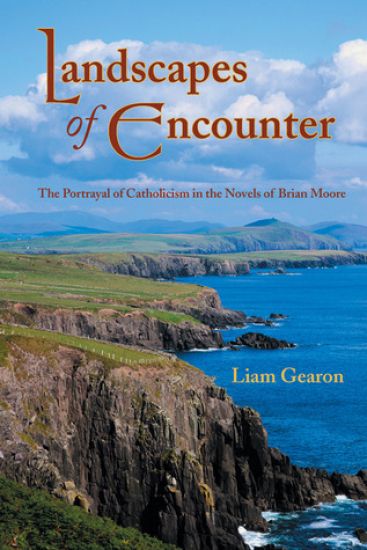
Landscapes of Encounter

Landscapes of Encounter

Liam Gearon

University of Calgary Press
2002
sidottu
Brian Moore (1921-1999) is one of the few novelists whose literary portrayal of Catholicism effectively spans the period prior to and following the Second Vatican Council. His novels - from Judith Hearne (1955) to his final work, The Magician's Wife (1997) - are characterized by an enormously varied portrayal of pre- and post-Vatican II Catholicism. Many critics have discussed how Moore's life is reflected in his works, while others have dismissed his fictions as simple narratives in the mould of classical realism. In this book, Gearon contends that Moore's fictions are far more complex, as he was one of the great observers of Catholicism in all its modern and historical controversy. Moore's writings thus portray a world where religion is in constant encounter, and often conflict, with alternative cultural, ideological, and theological worldviews. Landscapes of Encounter provides the only full treatment of Moore's work as a literary convergence of the theological and the ideological, and specifically as a convergence of post-Vatican II and post-colonial perspectives.