Kirjojen hintavertailu – 12 903 725 kirjaa ja 27 kauppaa

Kirjailija

Liam Kennedy

Kirjat ja teokset yhdessä paikassa: 13 kirjaa, julkaisuja vuosilta 2000–2026, suosituimpiin kuuluu The Death Census of Black ’47: Eyewitness Accounts of Ireland’s Great Famine. Vertaile teosten hintoja ja tarkista saatavuus suomalaisista kirjakaupoista.

13 kirjaa

Kirjojen julkaisuvuodet: 2000–2026.

Cops and Robbers

Cops and Robbers

Liam Kennedy

NEW YORK UNIVERSITY PRESS
2026
pokkari
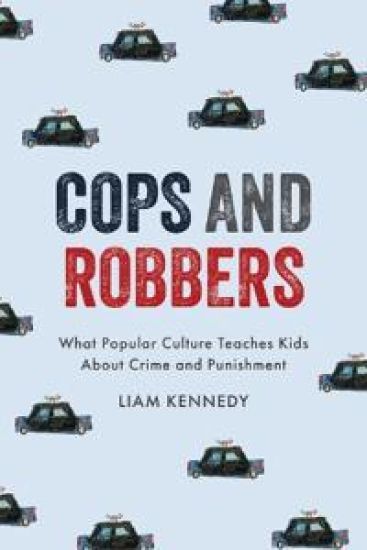
How children's books, tv shows, cartoons, and films often reproduce stereotypes about "good guys" and "bad guys" in terms of crime, policing, and the role of the criminal justice system in society In Cops and Robbers, Liam Kennedy examines children's popular culture to provide an understanding of how ideas about crime and the criminal justice system are produced and challenged. Based on an analysis of over 220 books, 12 films, and hundreds of television episodes/short videos geared toward children, Cops and Robbers considers the ideological impacts of children's crime media messaging about what counts as a crime, the causes of crime, the roles and responsibilities of cops and other crime-fighters, as well as the nature and boundaries of justice. Kennedy demonstrates how kids' pop culture works to sustain the status quo and inhibits our ability to imagine alternatives to policing and prisons. He argues that children's crime media teaches them that it is correct to criminalize behaviors designated as threats to the capitalist social order, that the perpetrators of these acts are bad or even evil, unworthy of our sympathy, and usually incapable of change. Further, police and crime-fighters are shown to solve a wide array of community problems, produce peace and happiness, and require endless resources to preserve the social order and quell dissent. Finally, he finds that forced labor and incarceration are routinely framed as inevitable consequences – rather than policy decisions – for bad people who have made supposedly bad choices. Ultimately, Cops and Robbers will encourage social scientists, educators, and parents/guardians to think more critically about how children's crime media shapes ideas about crime, cops, and justice.
Cops and Robbers

Cops and Robbers

Liam Kennedy

NEW YORK UNIVERSITY PRESS
2026
sidottu
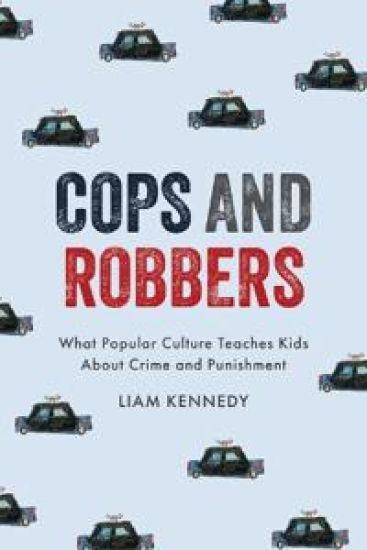
How children's books, tv shows, cartoons, and films often reproduce stereotypes about "good guys" and "bad guys" in terms of crime, policing, and the role of the criminal justice system in society In Cops and Robbers, Liam Kennedy examines children's popular culture to provide an understanding of how ideas about crime and the criminal justice system are produced and challenged. Based on an analysis of over 220 books, 12 films, and hundreds of television episodes/short videos geared toward children, Cops and Robbers considers the ideological impacts of children's crime media messaging about what counts as a crime, the causes of crime, the roles and responsibilities of cops and other crime-fighters, as well as the nature and boundaries of justice. Kennedy demonstrates how kids' pop culture works to sustain the status quo and inhibits our ability to imagine alternatives to policing and prisons. He argues that children's crime media teaches them that it is correct to criminalize behaviors designated as threats to the capitalist social order, that the perpetrators of these acts are bad or even evil, unworthy of our sympathy, and usually incapable of change. Further, police and crime-fighters are shown to solve a wide array of community problems, produce peace and happiness, and require endless resources to preserve the social order and quell dissent. Finally, he finds that forced labor and incarceration are routinely framed as inevitable consequences – rather than policy decisions – for bad people who have made supposedly bad choices. Ultimately, Cops and Robbers will encourage social scientists, educators, and parents/guardians to think more critically about how children's crime media shapes ideas about crime, cops, and justice.
The Death Census of Black ’47: Eyewitness Accounts of Ireland’s Great Famine

The Death Census of Black ’47: Eyewitness Accounts of Ireland’s Great Famine

Liam Kennedy; Donald M. MacRaild; Lewis Darwen; Brian Gurrin

ANTHEM PRESS
2026
nidottu
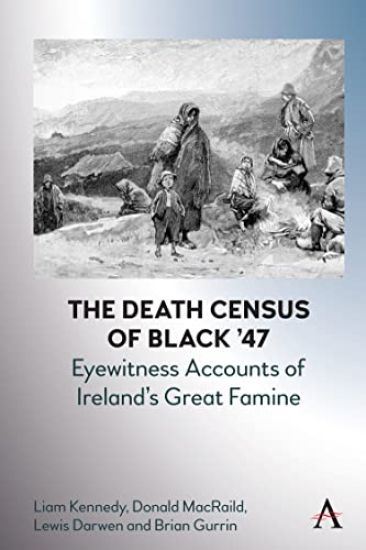
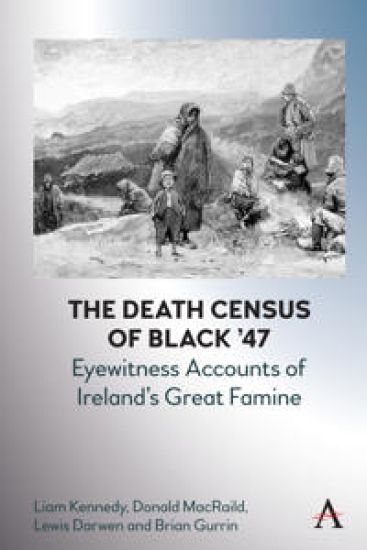
The Great Irish Famine claimed the lives of one million people, mainly from the lower classes. More than a million others fled the stricken land between 1845 and 1851. In recent decades, its history has become the focus of considerable scholarly and popular attention, but much remains to be retrieved and reconstructed, particularly at the level of the rural poor. This book fills that gap. It is based on a large volume of reports on social conditions in the Irish localities, emanating from within those localities, that has never been used systematically by historians. It bears the compelling title of the ‘Death Census’. Most historians are simply unaware of its existence. The outstanding feature of the Death Census is that it was authored by local clergymen who lived among the people they served and were intimately involved with their lives. This book brings the Death Census together in composite form for the first time and provides a detailed examination of its contents. The result is new understanding of the Great Famine as it was experienced on the ground.
The Death Census of Black ’47: Eyewitness Accounts of Ireland’s Great Famine

The Death Census of Black ’47: Eyewitness Accounts of Ireland’s Great Famine

Liam Kennedy; Donald M. MacRaild; Lewis Darwen; Brian Gurrin

ANTHEM PRESS
2023
sidottu
The Great Irish Famine claimed the lives of one million people, mainly from the lower classes. More than a million others fled the stricken land between 1845 and 1851. In recent decades, its history has become the focus of considerable scholarly and popular attention, but much remains to be retrieved and reconstructed, particularly at the level of the rural poor. This book fills that gap. It is based on a large volume of reports on social conditions in the Irish localities, emanating from within those localities, that has never been used systematically by historians. It bears the compelling title of the ‘Death Census’. Most historians are simply unaware of its existence. The outstanding feature of the Death Census is that it was authored by local clergymen who lived among the people they served and were intimately involved with their lives. This book brings the Death Census together in composite form for the first time and provides a detailed examination of its contents. The result is new understanding of the Great Famine as it was experienced on the ground.
Who Was Responsible for the Troubles?

Who Was Responsible for the Troubles?

Liam Kennedy

MCGILL-QUEEN'S UNIVERSITY PRESS
2022
nidottu
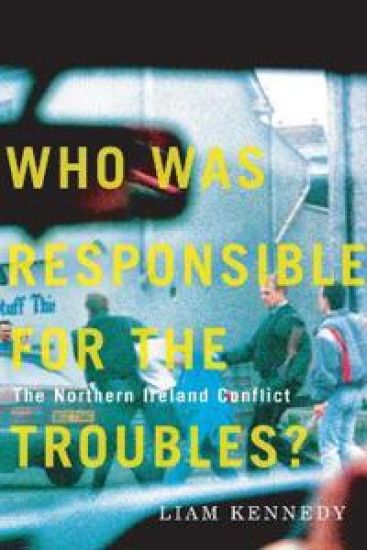
The Troubles claimed the lives of almost four thousand people in Northern Ireland, most of them civilians; forty-five thousand were injured in bombings and shootings. Relative to population size this was the most intense conflict experienced in Western Europe since the end of the Second World War. The central question posed in this book is fundamental, yet it is one that has rarely been asked: Who was primarily responsible for the prosecution of the Troubles and their attendant toll of the dead, the injured, and the emotionally traumatized? Liam Kennedy, who lived in Belfast throughout most of the conflict, was long afraid to raise the question and its implications. After years of reflection and research on the matter he has brought together elements of history, politics, sociology, and social psychology to identify the collective actors who drove the conflict onwards for more than three decades, from the days of the civil rights movement in the late 1960s to the signing of the Good Friday Agreement in 1998. The Troubles in Northern Ireland are a world-class problem in miniature. The combustible mix of national, ethnic, and sectarian passions that went into the making of the conflict has its parallels today in other parts of the world. Who Was Responsible for the Troubles? is an original and controversial work that captures the terror and the pain but also the hope of life and the pursuit of happiness in a deeply divided society.
Neoliberalism and Contemporary American Literature

Neoliberalism and Contemporary American Literature

Liam Kennedy; Stephen Shapiro

Dartmouth College Press
2019
nidottu
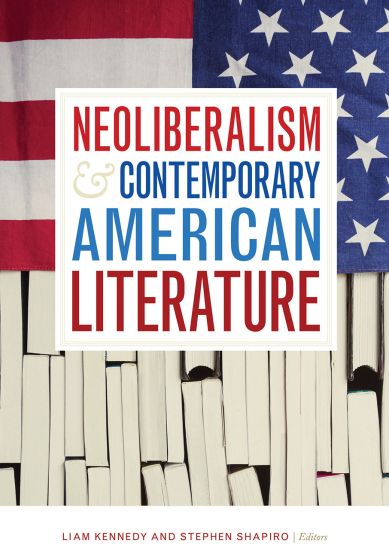
Neoliberalism is the rare buzzword that has fully crossed over from academic theorizing into mainstream discussion. Neoliberalism and Contemporary American Literature is the first book to examine the ways that US literature has responded to the dominance of our neoliberal regime. The essays collected here reveal how contemporary American writers have both propped up and interrogated the foundations of neoliberalism. The contributors look at a host of literary genres and styles, from the utopian sci-fi of Kim Stanley Robinson and the dark fantasy of Karen Russell to the poetic memoir-fiction hybrids of Ben Lerner, exploring how the relationships between politics, economics, and literary form have become both distorted and revitalized in the age of neoliberalism. Most pressingly, they ask if contemporary literature can still imagine either the end of capitalism or any realistic alternative to it.
Neoliberalism and Contemporary American Literature

Neoliberalism and Contemporary American Literature

Liam Kennedy; Stephen Shapiro

Dartmouth College Press
2019
sidottu
Neoliberalism is the rare buzzword that has fully crossed over from academic theorizing into mainstream discussion. Neoliberalism and Contemporary American Literature is the first book to examine the ways that US literature has responded to the dominance of our neoliberal regime. The essays collected here reveal how contemporary American writers have both propped up and interrogated the foundations of neoliberalism. The contributors look at a host of literary genres and styles, from the utopian sci-fi of Kim Stanley Robinson and the dark fantasy of Karen Russell to the poetic memoir-fiction hybrids of Ben Lerner, exploring how the relationships between politics, economics, and literary form have become both distorted and revitalized in the age of neoliberalism. Most pressingly, they ask if contemporary literature can still imagine either the end of capitalism or any realistic alternative to it.
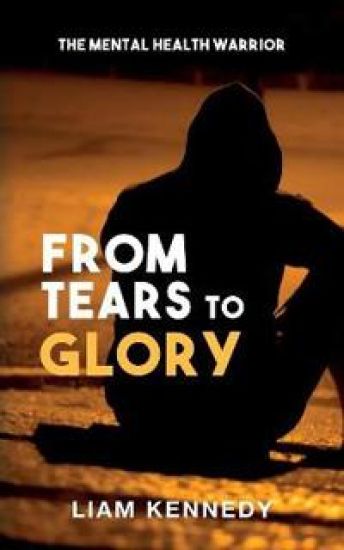
From Tears to Glory

From Tears to Glory

Liam Kennedy

That Guys House
2018
pokkari
"My dark days made me strong. Or maybe I was already strong and they made me prove it." My name is Liam Kennedy and I am a mental health sufferer, I have come from the brink of death to winning back my life. I use poetry as a tool to not just help myself but to also help my fellow mental health brothers and sisters around the world. My motto in life is NEVER GIVE UP
Afterimages

Afterimages

Liam Kennedy

University of Chicago Press
2016
sidottu
In 2005, photographer Chris Hondros captured a striking image of a young Iraqi girl in the aftermath of the killing of her parents by American soldiers. The shot stunned the world and has since become iconic—comparable to the infamous photo by Nick Ut of a Vietnamese girl running from a napalm attack. Both images serve as microcosms for their respective conflicts. Afterimages looks at the work of war photographers like Hondros and Ut to understand how photojournalism interacts with the American worldview. Liam Kennedy here maps the evolving relations between the American way of war and photographic coverage of it. Organized in its first section around key US military actions over the last fifty years, the book then moves on to examine how photographers engaged with these conflicts on wider ethical and political grounds, and finally on to the genre of photojournalism itself. Illustrated throughout with examples of the photographs being considered, Afterimages argues that photographs are important means for critical reflection on war, violence, and human rights. It goes on to analyze the high ethical, sociopolitical, and legalistic value we place on the still image’s ability to bear witness and stimulate action.
Race and Urban Space in American Culture
This innovative study looks at the formation of ethnic and racial identities in relation to the development of urban culture. The concept of urban space provides the means of organization for comprehensive illustrations of a series of themes, including white paranoia and urban decline; imagined urban communities; urban crime and justice; the racialized underclass; globalization; and new ethnicities. Race and Urban Space in American Culture focuses on a wide range of contemporary film and literature (including works by African-American, Irish-American, Hispanic, Puerto Rican, and Iranian-American authors), and examines the ways in which representations of urban space define issues of rights, community and citizenship.
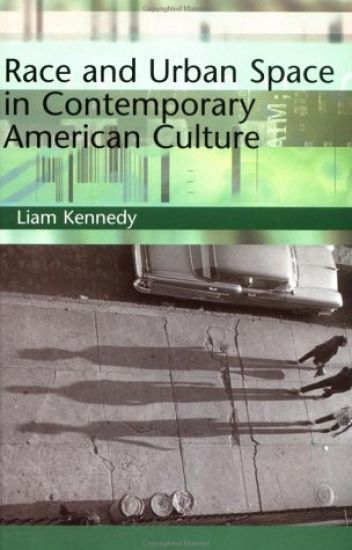
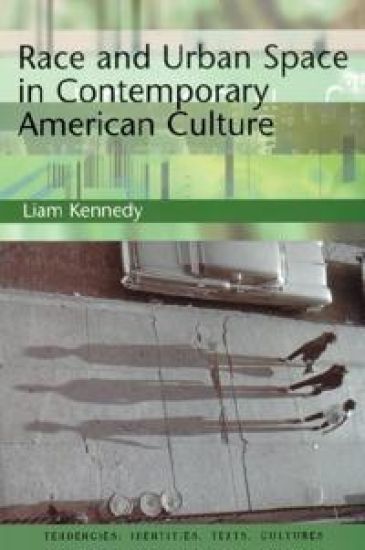
Race and Urban Space in Contemporary American Culture

Race and Urban Space in Contemporary American Culture

Liam Kennedy

Edinburgh University Press
2000
sidottu
This innovative book looks at representations of ethnic and racial identities in relation to the development of urban culture in postindustrialised American cities. The concept of 'urban space' organises the detailed illustration of a series of themes which structure chapters on white paranoia and urban decline; memories of urban passage; the racialised underclass; urban crime and justice; and globalisation and citizenship. The book focuses on a range of literary and visual forms including novels, journalism, films (narrative and documentary) and photography to examine the relationship between race and representation in the production of urban space. Texts analysed include writings by Tom Wolfe (The Bonfire of the Vanities), Toni Morrison (Jazz), John Edgar Wildeman (Philadelphia Fire) and Walter Mosley (Devil in a Blue Dress). Films covered include Falling Down, Strange Days, Hoop Dreams and Clockers. Provocative and absorbing, this interdisciplinary treatment of urban representations engages contemporary theoretical and sociological debates about race and the city. Issues of space and spatiality in representations of the city are explored and the author shows how expressive forms of literary and visual representation interact with broader productions of urban space.
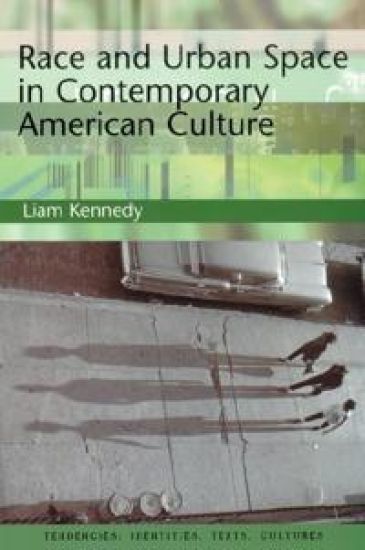
Race and Urban Space in Contemporary American Culture

Race and Urban Space in Contemporary American Culture

Liam Kennedy

Edinburgh University Press
2000
nidottu
This innovative book looks at representations of ethnic and racial identities in relation to the development of urban culture in postindustrialised American cities. The concept of 'urban space' organises the detailed illustration of a series of themes which structure chapters on white paranoia and urban decline; memories of urban passage; the racialised underclass; urban crime and justice; and globalisation and citizenship. The book focuses on a range of literary and visual forms including novels, journalism, films (narrative and documentary) and photography to examine the relationship between race and representation in the production of urban space. Texts analysed include writings by Tom Wolfe (The Bonfire of the Vanities), Toni Morrison (Jazz), John Edgar Wildeman (Philadelphia Fire) and Walter Mosley (Devil in a Blue Dress). Films covered include Falling Down, Strange Days, Hoop Dreams and Clockers. Provocative and absorbing, this interdisciplinary treatment of urban representations engages contemporary theoretical and sociological debates about race and the city. Issues of space and spatiality in representations of the city are explored and the author shows how expressive forms of literary and visual representation interact with broader productions of urban space.