

Kirjailija
Liam Murphy
Kirjat ja teokset yhdessä paikassa: 11 kirjaa, julkaisuja vuosilta 2004–2025, suosituimpiin kuuluu Polly Planet & Finnel Fixit. Vertaile teosten hintoja ja tarkista saatavuus suomalaisista kirjakaupoista.
11 kirjaa
Kirjojen julkaisuvuodet: 2004–2025.




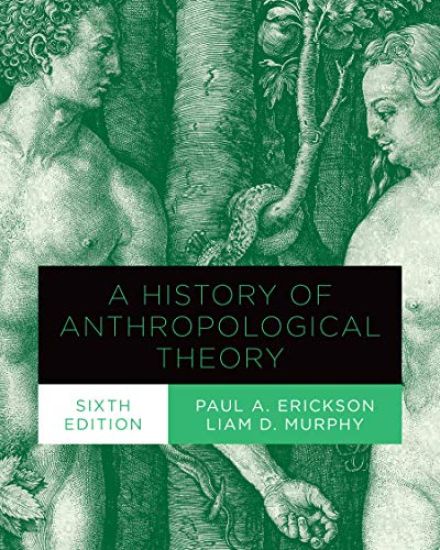
A History of Anthropological Theory, Sixth Edition
Paul A. Erickson; Liam Murphy
University of Toronto Press
2021
sidottu
For over twenty years, A History of Anthropological Theory has provided a strong foundation for understanding anthropological thinking, tracing how the discipline has evolved from its origins to the present day. The sixth edition of this important text offers substantial updates throughout, including more balanced coverage of the four fields of anthropology, an entirely new section on the Anthropocene, and significantly revised discussions of public anthropology, gender and sexuality, and race and ethnicity. Written in accessible prose and enhanced with illustrations, key terms, and study questions in each section, this text remains essential reading for those interested in studying the history of anthropology. On its own or used with the companion volume, Readings for a History of Anthropological Theory, sixth edition, this text provides comprehensive coverage in a flexible and easy-to-use format for teaching in the anthropology classroom.
A History of Anthropological Theory, Sixth Edition
Paul A. Erickson; Liam Murphy
University of Toronto Press
2021
pokkari
Halvin toimitettuna 51,50 €
For over twenty years, A History of Anthropological Theory has provided a strong foundation for understanding anthropological thinking, tracing how the discipline has evolved from its origins to the present day. The sixth edition of this important text offers substantial updates throughout, including more balanced coverage of the four fields of anthropology, an entirely new section on the Anthropocene, and significantly revised discussions of public anthropology, gender and sexuality, and race and ethnicity. Written in accessible prose and enhanced with illustrations, key terms, and study questions in each section, this text remains essential reading for those interested in studying the history of anthropology. On its own or used with the companion volume, Readings for a History of Anthropological Theory, sixth edition, this text provides comprehensive coverage in a flexible and easy-to-use format for teaching in the anthropology classroom.

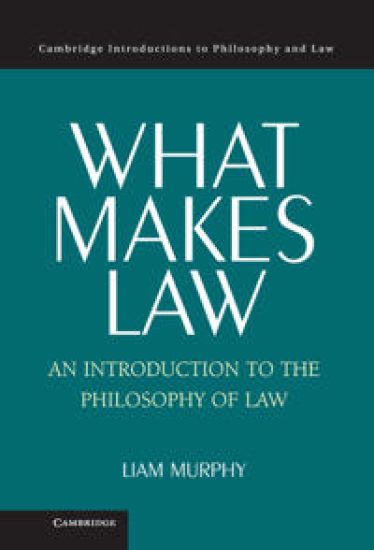
This book offers an advanced introduction to central questions in legal philosophy. What factors determine the content of the law in force? What makes a normative system a legal system? How does law beyond the state differ from domestic law? What kind of moral force does law have? The most important existing views are introduced, but the aim is not to survey the existing literature. Rather, this book introduces the subject by stepping back from the fray to sketch the big picture, to show just what is at stake in these old debates. Legal philosophy has become somewhat arid and inward looking. In part this is because the disagreement between the main camps on the important questions is apparently intractable. The main aim of the book is to suggest both a diagnosis and a proper practical response to this situation of intractable disagreement about questions that do matter.
This book offers an advanced introduction to central questions in legal philosophy. What factors determine the content of the law in force? What makes a normative system a legal system? How does law beyond the state differ from domestic law? What kind of moral force does law have? The most important existing views are introduced, but the aim is not to survey the existing literature. Rather, this book introduces the subject by stepping back from the fray to sketch the big picture, to show just what is at stake in these old debates. Legal philosophy has become somewhat arid and inward looking. In part this is because the disagreement between the main camps on the important questions is apparently intractable. The main aim of the book is to suggest both a diagnosis and a proper practical response to this situation of intractable disagreement about questions that do matter.
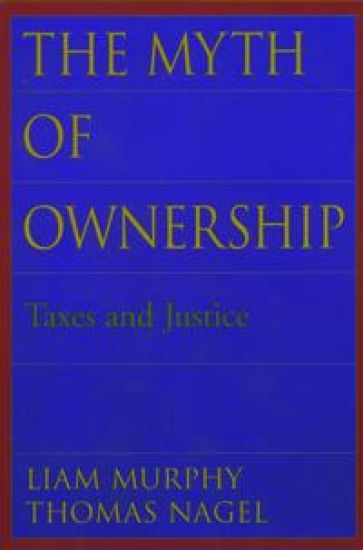
The Myth of Ownership
Liam Murphy; Thomas Nagel
Oxford University Press Inc
2004
nidottu
Halvin toimitettuna 44,80 €
In a capitalist economy, taxes are the most important instrument by which the political system puts into practice a conception of economic and distributive justice. Taxes arouse strong passions, fueled not only by conflicts of economic self-interest, but by conflicting ideas of fairness. Taking as a guiding principle the conventional nature of private property, Murphy and Nagel show how taxes can only be evaluated as part of the overall system of property rights that they help to create. Justice or injustice in taxation, they argue, can only mean justice or injustice in the system of property rights and entitlements that result from a particular regime. Taking up ethical issues about individual liberty, interpersonal obligation, and both collective and personal responsibility, Murphy and Nagel force us to reconsider how our tax policy shapes our system of property rights.