
Kirjojen hintavertailu – 12 903 725 kirjaa ja 27 kauppaa

Kirjailija

Liane Carlson

Kirjat ja teokset yhdessä paikassa: 3 kirjaa, julkaisuja vuosilta 2019–2022, suosituimpiin kuuluu The Abyss or Life Is Simple. Vertaile teosten hintoja ja tarkista saatavuus suomalaisista kirjakaupoista.

3 kirjaa

Kirjojen julkaisuvuodet: 2019–2022.

The Abyss or Life Is Simple

The Abyss or Life Is Simple

Courtney Bender; Jeremy Biles; Liane Carlson; Joshua Dubler; Hannah C. Garvey; M. Cooper Harriss; Winnifred Fallers Sullivan; Erik Thorstensen

THE UNIVERSITY OF CHICAGO PRESS
2022
sidottu
An absorbing collection of essays on religious textures in Knausgaard’s writings and our time. Min kamp, or My Struggle, is a six-volume novel by Karl Ove Knausgaard and one of the most significant literary works of the young twenty-first century. Published in Norwegian between 2009 and 2011, the novel presents an absorbing first-person narrative of the life of a writer with the same name as the author, in a world at once fully disillusioned and thoroughly enchanted. In 2015, a group of scholars began meeting to discuss the peculiarly religious qualities of My Struggle. Some were interested in Knausgaard’s attention to explicitly religious subjects and artworks, others to what they saw as more diffuse attention to the religiousness of contemporary life. The group wondered what reading these textures of religion in these volumes might say about our times, about writing, and about themselves. The Abyss or Life Is Simple is the culmination of this collective endeavor—a collection of interlocking essays on ritual, beauty, and the end of the world.
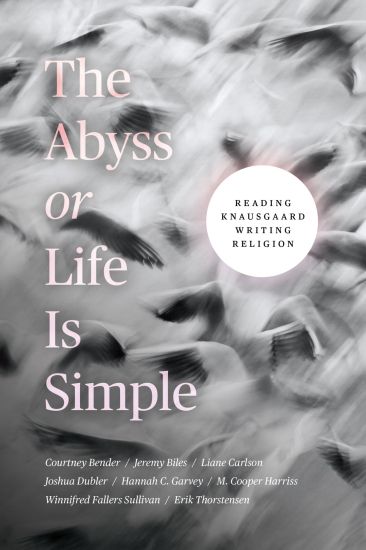
The Abyss or Life Is Simple

The Abyss or Life Is Simple

Courtney Bender; Jeremy Biles; Liane Carlson; Joshua Dubler; Hannah C. Garvey; M. Cooper Harriss; Winnifred Fallers Sullivan; Erik Thorstensen

THE UNIVERSITY OF CHICAGO PRESS
2022
nidottu
An absorbing collection of essays on religious textures in Knausgaard’s writings and our time. Min kamp, or My Struggle, is a six-volume novel by Karl Ove Knausgaard and one of the most significant literary works of the young twenty-first century. Published in Norwegian between 2009 and 2011, the novel presents an absorbing first-person narrative of the life of a writer with the same name as the author, in a world at once fully disillusioned and thoroughly enchanted. In 2015, a group of scholars began meeting to discuss the peculiarly religious qualities of My Struggle. Some were interested in Knausgaard’s attention to explicitly religious subjects and artworks, others to what they saw as more diffuse attention to the religiousness of contemporary life. The group wondered what reading these textures of religion in these volumes might say about our times, about writing, and about themselves. The Abyss or Life Is Simple is the culmination of this collective endeavor—a collection of interlocking essays on ritual, beauty, and the end of the world.
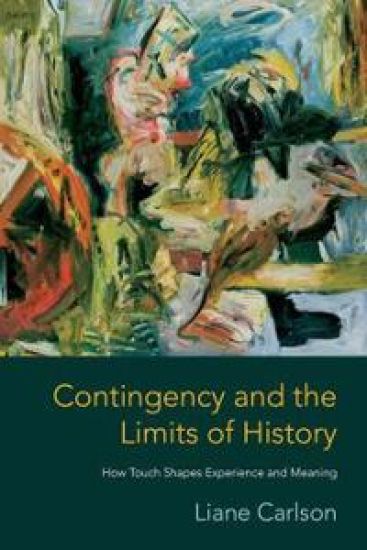
Contingency and the Limits of History

Contingency and the Limits of History

Liane Carlson

Columbia University Press
2019
sidottu
Central to the historicizing work of recent decades has been the concept of contingency, the realm of chance, change, and the unnecessary. Following Nietzsche and Foucault, genealogists have deployed contingency to show that all institutions and ideas could have been otherwise as a critique of the status quo. Yet scholars have spent very little time considering the genealogy of contingency itself—or what its history means for its role in politics. In Contingency and the Limits of History, Liane Carlson historicizes contingency by tying it to its theological and etymological roots in “touch,” contending that much of its critical, disruptive power is specific to our current historical moment. She returns to an older definition of contingency found in Christian theology that understands it as the lot of mortal creatures, who suffer, feel, bleed, and change, in contrast to a necessary, unchanging, impassible God. Far from dying out, Carlson reveals, this theological past persists in continental philosophy, where thinkers such as Novalis, Schelling, Merleau-Ponty, and Serres have imagined contingency as a type of radical destabilization brought about by the body’s collision with a changing world. Through studies of sickness, loneliness, violation, and love, she shows that different experiences of contingency can lead to dramatically dissimilar ethical and political projects. A strikingly original reconsideration of one of continental philosophy and critical theory’s most cherished concepts, this book reveals the limits of historicist accounts.