

Kirjojen hintavertailu – 12 903 725 kirjaa ja 27 kauppaa

Kirjailija

Liat Appel

Kirjat ja teokset yhdessä paikassa: 2 kirjaa, julkaisuja vuodelta 2019, suosituimpiin kuuluu Rorschach Assessment of Senior Adults. Vertaile teosten hintoja ja tarkista saatavuus suomalaisista kirjakaupoista.

2 kirjaa

Rorschach Assessment of Senior Adults

Rorschach Assessment of Senior Adults

Irving Weiner; Liat Appel; Shira Tibon-Czopp

Routledge
2019
sidottu
This guide is a much-needed reference for clinicians on how to use the Rorschach Inkblot Test with senior adults, an essential tool for assessing personality functioning to better identify psychological interventions. The book integrates historical developments, current research, conceptual considerations, and therapeutic and diagnostic applications. Chapters review basic guidelines for the understanding and interpretation of Rorschach variables, including protocol validity; interpretation of structural variables, thematic imagery, and cross-cultural normative data; sequence analysis; and more. The authors then provide 10 case illustrations of how the Rorschach indices of cognitive functioning, emotional experience, interpersonal relatedness, and self-perception can facilitate differential diagnosis and treatment planning in clinical work with older people. These case illustrations are rooted in previously non-existent Rorschach reference data based on an international sample of more than 250 senior adults and a second sample of more than 200 patients with Alzheimer’s disease. Clinicians will come away with a solid empirical basis for distinguishing between normal-range personality functioning and manifestations of psychological disorder in the elderly and for providing beneficial interventions to senior adult patients.
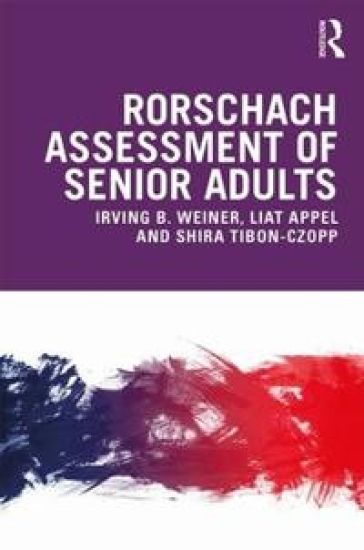
Rorschach Assessment of Senior Adults

Rorschach Assessment of Senior Adults

Irving Weiner; Liat Appel; Shira Tibon-Czopp

Routledge
2019
nidottu
This guide is a much-needed reference for clinicians on how to use the Rorschach Inkblot Test with senior adults, an essential tool for assessing personality functioning to better identify psychological interventions. The book integrates historical developments, current research, conceptual considerations, and therapeutic and diagnostic applications. Chapters review basic guidelines for the understanding and interpretation of Rorschach variables, including protocol validity; interpretation of structural variables, thematic imagery, and cross-cultural normative data; sequence analysis; and more. The authors then provide 10 case illustrations of how the Rorschach indices of cognitive functioning, emotional experience, interpersonal relatedness, and self-perception can facilitate differential diagnosis and treatment planning in clinical work with older people. These case illustrations are rooted in previously non-existent Rorschach reference data based on an international sample of more than 250 senior adults and a second sample of more than 200 patients with Alzheimer’s disease. Clinicians will come away with a solid empirical basis for distinguishing between normal-range personality functioning and manifestations of psychological disorder in the elderly and for providing beneficial interventions to senior adult patients.