Kirjojen hintavertailu – 12 859 828 kirjaa ja 27 kauppaa

Kirjailija

Liehuang Zhu

Kirjat ja teokset yhdessä paikassa: 12 kirjaa, julkaisuja vuosilta 2017–2025, suosituimpiin kuuluu Privacy-Preserving in Mobile Crowdsensing. Vertaile teosten hintoja ja tarkista saatavuus suomalaisista kirjakaupoista.

12 kirjaa

Kirjojen julkaisuvuodet: 2017–2025.

Privacy-Preserving in Mobile Crowdsensing

Privacy-Preserving in Mobile Crowdsensing

Chuan Zhang; Tong Wu; Youqi Li; Liehuang Zhu

SPRINGER VERLAG, SINGAPORE
2024
nidottu
Mobile crowdsensing is a new sensing paradigm that utilizes the intelligence of a crowd of individuals to collect data for mobile purposes by using their portable devices, such as smartphones and wearable devices. Commonly, individuals are incentivized to collect data to fulfill a crowdsensing task released by a data requester. This “sensing as a service” elaborates our knowledge of the physical world by opening up a new door of data collection and analysis. However, with the expansion of mobile crowdsensing, privacy issues urgently need to be solved. In this book, we discuss the research background and current research process of privacy protection in mobile crowdsensing. In the first chapter, the background, system model, and threat model of mobile crowdsensing are introduced. The second chapter discusses the current techniques to protect user privacy in mobile crowdsensing. Chapter three introduces the privacy-preserving content-based task allocation scheme. Chapter fourfurther introduces the privacy-preserving location-based task scheme. Chapter five presents the scheme of privacy-preserving truth discovery with truth transparency. Chapter six proposes the scheme of privacy-preserving truth discovery with truth hiding. Chapter seven summarizes this monograph and proposes future research directions. In summary, this book introduces the following techniques in mobile crowdsensing: 1) describe a randomizable matrix-based task-matching method to protect task privacy and enable secure content-based task allocation; 2) describe a multi-clouds randomizable matrix-based task-matching method to protect location privacy and enable secure arbitrary range queries; and 3) describe privacy-preserving truth discovery methods to support efficient and secure truth discovery. These techniques are vital to the rapid development of privacy-preserving in mobile crowdsensing.
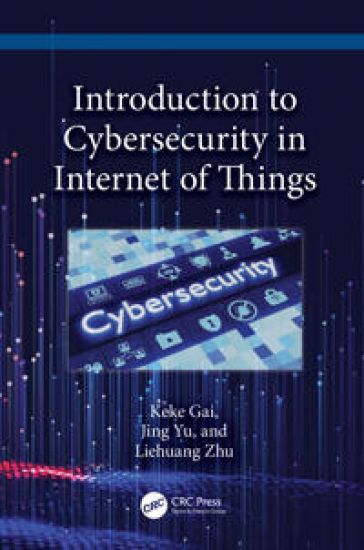
Introduction to Cybersecurity in the Internet of Things

Introduction to Cybersecurity in the Internet of Things

Keke Gai; Jing Yu; Liehuang Zhu

TAYLOR FRANCIS LTD
2025
nidottu
This book addresses the security challenges facing the rapidly growing Internet of Things (IoT) industry, including the potential threats and risks arising from its complex architecture. The authors discuss the overall IoT architecture, covering networking, computing, and security threats and risks to hardware such as sensors, actuators, and portable devices, as well as infrastructure layers. They cover a range of technical concepts such as cryptography, distributed storage, and data transmission, and offer practical advice on implementing security solutions such as authentication and access control. By exploring the future of cybersecurity in the IoT industry, with insights into the importance of big data and the threats posed by data mining techniques, this book is an essential resource for anyone interested in, or working in, the rapidly evolving field of IoT security.
Blockchain Technology

Blockchain Technology

Peng Jiang; Liehuang Zhu

Springer Nature Switzerland AG
2025
sidottu
The rapid development and widespread application of blockchain technology have led to a diverse and heterogeneous blockchain ecosystem. Independent operations, resembling isolated data islands, increase the difficulty of data exchange among blockchains. Cross-chain technology has emerged to connect independent blockchains, facilitating asset transfer and information interaction. As a promising new technology, cross-chain solutions with strong interoperability have garnered attention from both academia and industry. However, cross-chain financial incidents have exposed significant information leakage and property loss, highlighting the need for regulation and privacy in cross-chain environments. The lack of uniformity in cross-chain architecture and the use of common plain-format transactions increase the difficulty of both regulation and privacy preservation. This book, for the first time, explores the challenges and solutions related to cross-chain regulation and privacy. We provide a comprehensive understanding of how to design full life-cycle regulation mechanisms, from multi-dimensional detection to efficient provenance tracking, and lightweight privacy-preserving mechanisms. Additionally, we discuss how to balance regulation and privacy in cross-chain environments. This book will be of particular interest to researchers in the fields of blockchain, privacy concerns, and network security. It is the first book to comprehensively summarize cross-chain architecture and classification, analyze security challenges and potential requirements, and present numerous innovative technologies and practical solutions for regulation and privacy.
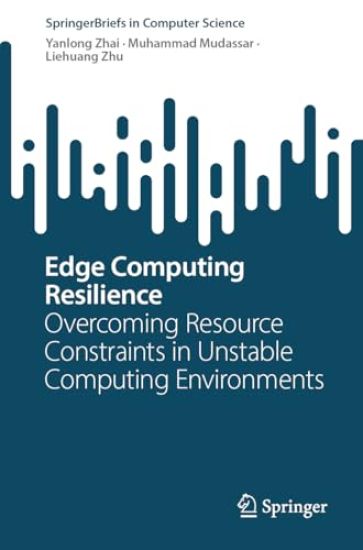
Edge Computing Resilience

Edge Computing Resilience

Yanlong Zhai; Muhammad Mudassar; Liehuang Zhu

SPRINGER VERLAG, SINGAPORE
2024
nidottu
Edge computing has emerged as a powerful technology for efficiently executing tasks by pushing cloud computing capabilities to the edge of the network. This approach significantly improves the quality of services of IoT applications and greatly enhances the performance of resource-constraint edge devices. However, with the explosive growth in users and data generation, low-computing-capability devices often struggle to meet computation demands in time, posing a significant challenge to the success of edge computing. These challenges include latency requirements, low computational power, system heterogeneity, energy constraints and privacy issues. To address these challenges, it is critical to design robust edge computing systems. This book provides a systematic and comprehensive analysis of edge computing challenges and presents resilient designs and frameworks suitable for real-time edge computing applications. The discussion primarily focuses on overcoming resource constraints in unstable edge computing environments, which is achieved through various concepts and technologies, such as fault handling, optimization and computation offloading. The book is significant to researchers in the field of edge computing, especially in the context of the resource-constrained paradigm, IoT application execution in the edge and fog computing. The book features innovative models and frameworks for processing time-critical, energy-aware and privacy-aware applications. By reading this book, researchers and professionals will gain a deeper understanding of different technologies and frameworks for edge computing and develop an appreciation for edge computing resilience. This resilience makes the edge system robust against frequent system failures for real-time IoT applications. The book provides a foundation for future research in this field and is an essential read for those seeking to advance their knowledge and expertise in edge computing.
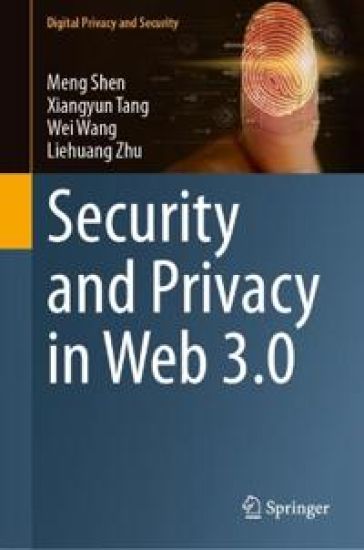
Security and Privacy in Web 3.0

Security and Privacy in Web 3.0

Meng Shen; Xiangyun Tang; Wei Wang; Liehuang Zhu

SPRINGER VERLAG, SINGAPORE
2024
sidottu
Web 3.0 is the next generation of the Internet built on decentralized technologies such as blockchain and cryptography. It is designed to address issues encountered in the previous generation of the Internet such as imbalanced distribution of interests, monopoly of platform resources, and leakage of personal privacy. This book explores the challenges and solutions related to ensuring security and privacy in the context of the evolving Web 3.0 architecture. Web 3.0 represents the next generation of the web, characterized by decentralized networks, blockchain technology, and enhanced user control over data. As Web 3.0 evolves, the focus on addressing security and privacy concerns becomes increasingly crucial. This book provides a comprehensive understanding of the security and privacy issues specific to Web 3.0 and offers practical defense frameworks and methods to mitigate these challenges. This book is dedicated to the specific aspects of security and privacy in Web 3.0, from introducing the architecture and addressing the inherent issues to presenting innovative methods for privacy-preserving computing, user behavior identification, and abnormal transaction detection. It is of particular interest to researchers in the field of Web 3.0, blockchain, and network security, as it summarizes the security and privacy concerns in Web 3.0 and brings a number of innovative technologies and practical solutions to protect sensitive data and maintain user privacy in Web 3.0 environments, equipping researchers with the knowledge necessary to design secure and privacy-aware applications and systems in Web 3.0.
Introduction to Cybersecurity in the Internet of Things

Introduction to Cybersecurity in the Internet of Things

Keke Gai; Jing Yu; Liehuang Zhu

TAYLOR FRANCIS LTD
2024
sidottu
This book addresses the security challenges facing the rapidly growing Internet of Things (IoT) industry, including the potential threats and risks arising from its complex architecture. The authors discuss the overall IoT architecture, covering networking, computing, and security threats and risks to hardware such as sensors, actuators, and portable devices, as well as infrastructure layers. They cover a range of technical concepts such as cryptography, distributed storage, and data transmission, and offer practical advice on implementing security solutions such as authentication and access control. By exploring the future of cybersecurity in the IoT industry, with insights into the importance of big data and the threats posed by data mining techniques, this book is an essential resource for anyone interested in, or working in, the rapidly evolving field of IoT security.
Privacy-Preserving in Mobile Crowdsensing

Privacy-Preserving in Mobile Crowdsensing

Chuan Zhang; Tong Wu; Youqi Li; Liehuang Zhu

SPRINGER VERLAG, SINGAPORE
2023
sidottu
Mobile crowdsensing is a new sensing paradigm that utilizes the intelligence of a crowd of individuals to collect data for mobile purposes by using their portable devices, such as smartphones and wearable devices. Commonly, individuals are incentivized to collect data to fulfill a crowdsensing task released by a data requester. This “sensing as a service” elaborates our knowledge of the physical world by opening up a new door of data collection and analysis. However, with the expansion of mobile crowdsensing, privacy issues urgently need to be solved. In this book, we discuss the research background and current research process of privacy protection in mobile crowdsensing. In the first chapter, the background, system model, and threat model of mobile crowdsensing are introduced. The second chapter discusses the current techniques to protect user privacy in mobile crowdsensing. Chapter three introduces the privacy-preserving content-based task allocation scheme. Chapter fourfurther introduces the privacy-preserving location-based task scheme. Chapter five presents the scheme of privacy-preserving truth discovery with truth transparency. Chapter six proposes the scheme of privacy-preserving truth discovery with truth hiding. Chapter seven summarizes this monograph and proposes future research directions. In summary, this book introduces the following techniques in mobile crowdsensing: 1) describe a randomizable matrix-based task-matching method to protect task privacy and enable secure content-based task allocation; 2) describe a multi-clouds randomizable matrix-based task-matching method to protect location privacy and enable secure arbitrary range queries; and 3) describe privacy-preserving truth discovery methods to support efficient and secure truth discovery. These techniques are vital to the rapid development of privacy-preserving in mobile crowdsensing.
Blockchain: Empowering Secure Data Sharing

Blockchain: Empowering Secure Data Sharing

Meng Shen; Liehuang Zhu; Ke Xu

SPRINGER VERLAG, SINGAPORE
2021
nidottu
With the development of big data, data sharing has become increasingly popular and important in optimizing resource allocation and improving information utilization. However, the expansion of data sharing means there is an urgent need to address the issue of the privacy protection – an area where the emerging blockchain technology offers considerable advantages. Although there are a large number of research papers on data sharing modeling and analysis of network security, there are few books dedicated to blockchain-based secure data sharing. Filing this gap in the literature, the book proposes a new data-sharing model based on the blockchain system, which is being increasingly used in medical and credit reporting contexts. It describes in detail various aspects of the model, including its role, transaction structure design, secure multi-party computing and homomorphic encryption services, and incentive mechanisms, and presents corresponding case studies. The book explains thesecurity architecture model and the practice of building data sharing from the blockchain infrastructure, allowing readers to understand the importance of data sharing security based on the blockchain framework, as well as the threats to security and privacy. Further, by presenting specific data sharing case studies, it offers insights into solving data security sharing problems in more practical fields. The book is intended for readers with a basic understanding of the blockchain infrastructure, consensus mechanisms, smart contracts, secure multiparty computing, homomorphic encryption and image retrieval technologies.
Blockchain Technology in Internet of Things

Blockchain Technology in Internet of Things

Liehuang Zhu; Keke Gai; Meng Li

Springer Nature Switzerland AG
2020
nidottu
This book focuses on picturing B-IoT techniques from a few perspectives, which are architecture, key technologies, security and privacy, service models and framework, practical use cases and more. Main contents of this book derive from most updated technical achievements or breakthroughs in the field. A number of representative IoT service offerings will be covered by this book, such as vehicular networks, document sharing system, and telehealth. Both theoretical and practical contents will be involved in this book in order to assist readers to have a comprehensive and deep understanding the mechanism of using blockchain for powering up IoT systems. The blockchain-enabled Internet of Things (B-IoT) is deemed to be a novel technical alternative that provides network-based services with additional functionalities, benefits, and implementations in terms of decentralization, immutability, and auditability. Towards the enhanced secure and privacy-preserving Internet of Things (IoT), this book introduces a few significant aspects of B-IoT, which includes fundamental knowledge of both blockchain and IoT, state-of-the-art reviews of B-IoT applications, crucial components in the B-IoT system and the model design, and future development potentials and trends. IoT technologies and services, e.g. cloud data storage technologies and vehicular services, play important roles in wireless technology developments. On the other side, blockchain technologies are being adopted in a variety of academic societies and professional realms due to its promising characteristics. It is observable that the research and development on integrating these two technologies will provide critical thinking and solid references for contemporary and future network-relevant solutions. This book targets researchers and advanced level students in computer science, who are focused on cryptography, cloud computing and internet of things, as well as electrical engineering students and researchers focused on vehicular networks and more. Professionals working in these fields will also find this book to be a valuable resource.
Blockchain: Empowering Secure Data Sharing

Blockchain: Empowering Secure Data Sharing

Meng Shen; Liehuang Zhu; Ke Xu

Springer Verlag, Singapore
2020
sidottu
With the development of big data, data sharing has become increasingly popular and important in optimizing resource allocation and improving information utilization. However, the expansion of data sharing means there is an urgent need to address the issue of the privacy protection – an area where the emerging blockchain technology offers considerable advantages. Although there are a large number of research papers on data sharing modeling and analysis of network security, there are few books dedicated to blockchain-based secure data sharing. Filing this gap in the literature, the book proposes a new data-sharing model based on the blockchain system, which is being increasingly used in medical and credit reporting contexts. It describes in detail various aspects of the model, including its role, transaction structure design, secure multi-party computing and homomorphic encryption services, and incentive mechanisms, and presents corresponding case studies. The book explains thesecurity architecture model and the practice of building data sharing from the blockchain infrastructure, allowing readers to understand the importance of data sharing security based on the blockchain framework, as well as the threats to security and privacy. Further, by presenting specific data sharing case studies, it offers insights into solving data security sharing problems in more practical fields. The book is intended for readers with a basic understanding of the blockchain infrastructure, consensus mechanisms, smart contracts, secure multiparty computing, homomorphic encryption and image retrieval technologies.
Blockchain Technology in Internet of Things

Blockchain Technology in Internet of Things

Liehuang Zhu; Keke Gai; Meng Li

Springer Nature Switzerland AG
2019
sidottu
This book focuses on picturing B-IoT techniques from a few perspectives, which are architecture, key technologies, security and privacy, service models and framework, practical use cases and more. Main contents of this book derive from most updated technical achievements or breakthroughs in the field. A number of representative IoT service offerings will be covered by this book, such as vehicular networks, document sharing system, and telehealth. Both theoretical and practical contents will be involved in this book in order to assist readers to have a comprehensive and deep understanding the mechanism of using blockchain for powering up IoT systems. The blockchain-enabled Internet of Things (B-IoT) is deemed to be a novel technical alternative that provides network-based services with additional functionalities, benefits, and implementations in terms of decentralization, immutability, and auditability. Towards the enhanced secure and privacy-preserving Internet of Things (IoT), this book introduces a few significant aspects of B-IoT, which includes fundamental knowledge of both blockchain and IoT, state-of-the-art reviews of B-IoT applications, crucial components in the B-IoT system and the model design, and future development potentials and trends. IoT technologies and services, e.g. cloud data storage technologies and vehicular services, play important roles in wireless technology developments. On the other side, blockchain technologies are being adopted in a variety of academic societies and professional realms due to its promising characteristics. It is observable that the research and development on integrating these two technologies will provide critical thinking and solid references for contemporary and future network-relevant solutions. This book targets researchers and advanced level students in computer science, who are focused on cryptography, cloud computing and internet of things, as well as electrical engineering students and researchers focused on vehicular networks and more. Professionals working in these fields will also find this book to be a valuable resource.
Secure and Privacy-Preserving Data Communication in Internet of Things

Secure and Privacy-Preserving Data Communication in Internet of Things

Liehuang Zhu; Zijian Zhang; Chang Xu

Springer Verlag, Singapore
2017
nidottu
This book mainly concentrates on protecting data security and privacy when participants communicate with each other in the Internet of Things (IoT). Technically, this book categorizes and introduces a collection of secure and privacy-preserving data communication schemes/protocols in three traditional scenarios of IoT: wireless sensor networks, smart grid and vehicular ad-hoc networks recently. This book presents three advantages which will appeal to readers. Firstly, it broadens reader’s horizon in IoT by touching on three interesting and complementary topics: data aggregation, privacy protection, and key agreement and management. Secondly, various cryptographic schemes/protocols used to protect data confidentiality and integrity is presented. Finally, this book will illustrate how to design practical systems to implement the algorithms in the context of IoT communication. In summary, readers can simply learn and directly apply the new technologies to communicate data in IoT afterreading this book.