Kirjojen hintavertailu – 12 903 724 kirjaa ja 27 kauppaa

Kirjailija

Linda Åhäll

Kirjat ja teokset yhdessä paikassa: 3 kirjaa, julkaisuja vuosilta 2015–2021, suosituimpiin kuuluu Feministiska perspektiv på global politik. Vertaile teosten hintoja ja tarkista saatavuus suomalaisista kirjakaupoista.

3 kirjaa

Kirjojen julkaisuvuodet: 2015–2021.

Feministiska perspektiv på global politik

Feministiska perspektiv på global politik

Emil Edenborg; Sofie Tornhill; Cecilia Åse; Seema Arora-Jonsson; Annika Bergman Rosamond; Kristoffer Ekberg; Maria Eriksson Baaz; Catia Gregoratti; Jenny Gunnarsson Payne; Martin Hultman; Katharina Kehl; Elzbieta Bekiesza-Korolczuk; Paula Mählck; Elisabeth Olivius; Swati Parashar; Maja Sager; Maria Stern; Sanna Strand; Fia Sundevall; Johan Svanberg; Yvonne Svanström; Aina Tollefsen; Maria Wendt; Annick Wibben; Annica Young Kronsell; Linda Åhäll

Studentlitteratur AB
2021
nidottu
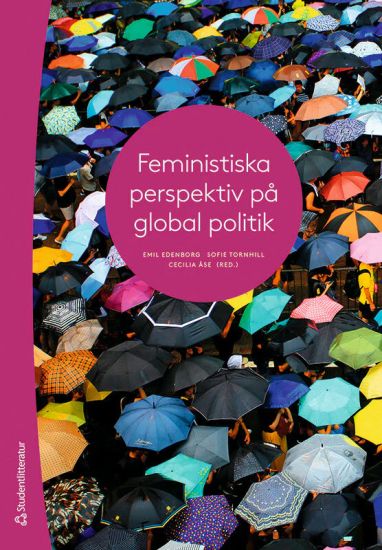
Klimatkris, högerpopulism, systematiskt våld och ojämlika livsvillkor världen över. Feministiska perspektiv på global politik visar att feministisk forskning ger oss verktyg för att analysera dessa brännande politiska problem. När vi ställer frågor om kön och undersöker maktordningar som innefattar sexualitet, klass, ras och nation, ökar kunskapen om hur hierarkier och orättvisor skapas och kan utmanas. Inom ramen för fem teman - klimatpolitik och hållbarhet, institutioner och styrning, ekonomi och arbete, transnationell mobilisering och aktivism samt krig, våld och militarisering - presenteras centrala feministiska teorier genom nedslag i aktuell forskning. Dessutom ingår ett kapitel som ger vägledning i att genomföra egna studier av global politik. Boken riktar sig till studenter i ämnen som genusvetenskap, statsvetenskap och internationella relationer och alla andra som är intresserade av globala frågor.
Sexing War/Policing Gender

Sexing War/Policing Gender

Linda Åhäll

CRC Press Inc
2017
nidottu
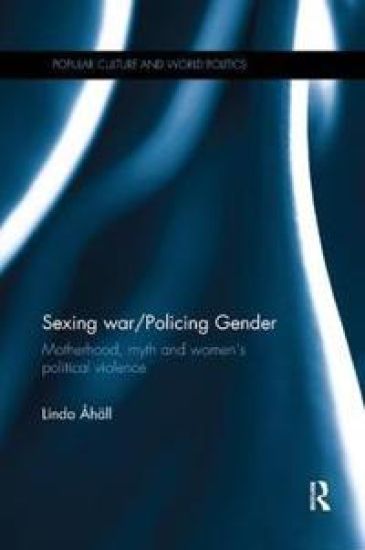
Historically, there has been reluctance, from mainstream IR scholars as well as feminists, to seriously engage with women’s agency in warfare. Instead, scholarship has tended to focus on women’s activism for peace or to ignore women’s agency altogether. This book rectifies this omission by exploring the cultural understanding of actors, agents and structures of war and how can we make sense of attitudes towards women, agency and war today. By using a poststructuralist feminist perspective and by analysing empirical cases from a Western ‘war on terror’ cultural context, Ahall argues that all types of stories are informed by ideas about motherhood and maternal reproduction as the foundation of sexual difference. This does not only mean that women are judged/read/valued based on the shape of their, maternalised, bodies, rather than what they actually do, but, it means that ideas about motherhood, not motherhood itself, function to police contemporary gender norms and contemporary understandings of agency in war. Overall, this book argues that maternalist war stories function to reiterate traditional heteronormative gender roles. This is how a ‘body politics’ of war is not only policing gender norms but actually writing ‘sex’ itself. The body politics of war told through maternalist war stories is a process in which the sexing of war means the policing of gender borders, with motherhood acting as the border agent. This work will be of interest to students and scholars in areas such as gender, political violence and international relations.
Sexing War/Policing Gender

Sexing War/Policing Gender

Linda Åhäll

Routledge
2015
sidottu
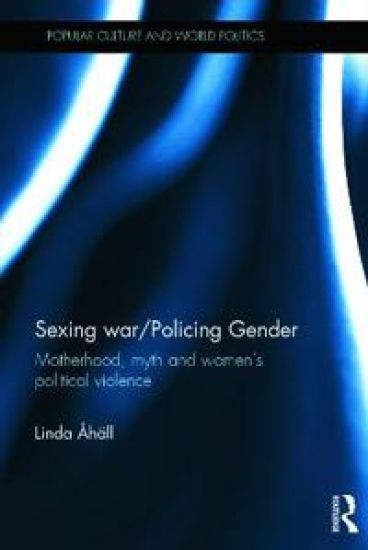
Historically, there has been reluctance, from mainstream IR scholars as well as feminists, to seriously engage with women’s agency in warfare. Instead, scholarship has tended to focus on women’s activism for peace or to ignore women’s agency altogether. This book rectifies this omission by exploring the cultural understanding of actors, agents and structures of war and how can we make sense of attitudes towards women, agency and war today. By using a poststructuralist feminist perspective and by analysing empirical cases from a Western ‘war on terror’ cultural context, Ahall argues that all types of stories are informed by ideas about motherhood and maternal reproduction as the foundation of sexual difference. This does not only mean that women are judged/read/valued based on the shape of their, maternalised, bodies, rather than what they actually do, but, it means that ideas about motherhood, not motherhood itself, function to police contemporary gender norms and contemporary understandings of agency in war. Overall, this book argues that maternalist war stories function to reiterate traditional heteronormative gender roles. This is how a ‘body politics’ of war is not only policing gender norms but actually writing ‘sex’ itself. The body politics of war told through maternalist war stories is a process in which the sexing of war means the policing of gender borders, with motherhood acting as the border agent. This work will be of interest to students and scholars in areas such as gender, political violence and international relations.