Kirjojen hintavertailu – 12 903 725 kirjaa ja 27 kauppaa
Kirjailija
Linda Greenhouse
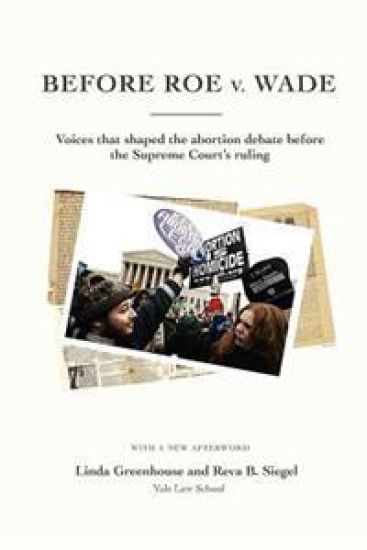
Kirjat ja teokset yhdessä paikassa: 9 kirjaa, julkaisuja vuosilta 2006–2023, suosituimpiin kuuluu Before Roe V. Wade: Voices That Shaped the Abortion Debate Before the Supreme Court's Ruling. Vertaile teosten hintoja ja tarkista saatavuus suomalaisista kirjakaupoista.
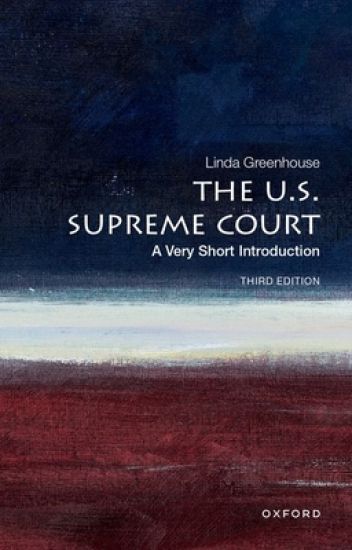
Very Short Introductions: Brilliant, Sharp, Inspiring For 30 years, Pulitzer Prize-winning journalist Linda Greenhouse chronicled the activities of the U. S. Supreme Court and its justices as a correspondent for the New York Times. In this Very Short Introduction, she draws on her deep knowledge of the court's history and of its written and unwritten rules to show readers how the Supreme Court really works. Greenhouse offers a fascinating institutional biography of a place and its people--men and women who exercise great power but whose names and faces are unrecognized by many Americans and whose work often appears cloaked in mystery. How do cases get to the Supreme Court? How do the justices go about deciding them? What special role does the chief justice play? What do the law clerks do? How does the court relate to the other branches of government? Greenhouse answers these questions by depicting the justices as they confront deep constitutional issues or wrestle with the meaning of confusing federal statutes. Throughout, the author examines many individual Supreme Court cases to illustrate points under discussion, including Marbury v. Madison, the seminal case which established judicial review; District of Columbia v. Heller (2008), which struck down the District of Columbia's gun-control statute and which was, surprisingly, the first time in its history that the Court issued an authoritative interpretation of the Second Amendment; and Dobbs v. Jackson Women's Health Organization (2022), which repudiated the right to abortion the Court had recognized nearly fifty years earlier in Roe v. Wade (1973). To add perspective, Greenhouse also compares the Court to foreign courts, revealing interesting differences. For instance, no other country in the world has chosen to bestow life tenure on its judges. The third edition of Greenhouse's Very Short Introduction tracks the changes in the Court's makeup over the past decade, including the landmark decisions of the Obama and Trump eras and the emergence of a conservative supermajority. A superb overview packed with telling details, this volume offers a matchless introduction to one of the pillars of American government.
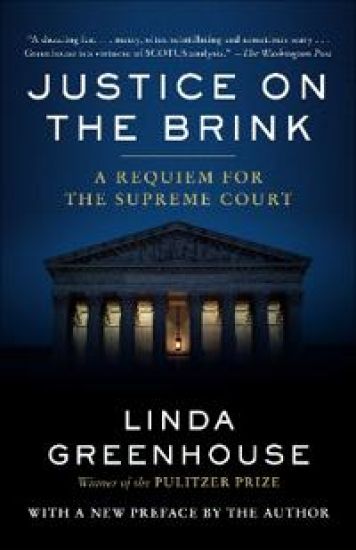
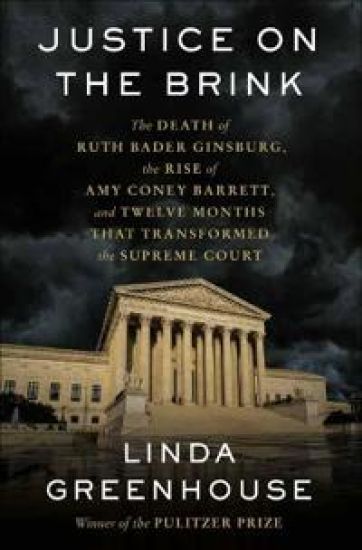
The gripping story of the Supreme Court's transformation from a measured institution of law and justice into a highly politicized body dominated by a right-wing supermajority, told through the dramatic lens of its most transformative year, by the Pulitzer Prize-winning law columnist for The New York Times--with a new preface by the author "A dazzling feat . . . meaty, often scintillating and sometimes scary . . . Greenhouse is a virtuoso of SCOTUS analysis."--The Washington Post In Justice on the Brink, legendary journalist Linda Greenhouse gives us unique insight into a court under stress, providing the context and brilliant analysis readers of her work in The New York Times have come to expect. In a page-turning narrative, she recounts the twelve months when the court turned its back on its legacy and traditions, abandoning any effort to stay above and separate from politics. With remarkable clarity and deep institutional knowledge, Greenhouse shows the seeds being planted for the court's eventual overturning of Roe v. Wade, expansion of access to guns, and unprecedented elevation of religious rights in American society. Both a chronicle and a requiem, Justice on the Brink depicts the struggle for the soul of the Supreme Court, and points to the future that awaits all of us.
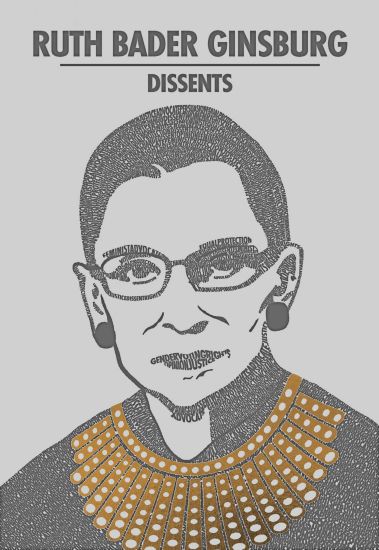
A collection of key dissenting and majority opinions from U. S. Supreme Court justice Ruth Bader Ginsburg. During her 27 years as an associate justice on the U. S. Supreme Court, Ruth Bader Ginsburg became well known for her strongly worded dissenting opinions against the decisions of the conservative majority. Ginsburg was a fierce supporter of women's rights whose personal experiences helped shape her into a feminist icon who employed logical, well-presented arguments to show that gender discrimination was harmful to all members of society. Ruth Bader Ginsburg Dissents includes majority and dissenting opinions that Ginsburg drafted during her time on the U. S. Supreme Court, along with briefs from her career before she was appointed to the court in 1993.
An urgent, sharply observed chronicle of the Supreme Court during twelve months unlike any other in American history, by the legendary New York Times writer and Pulitzer Prize winner At the end of the Supreme Court's 2019-2020 term, the center was holding. The predictions that the Court would move irrevocably to the radical right hadn't come to pass, as the justices released surprisingly moderate opinions on cases involving abortion rights, LGBTQ rights, and how local governments could handle the pandemic, all shepherded by Chief Justice John Roberts. By the end of the 2020-2021 term, much about our the nation's highest court will have changed. The right-wing supermajority will complete its first term on the bench, cementing Donald Trump's legacy on American jurisprudence. This is the story of that year. From the death of Ruth Bader Ginsburg to the rise of Amy Coney Barrett, from the pandemic to the election, from the Trump campaign's legal challenges to the storming of the Capitol across the street, the Supreme Court has been at the center of many of the biggest events of the year. Throughout Justice on the Brink, award-winning journalist Linda Greenhouse gives us unique insight into a Supreme Court under stress, providing the context and brilliant analysis readers of her work in The New York Times have come to expect. Ultimately, Greenhouse asks a fundamental question relevant to all Americans: Is this still John Roberts's Supreme Court, or does the Court now belong to Donald Trump?
For 30 years, Pulitzer Prize-winning journalist Linda Greenhouse chronicled the activities of the U. S. Supreme Court and its justices as a correspondent for the New York Times. In this Very Short Introduction, she draws on her deep knowledge of the court's history and of its written and unwritten rules to show readers how the Supreme Court really works. Greenhouse offers a fascinating institutional biography of a place and its people--men and women who exercise great power but whose names and faces are unrecognized by many Americans and whose work often appears cloaked in mystery. How do cases get to the Supreme Court? How do the justices go about deciding them? What special role does the chief justice play? What do the law clerks do? How does the court relate to the other branches of government? Greenhouse answers these questions by depicting the justices as they confront deep constitutional issues or wrestle with the meaning of confusing federal statutes. Throughout, the author examines many individual Supreme Court cases to illustrate points under discussion, ranging from Marbury v. Madison, the seminal case which established judicial review, to the recent District of Columbia v. Heller (2008), which struck down the District of Columbia's gun-control statute and which was, surprisingly, the first time in its history that the Court issued an authoritative interpretation of the Second Amendment. To add perspective, Greenhouse also compares the Court to foreign courts, revealing interesting differences. For instance, no other country in the world has chosen to bestow life tenure on its judges. The second edition of Greenhouse's Very Short Introduction tracks the changes in the Court's makeup over the last eight years, considers the landmark decisions of the Obama and Trump eras, and reexamines the precarious fates of such precedents as Roe v. Wade. A superb overview packed with telling details, this volume offers a matchless introduction to one of the pillars of American government.
In this timely book, a Pulitzer Prize–winning reporter trains an autobiographical lens on a moment of remarkable transition in American journalism. Just a few years ago, the mainstream press was wrestling with whether labeling waterboarding as torture violated important norms of neutrality and objectivity. Now, major American newspapers regularly call the president of the United States a liar. Clearly, something has changed as the old rules of “balance” and “two sides to every story” have lost their grip. Is the change for the better? Will it last? In Just a Journalist, Linda Greenhouse—who for decades covered the U. S. Supreme Court for The New York Times—tackles these questions from the perspective of her own experience. A decade ago, she faced criticism from her own newspaper and much of journalism’s leadership for a speech to a college alumnae group in which she criticized the Bush administration for, among other things, seeking to create a legal black hole at Guantánamo Bay—two years after the Supreme Court itself had ruled that the detainees could not be hidden away from the reach of federal judges who might hear their appeals. One famous newspaper editor expressed his belief that it was unethical for a journalist to vote, because the act of choosing one candidate over another could compromise objectivity. Linda Greenhouse disagrees. Calling herself “an accidental activist,” she raises urgent questions about the role journalists can and should play as citizens, even as participants, in the world around them.
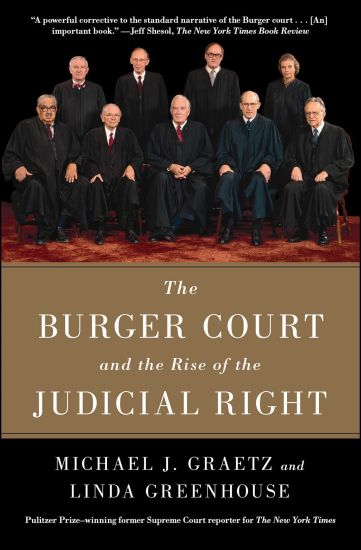
A revelatory look at the Warren Burger Supreme Court finds that it was not moderate or transitional, but conservative--and it shaped today's constitutional landscape. It is an "important book...a powerful corrective to the standard narrative of the Burger Court" (The New York Times Book Review). When Richard Nixon campaigned for the presidency in 1968 he promised to change the Supreme Court. With four appointments to the court, including Warren E. Burger as the chief justice, he did just that. In 1969, the Burger Court succeeded the famously liberal Warren Court, which had significantly expanded civil liberties and was despised by conservatives across the country. The Burger Court is often described as a "transitional" court between the Warren Court and the Rehnquist and Roberts Courts, a court where little of importance happened. But as this "landmark new book" (The Christian Science Monitor) shows, the Burger Court veered well to the right in such areas as criminal law, race, and corporate power. Authors Graetz and Greenhouse excavate the roots of the most significant Burger Court decisions and in "elegant, illuminating arguments" (The Washington Post) show how their legacy affects us today. "Timely and engaging" (Richmond Times-Dispatch), The Burger Court and the Rise of the Judicial Right draws on the personal papers of the justices as well as other archives to provide "the best kind of legal history: cogent, relevant, and timely" (Publishers Weekly).
"A fascinating book. In clear and forceful prose, Becoming Justice Blackmun tells a judicial Horatio Alger story and a tale of a remarkable transformation . . . A page-turner."--The New York Times Book ReviewIn this acclaimed biography, Linda Greenhouse of The New York Times draws back the curtain on America's most private branch of government, the Supreme Court. Greenhouse was the first print reporter to have access to the extensive archives of Justice Harry A. Blackmun (1908-99), the man behind numerous landmark Supreme Court decisions, including Roe v. Wade. Through the lens of Blackmun's private and public papers, Greenhouse crafts a compelling portrait of a man who, from 1970 to 1994, ruled on such controversial issues as abortion, the death penalty, and sex discrimination yet never lost sight of the human beings behind the legal cases. Greenhouse also paints the arc of Blackmun's lifelong friendship with Chief Justice Warren E. Burger, revealing how political differences became personal, even for two of the country's most respected jurists. From America's preeminent Supreme Court reporter, this is a must-read for everyone who cares about the Court and its impact on our lives.