Kirjojen hintavertailu – 12 859 818 kirjaa ja 27 kauppaa

Kirjailija

Linda Hargreaves

Kirjat ja teokset yhdessä paikassa: 8 kirjaa, julkaisuja vuosilta 1999–2009, suosituimpiin kuuluu Children, their World, their Education. Vertaile teosten hintoja ja tarkista saatavuus suomalaisista kirjakaupoista.

8 kirjaa

Kirjojen julkaisuvuodet: 1999–2009.

Children, their World, their Education

Children, their World, their Education

Robin Alexander; Michael Armstrong; Julia Flutter; Linda Hargreaves; David Harrison; Wynne Harlen; Elizabeth Hartley-Brewer; Ruth Kershner; John MacBeath; Berry Mayall; Stephanie Northen; Gillian Pugh; Colin Richards; David Utting

Routledge
2009
sidottu
Children, their World, their Education is the definitive text for students, teachers, researchers, educational leaders and all who are interested in primary education. As the culmination of the Cambridge Primary Review, the most comprehensive enquiry into English primary education for half a century, its publication provoked instant and dramatic headlines. Widespread support from teachers and eminent public figures demonstrated that the book had identified the issues that really mattered. Ministerial unease showed that here were findings that politicians could not ignore. But Children, their World, their Education is much more than a report. It is an unrivalled educational compendium that systematically covers the issues that are central to the daily work of students, teachers and heads. For trainee teachers on undergraduate and postgraduate courses it effectively maps the territory of primary education and provides the context, information and insight which are essential to the development of classroom skill. Its vast range of carefully evaluated evidence makes it a core resource for those undertaking research and advanced study. Its direct engagement with the policy process during a period of unprecedented change makes it an indispensable tool for policy analysis. It places England’s education system in the global context, and combines evidence on recent developments with a vision of how primary education should be. Part 1 sets the scene and tracks primary education policy since the 1960s. Part 2 examines children’s development and learning, their needs and aspirations, and their lives in a diverse society and fragile world. Part 3 explores what goes on in schools, from the vital early years to educational aims and values, the curriculum, pedagogy and classroom practice, assessment, standards and school organisation. Part 4 deals with the system as a whole: educational ages and stages, the work and training of primary teachers, school leadership, local authorities, funding, governance and policy. Part 5 pulls everything together with 78 conclusions and 75 recommendations for policy and practice. Companion volume: The Cambridge Primary Review Research Surveys, edited by Robin Alexander with Christine Doddington, John Gray, Linda Hargreaves and Ruth Kershner. The Cambridge Primary Review is supported by Esmée Fairbairn Foundation: www.primaryreview.org.uk.
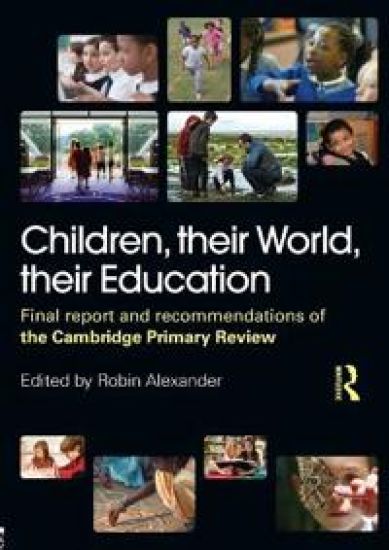
Children, their World, their Education

Children, their World, their Education

Robin Alexander; Michael Armstrong; Julia Flutter; Linda Hargreaves; David Harrison; Wynne Harlen; Elizabeth Hartley-Brewer; Ruth Kershner; John MacBeath; Berry Mayall; Stephanie Northen; Gillian Pugh; Colin Richards; David Utting

Routledge
2009
nidottu
Children, their World, their Education is the definitive text for students, teachers, researchers, educational leaders and all who are interested in primary education. As the culmination of the Cambridge Primary Review, the most comprehensive enquiry into English primary education for half a century, its publication provoked instant and dramatic headlines. Widespread support from teachers and eminent public figures demonstrated that the book had identified the issues that really mattered. Ministerial unease showed that here were findings that politicians could not ignore. But Children, their World, their Education is much more than a report. It is an unrivalled educational compendium that systematically covers the issues that are central to the daily work of students, teachers and heads. For trainee teachers on undergraduate and postgraduate courses it effectively maps the territory of primary education and provides the context, information and insight which are essential to the development of classroom skill. Its vast range of carefully evaluated evidence makes it a core resource for those undertaking research and advanced study. Its direct engagement with the policy process during a period of unprecedented change makes it an indispensable tool for policy analysis. It places England’s education system in the global context, and combines evidence on recent developments with a vision of how primary education should be. Part 1 sets the scene and tracks primary education policy since the 1960s. Part 2 examines children’s development and learning, their needs and aspirations, and their lives in a diverse society and fragile world. Part 3 explores what goes on in schools, from the vital early years to educational aims and values, the curriculum, pedagogy and classroom practice, assessment, standards and school organisation. Part 4 deals with the system as a whole: educational ages and stages, the work and training of primary teachers, school leadership, local authorities, funding, governance and policy. Part 5 pulls everything together with 78 conclusions and 75 recommendations for policy and practice. Companion volume: The Cambridge Primary Review Research Surveys, edited by Robin Alexander with Christine Doddington, John Gray, Linda Hargreaves and Ruth Kershner. The Cambridge Primary Review is supported by Esmée Fairbairn Foundation: www.primaryreview.org.uk.
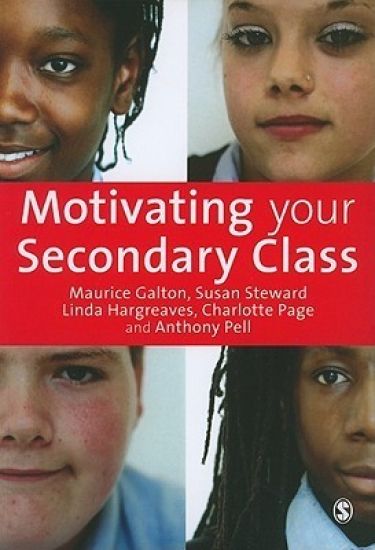
Motivating Your Secondary Class

Motivating Your Secondary Class

Maurice J Galton; Susan Steward; Linda Hargreaves; Charlotte Page; Anthony Pell

SAGE Publications Ltd
2009
nidottu
Why do so many pupils in Years 7, 8 and 9 'switch off' and make very little progress in the core subjects such as English and mathematics? What can teachers and schools do to improve pupils' attitudes and motivation? Maurice Galton and his team have collected examples from various schools of what works in re-energising demotivated pupils. This book presents practical advice and strategies for improving lower secondary school classrooms, ranging from reducing class size, to innovative induction programmes emphasising the development of core study skills, and developing effective procedures to train pupils to cooperate rather than confront each other during lessons. Chapters cover: - Making a Good Start to Secondary Education. - Creating a Cooperative Classroom Climate - Improving Communication between Pupils and Teachers - Why are some classrooms more successful? - How can school structures influence positive relationships? The book is a much-needed resource for all secondary teachers, and is particularly useful for year and subject heads.
Motivating Your Secondary Class

Motivating Your Secondary Class

Maurice J Galton; Susan Steward; Linda Hargreaves; Charlotte Page; Anthony Pell

SAGE Publications Ltd
2009
sidottu
Why do so many pupils in Years 7, 8 and 9 'switch off' and make very little progress in the core subjects such as English and mathematics? What can teachers and schools do to improve pupils' attitudes and motivation? Maurice Galton and his team have collected examples from various schools of what works in re-energising demotivated pupils. This book presents practical advice and strategies for improving lower secondary school classrooms, ranging from reducing class size, to innovative induction programmes emphasising the development of core study skills, and developing effective procedures to train pupils to cooperate rather than confront each other during lessons. Chapters cover: - Making a Good Start to Secondary Education. - Creating a Cooperative Classroom Climate - Improving Communication between Pupils and Teachers - Why are some classrooms more successful? - How can school structures influence positive relationships? The book is a much-needed resource for all secondary teachers, and is particularly useful for year and subject heads.
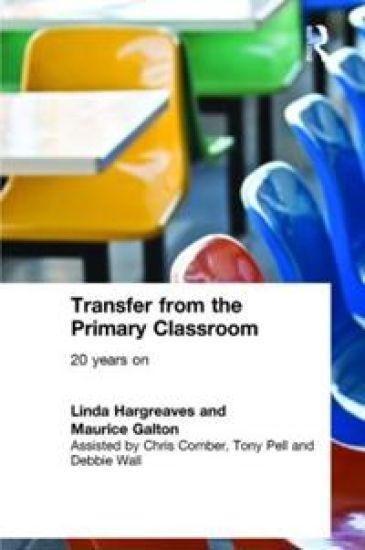
Transfer from the Primary Classroom

Transfer from the Primary Classroom

Maurice Galton; Linda Hargreaves

Routledge
2001
nidottu
The ORACLE (Observation and Classroom Learning and Evaluation) and its follow-up study address the following questions: Has teaching in the primary school changed over the past twenty years? Has pupil performance improved or declined? Are the links between certain teacher approaches and pupil achievement still the same? Has the National Curriculum had any important consequences for the way in which transfer is conducted? One of the main claims of the National Curriculum is that it has provided greater continuity through the various stages and this should be reflected in smoother transition from one school to the next. This book focuses on the issue of transfer from the primary to the secondary school, using data from the ORACLE project. This study which took place from 1975 to 1980, followed by 'Son of ORACLE', the study of group-work in the primary classroom 1980 to 1983, has had an enormous influence on the debate on primary education. The studies described in detail what took place in primary classrooms, the teaching styles used by teachers and the responses made by pupils. It linked these processes to pupil performance. Finally, it followed the pupils as they transferred out of the primary school into the secondary phase of education. At present a new research project is being carried out in Leicester. It involves studying primary schools for one year and then following the children as they transfer to the secondary phase or to a middle school. The project involves two thirds of the schools used in the original ORACLE research. In addition, the same observation instruments and the same tests, modified for cultural differences, are being used.
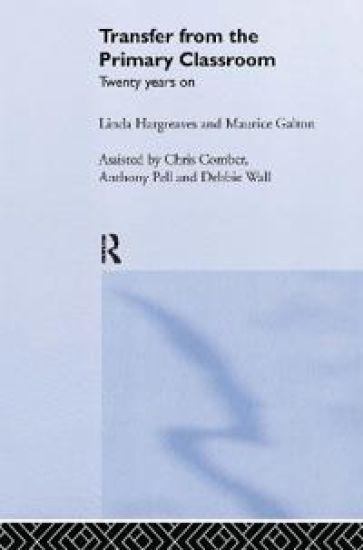
Transfer from the Primary Classroom

Transfer from the Primary Classroom

Maurice Galton; Linda Hargreaves

Routledge
2001
sidottu
The ORACLE (Observation and Classroom Learning and Evaluation) and its follow-up study address the following questions: Has teaching in the primary school changed over the past twenty years? Has pupil performance improved or declined? Are the links between certain teacher approaches and pupil achievement still the same? Has the National Curriculum had any important consequences for the way in which transfer is conducted? One of the main claims of the National Curriculum is that it has provided greater continuity through the various stages and this should be reflected in smoother transition from one school to the next. This book focuses on the issue of transfer from the primary to the secondary school, using data from the ORACLE project. This study which took place from 1975 to 1980, followed by 'Son of ORACLE', the study of group-work in the primary classroom 1980 to 1983, has had an enormous influence on the debate on primary education. The studies described in detail what took place in primary classrooms, the teaching styles used by teachers and the responses made by pupils. It linked these processes to pupil performance. Finally, it followed the pupils as they transferred out of the primary school into the secondary phase of education. At present a new research project is being carried out in Leicester. It involves studying primary schools for one year and then following the children as they transfer to the secondary phase or to a middle school. The project involves two thirds of the schools used in the original ORACLE research. In addition, the same observation instruments and the same tests, modified for cultural differences, are being used.
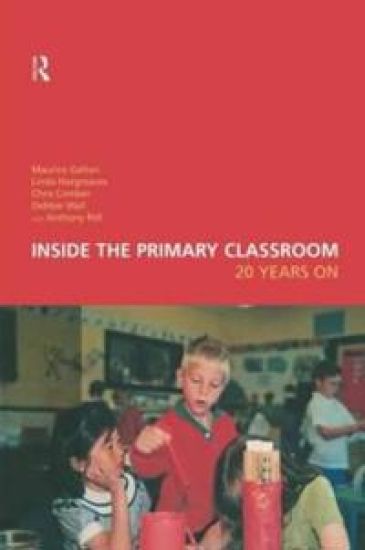
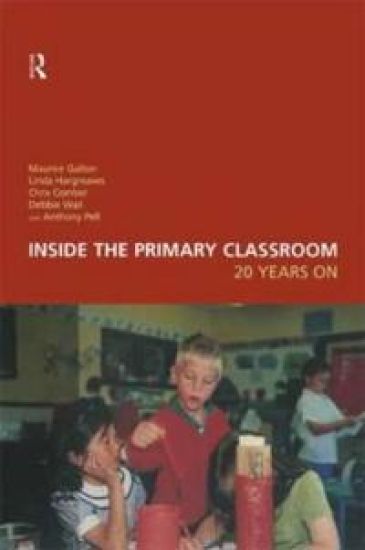
Inside the Primary Classroom: 20 Years On

Inside the Primary Classroom: 20 Years On

Chris Comber; Maurice Galton; Linda Hargreaves; Debbie Wall

Routledge
1999
nidottu
In recent years primary education has been the subject of continuing debate with questions of standards and their apparent decline being raised with alarming regularity. Central in informing these debates has been the ORACLE study of groupwork in primary classrooms. Published during the 1980s, the study described in detail the daily life of the primary classroom, the teaching styles used by teachers and the responses of pupils. That research has now been replicated - with over two thirds of the schools originally studied being revisited, using the same tests and observation instruments. This book presents the findings of this second round of research, and is therefore unique in being able authoritatively to document the changes - or lack of them - in primary education and teaching practice over the last twenty years.
Inside the Primary Classroom: 20 Years On

Inside the Primary Classroom: 20 Years On

Chris Comber; Maurice Galton; Linda Hargreaves; Debbie Wall

Routledge
1999
sidottu
In recent years primary education has been the subject of continuing debate with questions of standards and their apparent decline being raised with alarming regularity. Central in informing these debates has been the ORACLE study of groupwork in primary classrooms. Published during the 1980s, the study described in detail the daily life of the primary classroom, the teaching styles used by teachers and the responses of pupils. That research has now been replicated - with over two thirds of the schools originally studied being revisited, using the same tests and observation instruments. This book presents the findings of this second round of research, and is therefore unique in being able authoritatively to document the changes - or lack of them - in primary education and teaching practice over the last twenty years.