Kirjojen hintavertailu – 12 903 725 kirjaa ja 27 kauppaa

Kirjailija

Linda Mulcahy

Kirjat ja teokset yhdessä paikassa: 8 kirjaa, julkaisuja vuosilta 2008–2024, suosituimpiin kuuluu Contract Law in Perspective. Vertaile teosten hintoja ja tarkista saatavuus suomalaisista kirjakaupoista.

8 kirjaa

Kirjojen julkaisuvuodet: 2008–2024.

Digital Justice

Digital Justice

Linda Mulcahy; Anna Tsalapatanis

Springer International Publishing AG
2024
sidottu
This book explores an increasingly important issue for legal systems across the world. It asks what do we lose and gain when legal proceedings go online? Adopting a multi-disciplinary socio-legal perspective, it draws on an emerging body of empirical evidence from the UK, Australia, Canada and the US about the ways in which digital justice is being conceived of and experienced. Insights are drawn from across the social sciences to discuss the interface of digitalisation with a range of issues such as due process, procedural justice, digital disadvantage, ceremony and ritual, science and technology studies and the dematerialisation of the civic sphere. Written accessibly and provocatively, it poses questions from a variety of different perspective with a particular focus on marginalised groups.
The Democratic Courthouse

The Democratic Courthouse

Linda Mulcahy; Emma Rowden

Routledge
2019
nidottu

Halvin toimitettuna 87,50 €

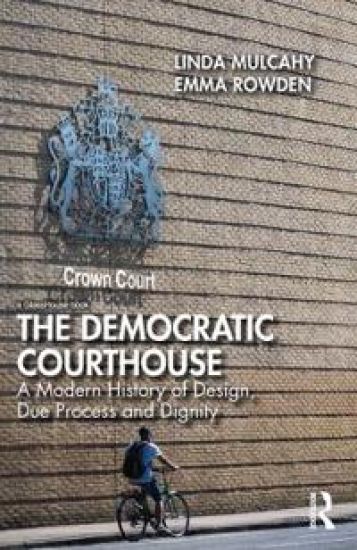
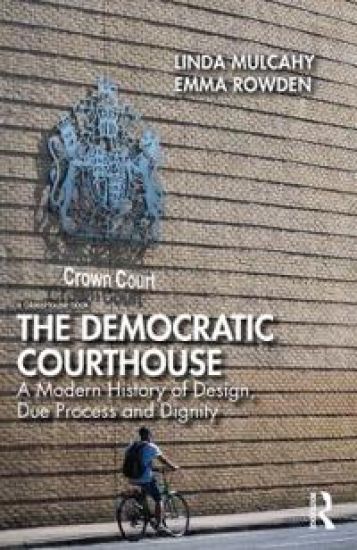
The Democratic Courthouse examines how changing understandings of the relationship between government and the governed came to be reflected in the buildings designed to house the modern legal system from the 1970s to the present day in England and Wales. The book explores the extent to which egalitarian ideals and the pursuit of new social and economic rights altered existing hierarchies and expectations about how people should interact with each other in the courthouse. Drawing on extensive public archives and private archives kept by the Ministry of Justice, but also using case studies from other jurisdictions, the book details how civil servants, judges, lawyers, architects, engineers and security experts have talked about courthouses and the people that populate them. In doing so, it uncovers a changing history of ideas about how the competing goals of transparency, majesty, participation, security, fairness and authority have been achieved, and the extent to which aspirations towards equality and participation have been realised in physical form. As this book demonstrates, the power of architecture to frame attitudes and expectations of the justice system is much more than an aesthetic or theoretical nicety. Legal subjects live in a world in which the configuration of space, the cues provided about behaviour by the built form and the way in which justice is symbolised play a crucial, but largely unacknowledged, role in creating meaning and constituting legal identities and rights to participate in the civic sphere. Key to understanding the modern-day courthouse, this book will be of interest to scholars and students in all fields of law, architecture, sociology, political science, psychology and criminology.

The Democratic Courthouse

The Democratic Courthouse

Linda Mulcahy; Emma Rowden

Routledge
2019
sidottu
The Democratic Courthouse examines how changing understandings of the relationship between government and the governed came to be reflected in the buildings designed to house the modern legal system from the 1970s to the present day in England and Wales. The book explores the extent to which egalitarian ideals and the pursuit of new social and economic rights altered existing hierarchies and expectations about how people should interact with each other in the courthouse. Drawing on extensive public archives and private archives kept by the Ministry of Justice, but also using case studies from other jurisdictions, the book details how civil servants, judges, lawyers, architects, engineers and security experts have talked about courthouses and the people that populate them. In doing so, it uncovers a changing history of ideas about how the competing goals of transparency, majesty, participation, security, fairness and authority have been achieved, and the extent to which aspirations towards equality and participation have been realised in physical form. As this book demonstrates, the power of architecture to frame attitudes and expectations of the justice system is much more than an aesthetic or theoretical nicety. Legal subjects live in a world in which the configuration of space, the cues provided about behaviour by the built form and the way in which justice is symbolised play a crucial, but largely unacknowledged, role in creating meaning and constituting legal identities and rights to participate in the civic sphere. Key to understanding the modern-day courthouse, this book will be of interest to scholars and students in all fields of law, architecture, sociology, political science, psychology and criminology.
Legal Life-Writing

Legal Life-Writing

Linda Mulcahy; David Sugarman

Wiley-Blackwell
2015
nidottu
Legal Life-Writing provides the first sustained treatment of the implications of life-writing on legal biography, autobiography and the visual history of law in society through a focus on neglected sources, and on those usually marginalized or ignored in legal biography and legal history, such as women and minorities. Draws on a range of sources and disciplinary approaches including legal history, life-writing, sociology, history, art history, feminism and post-colonialism, seeking to build a bridge-head between themChallenges the methodologies employed in conventional accounts of legal livesAims to ignite debate about the nature of the relationship between socio-legal studies and legal historyAims to enlarge the fields of legal biography, legal history, history and socio-legal studies, and to foster a closer and more inter-disciplinary dialogue between these disciplines
Legal Architecture

Legal Architecture

Linda Mulcahy

Routledge
2011
nidottu
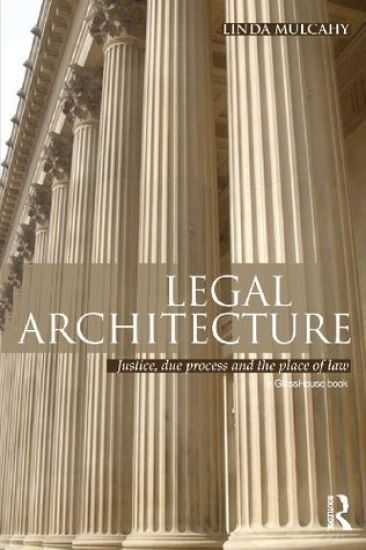
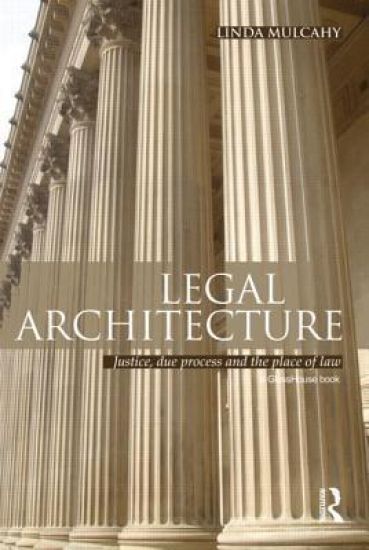
Legal Architecture addresses how the environment of the trial can be seen as a physical expression of our relationship with ideals of justice. It provides an alternative account of the trial, which charts the troubled history of notions of due process and participation. In contrast to visions of judicial space as neutral, Linda Mulcahy argues that understanding the factors that determine the internal design of the courthouse and courtroom are crucial to a broader and more nuanced understanding of the trial. Partitioning of the courtroom into zones and the restriction of movement within it are the result of turf wars about who can legitimately participate in the legal arena and call the judiciary to account. The gradual containment of the public, the increasing amount of space allocated to advocates, and the creation of dedicated space for journalists and the jury, all have complex histories that deserve attention. But these issues are not only of historical significance. Across jurisdictions, questions are now being asked about the internal configurations of the courthouse and courtroom, and whether standard designs meet the needs of modern participatory democracies: including questions about the presence and design of the modern dock; the ways in which new technologies threaten to change the dynamics of the trial and lead to the dematerialization of our primary site of adversarial practice; and the extent to which courthouses are designed in ways which realise their professed status as public spaces. This fascinating and original reflection on legal architecture will be of interest to socio-legal or critical scholars working in the field of legal geography, legal history, criminology, legal systems, legal method, evidence, human rights and architecture.
Legal Architecture

Legal Architecture

Linda Mulcahy

Routledge
2010
sidottu
Legal Architecture addresses how the environment of the trial can be seen as a physical expression of our relationship with ideals of justice. It provides an alternative account of the trial, which charts the troubled history of notions of due process and participation. In contrast to visions of judicial space as neutral, Linda Mulcahy argues that understanding the factors that determine the internal design of the courthouse and courtroom are crucial to a broader and more nuanced understanding of the trial. Partitioning of the courtroom into zones and the restriction of movement within it are the result of turf wars about who can legitimately participate in the legal arena and call the judiciary to account. The gradual containment of the public, the increasing amount of space allocated to advocates, and the creation of dedicated space for journalists and the jury, all have complex histories that deserve attention. But these issues are not only of historical significance. Across jurisdictions, questions are now being asked about the internal configurations of the courthouse and courtroom, and whether standard designs meet the needs of modern participatory democracies: including questions about the presence and design of the modern dock; the ways in which new technologies threaten to change the dynamics of the trial and lead to the dematerialization of our primary site of adversarial practice; and the extent to which courthouses are designed in ways which realise their professed status as public spaces. This fascinating and original reflection on legal architecture will be of interest to socio-legal or critical scholars working in the field of legal geography, legal history, criminology, legal systems, legal method, evidence, human rights and architecture.
Contract Law in Perspective

Contract Law in Perspective

Linda Mulcahy

Routledge Cavendish
2008
sidottu
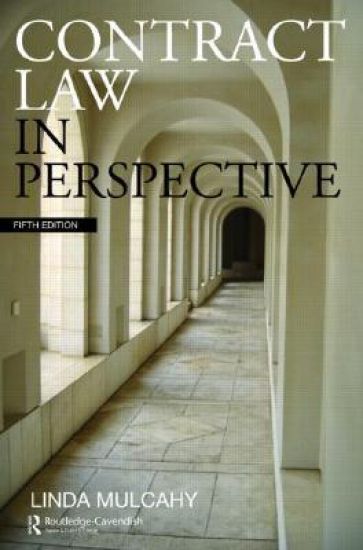
Contract Law in Perspective complements 'black letter' treatments of contract by looking at legal doctrine and statutes in their social, political and economic contexts. It increases students' understanding of the law of contract as well as convinces them why it is so important to us all. In addition to describing the key doctrines in the field, it explains the ideology behind them and considers the extent to which they serve the needs of the business community and consumers. The book broadens understanding and appreciation of the subject by reference to the 'big ideas' in contract theory and how these relate to practice at a level which is suitable for students. This fifth edition: has been substantially revised and now includes sections on privity and the Rights of Third Parties Act as well as a discussion of the Law Commision's Unfair Terms in Contract draft billincludes new chapter introductions and summaries designed to help students identify the key points and reflect on what they have learntprovides advice on further reading pointing students towards sources for more detailed studynow includes additional self-test questions for students at the end of each chapter to enable them to consolidate and practice at regular intervals.
Contract Law in Perspective

Contract Law in Perspective

Linda Mulcahy

Routledge Cavendish
2008
nidottu
Contract Law in Perspective complements 'black letter' treatments of contract by looking at legal doctrine and statutes in their social, political and economic contexts. It increases students' understanding of the law of contract as well as convinces them why it is so important to us all. In addition to describing the key doctrines in the field, it explains the ideology behind them and considers the extent to which they serve the needs of the business community and consumers. The book broadens understanding and appreciation of the subject by reference to the 'big ideas' in contract theory and how these relate to practice at a level which is suitable for students. This fifth edition: has been substantially revised and now includes sections on privity and the Rights of Third Parties Act as well as a discussion of the Law Commision's Unfair Terms in Contract draft billincludes new chapter introductions and summaries designed to help students identify the key points and reflect on what they have learntprovides advice on further reading pointing students towards sources for more detailed studynow includes additional self-test questions for students at the end of each chapter to enable them to consolidate and practice at regular intervals.