Kirjojen hintavertailu – 12 859 819 kirjaa ja 27 kauppaa

Kirjailija

Linda Pound

Kirjat ja teokset yhdessä paikassa: 12 kirjaa, julkaisuja vuosilta 2002–2021, suosituimpiin kuuluu How Children Learn. Vertaile teosten hintoja ja tarkista saatavuus suomalaisista kirjakaupoista.

12 kirjaa

Kirjojen julkaisuvuodet: 2002–2021.

Teaching Mathematics Creatively

Teaching Mathematics Creatively

Linda Pound; Trisha Lee

Routledge
2021
nidottu
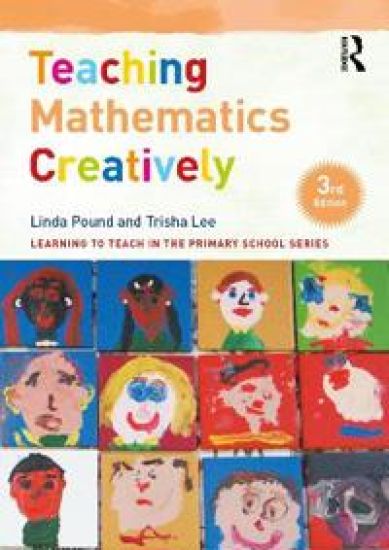
This revised and updated third edition offers a range of strategies, activities and ideas to bring mathematics to life in the primary classroom. Taking an innovative and playful approach to maths teaching, this book promotes creativity as a key element of practice and offers ideas to help your students develop knowledge, understanding and enjoyment of the subject. In the creative classroom, mathematics becomes a tool to build confidence, develop problem solving skills and motivate children. The fresh approaches explored in this book include a range of activities such as storytelling, music and construction, elevating maths learning beyond subject knowledge itself to enable students to see mathematics in a new way. Key chapters of this book explore:• Learning maths outdoors - make more noise, make more mess or work on a larger scale• Everyday maths - making sense of the numbers, patterns, shapes and measures children see around them• Music and maths – the role of rhythm in learning, and music and pattern in mathsStimulating, accessible and underpinned by the latest research and theory, this is essential reading for trainee and practising teachers who wish to embed creative approaches to maths teaching in their classroom.
Teaching Mathematics Creatively

Teaching Mathematics Creatively

Linda Pound; Trisha Lee

Routledge
2021
sidottu
This revised and updated third edition offers a range of strategies, activities and ideas to bring mathematics to life in the primary classroom. Taking an innovative and playful approach to maths teaching, this book promotes creativity as a key element of practice and offers ideas to help your students develop knowledge, understanding and enjoyment of the subject. In the creative classroom, mathematics becomes a tool to build confidence, develop problem solving skills and motivate children. The fresh approaches explored in this book include a range of activities such as storytelling, music and construction, elevating maths learning beyond subject knowledge itself to enable students to see mathematics in a new way. Key chapters of this book explore:• Learning maths outdoors - make more noise, make more mess or work on a larger scale• Everyday maths - making sense of the numbers, patterns, shapes and measures children see around them• Music and maths – the role of rhythm in learning, and music and pattern in mathsStimulating, accessible and underpinned by the latest research and theory, this is essential reading for trainee and practising teachers who wish to embed creative approaches to maths teaching in their classroom.
Influencing Early Childhood Education: Key Figures, Philosophies and Ideas
Thinking about early childhood education will offer an academic and critical approach to the wealth of theories that underpin elements of current practice in early childhood care and education. It will focus on analyzing the rise and interconnectedness of theories of learning and development. It will range from key nineteenth century movements to progressive ideas of the twentieth century, encompassing psychoanalytic theories, deconstructing theories and constructivism and behaviourism.
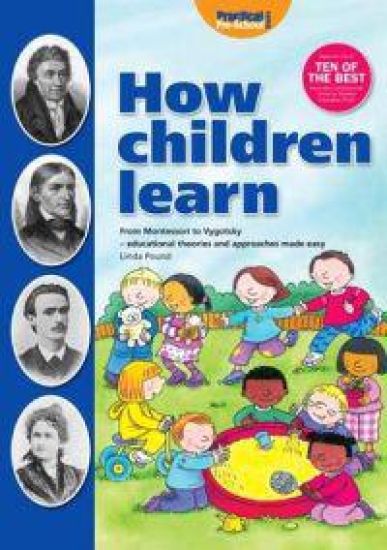
How Children Learn

How Children Learn

Linda Pound

Step Forward Publishing Ltd
2009
pokkari
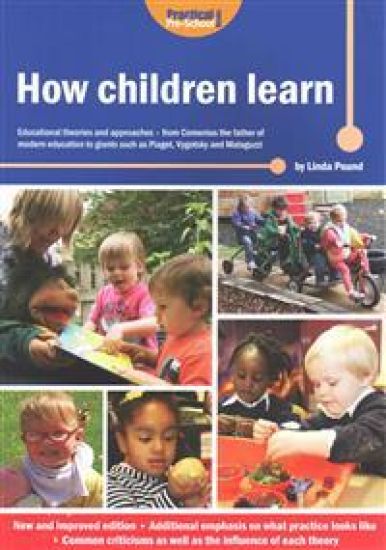
Contemporary Thinking and Theorists. Explores thoughts on tackling pressing modern day issues in childcare today and offers tangible ways of putting reflection into practice. Written in the same bestselling format as 'How Children Learn', which suceeded in making even the driest of theoretical tomes readable and relevant.
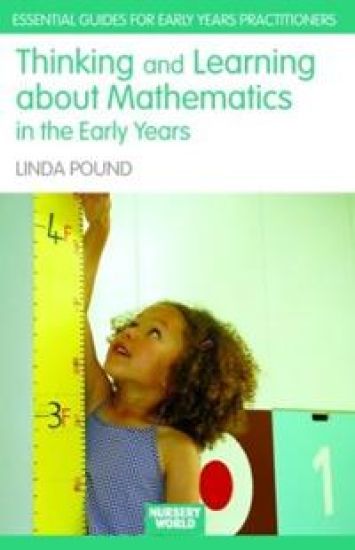
Thinking and Learning About Mathematics in the Early Years
How can early years practitioners help young children to become not only numerate but aspiring mathematicians who love numbers, shapes and mathematical comparisons? The introduction of the Foundation Stage has led to practitioners seeking ways to teach maths which are more in line with the creative and playful ways young children learn other subjects. Linda Pound draws on current thinking about children's mathematical development to show how you can encourage and enhance the numeracy skills of any child in the early years by linking maths to every-day life situations and making it a playful and enjoyable cross-curricular activity. This highly practical and engaging text includes chapters on: why maths is often seen as 'hard' and what practitioners can do to help young children be more successful exploring shapes, space, measures and patterns how to make maths more fun and playful, using games, humour, stories and rhymes using music and dance to enhance mathematical understanding encouraging children to see the connection between maths and everyday experiences through, for example sorting, matching and guessing creating an environment for mathematical development, indoors and outConcluding with a chapter on how practitioners and parents can become more confident in their use of maths, this user-friendly text, packed full of ideas, is essential reading for practitioners in any early years setting. Students on Early Education courses will also find much here to inspire them.
Leadership and Management in the Early Years: From Principles to Practice

Leadership and Management in the Early Years: From Principles to Practice

Caroline Jones; Linda Pound

Open University Press
2008
nidottu
Early childhood practitioners are often reluctant to see themselves as leaders and managers. However, all those who work with young children and their families, whatever their level of experience and competence, have to undertake both of these roles on a daily basis. This book encourages practitioners to recognise their active involvement in leadership and management in relation to their work as team leader or team member, and in their work with parents and other professionals, to ensure appropriate and effective provision for young children. The authors identify a number of key principles involved in effective early years leadership and management, which focus on the idea that:Leadership is about influencing others to improve and enhance children’s care, learning and development Leadership is only effective if it develops the leadership of others by supporting a team or group in meeting their declared aims or vision Leadership is ultimately distributed, shared and dispersed in early childhood settingsThese principles are supported by a detailed exploration of the statutory demands made on practitioners working with young children and their families, and reference to relevant literature drawn from both early childhood studies and leadership theories. As well as providing guidance on the roles, responsibilities and tasks facing early childhood leaders, the book features a number of case studies and practical tasks, giving life to concepts and ideas and enabling readers to apply theories and policies to their own work settings. Additional activities at the end of each chapter further support practitioners in fulfilling their leadership and management roles in practice. Leadership and Management in the Early Years is an essential text for early years and early childhood studies students as well as practitioners particularly those who are aiming for Early Years Professional Status.
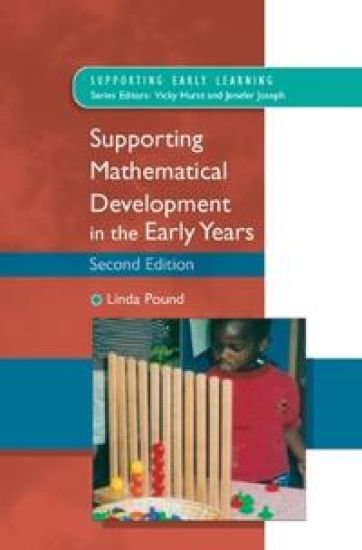
Supporting Mathematical Development in the Early Years
Review of the first edition“All the major areas of early childhood maths teaching and learning are covered in this powerful book… The book is also full of delightful stories… [It] would be eminently suitable for beginning and trainee teachers but would also be helpful to all those concerned in early years settings. All the relevant information is here, based on a wealth of knowledge and experience.” TESSupporting Mathematical Development in the Early Years provides practical guidance for parents, teachers and other early years workers who want to give children a good start in mathematical development. Showing how competent children are as mathematicians from an early age, the book offers an overview of young children’s mathematical behaviour at home and in early years settings. The book de?nes the content and the learning curriculum required to promote mathematical thinking, including an examination of the relationship between mathematics and language learning, and the role of other cross-curricular aspects such as information and communications technology (ICT). It explores the role of staff in observing, planning for and supporting children’s learning by using a variety of strategies, and makes suggestions for promoting effective partnerships between the parents or principal carers and early years staff. The book also considers the importance of play and imagination to the development of abstract thought. The second edition is comprehensively updated throughout and includes new material on Special Educational Needs, the very early years, the role of play, the role of ICT, and examples of outdoor play. It is essential reading for early years teachers and students, as well as parents who want to understand and develop their children’s early mathematical learning.
Supporting Musical Development in the Early Years

Supporting Musical Development in the Early Years

Linda Pound; Chris Harrison

Open University Press
2002
nidottu
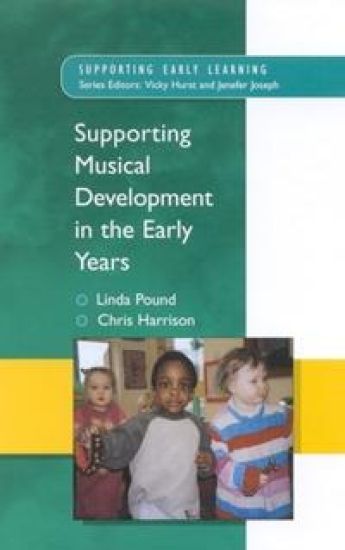
This important book provides practical guidance for parents, teachers and other early years practitioners who are concerned with young children's musical development. The authors highlight the relationship between music and the development of communication, the expression of emotion and playfulness. They show how these three elements, in conjunction with musical activity and experience, underpin all future learning including the development of language. They go on to explore music as a subject in its own right and its role in supporting other areas of the curriculum. Insights from a wide range of research are presented in a way which makes them accessible to practitioners so that they can be used to inform and develop effective practice. Practitioners and parents are encouraged to have confidence in their own musical ability. The book provides a wide range of practical strategies and activities. It will show that everyone is capable of enjoying making music with young children and contributing to their future musical development.