Kirjojen hintavertailu – 12 859 828 kirjaa ja 27 kauppaa

Kirjailija

Lindsay Oldenski

Kirjat ja teokset yhdessä paikassa: 3 kirjaa, julkaisuja vuosilta 1995–2013, suosituimpiin kuuluu Outward Foreign Direct Investment and US Exports – Implications for US Policy. Vertaile teosten hintoja ja tarkista saatavuus suomalaisista kirjakaupoista.

3 kirjaa

Kirjojen julkaisuvuodet: 1995–2013.

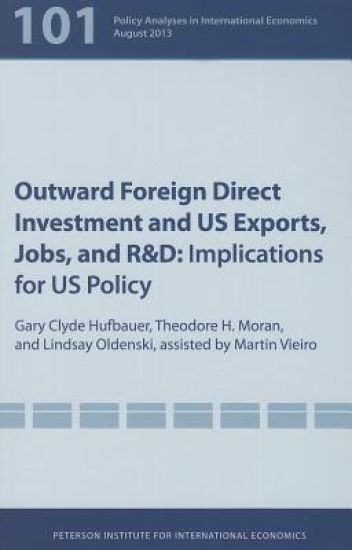
Outward Foreign Direct Investment and US Exports – Implications for US Policy

Outward Foreign Direct Investment and US Exports – Implications for US Policy

Gary Clyde Hufbauer; Theodore Moran; Lindsay Oldenski; Martin Vieiro

The Peterson Institute for International Economics
2013
nidottu
It is not in the US interest to adopt tax and regulatory policies that would discourage global engagement by US multinational corporations (MNCs). Research presented in this book shows that the expansion of foreign affiliates of US MNCs is positively associated with more production, greater employment, higher exports, and more research and development (R&D) in the United States. These findings suggest that less investment abroad by US firms would weaken-not strengthen-the US economy. This analysis by no means implies that there are only winners and no losers from outward investment. Changing patterns of MNC investment, like changing patterns of technology and production more generally, contribute to job losses and dislocations for some workers and to new opportunities for others. To benefit the US economy and US workers most broadly, the United States will want to search for ways to strengthen the appeal of the United States as a base for the operations of international firms. High among the recommendations to accomplish this, the United States should adopt a territorial tax system, like the great majority of developed countries.

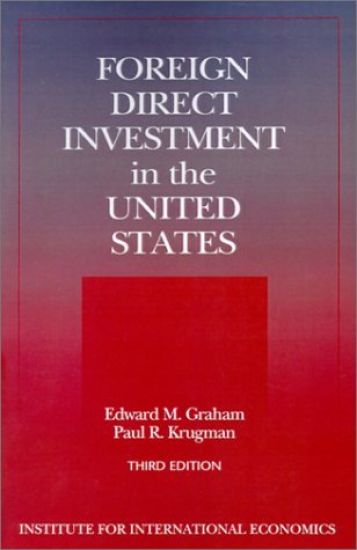
Foreign Direct Investment in the United States – Benefits, Suspicions, and Risks with Special Attention to FDI from China

Foreign Direct Investment in the United States – Benefits, Suspicions, and Risks with Special Attention to FDI from China

Edward Graham; Theodore Moran; Lindsay Oldenski; Paul Krugman

The Peterson Institute for International Economics
2012
nidottu
Americans have long been ambivalent toward foreign direct investment in the United States. Foreign multinational corporations may be a source of capital, technology, and jobs. But what are the implications for US workers, firms, communities, and consumers as the United States remains the most popular destination for foreign multinational investment? Theodore H. Moran and Lindsay Oldenski find that foreign multinational firms that invest in the United States are, alongside US-headquartered American multinationals, the most productive and highest-paying segment of the US economy. These firms conduct more research and development, provide more value added to US domestic inputs, and export more goods and services than other firms in the US economy. The superior technology and management techniques they employ spill over horizontally and vertically to improve the performance of local firms and workers. As the United States wants not only to expand employment but also create well-paying jobs that reverse the falling earnings that many US workers and middle class families have suffered in recent decades, it is more important than ever to enhance the United States as a destination for multinational investors.
Foreign Direct Investment in the United States – Benefits, Suspicions, and Risks with Special Attention to FDI from China

Foreign Direct Investment in the United States – Benefits, Suspicions, and Risks with Special Attention to FDI from China

Edward Graham; Theodore Moran; Lindsay Oldenski; Paul Krugman

The Peterson Institute for International Economics
1995
nidottu
The share of the US economy controlled by foreign firms has tripled since the mid-1970s. The authors find that foreign firms appear to invest in the United States mainly to exploit their individual advantages in management and technology - the same reasons why American firms invest abroad - rather than because the United States is now running large deficits and has become a large debtor nation. Foreign-owned firms do not pay lower wages or shift good jobs and research and development away from the United States. Foreign-owned firms and especially Japanese firms do, however, have a marked tendency to import more of their production inputs. The authors warn that the President's new legislative authority to screen FDI on national security grounds could easily be abused, but endorse using this authority to ensure access to critical technologies or production processes including a requirement on some foreign firms to invest in the United States. They propose new international rules to minimize governmental interference and harmonize policies toward multinational firms.