Kirjailija
Lionel Giles
Kirjat ja teokset yhdessä paikassa: 23 kirjaa, julkaisuja vuosilta 2005–2026, suosituimpiin kuuluu The Sayings of Lao Tzu. Vertaile teosten hintoja ja tarkista saatavuus suomalaisista kirjakaupoista.
23 kirjaa
Kirjojen julkaisuvuodet: 2005–2026.
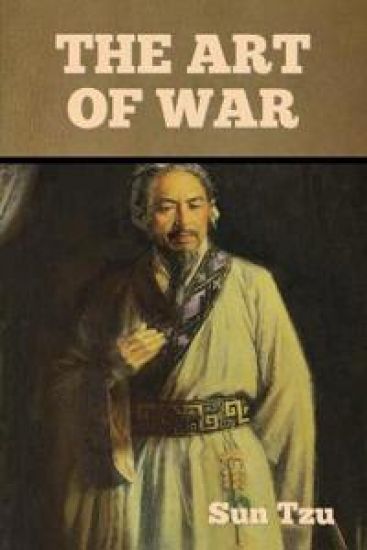
Sun Tzu on the Art of War
Active 6th Century B. C. Sunzi; Lionel Giles
Anson Street Press
2025
nidottu
"The Art of War" by Sun Tzu is a cornerstone of military strategy and ancient philosophy, offering timeless insights into warfare, leadership, and tactics. This edition, presented without translator's annotations, allows readers to engage directly with Sun Tzu's original text. A foundational work on military strategy, "The Art of War" explores the principles of effective leadership, emphasizing planning, deception, and discipline. Its teachings extend beyond the battlefield, influencing fields like business, negotiation, and conflict resolution. Discover the enduring wisdom of this classic text, a vital resource for understanding strategy and leadership from ancient times to the present day. A must-read for anyone interested in history, philosophy, and the art of strategic thinking. This work has been selected by scholars as being culturally important, and is part of the knowledge base of civilization as we know it. This work is in the public domain in the United States of America, and possibly other nations. Within the United States, you may freely copy and distribute this work, as no entity (individual or corporate) has a copyright on the body of the work. Scholars believe, and we concur, that this work is important enough to be preserved, reproduced, and made generally available to the public. We appreciate your support of the preservation process, and thank you for being an important part of keeping this knowledge alive and relevant.
The Art of War is an ancient Chinese military treatise dating from the Late Spring and Autumn Period (roughly 5th century BC). The work, which is attributed to the ancient Chinese military strategist Sun Tzu ("Master Sun", also spelled Sunzi), is composed of 13 chapters. Each one is devoted to an aspect of warfare and how it applies to military strategy and tactics. For almost 1,500 years it was the lead text in an anthology that would be formalised as the Seven Military Classics by Emperor Shenzong of Song in 1080. The Art of War remains the most influential strategy text in East Asian warfare and has influenced both Eastern and Western military thinking, business tactics, legal strategy, lifestyles and beyond. The book contained a detailed explanation and analysis of the Chinese military, from weapons and strategy to rank and discipline. Sun also stressed the importance of intelligence operatives and espionage to the war effort. Because Sun has long been considered to be one of history's finest military tacticians and analysts, his teachings and strategies formed the basis of advanced military training for millennia to come. The book was translated into French and published in 1772 (re-published in 1782) by the French Jesuit Jean Joseph Marie Amiot. A partial translation into English was attempted by British officer Everard Ferguson Calthrop in 1905 under the title The Book of War. The first annotated English translation was completed and published by Lionel Giles in 1910. Military and political leaders such as the Chinese communist revolutionary Mao Zedong, Japanese daimyō Takeda Shingen, Vietnamese general V Nguy n Gi p, and American military general Norman Schwarzkopf Jr. have drawn inspiration from the book. (wikipedia.org)
The Art of War is an ancient Chinese military treatise dating from the Late Spring and Autumn Period (roughly 5th century BC). The work, which is attributed to the ancient Chinese military strategist Sun Tzu ("Master Sun", also spelled Sunzi), is composed of 13 chapters. Each one is devoted to an aspect of warfare and how it applies to military strategy and tactics. For almost 1,500 years it was the lead text in an anthology that would be formalised as the Seven Military Classics by Emperor Shenzong of Song in 1080. The Art of War remains the most influential strategy text in East Asian warfare and has influenced both Eastern and Western military thinking, business tactics, legal strategy, lifestyles and beyond. The book contained a detailed explanation and analysis of the Chinese military, from weapons and strategy to rank and discipline. Sun also stressed the importance of intelligence operatives and espionage to the war effort. Because Sun has long been considered to be one of history's finest military tacticians and analysts, his teachings and strategies formed the basis of advanced military training for millennia to come. The book was translated into French and published in 1772 (re-published in 1782) by the French Jesuit Jean Joseph Marie Amiot. A partial translation into English was attempted by British officer Everard Ferguson Calthrop in 1905 under the title The Book of War. The first annotated English translation was completed and published by Lionel Giles in 1910. Military and political leaders such as the Chinese communist revolutionary Mao Zedong, Japanese daimyō Takeda Shingen, Vietnamese general V Nguy n Gi p, and American military general Norman Schwarzkopf Jr. have drawn inspiration from the book. (wikipedia.org)
This book has been considered by academicians and scholars of great significance and value to literature. This forms a part of the knowledge base for future generations. So that the book is never forgotten we have represented this book in a print format as the same form as it was originally first published. Hence any marks or annotations seen are left intentionally to preserve its true nature.
Sun Tzu's classic is profound and absolutely clear. Although ostensibly on military strategy, it is a treatise on the command of a hierarchical organisation in the face of conflict, and as such is invaluable in the worlds of politics and business. We present the definitive translation, by Lionel Giles, assistant curator at the British Museum and Keeper of the Department of Oriental Manuscripts.
Sun Tzu's classic is profound and lucid. Although ostensibly on military strategy, The Art of War is a treatise on the command of a hierarchical organisation in the face of conflict. It is an organised set of epigrammatic sayings on observation and planning, cunning and deception, the goals and methods of warfare, and when and how to attack and defend. These ideas have entered Chinese thought over the last two millennia, and more recently have been widely appreciated in the worlds of modern politics and business. We present the definitive translation, by Lionel Giles, assistant curator at the British Museum and Keeper of the Department of Oriental Manuscripts.
Sun Tzu on the Art of War: The Art of War
Lionel Giles; Sun Tzu
Createspace Independent Publishing Platform
2016
nidottu
First Published in 2005. This is the classic translation of the Chinese military masterpiece; it preserves the character and nuances of the Chinese original. The inspiration of Mao Tse Tung and countless generations of military leaders, it was written in antiquity and consists of thirteen chapters that reflect the mind of a born strategist and practical soldier whose maxims, full of acuteness and common sense, relate as much to the present day as they do to the military conditions of the time when they were written. As useful in the pursuit of success in modem business as it was in ancient warfare, this volume also relates to all aspects of personal and everyday life in which you must either be a winner or a loser.
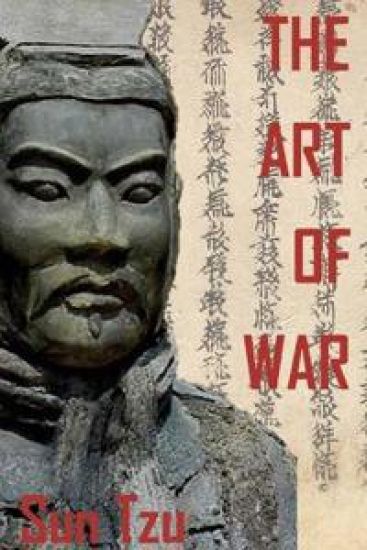
Art of War: The Thirteen Chapters
Lionel Giles; Sun Tzu
Createspace Independent Publishing Platform
2012
nidottu
Part I: The Thirteen Chapters by Sun Tzu Translation by Dr. Lionel Giles. - Part II: The Thirteen Chapters With Commentary and Notes by Dr. Lionel Giles. - Although the text by Sun Tzu was written 2500 years ago it was practically unknown in Europe until 1782 when the French Jesuit Father Joseph Amiot translated it to French. This translation in the words of Giles, "contains a great deal that Sun Tzu did not write, and very little indeed of what he did". The first translation to English was published in 1905 by E. F. Calthrop and the opinion of Giles was not more forgiving this time: "It is not merely a question of downright blunders, from which none can hope to be wholly exempt. Omissions were frequent; hard passages were willfully distorted or slurred over. Such offenses are less pardonable. They would not be tolerated in any edition of a Latin or Greek classic, and a similar standard of honesty ought to be insisted upon in translations from Chinese." - - This book contains two parts and can be enjoyed with or without the legendary commentary and notes by Giles.
Msings of a Chinese Mystic
Lionel Giles; T S Wentworth
Primary Sources, Historical Collections
2011
pokkari
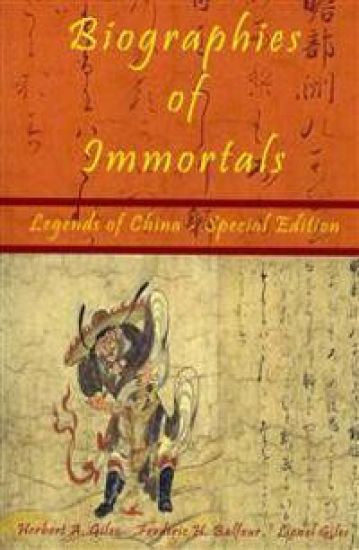
Biographies of Immortals - Legends of China - Special Edition
Frederic H. Balfour; Lionel Giles
El Paso Norte Press
2010
nidottu
This special edition brings together three classic works by Western scholars of ancient Chinese texts. The men were family friends, colleagues, and were all living in Shanghai during the late 19th century. Much of their combined transcription became shaped into the book we know today as the "Tao Te Ching." "China and the Manchus" by Herbert Giles is a series of legends and recollections from ancient China, ordered by chronology. Herbert Giles is also known for creating the first Chinese-English Dictionary and helping to develop the system of Chinese translation known as the "Wade-Giles Romanization System." "Leaves from My Chinese Scrapbook" by Frederic Balfour is a collection of stories, legends and anecdotes by a British expatriate scholar, who was working for local Chinese newspapers and contributing travel articles to "Harpers Magazine". Many of these stories are taken from the source scrolls Balfour used to write the ground-breaking "Taoist Texts" in 1884. "Biographies of Immortals" by Lionel Giles is the first partial Western translation of the ancient Chinese book of "Liexian Zhuan," containing mythic heroes from Chinese history, including the "Eight Immortals of China." Lionel Giles, the son of Herbert Giles, is also known for his original translation of Sun Tzu's "The Art of War" as well as "The Analects" of Confucius.