
Kirjailija
Liping Wang
Kirjat ja teokset yhdessä paikassa: 7 kirjaa, julkaisuja vuosilta 2013–2025, suosituimpiin kuuluu Le Basi del Metodo Segreto dell'Elisir d'Oro. Vertaile teosten hintoja ja tarkista saatavuus suomalaisista kirjakaupoista.
7 kirjaa
Kirjojen julkaisuvuodet: 2013–2025.

Living Record Of Scientific History, The: Conversations With C N Yang
Lizhen Ji; Liping Wang
WORLD SCIENTIFIC PUBLISHING CO PTE LTD
2025
sidottu
Professor Chen-Ning Yang is best known for his achievements in Physics. He has also made significant contributions to the development of mathematics, as mathematics is extensively used in his research. In his long and fruitful academic career, he has witnessed many important events in the fields of Physics and Mathematics, and has collaborated or interacted with many great scientists in history. This book records eight interviews with Professor Chen-Ning Yang, which were conducted by the authors from 2016 to 2019. Through Professor Yang's unique perspective, major scientific events in the 20th century were revisited vividly, elaborating the development and mutual influences of mathematics and physics, as well as unveiling the academic work, the daily lives, and the personalities of scientists, as well as their collaboration and competition, some stories unknown to the public before are also revealed in this book.
Design of Steel Structures
Lingyu Zhou; Liping Wang; Liqiang Jiang
Elsevier - Health Sciences Division
2022
nidottu
Design of Steel Structures: Materials, Connections, and Components systematically introduces the basic concepts and principles of the subject of "Design of steel structure". Sections cover materials, failure modes of steel structures, members under tension, compression, bending and combined loads, steel connections, typical steel structural systems, composite members and vibrations resistance of steel members and connections. In addition, development history and the general application of steel structures are introduced, along with development status trends and typical classifications of steel structures. Other chapters discuss materials of steel structures, including high-performance steel, cold-formed steel, and other new types.
How did inter-ethnic solidarity become attenuated in the era of the Chinese imperial transformation (1900-1930)? Based on Inner Mongolian cases, this book examines the transformations effective in the policy domains of land affairs, military organization, and law, which were initiated to strengthen state centralization, yet resulted in the sharpening of ethnic boundaries. Using unpublished archival sources, this book benefits from three key strengths. It addresses the question of Mongol-Han relationship in the early Republican period (1911-1930), it illuminates the details of imperial administration and its changes along with the shift of the regime, and it explores the theoretical potentials of the near frontier approach and positions the Chinese imperial transition within a comparative perspective.
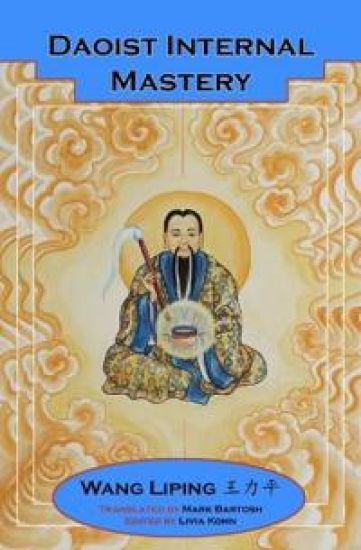
This book translates Master Wang’s original practice instructions and discourses given during training seminars. His system of internal alchemy goes back to two ancient Daoist texts that outline the concoction of a golden elixir through the dual cultivation of inner nature and life-destiny. This book follows the classics and presents all different kinds of techniques—including walking, pacing, sleeping, circulating the five phases, absorbing tree energy, and capturing planetary essences—in a systematic format and with a great amount of instructional detail. It contains a wealth of information invaluable to anyone interested in genuine Daoist cultivation and elucidates numerous rather obscure concepts to contextualize each practice.
Diese Studie geht von einem weit ausserhalb der europaisch-germanistischen Forschung liegenden Punkt aus, namlich der fernoestlichen Philosophie des Daoismus, und eroeffnet durch eine symboltheoretisch-strukturalistische Bedeutungsanalyse einen interkulturell erweiterten Zugang zu ausgewahlten Texten der "Kinder- und Hausmarchen". Aus dem Handeln von 16 signifikanten Marchenfiguren extrapoliert sie Verhaltensmodelle, die sowohl grundlegend fur das Weltbild in Grimms Marchen sind als auch uberraschende AEhnlichkeiten mit dem Daoismus aufweisen. Mit der Kardinalfrage der Marchen: "Was ist Gluck und Ungluck?" gelangt die Arbeit zu einer von traditionellen Marcheninterpretationen abweichenden, sie reflektierenden und erganzenden Antwort, die mit "der Suche nach der verlorenen (R)Einheit" anfangt.
Diese Studie geht von einem weit ausserhalb der europaisch-germanistischen Forschung liegenden Punkt aus, namlich der fernoestlichen Philosophie des Daoismus, und erschliesst durch eine symboltheoretisch-strukturalistische Bedeutungsanalyse einen interkulturell erweiterten Zugang zu ausgewahlten Texten der Kinder- und Hausmarchen. Aus dem Handeln von 16 signifikanten Marchenfiguren extrapoliert sie Verhaltensmodelle, die sowohl grundlegend fur das Weltbild in Grimms Marchen sind als auch uberraschende AEhnlichkeiten mit dem Daoismus aufweisen. Mit der Kardinalfrage der Marchen: "Was ist Gluck und Ungluck?", gelangt die Arbeit zu einer von traditionellen Marcheninterpretationen abweichenden, sie reflektierenden und erganzenden Antwort, die mit der Suche nach der verlorenen (R)Einheit anfangt.