
Kirjojen hintavertailu – 12 859 829 kirjaa ja 27 kauppaa

Kirjailija

Lisa F. Clark

Kirjat ja teokset yhdessä paikassa: 2 kirjaa, julkaisuja vuosilta 2015–2024, suosituimpiin kuuluu International Regulation of Gene Editing Technologies in Crops. Vertaile teosten hintoja ja tarkista saatavuus suomalaisista kirjakaupoista.

2 kirjaa

Kirjojen julkaisuvuodet: 2015–2024.

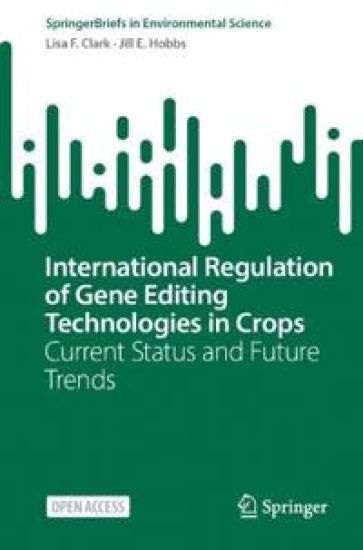
International Regulation of Gene Editing Technologies in Crops

International Regulation of Gene Editing Technologies in Crops

Lisa F. Clark; Jill E. Hobbs

Springer International Publishing AG
2024
nidottu
This open access book analyzes the regulation and governance of gene editing in the global agrifood system as applications of gene editing, regulations and the intellectual property landscape continue to evolve. The primary focus of the manuscript is the dynamic interactions between regulatory frameworks and agricultural applications of gene editing in plant breeding. The goal is to give readers a holistic perspective on why the status of gene editing in agricultural applications is in a state of flux in some jurisdictions (e.g., the European Union) while more settled in others (e.g., Canada). Readers are provided with a clearer picture of what the future might hold for the use of gene editing in agriculture as a means to address food insecurity as the climate crisis grows and amid global geopolitical and economic turbulence.
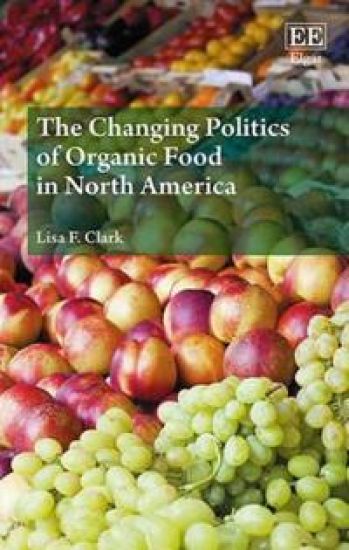
The Changing Politics of Organic Food in North America

The Changing Politics of Organic Food in North America

Lisa F. Clark

Edward Elgar Publishing Ltd
2015
sidottu
The Changing Politics of Organic Food in North America explores the political dynamics of the remarkable transition of organic food from a 'fringe fad' in the 1960s to a multi-billion dollar industry in the 2000s. Taking a multidisciplinary, institutionalist approach that integrates social movement theory, public policy analysis and value chain analysis, it tells the story of how the organic movement responded to the social, economic and political changes brought on by the rise of industrial agriculture in the twentieth century. This book examines how the changing constellation of actors, institutions and ideas involved in the politics of organic food influenced the evolving goals and principles of the organic movement, including the muting of social and political organic principles in formal policy and the eclipse of the 'process-based' definition of organic by the 'product-based' definition. It discusses the integration of organic food into the globalized food system and how food and agriculture movements have responded to the forces of industrialization and globalization, as well as critically analyzing the vulnerability of social movements that do not address market interactions in their mandates. This timely and impactful book is a theoretical and empirical resource for researchers and advanced students working on organic food, agriculture, comparative public policy analysis, trade policy, institutionalism and social movements, as well as those involved in making food and agriculture policy.