Kirjojen hintavertailu – 12 876 488 kirjaa ja 26 kauppaa

Kirjailija

Lisa Sowle Cahill

Kirjat ja teokset yhdessä paikassa: 15 kirjaa, julkaisuja vuosilta 1985–2020, suosituimpiin kuuluu Theological Bioethics. Vertaile teosten hintoja ja tarkista saatavuus suomalaisista kirjakaupoista.

15 kirjaa

Kirjojen julkaisuvuodet: 1985–2020.

Moral Agency within Social Structures and Culture

Moral Agency within Social Structures and Culture

Margaret S. Archer; Lisa Sowle Cahill

Georgetown University Press
2020
sidottu
Christian ethics has addressed moral agency and culture from the start, and Christian social ethics increasingly acknowledges the power of social structures. However, neither has made sufficient use of the discipline that specializes in understanding structures and culture: sociology. In Moral Agency within Social Structures and Culture, editor and contributor Daniel K. Finn proposes a field-changing critical realist sociology that puts Christian ethics into conversation with modern discourses on human agency and social transformation. Catholic social teaching mischaracterizes social evil as being little more than the sum of individual choices, remedied through individual conversion. Liberation theology points to the power of social structures but without specifying how structures affect moral agency. Critical realist sociology provides a solution to both shortcomings. This collection shows how sociological insights can deepen and extend Catholic social thought by enabling ethicists to analyze more precisely how structures and culture impact human decisions. The book demonstrates how this sociological framework has applications for the study of the ecological crisis, economic life, and virtue ethics. Moral Agency within Social Structures and Culture is a valuable tool for Christian ethicists who seek systemic change in accord with the Gospel.
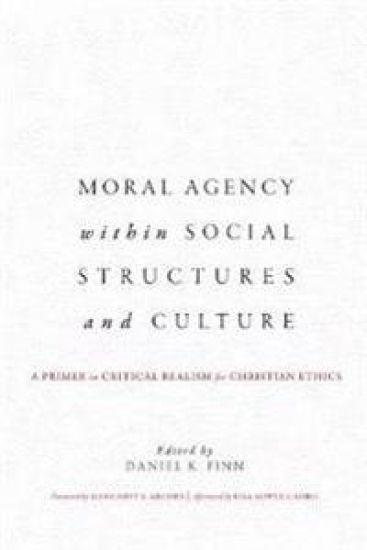
Moral Agency within Social Structures and Culture

Moral Agency within Social Structures and Culture

Margaret S. Archer; Lisa Sowle Cahill

Georgetown University Press
2020
pokkari
Christian ethics has addressed moral agency and culture from the start, and Christian social ethics increasingly acknowledges the power of social structures. However, neither has made sufficient use of the discipline that specializes in understanding structures and culture: sociology. In Moral Agency within Social Structures and Culture, editor and contributor Daniel K. Finn proposes a field-changing critical realist sociology that puts Christian ethics into conversation with modern discourses on human agency and social transformation. Catholic social teaching mischaracterizes social evil as being little more than the sum of individual choices, remedied through individual conversion. Liberation theology points to the power of social structures but without specifying how structures affect moral agency. Critical realist sociology provides a solution to both shortcomings. This collection shows how sociological insights can deepen and extend Catholic social thought by enabling ethicists to analyze more precisely how structures and culture impact human decisions. The book demonstrates how this sociological framework has applications for the study of the ecological crisis, economic life, and virtue ethics. Moral Agency within Social Structures and Culture is a valuable tool for Christian ethicists who seek systemic change in accord with the Gospel.

Blessed Are the Peacemakers

Blessed Are the Peacemakers

Lisa Sowle Cahill

Fortress Press,U.S.
2019
nidottu

Halvin toimitettuna 45,70 €

"This book is a contribution to the Christian ethics of war and peace. It advances peacebuilding as a needed challenge to and expansion of the traditional framework of just-war theory and pacifism. It builds on a critical reading of historical landmarks from the Bible through Augustine, Aquinas, the Reformers, Christian peace movements, and key modern figures like Dietrich Bonhoeffer, Reinhold Niebuhr, and recent popes. Similar to just-war theory, peacebuilding is committed to social change and social justice but includes some theorists and practitioners who accept the use of force in extreme cases of self-defense or humanitarian intervention. Unlike just-war theorists, they do not see the justification of war as part of the Christian mission. Unlike traditional pacifists, they do see social change as necessary and possible and, as such, requiring Christian participation in public efforts. Cahill argues that transformative Christian social participation is demanded by the gospel and the example of Jesus, and can produce the avoidance, resolution, or reduction of conflicts. And yet obstacles are significant, and expectations must be realistic. Decisions to use armed force against injustice, even when they meet the criteria of just war, will be ambiguous and tragic from a Christian perspective. Regarding war and peace, the focus of Christian theology, ethics, and practice should not be on justifying war but on practical and hopeful interreligious peacebuilding."
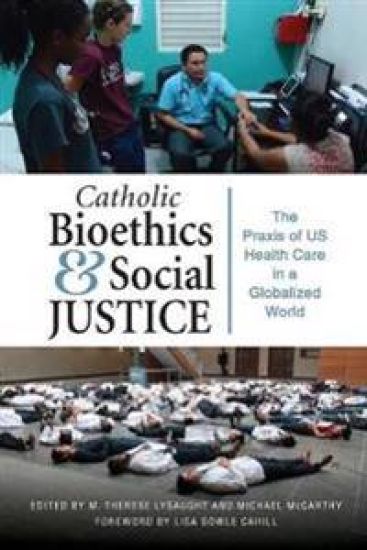
Catholic Bioethics and Social Justice

Catholic Bioethics and Social Justice

Lisa Sowle Cahill

Liturgical Press
2019
pokkari
Catholic health care is one of the key places where the church lives Catholic social teaching (CST). Yet the individualistic methodology of Catholic bioethics inherited from the manualist tradition has yet to incorporate this critical component of the Catholic moral tradition. Informed by the places where Catholic health care intersects with the diverse societal injustices embodied in the patients it encounters, this book brings the lens of CST to bear on Catholic health care, illuminating a new spectrum of ethical issues and practical recommendations from social determinants of health, immigration, diversity and disparities, behavioral health, gender-questioning patients, and environmental and global health issues.
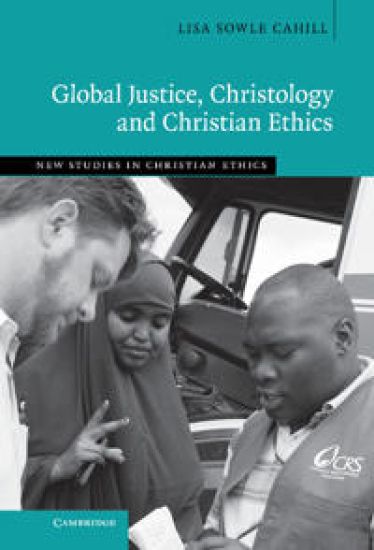
Global Justice, Christology and Christian Ethics

Global Justice, Christology and Christian Ethics

Lisa Sowle Cahill

Cambridge University Press
2013
sidottu
Global realities of human inequality, poverty, violence and ecological destruction call for a twenty-first-century Christian response which links cross-cultural and interreligious cooperation for change to the Gospel. This book demonstrates why just action is necessarily a criterion of authentic Christian theology, and gives grounds for Christian hope that change in violent structures is really possible. Lisa Sowle Cahill argues that theology and biblical interpretation are already embedded in and indebted to ethical-political practices and choices. Within this ecumenical study, she explores the use of the historical Jesus in constructive theology; the merits of Word and Spirit Christologies; the importance of liberation and feminist theologies as well as theologies from the global south; and also the possibility of qualified moral universalism. The book will be of great interest to all students of theology, religious ethics and politics, and biblical studies.
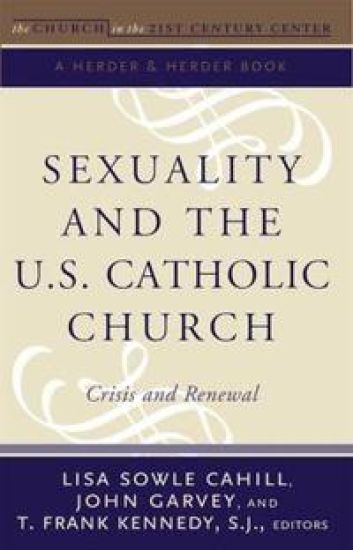
Sexuality and the U.S. Catholic Church

Sexuality and the U.S. Catholic Church

Lisa Sowle Cahill; John Garvey; T. Frank Kennedy

Crossroad Publishing Co ,U.S.
2006
nidottu

Halvin toimitettuna 30,90 €

No issue in the contemporary Church evokes more controversy than sexuality. In the wake of the clerical abuse scandals, the Catholic Church has come under intense scrutiny, criticized for being either too repressive or too lenient in its approach to human sexuality. In Sexuality and the U. S. Catholic Church, Lisa Sowle Cahill, John Garvey, and T. Frank Kennedy, S. J. introduce the work of leading Catholic theologians, writers, and scholars to help ground the conversation in the tradition, identify modern-day challenges, and point to resources for the future. Topics include homosexuality and marriage; theology of the body: possibilities and limitations; views of celibacy past and present; rebuilding community; childbearing; sexual discipleship; and future challenges.
The Critical Calling

The Critical Calling

Richard A. McCormick; Lisa Sowle Cahill

Georgetown University Press
2006
pokkari
When Richard A. McCormick's "The Critical Calling" was first published, Andrew M. Greeley commented that "in years to come scholars will look back on Father McCormick's work and say, 'This was a man who knew what he was talking about!'". In this reissue, with a new foreword by Lisa Sowle Cahill, both first-time readers and those opening the pages for a return visit with an honored friend will find Greeley's characterization remains valid. Father McCormick begins "The Critical Calling" with his personal affirmation of the work of Vatican II: "I believe the Council was a work of the Spirit - desperately needed, divinely inspired, devotedly and doggedly carried through". Yet, he stresses this was no uncritical endorsement of everything the Council did and said. Part One includes a discussion of fundamental moral theology that looks at the relationship between the church hierarchy and individual moral decision making and several chapters addressing issues precipitated by actions involving Cardinal Josef Ratzinger, now Pope Benedict XVI. Part Two focuses on practical and pastoral questions that touch on contemporary concerns ranging from abortion to AIDS, divorce, homosexuality, and teenage sexuality. Cahill suggests that "those who lived through the tumultuous 1960s and '70s" as well as "those who came to maturity after the Council" will find this book to be an accurate and evocative reflection of the passions that imbued all those early debates and a helpful explanation why those passions ran so high. All readers will benefit from the wise insights into the controversies of that era and the more recent struggles, challenges, and debates that confront today's church.
Theological Bioethics

Theological Bioethics

Lisa Sowle Cahill

Georgetown University Press
2005
pokkari
The field of bioethics was deeply influenced by religious thinkers as it emerged in the 1960s and early 1970s. Since that time, however, a seemingly neutral political liberalism has pervaded the public sphere, resulting in a deep suspicion of those bringing religious values to bear on questions of bioethics and public policy. As a theological ethicist and progressive Catholic, Lisa Sowle Cahill does not want to cede the "religious perspective" to fundamentalists and the pro-life movement, nor does she want to submit to the gospel of a political liberalism that champions individual autonomy as holy writ. In Theological Bioethics, Cahill calls for progressive religious thinkers and believers to join in the effort to reclaim the best of their traditions through jointly engaging political forces at both community and national levels. In Cahill's eyes, just access to health care must be the number one priority for this type of "participatory bioethics." She describes a new understanding of theological bioethics that must go beyond decrying injustice, beyond opposing social practices that commercialize human beings, beyond painting a vision of a more egalitarian future. Such a participatory bioethics, she argues, must also take account of and take part in a global social network of mobilization for change; it must seek out those in solidarity, those involved in a common calling to create a more just social, political, and economic system. During the past two decades Cahill has made profound contributions to theological ethics and bioethics. This is a magisterial and programmatic statement that will alter how the religiously inclined understand their role in the great bioethics debates of today and tomorrow that yearn for clear thinking and prophetic wisdom.
Genetics, Theology, and Ethics

Genetics, Theology, and Ethics

Lisa Sowle Cahill

Crossroad Publishing Co ,U.S.
2005
nidottu
Catholic Press Association Award-winner. From a team of the world’s leading bioethicists, a collection of popular and scholarly essays on the challenges of bioethics in our world today. Topics include stem cell research, cloning, economic challenges, and society’s common good.
Family

Family

Lisa Sowle Cahill

Augsburg Fortress
2000
pokkari
An authentic vision for today's family Thoughtful and informative, Cahill's work brings fresh historical, theological, and ethical thought to the explosive area of family-deeply contested territory in today's cultural and religious skirmishes. As one group of social theorists and cultural critics points to rising divorce and illegitimacy rates as symptoms of unfettered individualism and moral laxity, another side notes that the "traditional," nuclear family is actually a product of the industrial age, with its strict gender roles, public-private split, and exclusion of an underclass. In the religious arena, evangelical- conservative vs. mainline-feminist lines echo these battles, contesting the authentic meaning of family within a Christian framework. Though "family" has been dissected in the academic and cultural wars, Cahill asserts that the usual religious agenda of restoring the traditional nuclear family is actually misinformed and misguided. It actually bolsters oppressive social, economic, and racial mechanisms that are destroying families at the bottom, middle, and even top of the ladder. Is there an authentically Christian notion of family? Cahill's contribution shows in a striking way how very different we are counter-cultural New Testament and early- church notions of family from our ideas of "family values;" how, throughout history, other fruitful Christian examples have emerged in the work of John Chrysostom, Martin Luther, and the Puritans; how, despite distortion by gender and class divisions, there develops a Christian vision of the altruistic family, animated by Christian discipleship to stand for compassion, generosity, and justice; how pertinent this vision of the "domestic church" is to public debate and public policy.
Sex, Gender, and Christian Ethics

Sex, Gender, and Christian Ethics

Lisa Sowle Cahill

Cambridge University Press
1996
pokkari
This book endorses feminist critiques of gender, yet upholds the insight of traditional Christianity that sex, commitment and parenthood are fulfilling human relations. Their unity is a positive ideal, though not an absolute norm. Women and men should enjoy equal personal respect and social power. In reply to feminist critics of oppressive gender and sex norms and to communitarian proponents of Christian morality, Cahill argues that effective intercultural criticism of injustice requires a modest defence of moral objectivity. She thus adopts a critical realism as its moral foundation, drawing on Aristotle and Aquinas. Moral judgment should be based on reasonable, practical, prudent and cross-culturally nuanced reflection on human experience. This is combined with a New Testament model of community, centred on solidarity, compassion and inclusion of the economically or socially marginalised.
Love Your Enemies

Love Your Enemies

Lisa Sowle Cahill

Augsburg Fortress
1994
pokkari
Questions of pacifism and just war, which have preoccupied Christian thinkers from time to time over the past 1700 years, are given distinctive treatment in this book as it discusses biblical sources for the questions, builds on historical examples both of just war theory and of pacifism, and shows how Christian pacifism is a live option in many contexts. Lisa Sowle Cahill examines the theological bases of just war theory and pacifism, especially in light of the concept of the kingdom of God, as that motif illuminates Christian discipleship. Differences between the theory and just war and the practice of pacifism are highlighted in the overview of the history of Christian thought on the subject, and the inclusiveness of the ideal of the kingdom for pacifism is emphasized.