Kirjojen hintavertailu – 12 903 724 kirjaa ja 27 kauppaa

Kirjailija

Lisa Zunshine

Kirjat ja teokset yhdessä paikassa: 26 kirjaa, julkaisuja vuosilta 1999–2024, suosituimpiin kuuluu Why We Read Fiction. Vertaile teosten hintoja ja tarkista saatavuus suomalaisista kirjakaupoista.

26 kirjaa

Kirjojen julkaisuvuodet: 1999–2024.

Black Women’s Stories of Everyday Racism

Black Women’s Stories of Everyday Racism

Simone Drake; James Phelan; Robyn Warhol; Lisa Zunshine

TAYLOR FRANCIS LTD
2024
sidottu
Black Women’s Stories of Everyday Racism puts literary narrative theory to work on an urgent real-world problem. The book calls attention to African American women’s everyday experiences with systemic racism and demonstrates how four types of narrative theory can help generate strategies to explain and dismantle that racism. This volume presents fifteen stories told by eight midwestern African American women about their own experiences with casual and structural racism, followed by four detailed narratological analyses of the stories, each representing a different approach to narrative interpretation. The book makes a case for the need to hear the personal stories of these women and others like them as part of a larger effort to counter the systemic racism that prevails in the United States today. Readers will find that the women’s stories offer powerful evidence that African Americans experience racism as an inescapable part of their day-to-day lives—and sometimes as a force that radically changes their lives. The stories provide experience-based demonstrations of how pervasive systemic racism is and how it perpetuates power differentials that are baked into institutions such as schools, law enforcement, the health care system, and business. Containing countless signs of the stress and trauma that accompany and follow from experiences of racism, the stories reveal evidence of the women’s resilience as well as their unending need for it, as they continue to feel the negative effects of experiences that occurred many years ago. The four interpretive chapters note the complex skill involved in the women’s storytelling. The analyses also point to the overall value of telling these stories: how they are sometimes cathartic for the tellers; how they highlight the importance of listening—and the likelihood of misunderstanding—and how, if they and other stories like them were heard more often, they would be a force to counteract the structural racism they so graphically expose. The Open Access version of this book, available at http://www.taylorfrancis.com, has been made available under a Creative Commons Attribution (CC-BY) 4.0 license.
Black Women’s Stories of Everyday Racism

Black Women’s Stories of Everyday Racism

Simone Drake; James Phelan; Robyn Warhol; Lisa Zunshine

TAYLOR FRANCIS LTD
2024
nidottu
Black Women’s Stories of Everyday Racism puts literary narrative theory to work on an urgent real-world problem. The book calls attention to African American women’s everyday experiences with systemic racism and demonstrates how four types of narrative theory can help generate strategies to explain and dismantle that racism. This volume presents fifteen stories told by eight midwestern African American women about their own experiences with casual and structural racism, followed by four detailed narratological analyses of the stories, each representing a different approach to narrative interpretation. The book makes a case for the need to hear the personal stories of these women and others like them as part of a larger effort to counter the systemic racism that prevails in the United States today. Readers will find that the women’s stories offer powerful evidence that African Americans experience racism as an inescapable part of their day-to-day lives—and sometimes as a force that radically changes their lives. The stories provide experience-based demonstrations of how pervasive systemic racism is and how it perpetuates power differentials that are baked into institutions such as schools, law enforcement, the health care system, and business. Containing countless signs of the stress and trauma that accompany and follow from experiences of racism, the stories reveal evidence of the women’s resilience as well as their unending need for it, as they continue to feel the negative effects of experiences that occurred many years ago. The four interpretive chapters note the complex skill involved in the women’s storytelling. The analyses also point to the overall value of telling these stories: how they are sometimes cathartic for the tellers; how they highlight the importance of listening—and the likelihood of misunderstanding—and how, if they and other stories like them were heard more often, they would be a force to counteract the structural racism they so graphically expose. The Open Access version of this book, available at http://www.taylorfrancis.com, has been made available under a Creative Commons Attribution (CC-BY) 4.0 license.
Getting Inside Your Head

Getting Inside Your Head

Lisa Zunshine

Johns Hopkins University Press
2012
sidottu
We live in other people's heads: avidly, reluctantly, consciously, unaware, mistakenly, and inescapably. Our social life is a constant negotiation among what we think we know about each other's thoughts and feelings, what we want each other to think we know, and what we would dearly love to know but don't. Cognitive scientists have a special term for the evolved cognitive adaptation that makes us attribute mental states to other people through observation of their body language; they call it theory of mind. "Getting Inside Your Head" uses research in theory of mind to look at movies, musicals, novels, classic Chinese opera, stand-up comedy, mock-documentaries, photography, and reality television. It follows "Pride and Prejudice's" Mr. Darcy as he tries to conceal his anger, Tyler Durden as he lectures a stranger at gunpoint in "Fight Club", and Ingrid Bergman as she fakes interest in horse races in "Notorious". This engaging book exemplifies the new interdisciplinary field of cognitive cultural studies, demonstrating that collaboration between cognitive science and cultural studies is both exciting and productive.
Acting Theory and the English Stage, 1700-1830

Acting Theory and the English Stage, 1700-1830

Lisa Zunshine

Pickering Chatto (Publishers) Ltd
2008
muu
During the eighteenth century, treatises on the science of elocution, gesture and naturalness abounded. This title draws together a representative selection of the most difficult-to-access texts in the period. It helps cultural historians to examine the place of stagecraft in the eighteenth-century imagination.
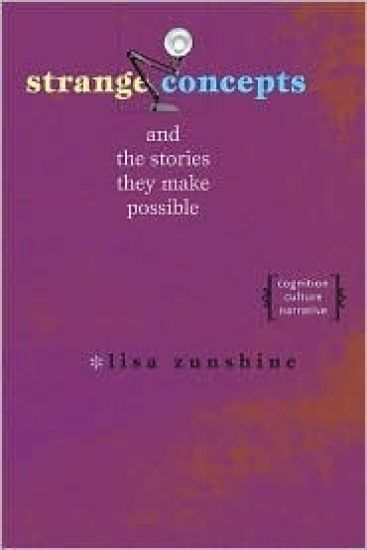
Strange Concepts and the Stories They Make Possible

Strange Concepts and the Stories They Make Possible

Lisa Zunshine

Johns Hopkins University Press
2008
pokkari
In this fresh and often playful interdisciplinary study, Lisa Zunshine presents a fluid discussion of how key concepts from cognitive science complicate our cultural interpretations of "strange" literary phenomena. From Short Circuit to I, Robot, from The Parent Trap to Big Business, fantastic tales of rebellious robots, animated artifacts, and twins mistaken for each other are a permanent fixture in popular culture and have been since antiquity. Why do these strange concepts captivate the human imagination so thoroughly? Zunshine explores how cognitive science, specifically its ideas of essentialism and functionalism, combined with historical and cultural analysis, can help us understand why we find such literary phenomena so fascinating. Drawing from research by such cognitive evolutionary anthropologists and psychologists as Scott Atran, Paul Bloom, Pascal Boyer, and Susan A. Gelman, Zunshine examines the cognitive origins of the distinction between essence and function and how unexpected tensions between these two concepts are brought into play in fictional narratives. Discussing motifs of confused identity and of twins in drama, science fiction's use of robots, cyborgs, and androids, and nonsense poetry and surrealist art, she reveals the range and power of key concepts from science in literary interpretation and provides insight into how cognitive-evolutionary research on essentialism can be used to study fiction as well as everyday strange concepts.
Strange Concepts and the Stories They Make Possible

Strange Concepts and the Stories They Make Possible

Lisa Zunshine

Johns Hopkins University Press
2008
sidottu
In this fresh and often playful interdisciplinary study, Lisa Zunshine presents a fluid discussion of how key concepts from cognitive science complicate our cultural interpretations of "strange" literary phenomena. From Short Circuit to I, Robot, from The Parent Trap to Big Business, fantastic tales of rebellious robots, animated artifacts, and twins mistaken for each other are a permanent fixture in popular culture and have been since antiquity. Why do these strange concepts captivate the human imagination so thoroughly? Zunshine explores how cognitive science, specifically its ideas of essentialism and functionalism, combined with historical and cultural analysis, can help us understand why we find such literary phenomena so fascinating. Drawing from research by such cognitive evolutionary anthropologists and psychologists as Scott Atran, Paul Bloom, Pascal Boyer, and Susan A. Gelman, Zunshine examines the cognitive origins of the distinction between essence and function and how unexpected tensions between these two concepts are brought into play in fictional narratives. Discussing motifs of confused identity and of twins in drama, science fiction's use of robots, cyborgs, and androids, and nonsense poetry and surrealist art, she reveals the range and power of key concepts from science in literary interpretation and provides insight into how cognitive-evolutionary research on essentialism can be used to study fiction as well as everyday strange concepts.
Narratives of the Poor in Eighteenth-Century England Vol 3

Narratives of the Poor in Eighteenth-Century England Vol 3

Alysa Levene; Steven King; Alannah Tomkins; Thomas Nutt; Peter King; Deborah A Symonds; Lisa Zunshine

Routledge
2006
sidottu
Presents narratives of the poor in eighteenth-century Britain. This collection covers the period from the early eighteenth century through to the Poor Law Amendment Act of 1834 and includes transcriptions of hand-written first-hand representations of poverty to poor law officials.