Kirjojen hintavertailu – 12 903 725 kirjaa ja 27 kauppaa

Kirjailija

Lita Linzer Schwartz

Kirjat ja teokset yhdessä paikassa: 9 kirjaa, julkaisuja vuosilta 1978–2011, suosituimpiin kuuluu American Education. Vertaile teosten hintoja ja tarkista saatavuus suomalaisista kirjakaupoista.

9 kirjaa

Kirjojen julkaisuvuodet: 1978–2011.

Endangered Children

Endangered Children

Lita Linzer Schwartz; Natalie K. Isser

Routledge Member of the Taylor and Francis Group
2011
sidottu
From infancy onward, children are in danger from many sources, including parental and sibling abuse, drug abuse and mental illness in the home, parental neglect, and poverty. Removing an at-risk child from a troubled environment brings on a host of new concerns and is not always a panacea. Endangered Children: Homicide, and Other Crimes, Second Edition focuses on the myriad threats facing children and provides insight into possible solutions. Beginning with a history of child abuse, the book explores this phenomenon as presented in literature and in other cultural references. It then provides sociobiological and cross-cultural perspectives on neonaticide. It examines motives for abuse and explores how shame and denial of pregnancy can lead to the killing of an infant within moments of its birth. The book examines legal ramifications to neonaticide in the U. S. and abroad, including psychological and psychiatric defenses. Additional chapters focus on shaken baby syndrome and Munchausen Syndrome by Proxy, and the book includes a new chapter on postpartum depression. The authors include profiles of several notorious cases, including Susan Smith and Andrea Yates. They also discuss issues related to abortion and euthanasia, and conclude by suggesting preventive measures to child abuse and therapeutic rehabilitation. Exploring a social tragedy from psychological, sociological, and criminological perspectives, the authors attempt to answer the many questions that arise from these crimes against our most vulnerable, offering readers a thought-provoking resource that is sure to encourage further research and inquiry.
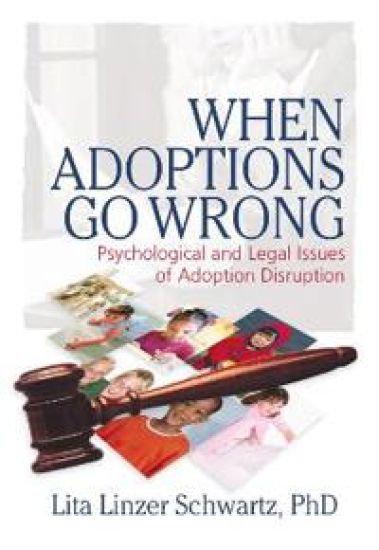
When Adoptions Go Wrong

When Adoptions Go Wrong

Lita Linzer Schwartz

Routledge Member of the Taylor and Francis Group
2006
sidottu
When adoptions fail to happen, the effects can be devastating on children and the families who chose to adopt themWhat if you were an adopted child and someone tried to remove you from the family you had grown to love? In the last twenty years, changes in laws, judicial decisions, social welfare practices, and the availability of American children for adoption have led to an increase in disrupted adoptions. When Adoptions Go Wrong: Psychological and Legal Issues of Adoption Disruption examines the psychological and forensic aspects of adoption with an emphasis on how negative events can affect children and the families that choose to adopt themand how you can prevent those events from happening. When Adoptions Go Wrong is a comprehensive resource on the causes of interrupted adoptions, including changing profiles of adoptive parents who have new reasons for wanting to adopt. With the help of detailed case examples, this powerful book explores the impact of disruptions on the children, the legal issues of determining in whose best interests decisions are made, and possible methods of reducing the negative affects of those decisions on the children. It also stresses how important it is, for the professionals involved, to be aware of child development in the adoption process. Topics discussed in When Adoptions Go Wrong include: children’s rights legal rights of gays to adopt tribal rights (Native Americans) open adoption individual state laws concerning adoption the media’s coverage of child custody cases types of adoption the Baby Jessica case the Evan Scott case the Internet Twins inadequate social services family court and much more When Adoptions Go Wrong also suggests legislative measures to create uniformity in the way states handle adoption issues to help natural and adoptive parents in making difficult decisions. The book is invaluable for psychologists, judges and lawyers, social workers, and prospective adoptive parents.
When Adoptions Go Wrong

When Adoptions Go Wrong

Lita Linzer Schwartz

Routledge Member of the Taylor and Francis Group
2006
nidottu
When adoptions fail to happen, the effects can be devastating on children and the families who chose to adopt themWhat if you were an adopted child and someone tried to remove you from the family you had grown to love? In the last twenty years, changes in laws, judicial decisions, social welfare practices, and the availability of American children for adoption have led to an increase in disrupted adoptions. When Adoptions Go Wrong: Psychological and Legal Issues of Adoption Disruption examines the psychological and forensic aspects of adoption with an emphasis on how negative events can affect children and the families that choose to adopt themand how you can prevent those events from happening. When Adoptions Go Wrong is a comprehensive resource on the causes of interrupted adoptions, including changing profiles of adoptive parents who have new reasons for wanting to adopt. With the help of detailed case examples, this powerful book explores the impact of disruptions on the children, the legal issues of determining in whose best interests decisions are made, and possible methods of reducing the negative affects of those decisions on the children. It also stresses how important it is, for the professionals involved, to be aware of child development in the adoption process. Topics discussed in When Adoptions Go Wrong include: children’s rights legal rights of gays to adopt tribal rights (Native Americans) open adoption individual state laws concerning adoption the media’s coverage of child custody cases types of adoption the Baby Jessica case the Evan Scott case the Internet Twins inadequate social services family court and much more When Adoptions Go Wrong also suggests legislative measures to create uniformity in the way states handle adoption issues to help natural and adoptive parents in making difficult decisions. The book is invaluable for psychologists, judges and lawyers, social workers, and prospective adoptive parents.
Child Homicide

Child Homicide

Lita Linzer Schwartz; Natalie Isser

CRC Press Inc
2006
sidottu
From governments that enact population-limiting legislation or commit wholesale neonaticide, to families who purposely allow a weak, infirm, or unfavorably gendered infant to perish rather than expend limited resources, neonaticide, infanticide, and filicide, are practiced on every continent and by every level of cultural complexity. Taking an objective and diagnostic approach, Child Homicide: Parents Who Kill examines the crime of neonaticide from all angles including historical, cultural, psychological, and legal. Expanding on the first edition, published as Endangered Children: Neonaticide, Infanticide, and Filicide, this edition details child homicide in its many forms such as shaken baby syndrome and Munchausen-by-Proxy as well as the differing circumstances involved in infanticide and filicide. Unlike many books on the subject, it investigates the behavior of the father--deemed responsible in roughly 75 percent of these cases--whether aggressive, complicit, or merely absent, and his ultimate culpability under the law. The authors study the influence of today's media, and how its lightning-fast dissemination of these shocking and often complicated stories affect public opinion, copycat crime, and legal bias. This book explains legal defenses including insanity, differential post partum diagnosis such as post-partum psychosis, and discusses new policies, more appropriate, therapeutic punishments, and preventive measures. Child Homicide: Parents Who Kill places this phenomenon in its historical, cultural, and human context and makes us realize that this is not just someone else's nightmare.
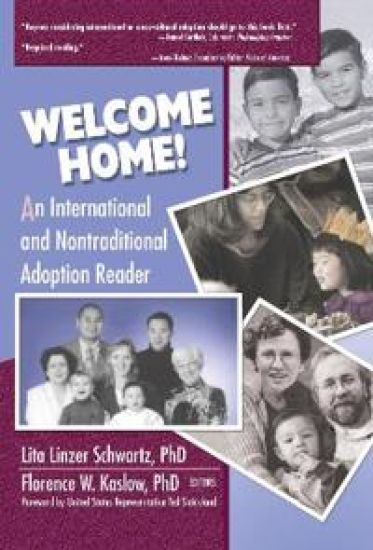
Welcome Home!

Welcome Home!

Lita Linzer Schwartz; Florence Kaslow

Routledge Member of the Taylor and Francis Group
2003
sidottu
Examine the pros and cons of nontraditional adoption! Welcome Home! An International and Nontraditional Adoption Reader is an essential guide to the process, pros, and cons of adopting children from outside the United States, with special needs, and/or from a different racial/cultural background. The book documents every aspect of the adoption procedurefrom working with facilitators, adoption agencies, and attorneys to mixed reactions over a child’s possible loss of heritage as the result of a transracial or multicultural adoption. Parents and adoptees offer unique, firsthand perspectives on the cautions and benefits of nontraditional adoption. Americans adopted more than 20,000 children from other countries in 2001, a number that reflects humanitarian motives, the desire to adopt a child from a specific country, and/or frustration with the domestic adoption system. Including a foreword by United States Representative Ted Strickland, Welcome Home! is a practical resource for anyone thinking of establishing a family or adding to their own. The book provides insight into the adoption process, open adoption, biracial adoption, adopting a special needs child, cultural attitudes, and how to handle an adopted child’s questions in later years. It also addresses specific adoption issues, including: how to verify an agency’s credentials; how an agency negotiates with the birth mother; state and country laws and practices; tax benefits; and expenses, including legal and medical costs; and includes research findings on the Northeast-Northwest Collaborative Adoption Projects (N2CAP) Welcome Home! tells the stories of: Naomi and Fred, an intermarried couple (she’s Jewish, he’s not) who adopted a Greek baby in 1962 Tina and Lee, a lesbian couple, who adopted a baby from China Marianne, a professor of child and adolescent psychiatry at the University of Lund in Sweden, who adopted babies from Iran and Thailandseveral years after her divorce Pamela, a divorced mother of four biological children who has adopted babies from Viet Nam and China All of her biological children MildredPamela’s mother and the children’s grandmother Karen, adoptive mother and national chairperson for Families for Russian and Ukrainian adoption (FRUA) William, adoptive father of miracle sisters from Romania and many more! Welcome Home! is an invaluable source of unusual insight for psychologists, psychiatrists, marriage and family therapists, adoption agencies, counselors, social workers, attorneys, physicians, academics, and, of course, anyone considering adoption.
Welcome Home!

Welcome Home!

Lita Linzer Schwartz; Florence Kaslow

Routledge Member of the Taylor and Francis Group
2003
nidottu
Examine the pros and cons of nontraditional adoption! Welcome Home! An International and Nontraditional Adoption Reader is an essential guide to the process, pros, and cons of adopting children from outside the United States, with special needs, and/or from a different racial/cultural background. The book documents every aspect of the adoption procedurefrom working with facilitators, adoption agencies, and attorneys to mixed reactions over a child’s possible loss of heritage as the result of a transracial or multicultural adoption. Parents and adoptees offer unique, firsthand perspectives on the cautions and benefits of nontraditional adoption. Americans adopted more than 20,000 children from other countries in 2001, a number that reflects humanitarian motives, the desire to adopt a child from a specific country, and/or frustration with the domestic adoption system. Including a foreword by United States Representative Ted Strickland, Welcome Home! is a practical resource for anyone thinking of establishing a family or adding to their own. The book provides insight into the adoption process, open adoption, biracial adoption, adopting a special needs child, cultural attitudes, and how to handle an adopted child’s questions in later years. It also addresses specific adoption issues, including: how to verify an agency’s credentials; how an agency negotiates with the birth mother; state and country laws and practices; tax benefits; and expenses, including legal and medical costs; and includes research findings on the Northeast-Northwest Collaborative Adoption Projects (N2CAP) Welcome Home! tells the stories of: Naomi and Fred, an intermarried couple (she’s Jewish, he’s not) who adopted a Greek baby in 1962 Tina and Lee, a lesbian couple, who adopted a baby from China Marianne, a professor of child and adolescent psychiatry at the University of Lund in Sweden, who adopted babies from Iran and Thailandseveral years after her divorce Pamela, a divorced mother of four biological children who has adopted babies from Viet Nam and China All of her biological children MildredPamela’s mother and the children’s grandmother Karen, adoptive mother and national chairperson for Families for Russian and Ukrainian adoption (FRUA) William, adoptive father of miracle sisters from Romania and many more! Welcome Home! is an invaluable source of unusual insight for psychologists, psychiatrists, marriage and family therapists, adoption agencies, counselors, social workers, attorneys, physicians, academics, and, of course, anyone considering adoption.
The Healing Journey Through Divorce

The Healing Journey Through Divorce

Phil Rich; Lita Linzer Schwartz

John Wiley Sons Inc
1999
nidottu
A source of support and expert guidance through a difficult life passage Like a wise and comforting companion, this unique journal can help you to understand and work through those feelings of anger, fear, confusion, remorse, grief, and hopelessness that come along with the breakup of a marriage. The evocative writing exercises throughout The Healing Journey Through Divorce will provide you with the calm psychological space you need to collect your thoughts, sort out and reflect upon your feelings, and regain your bearings so that you can get on with the business of forging a new life for yourself and your loved ones. You will find The Healing Journey Through Divorce a valuable travel companion on your path to a fulfilling life. "I heartily recommend this book. [It] provides the reader with useful, thought-provoking exercises to help navigate the difficult emotional journey of divorce." —Marc J. Ackerman, PhD Author of Does Wednesday Mean Mom's House or Dad's?: Parenting Together While Living Apart Other books in the Healing Journey series include: *The Healing Journey, 208 pp., Paper (0-471-24712-X) *The Healing Journey for Couples, 271 pp., Paper (0-471-25470-3) *The Healing Journey Through Grief, 264 pp., Paper (0-471-29565-5)
Painful Partings

Painful Partings

Lita Linzer Schwartz; Florence W. Kaslow

John Wiley Sons Inc
1997
sidottu
Acclaim for Painful Partings . . . "A rare triple threat book—for professionals, students, and laypersons. Sensitive—wise—comprehensive, Schwartz and Kaslow's work represents a maturing of a realistic stance toward divorce." —William C. Nichols, EdD, ABPP Atlanta, Georgia "This articulate, compassionate, and informed book is essential reading for all therapists who work with divorced or divorcing families. Scholarly, yet readable, its developmental framework gives coherence to an often confusing area of practice." —Augustus Y. Napier, PhD Director, The Family Workshop, Atlanta, Georgia "[Painful Partings] masters both the legal and mental health issues of divorce." —Judge Joseph L. Steinberg Superior Court, State of Connecticut, Regional Family Trial Docket "Obtaining a legal divorce may seem fairly straightforward. Emotional divorce, on the other hand, is a much more complicated process. In this book, the reader is taken step by painful step into the process of helping couples become emotionally divorced." —Luciano L'Abate, PhDProfessor Emeritus, Georgia State University "This book achieves a remarkable result in explaining sophisticated family-system concepts . . . into practical clinical suggestions." —Barry Bricklin, PhD Wayne, Pennsylvania. "This book is a must for professionals, but is also important for those who are contemplating or in the process of divorcing." —Hon. Walter M. Schackman, JSC Supreme Court of the State of New York "Must reading for clinicians and professionals working with and teaching about divorce and for those going through the process." —Clifford J. Sager, MD Director of Marital and Family Services, Payne Whitney Clinic "The journey [toward divorce] seems analogous to a prolonged roller coaster ride—at the beginning, climbing up and out is laborious and slow, followed by brief periods of respite and relief at the apex, and then a rapid descent into what may seem like a bottomless pit of pain and despair. As the months pass by, the ride becomes less turbulent as the highs and lows become less extreme, and ultimately, the travelers alight from the tempestuous ride, and establish a stable postdivorce existence." —from the Preface For those who have made the difficult decision to end their marriage, emotional divorce can be as difficult to achieve as legal divorce. This timely and compassionate book shows couples, their families, and their therapists how best to navigate the bumpy terrain of the road to divorce. In their 1987 classic, The Dynamics of Divorce, family-systems experts Lita Linzer Schwartz and Florence W. Kaslow offered a provocative analysis of how life-cycle stages impact the decision to divorce, and how divorce affects individual development. In this groundbreaking new volume, the authors look at changing life-cycle trends in divorce and explore a host of new economic, cultural, and social issues confronting a highly mobile generation of divorced spouses and parents. The book covers emerging alternatives to litigation—like mediation, and looks at sensitive legal matters, such as physical and emotional abuse and child custody. It also examines timely issues like fathers' rights, mid-life divorce, and what happens when one partner exits a marriage in order to lead a homosexual lifestyle. Painful Partings shows marriage and family therapists how to help clients marshal their energies toward constructive closure, rather than destructive resolution. For example, there is a full chapter on the religious aspects of divorce, including conducting a Ritual of Release—a departure ceremony paralleling the original marriage. Essential reading for therapists who work with divorced and divorcing families, the book is also a compassionate guide for spouses and parents negotiating the painful process of divorce.