Kirjojen hintavertailu – 12 859 827 kirjaa ja 27 kauppaa

Kirjailija

Livy

Kirjat ja teokset yhdessä paikassa: 108 kirjaa, julkaisuja vuosilta 1919–2026, suosituimpiin kuuluu Livy. Vertaile teosten hintoja ja tarkista saatavuus suomalaisista kirjakaupoista.

108 kirjaa

Kirjojen julkaisuvuodet: 1919–2026.

History of Rome, Volume XIV

History of Rome, Volume XIV

Livy; Julius Obsequens

LOEB
1959
sidottu
Rome, from the beginning. Livy (Titus Livius), the great Roman historian, was born at or near Patavium (Padua) in 64 or 59 BC; he may have lived mostly in Rome but died at Patavium, in AD 12 or 17. Livy’s only extant work is part of his history of Rome from the foundation of the city to 9 BC. Of its 142 books, we have just thirty-five, and short summaries of all the rest except two. The whole work was, long after his death, divided into Decades or series of ten. Books 1–10 we have entire; books 11–20 are lost; books 21–45 are entire, except parts of 41 and 43–45. Of the rest only fragments and the summaries remain. In splendid style Livy, a man of wide sympathies and proud of Rome’s past, presented an uncritical but clear and living narrative of Rome’s rise to greatness. The Loeb Classical Library edition of Livy is in fourteen volumes. The last volume includes a comprehensive index.

History of Rome, Volume XIII
Rome, from the beginning. Livy (Titus Livius), the great Roman historian, was born at or near Patavium (Padua) in 64 or 59 BC; he may have lived mostly in Rome but died at Patavium, in AD 12 or 17. Livy’s only extant work is part of his history of Rome from the foundation of the city to 9 BC. Of its 142 books, we have just thirty-five, and short summaries of all the rest except two. The whole work was, long after his death, divided into Decades or series of ten. Books 1–10 we have entire; books 11–20 are lost; books 21–45 are entire, except parts of 41 and 43–45. Of the rest only fragments and the summaries remain. In splendid style Livy, a man of wide sympathies and proud of Rome’s past, presented an uncritical but clear and living narrative of Rome’s rise to greatness. The Loeb Classical Library edition of Livy is in fourteen volumes. The last volume includes a comprehensive index.
History of Rome, Volume XII
Rome, from the beginning. Livy (Titus Livius), the great Roman historian, was born at or near Patavium (Padua) in 64 or 59 BC; he may have lived mostly in Rome but died at Patavium, in AD 12 or 17. Livy’s only extant work is part of his history of Rome from the foundation of the city to 9 BC. Of its 142 books, we have just thirty-five, and short summaries of all the rest except two. The whole work was, long after his death, divided into Decades or series of ten. Books 1–10 we have entire; books 11–20 are lost; books 21–45 are entire, except parts of 41 and 43–45. Of the rest only fragments and the summaries remain. In splendid style Livy, a man of wide sympathies and proud of Rome’s past, presented an uncritical but clear and living narrative of Rome’s rise to greatness. The Loeb Classical Library edition of Livy is in fourteen volumes. The last volume includes a comprehensive index.
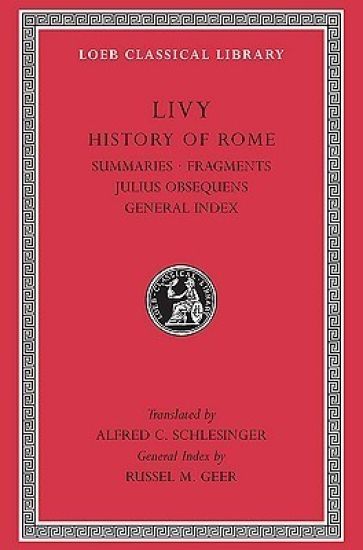
History of Rome, Volume IV
Rome, from the beginning. Livy (Titus Livius), the great Roman historian, was born at or near Patavium (Padua) in 64 or 59 BC; he may have lived mostly in Rome but died at Patavium, in AD 12 or 17. Livy’s only extant work is part of his history of Rome from the foundation of the city to 9 BC. Of its 142 books, we have just thirty-five, and short summaries of all the rest except two. The whole work was, long after his death, divided into Decades or series of ten. Books 1–10 we have entire; books 11–20 are lost; books 21–45 are entire, except parts of 41 and 43–45. Of the rest only fragments and the summaries remain. In splendid style Livy, a man of wide sympathies and proud of Rome’s past, presented an uncritical but clear and living narrative of Rome’s rise to greatness. The Loeb Classical Library edition of Livy is in fourteen volumes. The last volume includes a comprehensive index.
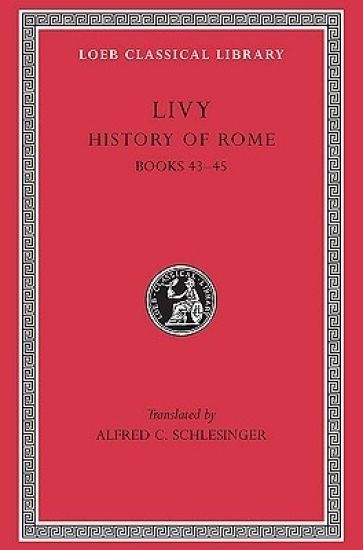
History of Rome, Volume III
Rome, from the beginning. Livy (Titus Livius), the great Roman historian, was born at or near Patavium (Padua) in 64 or 59 BC; he may have lived mostly in Rome but died at Patavium, in AD 12 or 17. Livy’s only extant work is part of his history of Rome from the foundation of the city to 9 BC. Of its 142 books, we have just thirty-five, and short summaries of all the rest except two. The whole work was, long after his death, divided into Decades or series of ten. Books 1–10 we have entire; books 11–20 are lost; books 21–45 are entire, except parts of 41 and 43–45. Of the rest only fragments and the summaries remain. In splendid style Livy, a man of wide sympathies and proud of Rome’s past, presented an uncritical but clear and living narrative of Rome’s rise to greatness. The Loeb Classical Library edition of Livy is in fourteen volumes. The last volume includes a comprehensive index.
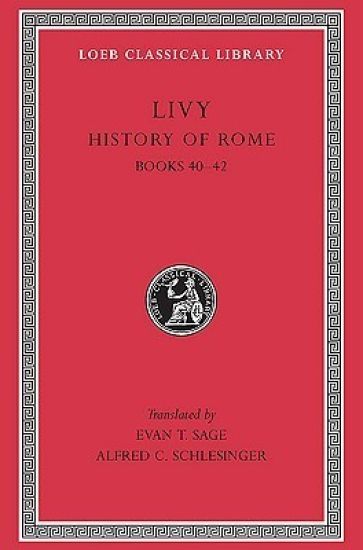
History of Rome, Volume II
Rome, from the beginning. Livy (Titus Livius), the great Roman historian, was born at or near Patavium (Padua) in 64 or 59 BC; he may have lived mostly in Rome but died at Patavium, in AD 12 or 17. Livy’s only extant work is part of his history of Rome from the foundation of the city to 9 BC. Of its 142 books, we have just thirty-five, and short summaries of all the rest except two. The whole work was, long after his death, divided into Decades or series of ten. Books 1–10 we have entire; books 11–20 are lost; books 21–45 are entire, except parts of 41 and 43–45. Of the rest only fragments and the summaries remain. In splendid style Livy, a man of wide sympathies and proud of Rome’s past, presented an uncritical but clear and living narrative of Rome’s rise to greatness. The Loeb Classical Library edition of Livy is in fourteen volumes. The last volume includes a comprehensive index.
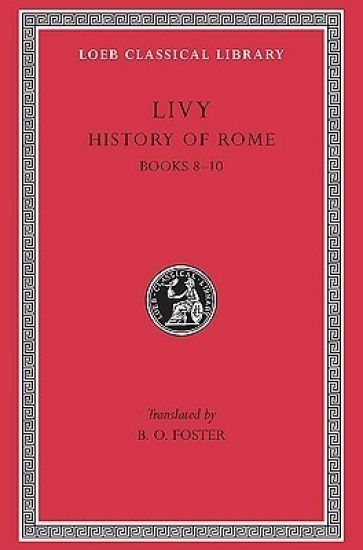
History of Rome, Volume I

History of Rome, Volume I

Livy

LOEB
1919
sidottu

Halvin toimitettuna 38,10 €

Rome, from the beginning. Livy (Titus Livius), the great Roman historian, was born at or near Patavium (Padua) in 64 or 59 BC; he may have lived mostly in Rome but died at Patavium, in AD 12 or 17. Livy’s only extant work is part of his history of Rome from the foundation of the city to 9 BC. Of its 142 books, we have just thirty-five, and short summaries of all the rest except two. The whole work was, long after his death, divided into Decades or series of ten. Books 1–10 we have entire; books 11–20 are lost; books 21–45 are entire, except parts of 41 and 43–45. Of the rest only fragments and the summaries remain. In splendid style Livy, a man of wide sympathies and proud of Rome’s past, presented an uncritical but clear and living narrative of Rome’s rise to greatness. The Loeb Classical Library edition of Livy is in fourteen volumes. The last volume includes a comprehensive index.