Kirjojen hintavertailu – 12 859 828 kirjaa ja 27 kauppaa
Kirjailija
Liz Jackson
Kirjat ja teokset yhdessä paikassa: 16 kirjaa, julkaisuja vuosilta 2014–2026, suosituimpiin kuuluu The Singing Teacher's Guide to Transgender Voices. Vertaile teosten hintoja ja tarkista saatavuus suomalaisista kirjakaupoista.
The Singing Teacher’s Guide to Transgender Voices, Second Edition remains the first comprehensive resource dedicated to the training and support of transgender and non-binary singers. In this fully revised second edition, the text deepens its commitment to ethical, student-centered voice pedagogy while expanding its examination of the cultural, institutional, and physiological realities that shape the singing lives of trans and gender-diverse students. Singing education has traditionally been organized around rigid gender binaries, and these structures can create significant barriers for students whose identities fall outside them. This book addresses the emotional, social, and physical challenges these singers face—particularly during transition—and equips teachers with the tools needed to foster healthy, joyful, and sustainable singing experiences. Through evidence-based pedagogy, reflective critique of traditional systems, and authentic first-person narratives, readers are challenged to reimagine voice education as inclusive, responsive, and humane. Designed for educators in academic, studio, and independent teaching settings, The Singing Teacher’s Guide to Transgender Voices, Second Edition sets a new standard for culturally competent, evidence-informed voice training and advocacy. New to the Second Edition Updated guidance for ethical, student-centered voice pedagogy Deeper examination of institutional and pedagogical systems in voice education New first-person narratives from trans singers and students Expanded discourse on the intersections of gender and singing New research and perspectives on singing through testosterone hormone therapy Interviews with industry professionals on building a career while trans, contributed by Dr. Jay Marchand Knight Technique suggestions for singing voice masculinization and feminization Vocal exercises with accompanying digital ancillary material PluralPlus Online Ancillaries Videos, Activities/Exercises
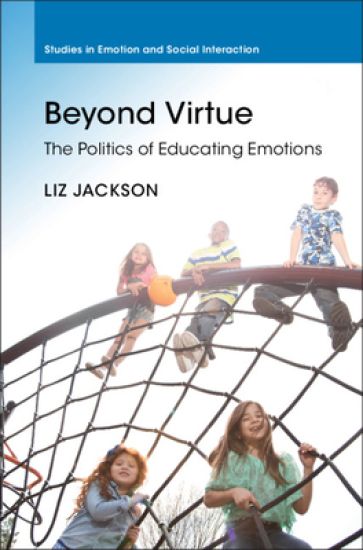
Schools and other forms of education have significant impacts on people’s views about emotions and emotional experiences. This book helps students and educators to better understand emotions and their significance in social life and in education. It shows how we often take it for granted that certain emotions, such as happiness, are ‘positive’, while others are ‘negative’ and how personal characteristics such as gender, ethnicity, and race, can make an unfair difference when it comes to what emotions are expected or accepted. It also focuses on how emotions are understood as functional and as moral by different theoretical traditions, from psychology to philosophy. Written in an accessible format, the book encourages broad reflection on what emotions are and why they matter, in relation to the aims of education, what it means to be a good person, and equality and social justice.
This book explores the decolonization of Holy Cross education in Bangladesh. It reveals how the church’s educational mission adapted to decolonization processes over time, including Bangladesh’s handover from British India to Pakistan in 1947, and its independence and national development from 1971 to the present day. This book describes the ongoing decolonization of Catholic education in Bangladesh, with the use of archival texts as well as interviews with local and foreign personnel, who are based in two of the most prestigious Holy Cross educational institutions in Dhaka. Providing a close examination of the impact of colonization on Bangladeshi education, it serves as a useful reference to students, scholars, and educators of Bangladeshi and South Asian studies, and postcolonial and decolonial educational and religious studies.
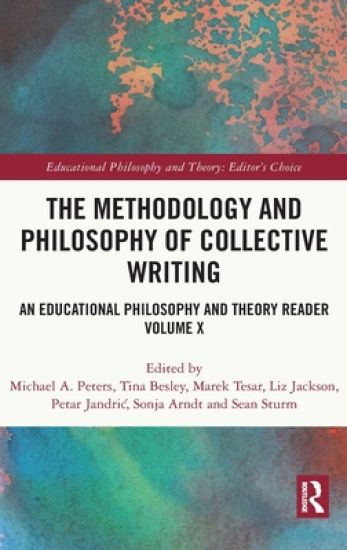
This multi-authored collection covers the methodology and philosophy of collective writing. It is based on a series of articles written by the authors in Educational Philosophy and Theory, Open Review of Educational Research and Knowledge Cultures to explore the concept of collective writing. This tenth volume in the Editor's Choice series provides insights into the philosophy of academic writing and peer review, peer production, collective intelligence, knowledge socialism, openness, open science and intellectual commons. This collection represents the development of the philosophy, methodology and philosophy of collective writing developed in the last few years by members of the Editors’ Collective (EC), who also edit, review and contribute to Educational Philosophy and Theory (EPAT), as well as to PESA Agora, edited by Tina Besley, and Access, edited by Nina Hood, two PESA ‘journals’ recently developed by EC members. This book develops the philosophy, methodology and pedagogy of collective writing as a new mode of academic writing as an alternative to the normal academic article. The philosophy of collective writing draws on a new mode of academic publishing that emphasises the metaphysics of peer production and open review along with the main characteristics of openness, collaboration, co-creation and co-social innovation, peer review and collegiality that have become a praxis for the self-reflection emphasising the subjectivity of writing, sometimes called self-writing. This collection, under the EPAT series Editor’s Choice, draws on a group of members of the Editors’ Collective,who constitute a network of editors, reviewers and authors who established the organisation to further the aims of innovation in academic writing and publishing. It provides discussion and examples of the philosophy, methodology and pedagogy of collective writing. Split into three sections: Introduction, Openness and Projects, this volume offers an introduction to the philosophy and methodology of collective writing. It will be of interest to scholars in philosophy of education and those interested in the process of collective writing.
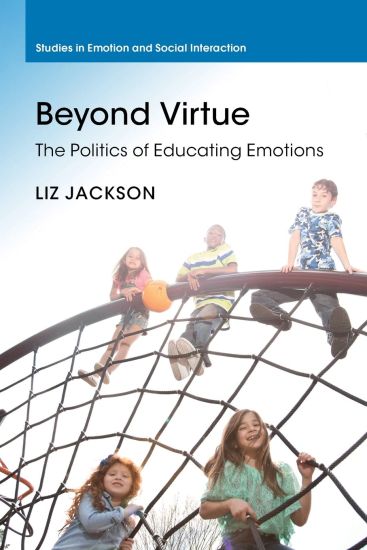
Educating students for emotional wellbeing is a vital task in schools. However, educating emotions is not straightforward. Emotional processes can be challenging to identify and control. How emotions are valued varies across societies, while individuals within societies face different emotional expectations. For example, girls face pressure to be happy and caring, while boys are often encouraged to be brave. This text analyses the best practices of educating emotions. The focus is not just on the psychological benefits of emotional regulation, but also on how calls for educating emotions connect to the aims of society. The book explores psychology's understanding of emotions, 'the politics of emotions', and philosophy. It also discusses education for happiness, compassion, gratitude, resilience, mindfulness, courage, vulnerability, anger, sadness, and fear.
This multi-authored collection covers the methodology and philosophy of collective writing. It is based on a series of articles written by the authors in Educational Philosophy and Theory, Open Review of Educational Research and Knowledge Cultures to explore the concept of collective writing. This tenth volume in the Editor's Choice series provides insights into the philosophy of academic writing and peer review, peer production, collective intelligence, knowledge socialism, openness, open science and intellectual commons. This collection represents the development of the philosophy, methodology and philosophy of collective writing developed in the last few years by members of the Editors’ Collective (EC), who also edit, review and contribute to Educational Philosophy and Theory (EPAT), as well as to PESA Agora, edited by Tina Besley, and Access, edited by Nina Hood, two PESA ‘journals’ recently developed by EC members. This book develops the philosophy, methodology and pedagogy of collective writing as a new mode of academic writing as an alternative to the normal academic article. The philosophy of collective writing draws on a new mode of academic publishing that emphasises the metaphysics of peer production and open review along with the main characteristics of openness, collaboration, co-creation and co-social innovation, peer review and collegiality that have become a praxis for the self-reflection emphasising the subjectivity of writing, sometimes called self-writing. This collection, under the EPAT series Editor’s Choice, draws on a group of members of the Editors’ Collective,who constitute a network of editors, reviewers and authors who established the organisation to further the aims of innovation in academic writing and publishing. It provides discussion and examples of the philosophy, methodology and pedagogy of collective writing. Split into three sections: Introduction, Openness and Projects, this volume offers an introduction to the philosophy and methodology of collective writing. It will be of interest to scholars in philosophy of education and those interested in the process of collective writing.
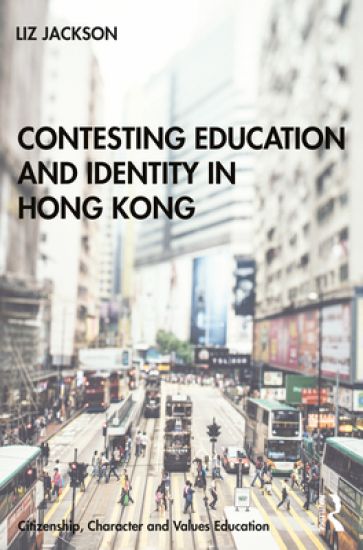
This text examines the intersection of youth civic engagement, identity, and protest in Hong Kong, through the lens of education. It explores how education and identity have been protested in Hong Kong, historically and today, and the mark that such contestations have left on education. Many people, particularly outside Hong Kong, were astonished by youth participation in the Umbrella Movement of 2013–2014, and the anti-extradition law protests in 2019. These protests have caused people to consider what has changed in Hong Kong over time, and what education has to do with youth civic engagement and political expression. This book provides an academic, theoretically oriented perspective on the intersection of youth identity and education in Hong Kong. Coming from an educational (and philosophical) orientation, Jackson focuses on areas where greater understanding, and greater potential agreement, might be developed, when it comes to education. This book will be of interest to educational policy makers, curriculum specialists, and educational scholars and students in liberal studies, social studies, civic education, comparative and international education, multicultural education, and youth studies.
This book examines teachers’ conceptions and practices of assessment in Tanzania. Adopting a sociocultural perspective, it reveals how Tanzanian teachers understand the role of assessment in relation to their classroom practices, community and other factors. The book determines that although teachers in Tanzania generally consider assessment to be useful for evaluating and monitoring learning, improving student performance and for accountability, their assessment practices are rarely seen as directly supporting student learning; it is not that teachers do not know how to implement the mandated assessment reforms. Instead, they are reluctant to adopt and embrace the reforms because they consider them to be contradictory to their teaching roles, and overly burdensome, if not implausible, given the physical, economic and cultural contexts of teaching and learning. This book argues that improving traditional assessments, rather than radically transforming them, canbe more effective for cultivating practices that suit the physical, political, economic and cultural contexts of Tanzanian schools. Highlighting the significance of sociocultural factors in educators’ professional practices, while also illustrating the major challenges in implementing global reform agendas in diverse contexts, it is a valuable resource for educators and scholars interested in development and educational reform in African contexts.
Educating students for emotional wellbeing is a vital task in schools. However, educating emotions is not straightforward. Emotional processes can be challenging to identify and control. How emotions are valued varies across societies, while individuals within societies face different emotional expectations. For example, girls face pressure to be happy and caring, while boys are often encouraged to be brave. This text analyses the best practices of educating emotions. The focus is not just on the psychological benefits of emotional regulation, but also on how calls for educating emotions connect to the aims of society. The book explores psychology's understanding of emotions, 'the politics of emotions', and philosophy. It also discusses education for happiness, compassion, gratitude, resilience, mindfulness, courage, vulnerability, anger, sadness, and fear.
Education about living in society and in the world is a vital task of schools. Yet such civic education is not always critically examined, and few among us have been encouraged to reflect on our civic education experiences. Around the world, one’s civic education most often looks like a black box. How it works is unclear. When human harm, violence, and oppression can be seen in a wide variety of contexts, it is worth critically examining civic education. Could it be that civic education is not playing a helpful role in society? Can it be done differently and better? As one reflects on the contemporary social world, it is helpful to examine the assumptions surrounding education for living together, to think about current modes and possible alternatives. Otherwise, one might end up promoting allegiance to civic and partisan entities which are themselves black boxes (the ‘nation’, the ‘people’), failing to notice when and how what goes on in civic education is morally questionable. This book aims to elucidate some of the black box of civic education, and focuses on some of its main operations across contexts. Offering a new framework for students and academics, this book questions existing thinking and shifts the focus of attention from the right balance to strike between local, national, and global allegiances to the more fundamental question of what counts as ‘local’, ‘national’, and ‘global’, and what might be involved in cultivating allegiances to them. It looks at allegiance to not just transnational but also sub-global ‘civilisations’ and it problematises the notion of the ‘local community’ in new ways. This book is the 2020 AESA Critics' Choice Book Award Winner.
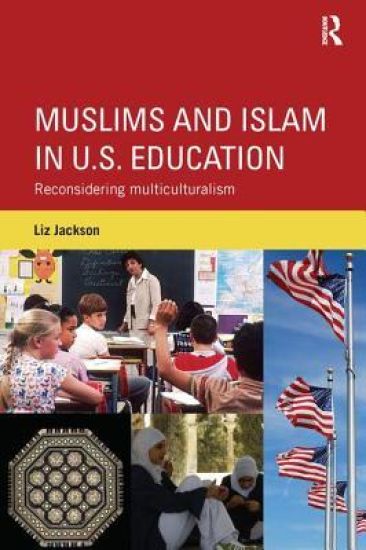
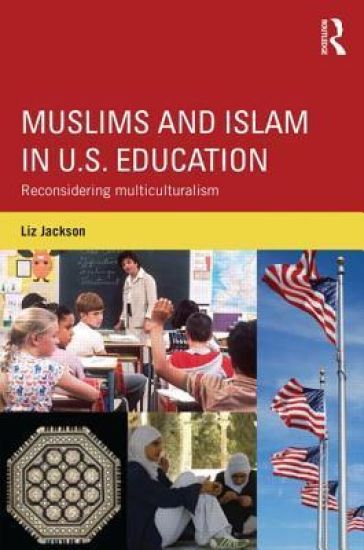
Winner of Philosophy of Education Society of Australasia (PESA)'s inaugural PESA Book Awards in 2015, and The University of Hong Kong Research Output Prize for Education 2014-15. Muslims and Islam in U. S. Education explores the complex interface that exists between U. S. school curriculum, teaching practice about religion in public schools, societal and teacher attitudes toward Islam and Muslims, and multiculturalism as a framework for meeting the needs of minority group students. It presents multiculturalism as a concept that needs to be rethought and reformulated in the interest of creating a more democratic, inclusive, and informed society. Islam is an under-considered religion in American education, due in part to the fact that Muslims represent a very small minority of the population today (less than 1%). However, this group faces a crucial challenge of representation in United States society as a whole, as well as in its schools. Muslims in the United States are impacted by ignorance that news and opinion polls have demonstrated is widespread among the public in the last few decades. U. S. citizens who do not have a balanced, fair and accurate view of Islam can make a variety of decisions in the voting booth, in job hiring, and within their small-scale but important personal networks and spheres of influence, that make a very negative impact on Muslims in the United States. This book presents new information that has implications for curricula, religious education, and multicultural education today, examining the unique case of Islam in U. S. education over the last 20 years. Chapters include: Perspectives on Multicultural Education 9/11, the Media, and the New Need to Know Islam and Muslims in Public Schools Blazing a Path for Intercultural EducationThis book is an essential resource for professors, researchers, and teachers of social studies, particularly those involved with multicultural issues, critical and sociocultural analysis of education and schools; as well as interdisciplinary scholars and students in anthropology and education.