Kirjojen hintavertailu – 12 903 725 kirjaa ja 27 kauppaa

Kirjailija

Lizabeth Paravisini-Gebert

Kirjat ja teokset yhdessä paikassa: 8 kirjaa, julkaisuja vuosilta 1999–2025, suosituimpiin kuuluu Creole Religions of the Caribbean, Third Edition. Vertaile teosten hintoja ja tarkista saatavuus suomalaisista kirjakaupoista.

8 kirjaa

Kirjojen julkaisuvuodet: 1999–2025.

Changes in the Landscape

Changes in the Landscape

Jens Andermann; Ronald Briggs; Gisela Heffes; Aarti S. Madan; Vanesa Miseres; Lizabeth Paravisini-Gebert; Jorge Quintana Navarrete; Catalina Rodríguez; Emmanuel A Velayos Larrabure; Lesley Wylie

VANDERBILT UNIVERSITY PRESS
2025
nidottu
Changes in the Landscape is a collection of timely essays that bring the methodologies and commitments of ecocriticism to bear on the study of Latin American literature and cultural production. The book’s eleven chapters, written by some of the leading voices in the field, invite readers to consider how the relationship between humans and nonhuman nature was fundamentally transformed during a period when new modes of capitalist production were emerging in the region and around the world. Jennifer L. French’s introductory essay provides a historical and theoretical framework for the collection. Ranging from the immediate aftermath of the Spanish-American Wars of Independence (1810–1826) to the early twentieth century (1925), the volume’s essays cover a wide variety of genres and forms of cultural production, from JosÉ HernÁndez’s epic poem MartÍn Fierro to prose fiction, painting and photography, and the personal albums compiled by Spanish-American women. Individually and collectively, the essays engage with scientific writing as both a discourse of power and a source of potentially significant, even revelatory information about human and nonhuman nature. Changes in the Landscape enables readers to more fully understand the transition from colonial regimes to the ecocidal extractivism of the export boom (1870–1930) by drawing out and analyzing some of the cognitive resources and rhetorical strategies that were available to imagine, protest, or enact new norms and expectations regarding the relations between human and nonhuman life, be it the life of wildflowers, waterfalls, or Cuba’s CiÉnaga de Zapata.

Changes in the Landscape

Changes in the Landscape

Jens Andermann; Ronald Briggs; Gisela Heffes; Aarti S. Madan; Vanesa Miseres; Lizabeth Paravisini-Gebert; Jorge Quintana Navarrete; Catalina Rodríguez; Emmanuel A Velayos Larrabure; Lesley Wylie

VANDERBILT UNIVERSITY PRESS
2025
sidottu
Changes in the Landscape is a collection of timely essays that bring the methodologies and commitments of ecocriticism to bear on the study of Latin American literature and cultural production. The book’s eleven chapters, written by some of the leading voices in the field, invite readers to consider how the relationship between humans and nonhuman nature was fundamentally transformed during a period when new modes of capitalist production were emerging in the region and around the world. Jennifer L. French’s introductory essay provides a historical and theoretical framework for the collection. Ranging from the immediate aftermath of the Spanish-American Wars of Independence (1810–1826) to the early twentieth century (1925), the volume’s essays cover a wide variety of genres and forms of cultural production, from JosÉ HernÁndez’s epic poem MartÍn Fierro to prose fiction, painting and photography, and the personal albums compiled by Spanish-American women. Individually and collectively, the essays engage with scientific writing as both a discourse of power and a source of potentially significant, even revelatory information about human and nonhuman nature. Changes in the Landscape enables readers to more fully understand the transition from colonial regimes to the ecocidal extractivism of the export boom (1870–1930) by drawing out and analyzing some of the cognitive resources and rhetorical strategies that were available to imagine, protest, or enact new norms and expectations regarding the relations between human and nonhuman life, be it the life of wildflowers, waterfalls, or Cuba’s CiÉnaga de Zapata.

Creole Religions of the Caribbean, Third Edition

Creole Religions of the Caribbean, Third Edition

Margarite Fernández Olmos; Lizabeth Paravisini-Gebert

NEW YORK UNIVERSITY PRESS
2022
sidottu
An updated introduction to the religions developed in the Caribbean region Creole Religions of the Caribbean offers a comprehensive introduction to the overlapping religions that have developed as a result of the creolization process. Caribbean peoples drew on the variants of Christianity brought by European colonizers, as well as on African religious and healing traditions and the remnants of Amerindian practices, to fashion new systems of belief. From Vodou, Santería, Regla de Palo, the Abakuá Secret Society, and Obeah to Quimbois and Espiritismo, the volume traces the historical–cultural origins of the major Creole religions, as well as the newer traditions such as Rastafari. This third edition updates the scholarship by featuring new critical approaches that have been brought to bear on the study of religion, such as queer studies, environmental studies, and diasporic studies. The third edition also expands the regional considerations of the diaspora to the US Latinx communities that are influenced by Creole spiritual practices, taking into account the increased significance of material culture?art, music, literature, and healing practices influenced by Creole religions.
Creole Religions of the Caribbean, Third Edition

Creole Religions of the Caribbean, Third Edition

Margarite Fernández Olmos; Lizabeth Paravisini-Gebert

NEW YORK UNIVERSITY PRESS
2022
pokkari
An updated introduction to the religions developed in the Caribbean region Creole Religions of the Caribbean offers a comprehensive introduction to the overlapping religions that have developed as a result of the creolization process. Caribbean peoples drew on the variants of Christianity brought by European colonizers, as well as on African religious and healing traditions and the remnants of Amerindian practices, to fashion new systems of belief. From Vodou, Santería, Regla de Palo, the Abakuá Secret Society, and Obeah to Quimbois and Espiritismo, the volume traces the historical–cultural origins of the major Creole religions, as well as the newer traditions such as Rastafari. This third edition updates the scholarship by featuring new critical approaches that have been brought to bear on the study of religion, such as queer studies, environmental studies, and diasporic studies. The third edition also expands the regional considerations of the diaspora to the US Latinx communities that are influenced by Creole spiritual practices, taking into account the increased significance of material culture?art, music, literature, and healing practices influenced by Creole religions.
Creole Religions of the Caribbean

Creole Religions of the Caribbean

Lizabeth Paravisini-Gebert; Margarite Fernández Olmos; Joseph M. Murphy

New York University Press
2011
sidottu
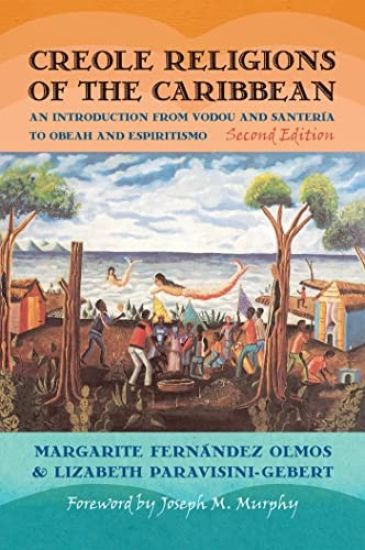
A comprehensive introduction to the syncretic religions developed in the Caribbean region Creolization—the coming together of diverse beliefs and practices to form new beliefs and practices—is one of the most significant phenomena in Caribbean religious history. Brought together in the crucible of the sugar plantation, Caribbean peoples drew on the variants of Christianity brought by European colonizers, as well as on African religious and healing traditions and the remnants of Amerindian practices, to fashion new systems of belief. Creole Religions of the Caribbean offers a comprehensive introduction to the syncretic religions that have developed in the region. From Vodou, Santería, Regla de Palo, the Abakuá Secret Society, and Obeah to Quimbois and Espiritismo, the volume traces the historical–cultural origins of the major Creole religions, as well as the newer traditions such as Pocomania and Rastafarianism. This second edition updates the scholarship on the religions themselves and also expands the regional considerations of the Diaspora to the U. S. Latino community who are influenced by Creole spiritual practices. Fernández Olmos and Paravisini–Gebert also take into account the increased significance of material culture—art, music, literature—and healing practices influenced by Creole religions.
Creole Religions of the Caribbean

Creole Religions of the Caribbean

Lizabeth Paravisini-Gebert; Margarite Fernández Olmos; Joseph M. Murphy

New York University Press
2011
pokkari
A comprehensive introduction to the syncretic religions developed in the Caribbean region Creolization—the coming together of diverse beliefs and practices to form new beliefs and practices—is one of the most significant phenomena in Caribbean religious history. Brought together in the crucible of the sugar plantation, Caribbean peoples drew on the variants of Christianity brought by European colonizers, as well as on African religious and healing traditions and the remnants of Amerindian practices, to fashion new systems of belief. Creole Religions of the Caribbean offers a comprehensive introduction to the syncretic religions that have developed in the region. From Vodou, Santería, Regla de Palo, the Abakuá Secret Society, and Obeah to Quimbois and Espiritismo, the volume traces the historical–cultural origins of the major Creole religions, as well as the newer traditions such as Pocomania and Rastafarianism. This second edition updates the scholarship on the religions themselves and also expands the regional considerations of the Diaspora to the U. S. Latino community who are influenced by Creole spiritual practices. Fernández Olmos and Paravisini–Gebert also take into account the increased significance of material culture—art, music, literature—and healing practices influenced by Creole religions.
Literature of the Caribbean

Literature of the Caribbean

Lizabeth Paravisini-Gebert

Greenwood Press
2008
sidottu
The Caribbean is an exotic but not too distant land, full of rich cultural traditions. The literature of the Caribbean reflects the social, political, and cultural concerns of the region and is a valuable tool for learning about the area and its people. This book includes chapters on roughly a dozen contemporary Caribbean writers. Along with plot summaries, these sections discuss major themes and give close attention to how Caribbean culture figures in the writer's texts. To help students conduct further research, each chapter cites works for further reading.
Jamaica Kincaid

Jamaica Kincaid

Lizabeth Paravisini-Gebert

Greenwood Press
1999
sidottu
With the publication of her novel Annie John in 1985, Jamaica Kincaid entered the ranks of the best novelists of her generation. Her three autobiographical novels, Annie John, Lucy, and Autobiography of My Mother, and collection of short stories, At the Bottom of the River, touch on the universal theme of coming-of-age and the female adolescent's need to sever her ties to her mother. This angst is couched in the social landscape of post-colonial Antigua, a small Caribbean island whose legacy of racism affects Kincaid's protagonists. Her fiction rewrites the history of the Caribbean from a West Indies perspective and this milieu colors the experiences of her characters. Following a biographical chapter, Paravisini-Gebert traces the development of Kincaid's craft as a writer. Each of the novels and the collection of short stories is discussed in a separate chapter that includes sections on plot, character, theme, and an alternate critical approach from which to read the novel, such as feminist. A complete primary and secondary bibliography and lists of selected reviews of Kincaid's work complete the study.