Kirjojen hintavertailu – 12 903 725 kirjaa ja 27 kauppaa

Kirjailija

Lois Weis

Kirjat ja teokset yhdessä paikassa: 19 kirjaa, julkaisuja vuosilta 1990–2025, suosituimpiin kuuluu Graduating Class. Vertaile teosten hintoja ja tarkista saatavuus suomalaisista kirjakaupoista.

19 kirjaa

Kirjojen julkaisuvuodet: 1990–2025.

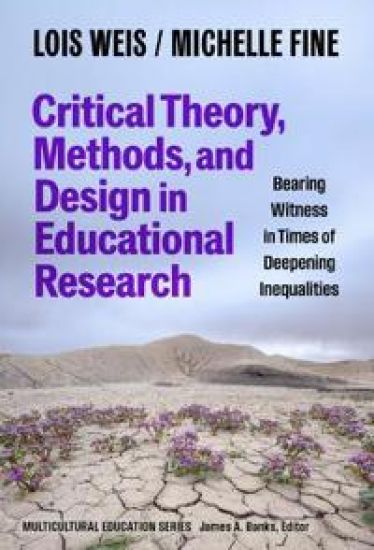
Critical Theory, Methods, and Design in Educational Research

Critical Theory, Methods, and Design in Educational Research

Lois Weis; Michelle Fine

TEACHERS' COLLEGE PRESS
2025
sidottu
Two of the foremost educational researchers chronicle their 3 -year collaboration across tumultuous shifts in educational studies, bearing witness to cumulative inequities in schools and urban communities. Weis and Fine examine critical research designs with young people from elite, working class, and impoverished class fractions, as well as across racial and ethnic groups, including those experiencing structural dispossession and those enjoying privilege. Curated to be useful to today's students and future generations of scholars, the volume chronicles the sustained impacts of unjust state systems and dives into vibrant fissures in which the imagination flourishes and possibilities grow. Chapters explore rich linkages of theory and methods knotty questions of collaboration, partnership, and ethics and designs that trace social relations over time and space. A newly developed introduction and conclusion bookend six previously published chapters, many coauthored with a range of colleagues, animating research studies with a broad range of young people and young adults navigating the uneven landscapes of education in urban America. Book Features: Details linked to research methodologies, including multi-site longitudinal ethnography and longitudinal ethnographic interviews, as well as participatory action research that the authors, among others, have advanced in critical educational studies. Provides examples of educational research that interrogate inequities and document radical possibilities by race, class, gender, immigration status, and sexuality. Examines projects that have been designed alongside and by vibrant research teams from across schools, prisons, youth movements, and public and private educational P– plus settings. Interrogates how the authors evolved innovative research methods and ethics attentive to "studying up," mapping, national youth-led surveys, participatory inquiry behind bars, and with middle school students. Offers educational designs that address inequities in STEM education and outcomes and the impact of state violence on young people as well as methods for understanding structural arrangements, youth identities, and on-the-ground research for justice.
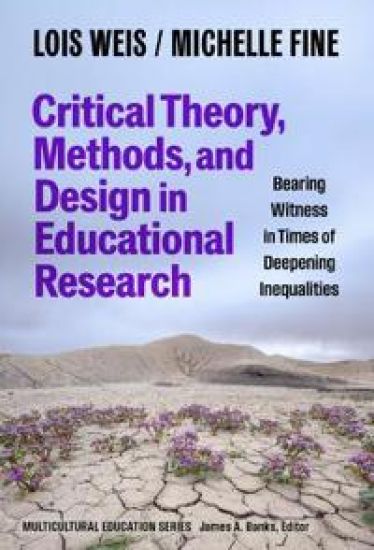
Critical Theory, Methods, and Design in Educational Research

Critical Theory, Methods, and Design in Educational Research

Lois Weis; Michelle Fine

TEACHERS' COLLEGE PRESS
2025
nidottu
Two of the foremost educational researchers chronicle their 3 -year collaboration across tumultuous shifts in educational studies, bearing witness to cumulative inequities in schools and urban communities. Weis and Fine examine critical research designs with young people from elite, working class, and impoverished class fractions, as well as across racial and ethnic groups, including those experiencing structural dispossession and those enjoying privilege. Curated to be useful to today's students and future generations of scholars, the volume chronicles the sustained impacts of unjust state systems and dives into vibrant fissures in which the imagination flourishes and possibilities grow. Chapters explore rich linkages of theory and methods knotty questions of collaboration, partnership, and ethics and designs that trace social relations over time and space. A newly developed introduction and conclusion bookend six previously published chapters, many coauthored with a range of colleagues, animating research studies with a broad range of young people and young adults navigating the uneven landscapes of education in urban America. Book Features: Details linked to research methodologies, including multi-site longitudinal ethnography and longitudinal ethnographic interviews, as well as participatory action research that the authors, among others, have advanced in critical educational studies. Provides examples of educational research that interrogate inequities and document radical possibilities by race, class, gender, immigration status, and sexuality. Examines projects that have been designed alongside and by vibrant research teams from across schools, prisons, youth movements, and public and private educational P– plus settings. Interrogates how the authors evolved innovative research methods and ethics attentive to "studying up," mapping, national youth-led surveys, participatory inquiry behind bars, and with middle school students. Offers educational designs that address inequities in STEM education and outcomes and the impact of state violence on young people as well as methods for understanding structural arrangements, youth identities, and on-the-ground research for justice.
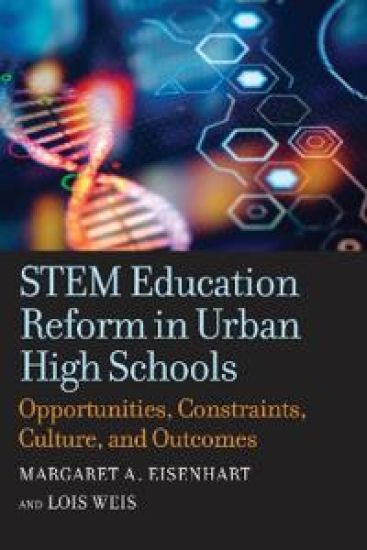
STEM Education Reform in Urban High Schools

STEM Education Reform in Urban High Schools

Margaret A. Eisenhart; Lois Weis

Harvard Educational Publishing Group
2022
nidottu
STEM Education Reform in Urban High Schools gives a nuanced view of the obstacles marginalized students face in STEM education—and explores how schools can better support STEM learners. Reporting the results of a nine-year ethnographic study, the book chronicles the outcomes of various STEM education reforms in eight public high schools with nonselective admissions policies and high proportions of low-income and minoritized students: four schools in Denver, Colorado, and four in Buffalo, New York. Margaret A. Eisenhart and Lois Weis follow the educational experiences of high-ability students from each school, tracking the students' high school-to-college-to-career trajectories. Through interviews with students, educators, and parents, as well as classroom and campus observations, the authors identify patterns in the educational paths of students who go on to great success in STEM occupations and those who do not. They discuss common mechanisms that undermine the stated goals of STEM programming—opportunity structures that are inequitable, erosion of program quality, and diversion of resources—as well as social and cultural constructs (the figured worlds of STEM) that exclude many minoritized students with potential for success from the STEM pipeline. On a broader scope, the book explores how and why STEM education reform efforts fail and succeed. With an eye toward greater access to STEM learning, the authors show how lessons of past measures can inform future STEM initiatives.
Between Two Worlds

Between Two Worlds

Lois Weis

Routledge
2019
nidottu
First published in 1985, this book explores the ‘lived culture’ of urban black students in a community college located in a large northeastern city in the United States. The author immersed herself in the institution she was studying for a full academic year, exploring both the direct experiences of education, and the way these experiences were worked over and through the praxis of cultural discourse. She examines in detail the messages of the school, including the ‘hidden curriculum’ and faculty perspectives, as well as the way these messages are transformed at a cultural level. The resulting work provides a major contribution to a number of debates on education and cultural and economic reproduction, as well as a leap forward in our understanding of the role schooling plays in the re-creation of race and class antagonisms. This work will be of great interest to anyone working with minorities, particularly in the context of education.
Between Two Worlds

Between Two Worlds

Lois Weis

Routledge
2017
sidottu
First published in 1985, this book explores the ‘lived culture’ of urban black students in a community college located in a large northeastern city in the United States. The author immersed herself in the institution she was studying for a full academic year, exploring both the direct experiences of education, and the way these experiences were worked over and through the praxis of cultural discourse. She examines in detail the messages of the school, including the ‘hidden curriculum’ and faculty perspectives, as well as the way these messages are transformed at a cultural level. The resulting work provides a major contribution to a number of debates on education and cultural and economic reproduction, as well as a leap forward in our understanding of the role schooling plays in the re-creation of race and class antagonisms. This work will be of great interest to anyone working with minorities, particularly in the context of education.
Working Class Without Work

Working Class Without Work

Lois Weis

Routledge
2017
sidottu
The author wxplores issues of race, class, and gender among white working class youths, and she considers the roles of school and family in the production of the self. The book also examines the working class teens' attitudes toward and readiness for postfeminist thinking and the emerging American New Right. Presenting the first sustained ethnographic investigation of white working class youth in the context of deindustrializatin, Weis offers a complex portrait of how these young people produce themselves in a society vastly different from that of their parents and grandparents.
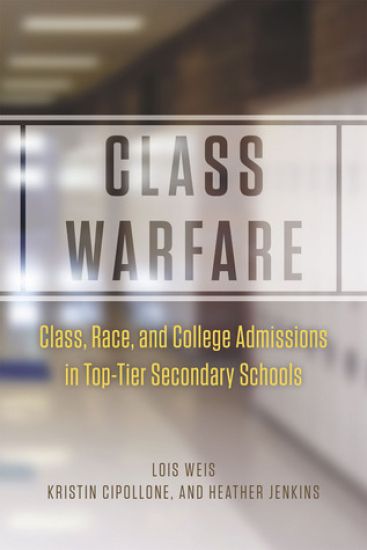
Class Warfare – Class, Race, and College Admissions in Top–Tier Secondary Schools

Class Warfare – Class, Race, and College Admissions in Top–Tier Secondary Schools

Lois Weis; Kristin Cipollone; Heather Jenkins

University of Chicago Press
2014
nidottu
Stories abound about the lengths to which middle- and upper-middle-class parents will go to ensure a spot for their child at a prestigious university. From the Suzuki method to calculus-based physics, from AP tests all the way back to early-learning Kumon courses, students are increasingly pushed to excel, with that Harvard or Yale acceptance letter held tantalizingly in front of them. And nowhere is this drive more apparent than in our elite secondary schools. In Class Warfare, Lois Weis, Kristin Cipollone, and Heather Jenkins go inside the ivy-yearning halls of three such schools to offer a day-to-day, week-by-week look at this remarkable drive toward college admissions and one of its most salient purposes: to determine class. Drawing on deep and sustained contact with students, parents, teachers, and administrators at three iconic secondary schools in the United States, the authors unveil a formidable process of class positioning at the heart of the college admissions process. They detail the ways students and parents exploit every opportunity and employ every bit of cultural, social, and economic capital they can in order to gain admission into a "Most Competitive" or "Highly Competitive Plus" university. Moreover, they show how admissions into these schools - with their attendant rankings - are used to lock in or improve class standing for the next generation.
Class Warfare

Class Warfare

Lois Weis; Kristin Cipollone; Heather Jenkins

University of Chicago Press
2014
sidottu
Stories abound about the lengths to which middle- and upper-middle-class parents will go to ensure a spot for their child at a prestigious university. From the Suzuki method to calculus-based physics, from AP tests all the way back to early-learning Kumon courses, students are increasingly pushed to excel, with that Harvard or Yale acceptance letter held tantalizingly in front of them. And nowhere is this drive more apparent than in our elite secondary schools. In Class Warfare, Lois Weis, Kristin Cipollone, and Heather Jenkins go inside the ivy-yearning halls of three such schools to offer a day-to-day, week-by-week look at this remarkable drive toward college admissions and one of its most salient purposes: to determine class. Drawing on deep and sustained contact with students, parents, teachers, and administrators at three iconic secondary schools in the United States, the authors unveil a formidable process of class positioning at the heart of the college admissions process. They detail the ways students and parents exploit every opportunity and employ every bit of cultural, social, and economic capital they can in order to gain admission into a "Most Competitive" or "Highly Competitive Plus" university. Moreover, they show how admissions into these schools-with their attendant rankings-are used to lock in or improve class standing for the next generation.
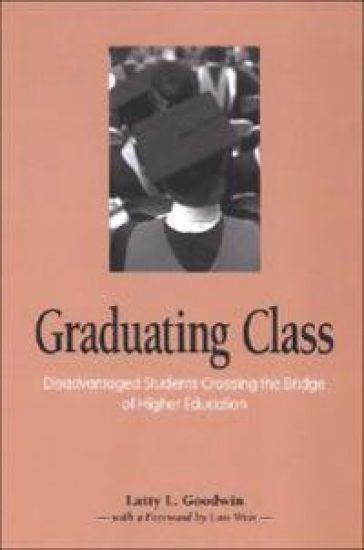
Graduating Class

Graduating Class

Latty L. Goodwin; Lois Weis

State University of New York Press
2006
pokkari
Students from poor and working-class families struggle to succeed and graduate from an elite university. In Graduating Class, Latty L. Goodwin tells the story of a group of students from poor and working-class families who struggle against all odds to graduate from an elite university. The author explores the lived experiences of an engaging group of college students and shares their stories of trials and tribulations, joys and sorrows, and their frustrations and successes. Goodwin shows that even though the affirmative action debate was recently "settled" in the Supreme Court, universities are still left to grapple with defining who is deserving, meritorious, and qualified for admission. This timely story of hope and of students persevering through academic adversity poignantly demonstrates the justice of democratic access to higher education.
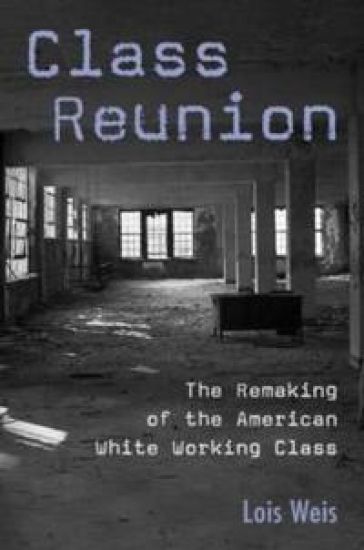
Class Reunion

Class Reunion

Lois Weis

Routledge
2004
sidottu
Noted scholar Lois Weis first visited the town of "Freeway" in her 1990 book, Working Class Without Work. In that book we met the students and teachers of Freeway's high school to understand how these working-class folks made sense of their lives. Now, fifteen years later, Weis has gone back to Freeway for Class Reunion. This time her focus is on the now grown-up students who are, for the most part, still working class and now struggling to survive the challenges of the global economy. Class Reunion is a rare and valuable longitudinal ethnographic study that provides powerful, provocative insight into how the lives of these men and women have changed over the last two decades--and what their prospects might be for the future.
Class Reunion

Class Reunion

Lois Weis

Routledge
2004
nidottu

Halvin toimitettuna 95,00 €

Noted scholar Lois Weis first visited the town of "Freeway" in her 1990 book, Working Class Without Work. In that book we met the students and teachers of Freeway's high school to understand how these working-class folks made sense of their lives. Now, fifteen years later, Weis has gone back to Freeway for Class Reunion. This time her focus is on the now grown-up students who are, for the most part, still working class and now struggling to survive the challenges of the global economy. Class Reunion is a rare and valuable longitudinal ethnographic study that provides powerful, provocative insight into how the lives of these men and women have changed over the last two decades--and what their prospects might be for the future.
Off White

Off White

Michelle Fine; Lois Weis; Linda Powell Pruitt; April Burns

Routledge
2004
sidottu
With a fascinating new introduction on the proliferation and development of the field of whiteness studies and updated essays throughout, this much-anticipated second ddition continues to redefine our understanding of race and society. Also inlcludes three maps.
Working Method

Working Method

Lois Weis; Michelle Fine

Routledge
2004
sidottu
Working Method focuses on the theory, method, and politics of contemporary social research. As ethnographic and qualitative research become more popular, noted scholars Weis and Fine provide a roadmap for understanding the complexities involved in doing this research.
Working Method

Working Method

Lois Weis; Michelle Fine

Routledge
2004
nidottu
Working Method focuses on the theory, method, and politics of contemporary social research. As ethnographic and qualitative research become more popular, noted scholars Weis and Fine provide a roadmap for understanding the complexities involved in doing this research.
Off White

Off White

Michelle Fine; Lois Weis; Linda Powell Pruitt; April Burns

Routledge
2004
nidottu
With a fascinating new introduction on the proliferation and development of the field of whiteness studies and updated essays throughout, this much-anticipated second ddition continues to redefine our understanding of race and society. Also inlcludes three maps.
Silenced Voices and Extraordinary Conversations

Silenced Voices and Extraordinary Conversations

Michelle Fine; Lois Weis

Teachers' College Press
2003
nidottu
This volume is a collection of classic essays - as urgently needed now as when they first appeared - on social class, race, gender, and schooling crafted over the course of two decades. The authors invite all of us to take a serious look at the paradox of public education - the ways in which urban schools reproduce social inequalities while, at the same time, serve as sites for learning at its most transformative and compelling. A must-read for all those educators who believe that ""we can no longer afford to cede this space to policymakers who know little of the life of a classroom, the curiosity of a child, and the moral imperatives of teaching for critical citizenship.
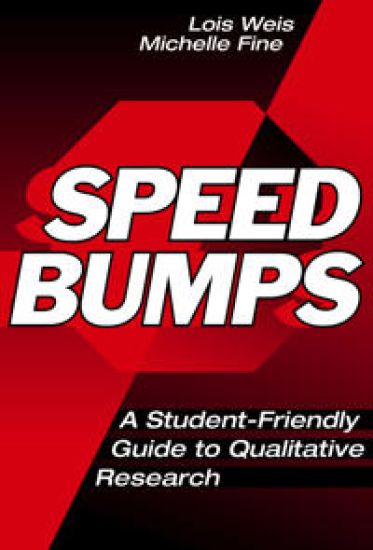
Speed Bumps

Speed Bumps

Lois Weis; Michelle Fine

Teachers' College Press
2000
nidottu
A guide to the process of qualitative research. Two ethnographers explore what it means to conduct a piece of qualitative work. They offer information regarding developing interview questions, conducting interviews and observations, coding and analyzing data, and writing up results.
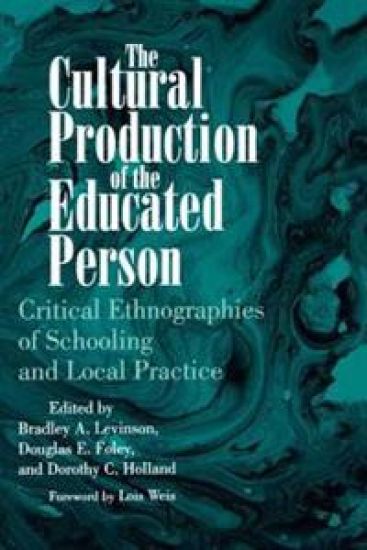
The Cultural Production of the Educated Person

The Cultural Production of the Educated Person

Lois Weis

State University of New York Press
1996
pokkari
Examines the ways in which cultural practices and knowledges are produced in and out of schools around the world. Eleven historical-ethnographic case studies examine the social and cultural projects of modern schools, and the contestations, dramatic and not, that emerge in and around and against them. These case studies, ranging from Taiwan to South Texas, build upon an original joining of anthropology, critical education theory, and cultural studies. The studies advance the concept of cultural production as a way of understanding the dynamics of power and identity formation underlying different forms of "education." Using the concept of the "educated person" as a culture-specific construct, the authors examine conflicts and points of convergence between cultural practices and knowledges that are produced in and out of schools.
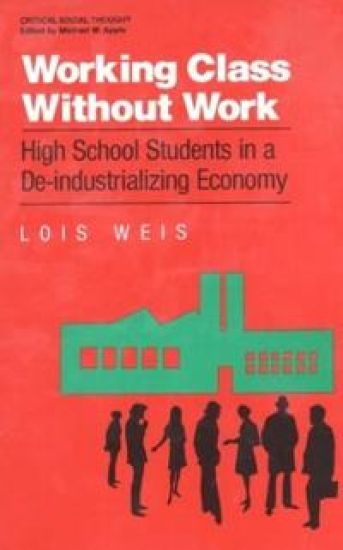
Working Class Without Work

Working Class Without Work

Lois Weis

Routledge
1990
nidottu

Halvin toimitettuna 62,80 €

The author wxplores issues of race, class, and gender among white working class youths, and she considers the roles of school and family in the production of the self. The book also examines the working class teens' attitudes toward and readiness for postfeminist thinking and the emerging American New Right. Presenting the first sustained ethnographic investigation of white working class youth in the context of deindustrializatin, Weis offers a complex portrait of how these young people produce themselves in a society vastly different from that of their parents and grandparents.