Kirjojen hintavertailu – 12 903 724 kirjaa ja 27 kauppaa

Kirjailija

Lol Burke

Kirjat ja teokset yhdessä paikassa: 7 kirjaa, julkaisuja vuosilta 2011–2026, suosituimpiin kuuluu Delivering Rehabilitation. Vertaile teosten hintoja ja tarkista saatavuus suomalaisista kirjakaupoista.

7 kirjaa

Kirjojen julkaisuvuodet: 2011–2026.

Devolving Probation Services

Devolving Probation Services

Matthew Millings; Lol Burke; Gwen Robinson

TAYLOR FRANCIS LTD
2026
sidottu
The role of the private sector in managing and delivering criminal justice services is not a new phenomenon and the criminal justice field is just one of a number of public and social policy fields which have increasingly been opened up to the market. Research has shown that these transitions do not follow a uniform pattern, or adhere to an accepted blueprint. Drawing on a rich original data set of observational research and interviews, this book captures a distinctive period of profound change in the devolution of the probation service in England and Wales and constructs a narrative of the transition process. It explores the impact of privatization on workers and their identities, in their move from public service to private sector employment. It explores occupational cultures and loyalties, the speed of processes of transition and leadership approaches to driving change. The books argues that the way in which workers experience and manage these transitions tell us a great deal about the prospects for retaining (formerly) public sector staff within fields that are increasingly being subject to private sector influence.
Reimagining Rehabilitation

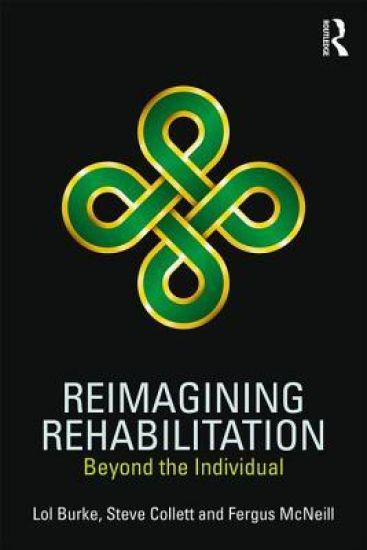
Reimagining Rehabilitation

Lol Burke; Steve Collett; Fergus McNeill

Routledge
2018
sidottu
This book aims to make the case for and provide some of the resources necessary to reimagine rehabilitation for twenty-first-century criminal justice. Outlining an approach to rehabilitation which takes into account wider democratic processes, political structures and mechanisms of resource allocation, the authors develop a new model of rehabilitation comprising four forms – personal, legal, social and moral. Personal rehabilitation concerns how individuals make their journeys away from offending and towards reintegration and how they can be supported to do so, whilst legal rehabilitation concerns the role of the criminal courts in the process of restricting and then restoring the rights and status of citizens. Moral rehabilitation is concerned with the ethical basis of the interactions between the individual who has offended and the people and organisations charged with providing rehabilitative services. Social rehabilitation explores the crucial contribution civil society can make to rehabilitation, exploring this through the lens of citizenship, community and social capital. Drawing on the conceptual insights offered in the late Stan Cohen’s seminal work – Visions of Social Control – and specifically his insistence that modern social institutions can aspire to doing good and doing justice, the authors argue that these values can underpin a moral pragmatism in designing social interventions that must go beyond achieving simply instrumental ends. Reimaging rehabilitation within the context of social action and social justice, this book is essential reading for students and scholars alike, particularly those engaged with criminal justice policy, probation and offender rehabilitation.
Reimagining Rehabilitation

Reimagining Rehabilitation

Lol Burke; Steve Collett; Fergus McNeill

Routledge
2018
nidottu
This book aims to make the case for and provide some of the resources necessary to reimagine rehabilitation for twenty-first-century criminal justice. Outlining an approach to rehabilitation which takes into account wider democratic processes, political structures and mechanisms of resource allocation, the authors develop a new model of rehabilitation comprising four forms – personal, legal, social and moral. Personal rehabilitation concerns how individuals make their journeys away from offending and towards reintegration and how they can be supported to do so, whilst legal rehabilitation concerns the role of the criminal courts in the process of restricting and then restoring the rights and status of citizens. Moral rehabilitation is concerned with the ethical basis of the interactions between the individual who has offended and the people and organisations charged with providing rehabilitative services. Social rehabilitation explores the crucial contribution civil society can make to rehabilitation, exploring this through the lens of citizenship, community and social capital. Drawing on the conceptual insights offered in the late Stan Cohen’s seminal work – Visions of Social Control – and specifically his insistence that modern social institutions can aspire to doing good and doing justice, the authors argue that these values can underpin a moral pragmatism in designing social interventions that must go beyond achieving simply instrumental ends. Reimaging rehabilitation within the context of social action and social justice, this book is essential reading for students and scholars alike, particularly those engaged with criminal justice policy, probation and offender rehabilitation.
Delivering Rehabilitation

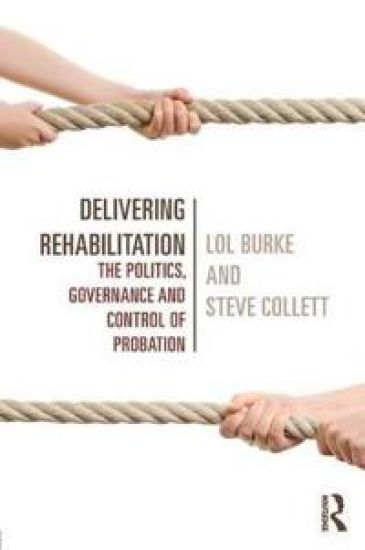
Delivering Rehabilitation

Lol Burke; Steve Collett

Routledge
2014
sidottu
Do offenders have the right to be rehabilitated and should the state be responsible for their rehabilitation? Should the public expect punitive and coercive approaches to offender rehabilitation? Why should the state be interested in the reform of individuals and how can helping offenders be justified when there are other disadvantaged groups in society who are unable to access the services they desperately need? Finally, why does the state appear to target and criminalise certain groups and individuals and not others? These are just some of the questions asked in this new text, which offers an analysis of the delivery of rehabilitative services to offenders over the past two decades. It focuses particularly on the ideological and political imperatives of a neoliberal state that intends to segment the work of the Probation Service and hand over the majority of its work to the private sector. Issues covered include: governance, politics and performance of probation, occupational culture and professional identity, markets, profit and delivery, partnership, localism and civil society, citizenship, exclusion and the State. This book is aimed at academics, practitioners, managers and leaders within the field of corrections and wider social policy. It will also appeal to undergraduates and postgraduates specialising in criminal justice, criminology, politics and social policy.
Delivering Rehabilitation

Delivering Rehabilitation

Lol Burke; Steve Collett

Routledge
2014
nidottu
Do offenders have the right to be rehabilitated and should the state be responsible for their rehabilitation? Should the public expect punitive and coercive approaches to offender rehabilitation? Why should the state be interested in the reform of individuals and how can helping offenders be justified when there are other disadvantaged groups in society who are unable to access the services they desperately need? Finally, why does the state appear to target and criminalise certain groups and individuals and not others? These are just some of the questions asked in this new text, which offers an analysis of the delivery of rehabilitative services to offenders over the past two decades. It focuses particularly on the ideological and political imperatives of a neoliberal state that intends to segment the work of the Probation Service and hand over the majority of its work to the private sector. Issues covered include: governance, politics and performance of probation, occupational culture and professional identity, markets, profit and delivery, partnership, localism and civil society, citizenship, exclusion and the State. This book is aimed at academics, practitioners, managers and leaders within the field of corrections and wider social policy. It will also appeal to undergraduates and postgraduates specialising in criminal justice, criminology, politics and social policy.
Redemption, Rehabilitation and Risk Management

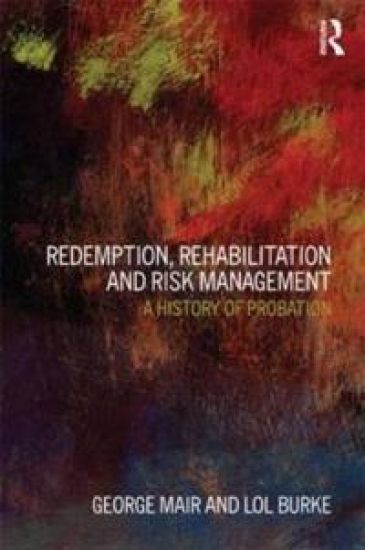
Redemption, Rehabilitation and Risk Management

George Mair; Lol Burke

Willan Publishing
2011
sidottu
Redemption, Rehabilitation and Risk Management provides the most accessible and up-to-date account of the origins and development of the Probation Service in England and Wales. The book explores and explains the changes that have taken place in the service, the pressures and tensions that have shaped change, and the role played by government, research, NAPO, and key individuals from its origins in the nineteenth century up to the plans for the service outlined by the Conservative/Liberal Democrat government. The probation service is a key agency in dealing with offenders; providing reports for the courts that assist sentencing decisions; supervizing released prisoners in the community and working with the victims of crime. Yet despite dealing with more offenders than the prison service, at lower cost and with reconviction rates that are lower than those associated with prisons, the Probation Service has been ignored, misrepresented, taken for granted and marginalized, and probation staff have been sneered at as ‘do-gooders’. The service as a whole is currently under serious threat as a result of budget cuts, organizational restructuring, changes in training, and increasingly punitive policies. This book details how probation has come to such a pass. By tracing the evolution of the probation service, Redemption, Rehabilitation and Risk Management not only sheds invaluable light on a much misunderstood criminal justice agency, but offers a unique examination of twentieth century criminal justice policy. It will be essential reading for students and academics in criminal justice and criminology.
Redemption, Rehabilitation and Risk Management

Redemption, Rehabilitation and Risk Management

George Mair; Lol Burke

Willan Publishing
2011
nidottu
Redemption, Rehabilitation and Risk Management provides the most accessible and up-to-date account of the origins and development of the Probation Service in England and Wales. The book explores and explains the changes that have taken place in the service, the pressures and tensions that have shaped change, and the role played by government, research, NAPO, and key individuals from its origins in the nineteenth century up to the plans for the service outlined by the Conservative/Liberal Democrat government. The probation service is a key agency in dealing with offenders; providing reports for the courts that assist sentencing decisions; supervizing released prisoners in the community and working with the victims of crime. Yet despite dealing with more offenders than the prison service, at lower cost and with reconviction rates that are lower than those associated with prisons, the Probation Service has been ignored, misrepresented, taken for granted and marginalized, and probation staff have been sneered at as ‘do-gooders’. The service as a whole is currently under serious threat as a result of budget cuts, organizational restructuring, changes in training, and increasingly punitive policies. This book details how probation has come to such a pass. By tracing the evolution of the probation service, Redemption, Rehabilitation and Risk Management not only sheds invaluable light on a much misunderstood criminal justice agency, but offers a unique examination of twentieth century criminal justice policy. It will be essential reading for students and academics in criminal justice and criminology.