
Kirjailija
Loren D. Estleman
Kirjat ja teokset yhdessä paikassa: 41 kirjaa, julkaisuja vuosilta 2002–2026, suosituimpiin kuuluu Man One. Vertaile teosten hintoja ja tarkista saatavuus suomalaisista kirjakaupoista.
Nimi esiintyy myös muodoissa: Loren D Estleman
41 kirjaa
Kirjojen julkaisuvuodet: 2002–2026.
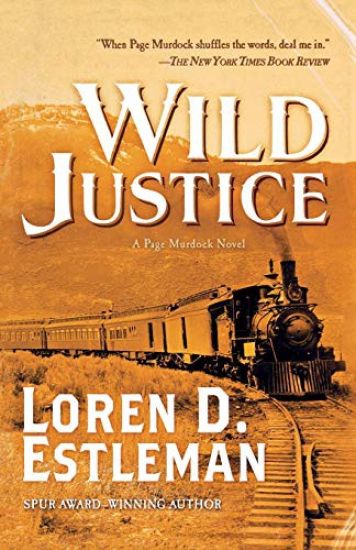
A riveting western novel starring beloved character Page Murdock from Spur Award-winning author Loren D. Estleman In the spring of 1896, after thirty years spent dispensing justice in the territory of Montana, Judge Harlan Blackthorne expires, leaving Deputy U. S. Marshal Page Murdock, his most steadfast officer, to escort his remains across the continent by rail. The long journey--interrupted from time to time by station stops for the public to pay its respects and for various marching bands to serenade the departed with his favorite ballad, "After the Ball"--gives Murdock plenty of opportunity to reflect upon the years of triumphs and tragedies he's seen first hand, always in the interest of bringing justice to a wilderness he, his fellow deputies, and the Judge played so important a role in its settlement. As the funeral train chugs through prairie, over mountains, and across rivers once ruled by buffalo herds, Indian nations, trappers, cowboys, U. S. Cavalry, entrepreneurs, and outlaws representing every level of heroism, sacrifice, ambition, and vice, Wild Justice provides a capsule history of the American frontier from its untamed beginnings to a civilization balanced on the edge of a new and unpredictable century.
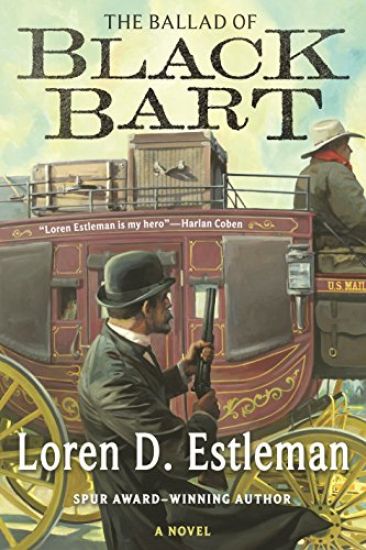
The Ballad of Black Bart: a riveting western novel from Spur Award-Winning Author Loren D. Estleman. "Loren Estleman is my hero."--Harlan Coben Between July 1875 and November 1883, a single outlaw robbed the stagecoaches of Wells Fargo in California's Mother Lode country a record of twenty-eight times. Armed with an unloaded shotgun, walking to and from the scenes of the robberies, often for hundreds of miles, and leaving poems behind, the infamous Black Bart was fiercely hunted. Between robberies, Black Bart was known as Charles E. Bolton, a distinguished, middle-aged man who enjoyed San Francisco's entertainments in the company of socialites drawn to his quiet, temperate good nature and upper-class tastes. Meanwhile, James B. Hume, Wells Fargo's legendary chief of detectives, made Bart's apprehension a matter of personal as well as professional interest. The Ballad of Black Bart is a duel of wits involving two adversaries of surpassing cleverness, set against the vivid backdrop of the Old West.

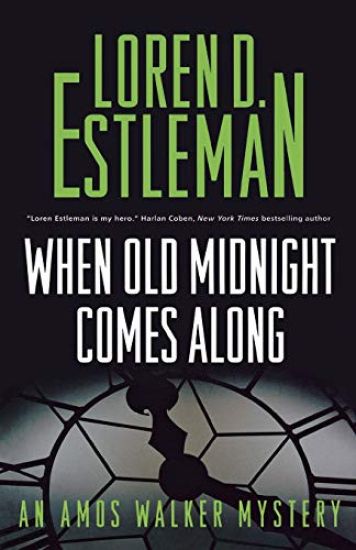
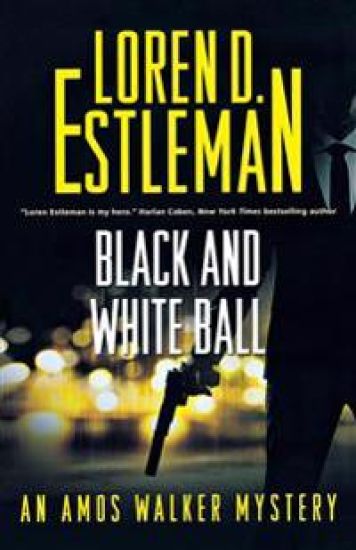
A hot new Amos Walker mystery by a master of the hard-boiled detective novel. "Loren Estleman is my hero."--Harlan Coben, New York Times bestselling author Detroit entrepreneur Carl Fannon hires Walker to trace Emil Haas, his partner, whose sudden disappearance has jeopardized their firm's plans to purchase the historic Sentinel Building. Almost immediately, the missing man shows up and asks the detective to meet him in the empty Sentinel to discuss a top-secret concern. Walker complies, only to find not Haas, but Fannon's suffocated corpse locked in a basement vault. When Gwendolyn Haas, the partner's adult daughter, enters the picture, the client number rises to three, including one missing and one murdered. But the worst is yet to come: Emil Haas's "concern" is that Fannon's been buying up depressed real estate on behalf of Charlotte Sing, the international fugitive Walker knows only too well as Madam Sing. Madam Sing is believed to have been executed in Asia for capital crimes without number, but instead may be engaged in rebuilding her fortune to relaunch her assault on civilization.
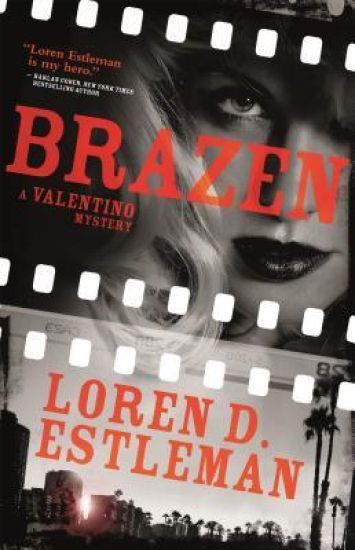
A killer is reenacting the deaths of Hollywood's blond bombshells, and Valentino must stop him before it's too late in Loren D. Estleman's Brazen. UCLA film archivist and sometime film detective Valentino doesn't take friend and former actress Beata Limerick very seriously when she tells him that she quit acting because of the curse on blond actresses. Marilyn Monroe, Jayne Mansfield, Thelma Todd, Sharon Tate... they all had more fun, but none of them made it out of the business alive, and according to Limerick, she wasn't taking any chances. But when Valentino finds Beata's body staged the way Monroe was found, "Diamonds Are a Girl's Best Friend" playing on repeat; he knows Limerick's death was no accident. Police detective Ray Padilla doesn't quite suspect Valentino is the killer, but he can't let him off that easy. After all, the film archivist seems to be involved in more than his share of intrigue and death, which makes him a prime suspect. But Valentino is also a walking encyclopedia of Hollywood knowledge. When another washed-up actress is killed, the crime scene a copy of Thelma Todd's last moments, Padilla enlists Valentino's help in catching a serial killer of doomed blondes before he can strike again.
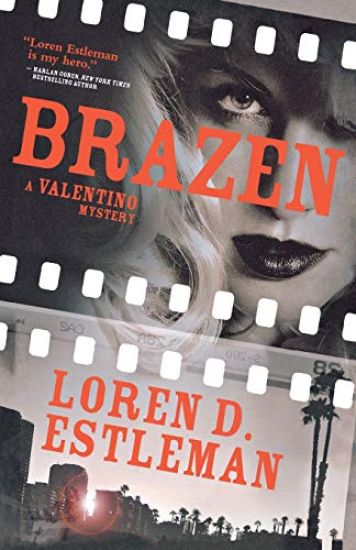
A killer is reenacting the deaths of Hollywood's blond bombshells, and Valentino must stop him before it's too late in Loren D. Estleman's Brazen. UCLA film archivist and sometime film detective Valentino doesn't take friend and former actress Beata Limerick very seriously when she tells him that she quit acting because of the curse on blond actresses. Marilyn Monroe, Jayne Mansfield, Thelma Todd, Sharon Tate... they all had more fun, but none of them made it out of the business alive, and according to Limerick, she wasn't taking any chances. But when Valentino finds Beata's body staged the way Monroe was found, "Diamonds Are a Girl's Best Friend" playing on repeat; he knows Limerick's death was no accident. Police detective Ray Padilla doesn't quite suspect Valentino is the killer, but he can't let him off that easy. After all, the film archivist seems to be involved in more than his share of intrigue and death, which makes him a prime suspect. But Valentino is also a walking encyclopedia of Hollywood knowledge. When another washed-up actress is killed, the crime scene a copy of Thelma Todd's last moments, Padilla enlists Valentino's help in catching a serial killer of doomed blondes before he can strike again.
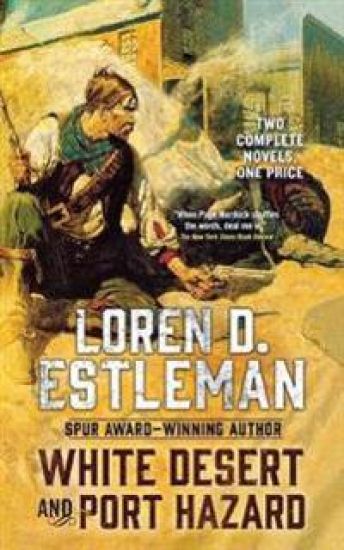
Two Westerns in the Page Murdock series from Spur Award-Winning Author Loren D. Estleman White DesertU. S. Marshal Page Murdock is a tough cynic--and the last man you'd want on your tail. Though Montana-based, Murdock pursues a vicious gang into a harsh northern Canadian winter. While trying to outwit and outmaneuver groups of aggressive foes, Murdock pushes his luck as he struggles to get his man--and to survive in the unfamiliar wilderness. Port HazardPage Murdock doesn't know why someone wants him dead, but he knows where the hired killers are coming from. Thus begins Murdoch's descent into a hell more decadent, corrupt, and dangerous than even he has ever seen--San Francisco's Barbary Coast. With an unwilling backup man, Murdock takes up temporary residence among the whores, gamblers, dope addicts, and cutthroats of the continent's foulest district. No man here is trustworthy. But perhaps the men who seem respectable are the most insidious of all. This edition of the book is the deluxe, tall rack mass market paperback.
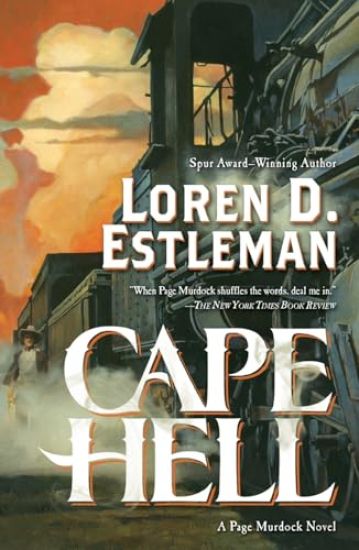
In this thrilling new western novel by Spur Award-winning author Loren D. Estleman, U. S. Deputy Page Murdock is ordered by Federal Judge Harlan A. Blackthorne to Cape Hell, Mexico, to verify a report that former Confederate Captain Oscar Childress is raising an army to take over Mexico City--and then intends to turn north to rekindle the Civil War. Childress, it seems, has the weapons, wealth, and moral compass to do it. Unable to talk himself out of the mission, Murdock heads south on a steam train named El Espanto--The Ghost. With only Hector Cansado, an engineer who can't be trusted and Joseph, a Native American fireman with a few secrets of his own, Murdock hurtles through the murderous desert of a foreign land toward a man bent on wholesale massacre . . . unless Murdock can stop him.
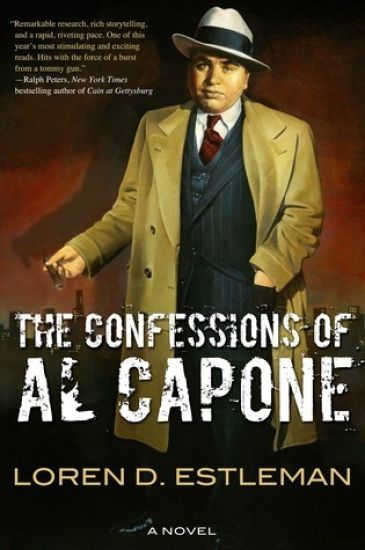
1944: Al Capone is living with his family in Florida and suffering from advanced syphilis. J. Edgar Hoover orders FBI agent Peter Vasco to pose as a priest and get close to the infamous American gangster, so he can obtain information that might help the Bureau nab members of Capone's Chicago Outfit. Vasco and Capone bond over card games, lunches, and even a trip to Wisconsin, and Capone spills secrets that expose in vivid detail this monster who was the most iconic figure in twentieth-century crime. What emerges is a fascinating, compelling portrait of Capone a man who would stop at nothing to take what he wanted, but who also fed the poor of Chicago; who rose to the top of Chicago on a tide of bootleg beer and booze but took the time to ensure that innocent victims of mob violence got proper medical care. This is Al Capone as he's never been seen before, a ruthless crime lord who trafficked in death and corruption as well as a man of refined tastes who loved his family. Loren D. Estleman's "The Confessions of Al Capone" is a rigorously researched historical thriller, with sharp and subtly nuanced portrayals of Capone, his family, members of the Chicago outfit, J. Edgar Hoover, and even Ernest Hemingway in a riveting story that truly exposes the real man behind Capone's iconic, scarred visage."
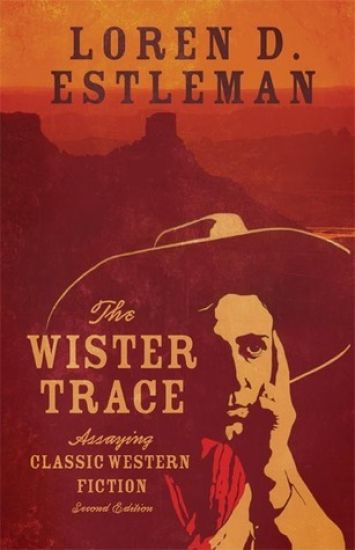
A master practitioner's view of his craft, this classic survey of the fiction of the American West is part literary history, part criticism, and entertaining throughout. The first edition of The Wister Trace was published in 1987, when Larry McMurtry had just reinvented himself as a writer of Westerns and Cormac McCarthy's career had not yet taken off. Loren D. Estleman's long-overdue update connects these new masters with older writers, assesses the genre's past, present, and future, and takes account of the renaissance of western movies, as well. Estleman's title indicates the importance he assigns Owen Wister's 1902 classic, The Virginian. Wister was not the first writer of Westerns, but he defined the genre, contrasting chivalry with the lawlessness of the border and introducing such lines as ""When you call me that, smile!"" Estleman tips his hat to Wister's predecessors, among them Ned Buntline, the inventor of the dime novel, and Buffalo Bill. His assessments of Wister's successors - Zane Grey, Walter Van Tilburg Clark, and Louis L'Amour, to name but three - soon make clear the impossibility of differentiating great western writing from great American writing. Especially important in this new edition is the attention to women writers. The author devotes a chapter each to Dorothy Johnson - author of ""The Man Who Shot Liberty Valance"" - and Annie Proulx, whose Wyoming stories include ""Brokeback Mountain."" In his discussion of movies, Estleman includes a list of film adaptations that will guide readers to movies, and moviegoers to books. An appendix draws readers' attention to authors not covered elsewhere in the volume - some of them old masters like Bret Harte and Jack London, but many of them fascinating outliers ranging from Clifford Irving to Joe R. Lansdale.
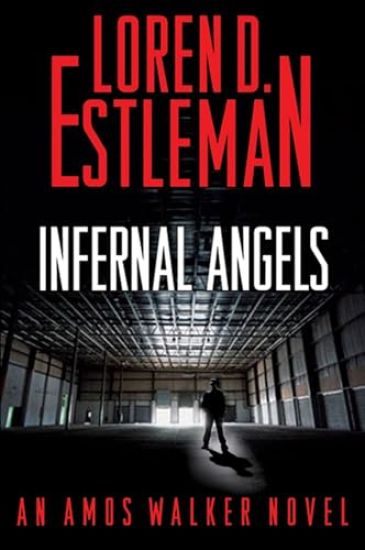
Break out the champagne--it's the twenty-first Amos Walker noir detective novel Much like author Loren D. Estleman, Detroit private investigator Amos Walker has long been reluctant to embrace technology--he only recently got his first cell phone. Walker is hired to do a twenty-first-century job--recovering HDTV converter boxes stolen from a retailer whose shop also does vintage resale business. Before long, the case turns old school: both a suspect and the man who lost the boxes are murdered, and Walker ends up working with both the local police and the feds. The converter boxes were being used to smuggle high-grade heroin that's been killing off junkies left and right, and it's up to Walker to track down the missing dope. Old friends and even older enemies resurface before this story is done, and Walker has to take a few beatings if he wants to find out who has been trafficking the drugs and bring the crooks to justice. This old dog still has a few new tricks, and there hasn't been a case yet that Walker couldn't crack.

Joseph Michael Ballista--"Joey Ballistic" to his mob buddies--knows most of the ways to make an illegal buck, or "a lefthanded dollar." That's why he's in trouble again. But his crafty lawyer, Lucille Lettermore--"Lefty Lucy" to just about every prosecutor she's ever humiliated in court--is determined to free him by getting all his previous convictions set aside, beginning with one for attempted murder. She hires Detroit private detective Amos Walker to investigate the old crime. Walker's first problem? The intended victim was investigative reporter Barry Stackpole, Walker's only true friend. Walker's not thrilled to help get his buddy's would-be killer off the hook. But money's money, so he takes the case, though it won't be easy. For starters, the creep's ex-wives grudgingly talk to Walker, but he knows they're not leveling with him. And two new murders tied to the case aren't likely to make them any chattier. Walker, friendless and desperate for answers, follows a string of leads old and new straight into a war of nerves and bullets in Detroit's seedy, crime-ridden underbelly.
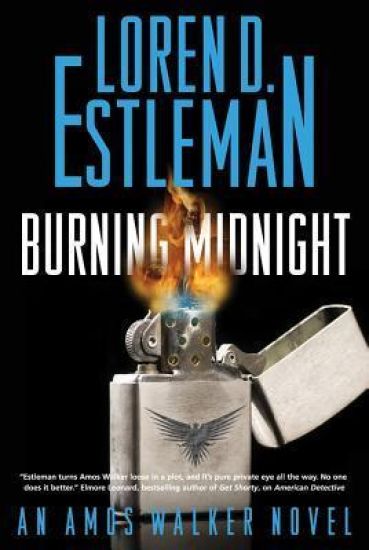
In Burning Midnight, master of the hard-boiled detective novel Loren D. Estleman gives readers a hot new Amos Walker mystery. Amos Walker knows Detroit, from the highest to the lowest, and that includes the gangs of Mexicantown. When a friend asks Walker to get his son's brother-in-law out of one of two feuding gangs, Walker gets in trouble fast. First, dead bodies start to pile up; then come suspicious fires and the bottle bombs. Walker is caught in the middle of a gang war. Whether or not a middle-aged gringo like him can cool things off between the Maldados and the Zapatistas, he's got to try; he did promise his friend. Once he gets involved, he realizes there's something else going on; the specter of an international conspiracy threatens to make this local trouble blow sky-high. And if he ends up dead or in jail for murders he didn't commit, he might have to put that promise on hold. It's tough being Amos Walker.
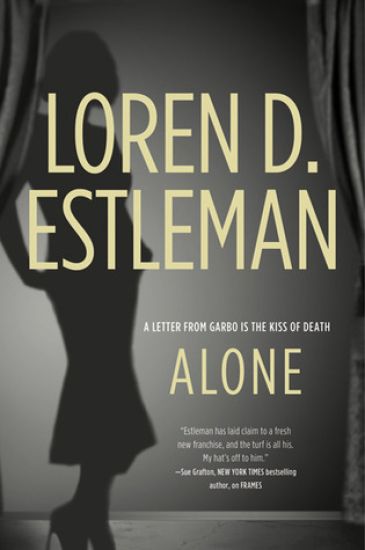
Alone, the second wacky comedic murder romp for Hollywood film detective Valentino, from award-winning author Loren D. EstlemanValentino wants to keep The Oracle, his beloved run-down movie palace, from being condemned before it even reopens, but murder keeps intruding into his otherwise quiet life. At a gala party held in memory of screen legend Greta Garbo, he's having fun until the host, a hotshot developer named Matthew Rankin, tells Valentino about a certain letter from Garbo to his late wife. She and Garbo had been close. Such a letter is of great interest to a film archivist like Valentino, but the the plot thickens when Rankin tells Val that his assistant, Akers, is using this letter to blackmail him. Val is appalled by the thought of blackmail but that letter sounds juicier all the time. Returning to Rankin's mansion after the party, Val finds Rankin sitting at his desk with a pistol in his hand, looking at Akers's dead body on the floor. Valentino's in a quandary. He'd love to see that letter, but he can't. He's gotten his girlfriend who works for the police in trouble, so his love life is, pardon the expression, shot to hell. Worse yet, the building inspector has kicked him out of his unfinished living space in the Oracle, so he takes his life in his hands and moves in with his eccentric mentor, the elderly, insomniac Professor Broadhead. No love, no sleep, no letter life isn't fair "
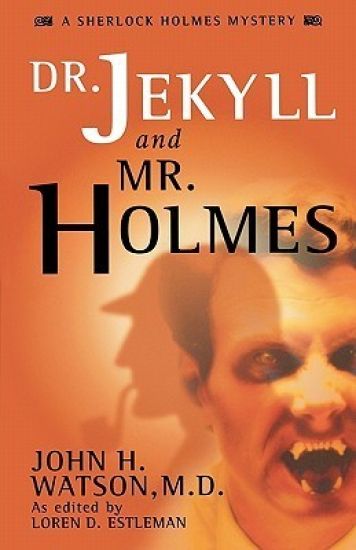
Accompanied by Dr. Watson, master sleuth Sherlock Holmes has already encountered the evil young hedonist Edward Hyde, and knew he was strangely connected with Henry Jekyll, the wealthy, respectable London doctor. It was not until the Queen herself requested it, however, that Holmes was officially on the case of the savage murder of Sir Danvers Carew -- the blackest mystery of his career! Although Robert Louis Stevenson published his tale of Jekyll and Hyde as fiction, the hideous facts were true, insofar as Stevenson knew them. Here, then, is the entire firsthand account of that devilish crime as recorded by Dr. Watson, with an explanation of why Holmes's personal involvement had to be kept secret -- until now....

Amos Walker, the quintessential hardboiled detective, is mortal after all. Jeff Starzek, an old friend who smuggles cigarettes for a living, saved Amos Walker's life, bringing him to a hospital after Walker took a bullet to the leg. A month later, Walker, still convalescing, gets a panicked phone call from Starzek's sister. Jeff is missing and the leads are few. One lead is Homeland Security agent H. Clemson. The Fed also seeks Starzek, whom he believes may be working for a counterfeiting operation with ties to terrorists. Though Walker doubts Starzek is a terrorist, he finds blank treasury paper at an evangelical church belonging to Starzek's brother. Then Starzek's brother disappears too. Back to square one, Walker follows his best hunch, driving Starzek's usual cigarette route along the Lake Huron shore, and finally gets a solid lead on the paper hangers. But before Walker can break the case, someone tries to shoot him-and he's accused of murder. In the end, Walker will need all of his fortitude to stay alive long enough to figure out who's doing what to whom, in time to save his friend's life.
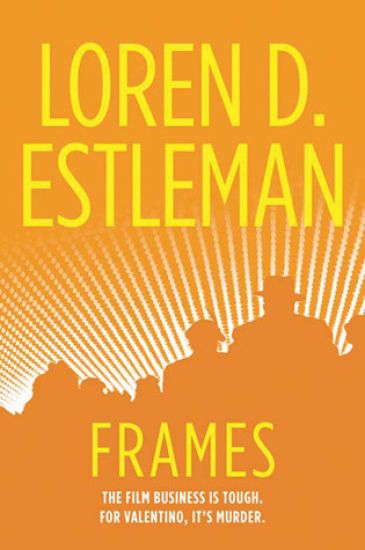
Enter Valentino, a mild-mannered UCLA film archivist. In the surreal world of Hollywood filmdom, truth is often stranger than celluloid fiction. When Valentino buys a decrepit movie palace and uncovers a skeleton in the secret Prohibition basement, he's not really surprised. But he's staggered by a second discovery: long-lost, priceless reels of film: Erich von Stroheim's infamous Greed. The LAPD wants to take the reels as evidence, jeopardizing the precious old film. If Valentino wants to save his find, he has only one choice: solve the murder within 72 hours with the help of his mentor, the noted film scholar Broadhead, and Fanta, a feisty if slightly flaky young law student. Between a budding romance with a beautiful forensics investigator and visions of Von Stroheim's ghost, Valentino's madcap race to save the flick is as fast and frenetic as a classic screwball comedy. A quirky cast of characters, smart dialogue and a touch of romance make Frames Estleman's most engaging and accessible novel to date.

Calling upon his considerable novelistic skills, Loren D. Estleman exposes the black heart of a seemingly stable, well-run city suddenly pitched into violence and chaos. A delicate balance of forces greed and corruption, ambition and desire run out of control in the wake of a serial killer's grisly rampage. A power struggle between a police chief who has looked the other way for too long, a Mafia boss who holds the city's vices in his powerful grasp, and media reporters looking for a big story turns what has been a minor dispute into a desperate struggle for survival. Setting this drama, " Gas City, " in a blue-collar metropolis dominated by an oil company, Estleman, with an unerring eye for telling detail and an ear for dialogue that reveals the secret desires of his characters, crafts a fascinating, deadly tapestry of love, ambition, revenge, and redemption, a stunning portrait of the human condition."

Amos Walker’s Detroit visits dozens of unforgettable locations from Loren D. Estleman’s Amos Walker series. As Estleman says of Detroit in the preface: "It’s a hard-boiled town, and the crumbling buildings and rusting railroad tracks of the warehouse district, the palaces across the limits in Grosse Pointe, and the black-hole shadows of the Cass Corridor were made to order for a remaindered knight chasing truth through a maze of threats, deceptions, and inconvenient corpses. City and protagonist are cut from the same coarse cloth. They are the series’ two heroes." Amos Walker’s Detroit allows Estleman’s settings to take center stage as noted photographer Monte Nagler turns his lens to Estleman’s various noir locations. Some locations are well-known landmarks, like the Renaissance Center, the Wayne County Building, Belle Isle, and Mexicantown, and some are fictional locales such as Walker’s home and office. Even when the locations are familiar, Nagler’s lens renders them in fresh and unexpected ways. Excerpts from Estleman’s novels describing the locations accompany each image and Estleman’s thoughtful introduction contextualizes the images and comments on the role of Detroit as a noir backdrop. The photographs in Amos Walker’s Detroit show the city in a new light, demonstrating that Detroit’s grit and glamour coexist in unexpected places and make a perfect setting for a mystery. Fans of the Amos Walker series, as well as those interested in photography, architecture, and local culture will appreciate this handsome volume.