Kirjojen hintavertailu – 12 859 819 kirjaa ja 27 kauppaa

Kirjailija

Lorenzo Chiesa

Kirjat ja teokset yhdessä paikassa: 6 kirjaa, julkaisuja vuosilta 2007–2025, suosituimpiin kuuluu God Is Undead. Vertaile teosten hintoja ja tarkista saatavuus suomalaisista kirjakaupoista.

6 kirjaa

Kirjojen julkaisuvuodet: 2007–2025.

God Is Undead

God Is Undead

Lorenzo Chiesa; Adrian Johnston

BLOOMSBURY PUBLISHING PLC
2025
sidottu
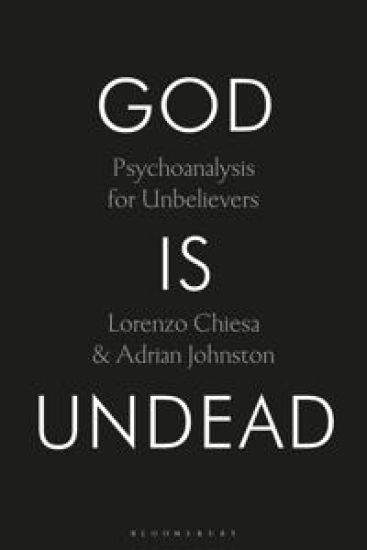
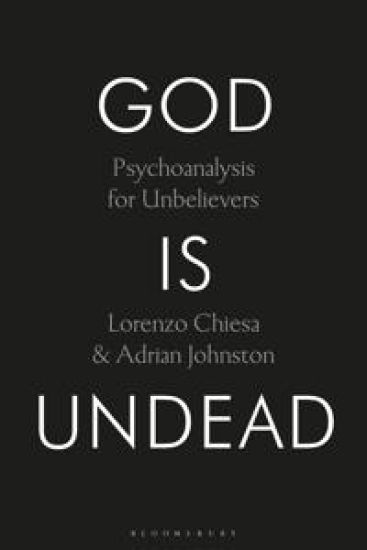
The undead are neither alive nor dead. They are animate yet non-living. In God Is Undead, Lorenzo Chiesa and Adrian Johnston contend that true unbelief today sees the divine precisely as exemplifying such undeath. In God Is Undead, Chiesa and Johnston delve into and deepen the insights of both Freudian and Lacanian psychoanalysis as regards unbelief. This analytic perspective reveals that modern atheisms appealing to a scientific worldview as an antidote to orthodox religious faith end up as heterodox theisms of Nature, Reason, Knowledge, or even the Market itself. They ironically place new gods of their own atop the graves of the traditional gods of old. They likewise forget the religious influences underlying modern science. One of the most important and novel contributions of God Is Undead is its gesture of dignifying unbelief as something that is able to contain multitudes. Far from a unified, homogeneous, and flatly bleak position, irreligiosity can come in many forms whose convergences and divergences contain possibilities for creatively thinking and living differently. This book shows such variegated non-belief in action. We have two unbelievers vigorously disagreeing with each other about fundamental ontological matters, thereby bringing to light critical questions going to the very heart of any unbelief whatsoever: Can an atheism, as thoroughly atheistic, ever believe in or be certain of itself? What is the role of agnosticism, and specifically of an agnosticism strengthening (rather than contrasting with) atheism, in all this? How might different unbelievers become what Freud calls “comrades in unbelief” without erecting new gods in the process?
God Is Undead

God Is Undead

Lorenzo Chiesa; Adrian Johnston

BLOOMSBURY PUBLISHING PLC
2025
nidottu

Halvin toimitettuna 34,40 €

The undead are neither alive nor dead. They are animate yet non-living. In God Is Undead, Lorenzo Chiesa and Adrian Johnston contend that true unbelief today sees the divine precisely as exemplifying such undeath. In God Is Undead, Chiesa and Johnston delve into and deepen the insights of both Freudian and Lacanian psychoanalysis as regards unbelief. This analytic perspective reveals that modern atheisms appealing to a scientific worldview as an antidote to orthodox religious faith end up as heterodox theisms of Nature, Reason, Knowledge, or even the Market itself. They ironically place new gods of their own atop the graves of the traditional gods of old. They likewise forget the religious influences underlying modern science. One of the most important and novel contributions of God Is Undead is its gesture of dignifying unbelief as something that is able to contain multitudes. Far from a unified, homogeneous, and flatly bleak position, irreligiosity can come in many forms whose convergences and divergences contain possibilities for creatively thinking and living differently. This book shows such variegated non-belief in action. We have two unbelievers vigorously disagreeing with each other about fundamental ontological matters, thereby bringing to light critical questions going to the very heart of any unbelief whatsoever: Can an atheism, as thoroughly atheistic, ever believe in or be certain of itself? What is the role of agnosticism, and specifically of an agnosticism strengthening (rather than contrasting with) atheism, in all this? How might different unbelievers become what Freud calls “comrades in unbelief” without erecting new gods in the process?
The Virtual Point of Freedom

The Virtual Point of Freedom

Lorenzo Chiesa

Northwestern University Press
2016
nidottu
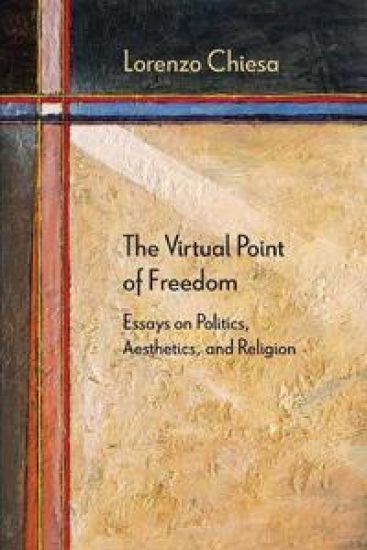
The principal motif that runs throughout The Virtual Point of Freedom is a confrontation with the discourse of freedom, or, more specifically, the falsely transgressive ideal of a total emancipation that would know no constraints. Far from delineating a supposed “subject of freedom” that would allegedly overcome alienation once and for all, the seven chapters in Chiesa’s book seek to unfold an innovative reading of the dialectical coincidence between dis-alienation and re-alienation in politics, aesthetics, and religion, using psychoanalysis as a privileged critical tool. Topics include Pier Paolo Pasolini’s attack on the visual and biological degeneration of bodies brought about by pleasure-seeking “liberal” consumerism, Giorgio Agamben’s and Slavoj Žižek’s conflicting negotiations with the Christian tradition of “poverty” and “inappropriateness”as potential redemption, and Alain Badiou’s inability to develop a philosophical anthropology that could sustain a coherent politics of emancipation. The book concludes by sketching out the figure of the partisan, a subject who makes it possible toconceive of an intersection between provisional morality and radical politics.
The Not-Two

The Not-Two

Lorenzo Chiesa

MIT Press
2016
pokkari
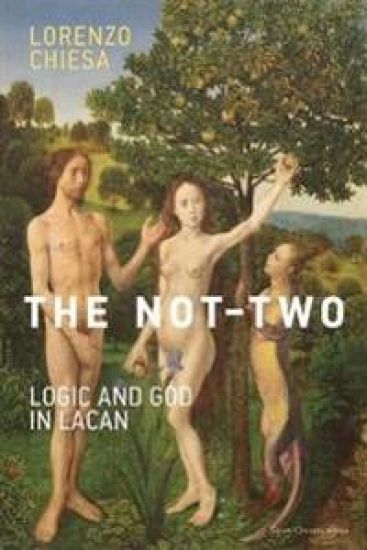
A philosophical examination of the treatment of logic and God in Lacan's later psychoanalytic theory. In The Not-Two, Lorenzo Chiesa examines the treatment of logic and God in Lacan's later work. Chiesa draws for the most part from Lacan's Seminars of the early 1970s, as they revolve around the axiom "There is no sexual relationship." Chiesa provides both a close reading of Lacan's effort to formalize sexual difference as incompleteness and an assessment of its broader implications for philosophical realism and materialism. Chiesa argues that "There is no sexual relationship" is for Lacan empirically and historically circumscribed by psychoanalysis, yet self-evident in our everyday lives. Lacan believed that we have sex because we love, and that love is a desire to be One in face of the absence of the sexual relationship. Love presupposes a real "not-two." The not-two condenses the idea that our love and sex lives are dictated by the impossibility of fusing man's contradictory being with the heteros of woman as a fundamentally uncountable Other. Sexual liaisons are sustained by a transcendental logic, the so-called phallic function that attempts to overcome this impossibility. Chiesa also focuses on Lacan's critical dialogue with modern science and formal logic, as well as his dismantling of sexuality as considered by mainstream biological discourse. Developing a new logic of sexuation based on incompleteness requires the relinquishing of any alleged logos of life and any teleological evolution. For Lacan, the truth of incompleteness as approached psychoanalytically through sexuality would allow us to go further in debunking traditional onto-theology and replace it with a "para-ontology" yet to be developed. Given the truth of incompleteness, Chiesa asks, can we think such a truth in itself without turning incompleteness into another truth about truth, that is, into yet another figure of God as absolute being?
Subjectivity and Otherness

Subjectivity and Otherness

Lorenzo Chiesa

MIT Press
2007
pokkari

Halvin toimitettuna 53,30 €

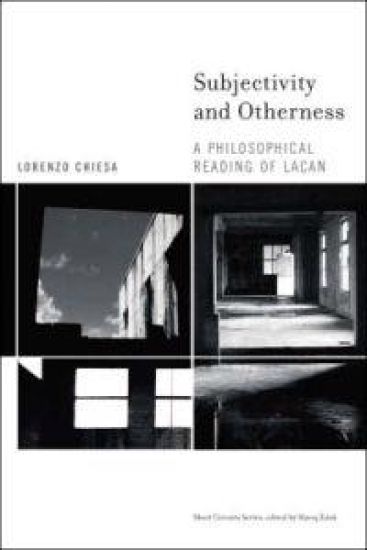
The evolution of the concept of subjectivity in the works of Jacques Lacan. Countering the call by some "pro-Lacanians" for an end to the exegesis of Lacan's work-and the dismissal by "anti-Lacanians" of Lacan as impossibly impenetrable-Subjectivity and Otherness argues for Lacan as a "paradoxically systematic" thinker, and for the necessity of a close analysis of his texts. Lorenzo Chiesa examines, from a philosophical perspective, the evolution of the concept of subjectivity in Lacan's work, carrying out a detailed reading of the Lacanian subject in its necessary relation to otherness according to Lacan's orders of the Imaginary, the Symbolic, and the Real. Chiesa emphasizes the continuity underlying apparently incompatible phases of Lacan's examination of the subject, describing Lacan's theory as a consistent philosophical system-but one that is constantly revised and therefore problematic. Chiesa analyzes each "old" theory of the subject within the framework of a "new" elaboration and reassesses its fundamental tenets from the perspective of a general psychoanalytic discourse that becomes increasingly complex. From the 1960s on, writes Chiesa, the Lacanian subject amounts to an irreducible lack that must be actively confronted and assumed; this "subjectivized lack," Chiesa argues further, offers an escape from the contemporary impasse between the "death of the subject" alleged by postmodernism and a return to a traditional "substantialist" notion of the subject. An original treatment of psychoanalytic issues, Subjectivity and Otherness fills a significant gap in the existing literature on Lacan, taking seriously the need for a philosophical investigation of Lacanian concepts.