Kirjojen hintavertailu – 12 903 725 kirjaa ja 27 kauppaa

Kirjailija

Lorenzo Fusaro

Kirjat ja teokset yhdessä paikassa: 4 kirjaa, julkaisuja vuosilta 2017–2020, suosituimpiin kuuluu Crises and Hegemonic Transitions. Vertaile teosten hintoja ja tarkista saatavuus suomalaisista kirjakaupoista.

4 kirjaa

Kirjojen julkaisuvuodet: 2017–2020.

Crises and Hegemonic Transitions

Crises and Hegemonic Transitions

Lorenzo Fusaro

Haymarket Books
2020
pokkari
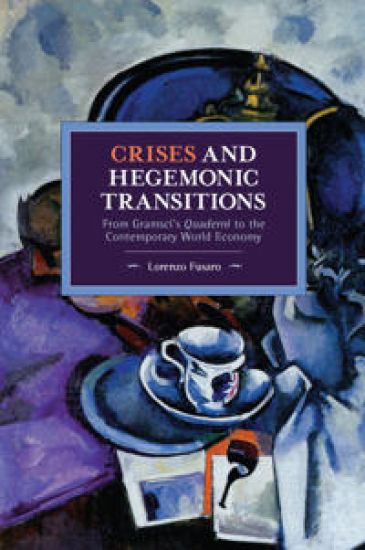
Crises and Hegemonic Transitions reworks the concept of hegemony at the international level and analyses its relation to world market crises. Returning to the critical edition of Gramsci's Quaderni and maintaining that the author's work is permeated by Marx's Capital and the law of value, Fusaro argues that imperialist states strive to construct hegemonic relations through the use of domination, leadership, coercion, and consensus, in order to secure capital accumulation, and that economic crises have only the potential to provoke crises of hegemony. Tracing the vicissitudes of US hegemony from the interwar period to the present and assessing the Great Depression's and the Great Recession's impact, Fusaro provides a novel way to interpret past and present developments within the world economy.

Crises and Hegemonic Transitions
Crises and Hegemonic Transitions reworks the concept of hegemony at the international level and analyses its relation to world market crises. Returning to the critical edition of Gramsci’s Quaderni and maintaining that the author’s work is permeated by Marx’s Capital and the law of value, Fusaro argues that imperialist states strive to constructing hegemonic relations in order to secure capital accumulation using domination and leadership, coercion and consensus, and that economic crises have only the potential to provoke crises of hegemony. Tracing the vicissitudes of US hegemony from the interwar period to the present and assessing the Great Depression’s and the Great Recession’s impact, Fusaro provides a novel way to interpret past and present developments within the world economy.

An Analysis of Antonio Gramsci's Prison Notebooks

An Analysis of Antonio Gramsci's Prison Notebooks

Lorenzo Fusaro; Jason Xidias

Macat International Limited
2017
sidottu
Antonio Gramsci’s Prison Notebooks is a remarkable work, not only because it was written in jail as the Italian Marxist thinker fell victim to political oppression in his home country, but also because it shows his impressive analytical ability. First published in 1948, 11 years after Gramsci’s death, Prison Notebooks ably demonstrates that the writer has an innate ability to understand the relationship between different parts of an argument. This is how Gramsci manages to analyze such wide-ranging topics – capitalism, economics and culture – to explain historical developments. He introduces the idea of “hegemony,” the means by which ruling classes in a society gain, keep hold of and manage their power, and, by carefully looking at how society operates, he reveals the manner in which the powerful deploy a combination of force and manipulation to convince most people that the existing social arrangement is logical and in their best interests ­– even when it isn’t. Gramsci shows exactly how the ruling class maintains power by influencing both political institutions like the courts and the police, and civil institutions, such as churches, family and schools. His powerful analysis led him to the conclusion that change can only take place in two ways, either through revolution or through a slow but constant struggle to transform the belief system of the ruling classes.
An Analysis of Antonio Gramsci's Prison Notebooks

An Analysis of Antonio Gramsci's Prison Notebooks

Lorenzo Fusaro; Jason Xidias

Macat International Limited
2017
nidottu

Halvin toimitettuna 15,00 €

Antonio Gramsci’s Prison Notebooks is a remarkable work, not only because it was written in jail as the Italian Marxist thinker fell victim to political oppression in his home country, but also because it shows his impressive analytical ability. First published in 1948, 11 years after Gramsci’s death, Prison Notebooks ably demonstrates that the writer has an innate ability to understand the relationship between different parts of an argument. This is how Gramsci manages to analyze such wide-ranging topics – capitalism, economics and culture – to explain historical developments. He introduces the idea of “hegemony,” the means by which ruling classes in a society gain, keep hold of and manage their power, and, by carefully looking at how society operates, he reveals the manner in which the powerful deploy a combination of force and manipulation to convince most people that the existing social arrangement is logical and in their best interests ­– even when it isn’t. Gramsci shows exactly how the ruling class maintains power by influencing both political institutions like the courts and the police, and civil institutions, such as churches, family and schools. His powerful analysis led him to the conclusion that change can only take place in two ways, either through revolution or through a slow but constant struggle to transform the belief system of the ruling classes.