Kirjojen hintavertailu – 12 903 735 kirjaa ja 27 kauppaa

Kirjailija

Lorna L Hecker

Kirjat ja teokset yhdessä paikassa: 5 kirjaa, julkaisuja vuosilta 1998–2008, suosituimpiin kuuluu The Practical Practice of Marriage and Family Therapy. Vertaile teosten hintoja ja tarkista saatavuus suomalaisista kirjakaupoista.

Nimi esiintyy myös muodoissa: Lorna L. Hecker

5 kirjaa

Kirjojen julkaisuvuodet: 1998–2008.

The Therapist's Notebook Volume 3

The Therapist's Notebook Volume 3

Catherine Ford Sori; Lorna L. Hecker

Routledge Member of the Taylor and Francis Group
2008
nidottu
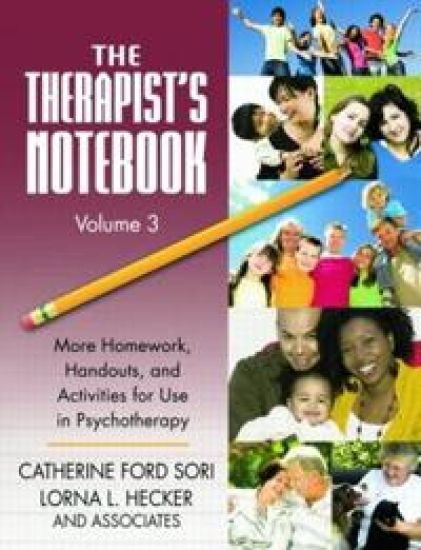
The Therapist's Notebook Volume 3 includes clinician field-tested activities for therapists who work with individuals, children and adolescents, couples, families, and groups. The reproducible handouts are designed to be practical and useful for the clinician, and cover the most salient topics that counselors are likely to encounter in their practices, with various theoretical approaches. Each chapter includes a "Reading and Resources for the Professional" section that guides readers toward useful books, videos, or websites that will further enhance their understanding of the chapter contents. This book is an excellent tool for both experienced and novice counselors for increasing therapeutic effectiveness.
Introduction to Alternative and Complementary Therapies

Introduction to Alternative and Complementary Therapies

Terry S Trepper; Anne Strozier; Joyce E Carpenter; Lorna L Hecker

Routledge Member of the Taylor and Francis Group
2008
nidottu
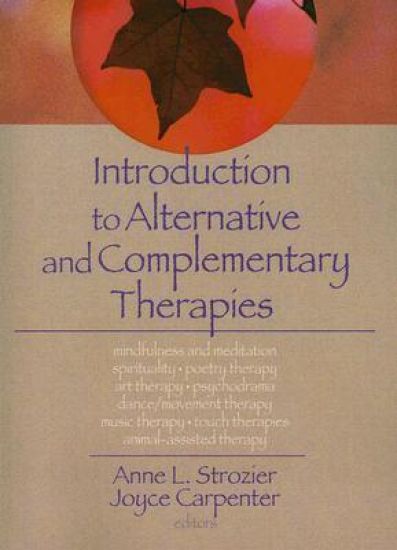
Discover creative new ways to facilitate the therapeutic process Therapeutic modalities that psychotherapists usually rely on--such as psychodynamic, humanistic, systems, cognitive, narrative, analytic and solution focused--are all verbal interventions. Introduction to Complementary and Alternative Therapies presents a comprehensive overview of complementary and alternative therapeutic interventions that go beyond the standard verbal approaches. The therapies presented in this book--including mindfulness and meditation, spirituality, poetry therapy, art therapy, psychodrama, dance/movement therapy, music therapy, animal-assisted therapy, and touch therapy--provide the reader with creative non-traditional modalities that are effective in conjunction with traditional treatment, or as substitutes. They may enrich talk-therapy, especially when therapists and/or clients get stuck, or they may provide healing on their own. Introduction to Complementary and Alternative Therapies explains the basics about how these nontraditional therapies work and provides vivid examples for utilizing them in treatment. Each chapter is written by an expert in the field of expertise, and includes a description of the approach, research evidence about its effectiveness, guidelines on how to use the therapy in practice, and case examples. This excellent volume also provides practitioners with a wide range of resources, including Web sites, information on state and national organizations, accrediting board info, and more. Topics in Introduction to Complementary and Alternative Therapies include: the mind-body relationship ways to integrate spirituality in counseling the healing components of poetry research studies on art therapy different techniques available in Psychodrama using body movement as a means of expressing conflicts and desires how music therapy promotes positive changes in the client the healing aspects of animals and much more! Introduction to Complementary and Alternative Therapies is a horizon-expanding guide for therapists, social workers, psychologists, counselors, physicians, educators, and students.
Introduction to Alternative and Complementary Therapies

Introduction to Alternative and Complementary Therapies

Terry S Trepper; Anne Strozier; Joyce E Carpenter; Lorna L Hecker

Routledge Member of the Taylor and Francis Group
2008
sidottu
Discover creative new ways to facilitate the therapeutic process Therapeutic modalities that psychotherapists usually rely on--such as psychodynamic, humanistic, systems, cognitive, narrative, analytic and solution focused--are all verbal interventions. Introduction to Complementary and Alternative Therapies presents a comprehensive overview of complementary and alternative therapeutic interventions that go beyond the standard verbal approaches. The therapies presented in this book--including mindfulness and meditation, spirituality, poetry therapy, art therapy, psychodrama, dance/movement therapy, music therapy, animal-assisted therapy, and touch therapy--provide the reader with creative non-traditional modalities that are effective in conjunction with traditional treatment, or as substitutes. They may enrich talk-therapy, especially when therapists and/or clients get stuck, or they may provide healing on their own. Introduction to Complementary and Alternative Therapies explains the basics about how these nontraditional therapies work and provides vivid examples for utilizing them in treatment. Each chapter is written by an expert in the field of expertise, and includes a description of the approach, research evidence about its effectiveness, guidelines on how to use the therapy in practice, and case examples. This excellent volume also provides practitioners with a wide range of resources, including Web sites, information on state and national organizations, accrediting board info, and more. Topics in Introduction to Complementary and Alternative Therapies include: the mind-body relationship ways to integrate spirituality in counseling the healing components of poetry research studies on art therapy different techniques available in Psychodrama using body movement as a means of expressing conflicts and desires how music therapy promotes positive changes in the client the healing aspects of animals and much more! Introduction to Complementary and Alternative Therapies is a horizon-expanding guide for therapists, social workers, psychologists, counselors, physicians, educators, and students.
The Practical Practice of Marriage and Family Therapy

The Practical Practice of Marriage and Family Therapy

Terry S Trepper; Charles E Campbell; Mark O'Dell; Lorna L Hecker

Routledge Member of the Taylor and Francis Group
1998
sidottu
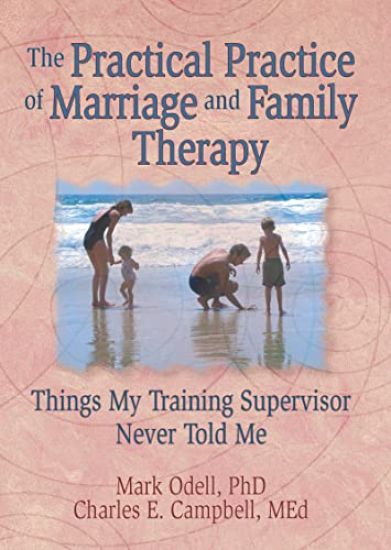
It is a truism among therapists in most mental health disciplines that the most important aspects of clinical practice are learned only after one has left graduate school and entered “the real world.” While many of the basics could be covered in graduate school, supervisors of new therapists often feel that the fundamentals are only addressed in detail after a therapist has been employed. In response to this predicament, Odell and Campbell offer The Practical Practice of Marriage and Family Therapy: Things My Training Supervisor Never Told Me as a useful daily guide for graduate students and beginning marriage and family therapists that will ease the transition from learner to practicing professional in the clinical domain. Written in a refreshing and unpretentious style, much the way a caring seasoned professional would mentor a novice practitioner, The Practical Practice of Marriage and Family Therapy covers the major areas that typical graduate programs don’t have time to address, including how to:integrate theoretical training with pragmatic clinical practice to maximize therapeutic effectiveness face the practical problems involving the financial elements of clinical work become a thoroughly credentialed professional develop an approach to becoming specialized uncover the motivation for being a professional marriage and family therapist increase one’s ability to maintain high-level practice over a lifetime of work by developing coping strategies and methods of safeguarding one’s own mental healthAddressing the unique approach of their book, Odell and Campbell explain, “Whereas most texts are handbooks on the actual theories and techniques used with couples and families, this book is designed to be a guide to the beginning professional as s/he leaves the graduate training environment and enters the mental health field as it exists in contemporary America. Our hope is that this book would be one of those chosen by the novice practicing professional if s/he could only take two or three with them into the field, as it contains material that is most useful for everyday work in clinical settings.”
The Practical Practice of Marriage and Family Therapy

The Practical Practice of Marriage and Family Therapy

Terry S Trepper; Charles E Campbell; Mark O'Dell; Lorna L Hecker

Routledge Member of the Taylor and Francis Group
1998
nidottu
It is a truism among therapists in most mental health disciplines that the most important aspects of clinical practice are learned only after one has left graduate school and entered “the real world.” While many of the basics could be covered in graduate school, supervisors of new therapists often feel that the fundamentals are only addressed in detail after a therapist has been employed. In response to this predicament, Odell and Campbell offer The Practical Practice of Marriage and Family Therapy: Things My Training Supervisor Never Told Me as a useful daily guide for graduate students and beginning marriage and family therapists that will ease the transition from learner to practicing professional in the clinical domain. Written in a refreshing and unpretentious style, much the way a caring seasoned professional would mentor a novice practitioner, The Practical Practice of Marriage and Family Therapy covers the major areas that typical graduate programs don’t have time to address, including how to:integrate theoretical training with pragmatic clinical practice to maximize therapeutic effectiveness face the practical problems involving the financial elements of clinical work become a thoroughly credentialed professional develop an approach to becoming specialized uncover the motivation for being a professional marriage and family therapist increase one’s ability to maintain high-level practice over a lifetime of work by developing coping strategies and methods of safeguarding one’s own mental healthAddressing the unique approach of their book, Odell and Campbell explain, “Whereas most texts are handbooks on the actual theories and techniques used with couples and families, this book is designed to be a guide to the beginning professional as s/he leaves the graduate training environment and enters the mental health field as it exists in contemporary America. Our hope is that this book would be one of those chosen by the novice practicing professional if s/he could only take two or three with them into the field, as it contains material that is most useful for everyday work in clinical settings.”