Kirjojen hintavertailu – 12 903 742 kirjaa ja 27 kauppaa

Kirjailija

Louis Corsino

Kirjat ja teokset yhdessä paikassa: 5 kirjaa, julkaisuja vuosilta 2014–2024, suosituimpiin kuuluu Chicago Heights. Vertaile teosten hintoja ja tarkista saatavuus suomalaisista kirjakaupoista.

5 kirjaa

Kirjojen julkaisuvuodet: 2014–2024.

Chicago Heights

Chicago Heights

Charles Hager; David T. Miller; Louis Corsino; Ashleigh D'Andrea

Southern Illinois University Press
2018
nidottu
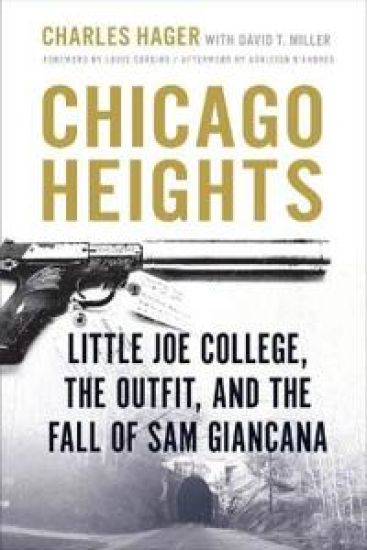
In this riveting true story of coming of age in the Chicago Mob, Charles “Charley” Hager is plucked from his rural West Virginia home by an uncle in the 1960s and thrown into an underworld of money, cars, crime, and murder on the streets of Chicago Heights. Street-smart and good with his hands, Hager is accepted into the working life of a chauffeur and “street tax” collector, earning the moniker “Little Joe College” by notorious mob boss Albert Tocco. But when his childhood friend is gunned down by a hit man, Hager finds himself a bit player in the events surrounding the mysterious, and yet unsolved, murder of mafia chief Sam Giancana. Chicago Heights is part rags-to-riches story, part murder mystery, and part redemption tale. Hager, with author David T. Miller, juxtaposes his early years in West Virginia with his life in crime, intricately weaving his own experiences into the fabric of mob life, its many characters, and the murder of Giancana. Fueled by vivid recollections of turf wars and chop shops, of fix-ridden harness racing and the turbulent politics of the 1960s, Chicago Heights reveals similarities between high-level organized crime in the city and the corrupt lawlessness of Appalachia. Hager candidly reveals how he got caught up in a criminal life, what it cost him, and how he rebuilt his life back in West Virginia with a prison record. Based on interviews with Hager and supplemented by additional interviews and extensive research by Miller, the book also adds Hager’s unique voice to the volumes of speculation about Giancana’s murder, offering a plausible theory of what happened on that June night in 1975.
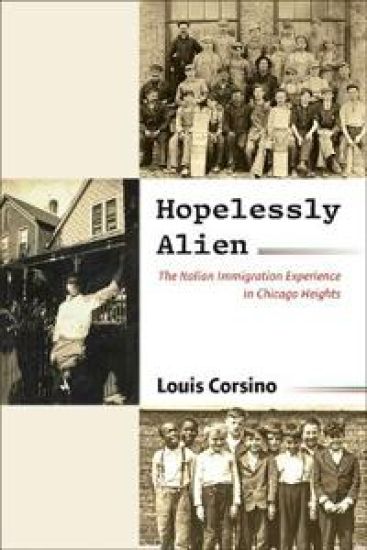
Hopelessly Alien

Hopelessly Alien

Louis Corsino

STATE UNIVERSITY OF NEW YORK PRESS
2024
pokkari
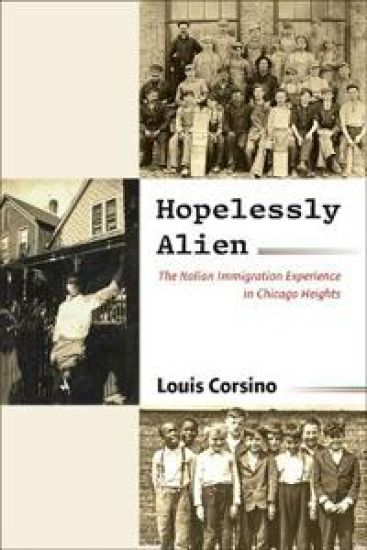
An in-depth sociological investigation of "hope" as it applies to the Italian immigrant experience in the blue-collar suburb of Chicago Heights between 1910 and 1950. Hopelessly Alien is an in-depth study of Italian immigration to Chicago Heights, Illinois, between 1910 and 1950. Drawing upon oral histories, interviews, historical documents, and census materials, Louis Corsino examines the critical concept of hope, which most immigration studies have cast in privatized, psychological terms as the motivation to emigrate in search of a better life. This investigation offers a more contentious, sociological perspective, depicting hope as both an ideological lure to recruit and manage the "foreign element" and as a resource immigrants employed to purchase acceptance and avoid a disparaging label as a "hopelessly alien" stranger. These dialectical processes are illustrated through the Italian immigrants' pursuit of occupational mobility and homeownership, and the appropriation of their children's hopes. Each became forms of cultural capital that demonstrated a public commitment to the American ethos of "joyful striving." Each provided measures of success, but these individual pursuits came at the expense of upsetting the necessary tension between individual and communal hopes.
Hopelessly Alien

Hopelessly Alien

Louis Corsino

STATE UNIVERSITY OF NEW YORK PRESS
2024
sidottu
An in-depth sociological investigation of "hope" as it applies to the Italian immigrant experience in the blue-collar suburb of Chicago Heights between 1910 and 1950. Hopelessly Alien is an in-depth study of Italian immigration to Chicago Heights, Illinois, between 1910 and 1950. Drawing upon oral histories, interviews, historical documents, and census materials, Louis Corsino examines the critical concept of hope, which most immigration studies have cast in privatized, psychological terms as the motivation to emigrate in search of a better life. This investigation offers a more contentious, sociological perspective, depicting hope as both an ideological lure to recruit and manage the "foreign element" and as a resource immigrants employed to purchase acceptance and avoid a disparaging label as a "hopelessly alien" stranger. These dialectical processes are illustrated through the Italian immigrants' pursuit of occupational mobility and homeownership, and the appropriation of their children's hopes. Each became forms of cultural capital that demonstrated a public commitment to the American ethos of "joyful striving." Each provided measures of success, but these individual pursuits came at the expense of upsetting the necessary tension between individual and communal hopes.
The Neighborhood Outfit

The Neighborhood Outfit

Louis Corsino

University of Illinois Press
2014
nidottu
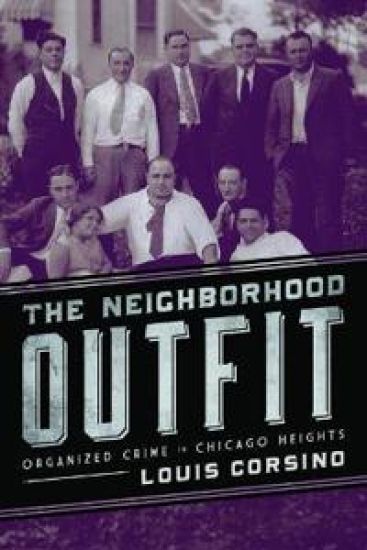
From the slot machine trust of the early 1900s to the prolific Prohibition era bootleggers allied with Al Capone, and for decades beyond, organized crime in Chicago Heights, Illinois, represented a vital component of the Chicago Outfit. Louis Corsino taps interviews, archives, government documents, and his own family's history to tell the story of the Chicago Heights "boys" and their place in the city's Italian American community in the twentieth century. Debunking the popular idea of organized crime as a uniquely Italian enterprise, Corsino delves into the social and cultural forces that contributed to illicit activities. As he shows, discrimination blocked opportunities for Italians' social mobility and the close-knit Italian communities that arose in response to such limits produced a rich supply of social capital Italians used to pursue alternative routes to success that ranged from Italian grocery stores to union organizing to, on occasion, crime.
The Neighborhood Outfit

The Neighborhood Outfit

Louis Corsino

University of Illinois Press
2014
sidottu
From the slot machine trust of the early 1900s to the prolific Prohibition era bootleggers allied with Al Capone, and for decades beyond, organized crime in Chicago Heights, Illinois, represented a vital component of the Chicago Outfit. Louis Corsino taps interviews, archives, government documents, and his own family's history to tell the story of the Chicago Heights "boys" and their place in the city's Italian American community in the twentieth century. Debunking the popular idea of organized crime as a uniquely Italian enterprise, Corsino delves into the social and cultural forces that contributed to illicit activities. As he shows, discrimination blocked opportunities for Italians' social mobility and the close-knit Italian communities that arose in response to such limits produced a rich supply of social capital Italians used to pursue alternative routes to success that ranged from Italian grocery stores to union organizing to, on occasion, crime.