

Kirjailija
Louis James
Kirjat ja teokset yhdessä paikassa: 10 kirjaa, julkaisuja vuosilta 2005–2026, suosituimpiin kuuluu The Complete Press Devotional DIY. Vertaile teosten hintoja ja tarkista saatavuus suomalaisista kirjakaupoista.
10 kirjaa
Kirjojen julkaisuvuodet: 2005–2026.

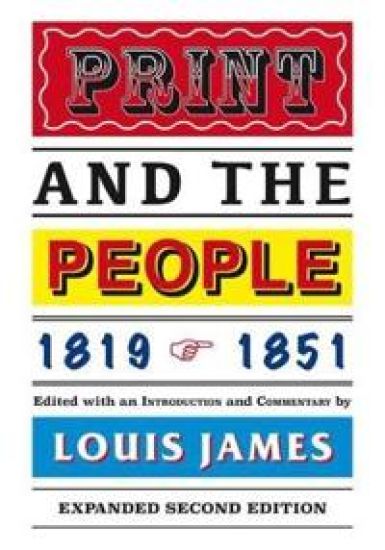
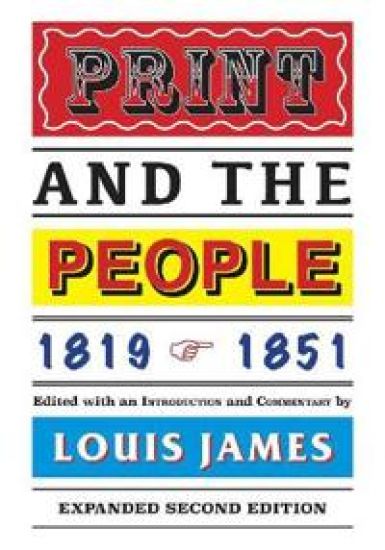
This work offers a wonderfully illustrated guide - and a rigorous analysis - of popular print and literature in all its many forms in the first half of the 19th century. It provides a unique collection of illustrated popular literature published between the events of 'Peterloo' in 1819 and the Great Exhibition of 1851, much never reprinted before. This was a time when the expansive growth of literacy led to the rapid and diverse evolution of popular culture, of publishing and print. This did much to transform the life experiences of millions. The printing press, combined with the railways and the telegraph, was a key agent of mass change. Louis James gives a picture of what the working classes were reading and a fascinating insight into their interest and concerns - their sports, work, crime, politics, religion and entertainments. His detailed introduction places all of this in its context of the contemporary cultural and social movements. The book profusely illustrates the fare which was offered: woodcut pictures, broadsheets and ballads, sensational Gothic novels issued in parts, newspapers and magazines, melodramatic penny dreadfuls published weekly in parts, and tracts of all kinds. The work examines this material in its many aspects, and from both sides of the social mirror. As well as showing the material, and analysing its significance, the book deals with official attempts to damp down or suppress the revolutionary new political and cultural press which served the new literacy. This did much to change taste, and ways of thinking and feeling. The book brings thus not only brings together a great deal of unusual and otherwise inaccessible illustration, it also offers a multi-facetted discussion of how the material was received, and its longer-term cultural influences. The new edition also includes a survey of studies in popular culture including song (A. L. Lloyd); the popular arts (Barbara Jones, Marx and Lambert, Panofsky, Gombrich); cartoons and graphic satire (Meisel, Maidment); the conventions and influence of popular melodrama and woodcuts, and a case study of the fiction of G. W. M. Reynolds. Also, a list of relevant web sites.
This work offers a wonderfully illustrated guide - and a rigorous analysis - of popular print and literature in all its many forms in the first half of the 19th century. It provides a unique collection of illustrated popular literature published between the events of 'Peterloo' in 1819 and the Great Exhibition of 1851, much never reprinted before. This was a time when the expansive growth of literacy led to the rapid and diverse evolution of popular culture, of publishing and print. This did much to transform the life experiences of millions. The printing press, combined with the railways and the telegraph, was a key agent of mass change. Louis James gives a picture of what the working classes were reading and a fascinating insight into their interest and concerns - their sports, work, crime, politics, religion and entertainments. His detailed introduction places all of this in its context of the contemporary cultural and social movements. The book profusely illustrates the fare which was offered: woodcut pictures, broadsheets and ballads, sensational Gothic novels issued in parts, newspapers and magazines, melodramatic penny dreadfuls published weekly in parts, and tracts of all kinds. The work examines this material in its many aspects, and from both sides of the social mirror. As well as showing the material, and analysing its significance, the book deals with official attempts to damp down or suppress the revolutionary new political and cultural press which served the new literacy. This did much to change taste, and ways of thinking and feeling. The book brings thus not only brings together a great deal of unusual and otherwise inaccessible illustration, it also offers a multi-facetted discussion of how the material was received, and its longer-term cultural influences. The new edition also includes a survey of studies in popular culture including song (A. L. Lloyd); the popular arts (Barbara Jones, Marx and Lambert, Panofsky, Gombrich); cartoons and graphic satire (Meisel, Maidment); the conventions and influence of popular melodrama and woodcuts, and a case study of the fiction of G. W. M. Reynolds. Also, a list of relevant web sites.
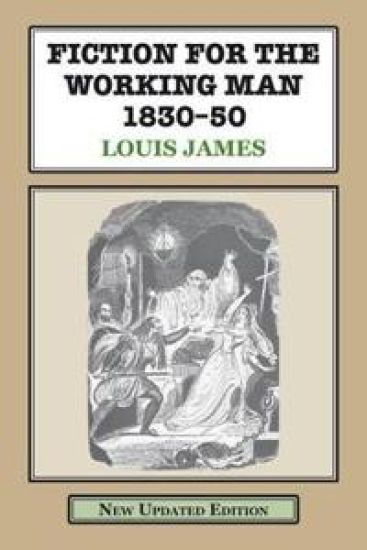
Literature for the masses appeared on an unprecedented scale in the first half of the 19th-century. This was the earliest response to new and voracious demands for cheap books of all kinds. This famous and innovative book enquires as to the nature of this new material, the responses to it, and its audiences amidst the new reading public which it illuminatesThe technological advances in printing, and the urbanisation of the population were key influences. So, too, were new entrepreneurial energies amongst author and publishers. Professor James shows what were the realities and the resonances of this new culture. He examines the effects of a new urban culture, its complicated class relations, the difficult history of the radical press, and the relationships between popular fiction and 'literature'. His is a detailed and engaging, well illustrated study of the growth of literacy and the vivacious and enormously varied popular literature of both entertainment, improvement, and instruction which was published. This included chapbooks and broadsheets, plagiarisms of Dickens in penny serial numbers, gothic tales of terror, 'blood-and-murder', 'ghost-and-goblin' fiction, exuberant historical novels, domestic stories, romances, and tales of fashionable life. The first edition was welcomed by Raymond Williams, who wrote that "Dr. James has done so thorough a job that all students of the period will be permanently in his debt...the success of the enquiry, in research terms is outstanding: a solid contribution to the necessary rewriting of nineteenth-century cultural history." This expanded edition includes new material on how this important study started with, D. Phil work on the Barry Ono Collection; existing non-academic collectors and enthusiasts (Lawson, Algar, Jay, Medcraft, Summers); theatrical artistes (Barry Ono , Frank Pettingell); research on 'Old Boys blood and thunder' serials (E. S. Turner), early academic studies of popular fiction and its audience; literary studies (J. M. S. Tompkins, Margaret Dalziel); readership (Richard Altick, Raymond Williams); social issues (Q. D. Leavis, Richard Hoggart). The author has also added a short epilogue on other work in the field by radical historians, including E. P. Thompson, Ian Haywood, and Rohan McWilliam. On working-class readership (by David Vincent); on serial fiction and popular traditions, journalism, melodrama and the visual arts; and on recent studies of Edward Lloyd, J. M. Rymer, G. W. M. Reynolds; reprinted fiction by Valancourt et al. He has added a guide to relevant websites for ongoing study.
Literature for the masses appeared on an unprecedented scale in the first half of the 19th-century. This was the earliest response to new and voracious demands for cheap books of all kinds. This famous and innovative book enquires as to the nature of this new material, the responses to it, and its audiences amidst the new reading public which it illuminatesThe technological advances in printing, and the urbanisation of the population were key influences. So, too, were new entrepreneurial energies amongst author and publishers. Professor James shows what were the realities and the resonances of this new culture. He examines the effects of a new urban culture, its complicated class relations, the difficult history of the radical press, and the relationships between popular fiction and 'literature'. His is a detailed and engaging, well illustrated study of the growth of literacy and the vivacious and enormously varied popular literature of both entertainment, improvement, and instruction which was published. This included chapbooks and broadsheets, plagiarisms of Dickens in penny serial numbers, gothic tales of terror, 'blood-and-murder', 'ghost-and-goblin' fiction, exuberant historical novels, domestic stories, romances, and tales of fashionable life. The first edition was welcomed by Raymond Williams, who wrote that "Dr. James has done so thorough a job that all students of the period will be permanently in his debt...the success of the enquiry, in research terms is outstanding: a solid contribution to the necessary rewriting of nineteenth-century cultural history." This expanded edition includes new material on how this important study started with, D. Phil work on the Barry Ono Collection; existing non-academic collectors and enthusiasts (Lawson, Algar, Jay, Medcraft, Summers); theatrical artistes (Barry Ono , Frank Pettingell); research on 'Old Boys blood and thunder' serials (E. S. Turner), early academic studies of popular fiction and its audience; literary studies (J. M. S. Tompkins, Margaret Dalziel); readership (Richard Altick, Raymond Williams); social issues (Q. D. Leavis, Richard Hoggart). The author has also added a short epilogue on other work in the field by radical historians, including E. P. Thompson, Ian Haywood, and Rohan McWilliam. On working-class readership (by David Vincent); on serial fiction and popular traditions, journalism, melodrama and the visual arts; and on recent studies of Edward Lloyd, J. M. Rymer, G. W. M. Reynolds; reprinted fiction by Valancourt et al. He has added a guide to relevant websites for ongoing study.
Caribbean Literature in English places its subject in its precise regional context. The `Caribbean', generally considered as one area, is highly discrete in its topography, race and languages, including mainland Guyana, the Atlantic island of Barbados, the Lesser Antilles, Trinidad, and Jamaica, whose size and history gave it an early sense of separate nationhood. Beginning with Raleigh's Discoverie of... Guiana (1596), this innovative study traces the sometimes surprising evolution of cultures which shared a common experience of slavery, but were intimately related to individual local areas. The approach is interdisciplinary, examining the heritage of the plantation era, and the issues of language and racial identity it created. From this base, Louis James reassesses the phenomenal expansion of writing in the contemporary period. He traces the influence of pan-Caribbean movements and the creation of an expatriate Caribbean identity in Britain and America: `Brit'n' is considered as a West Indian island, created by `colonization in reverse'. Further sections treat the development of a Caribbean aesthetic, and the repossession of cultural roots from Africa and Asia. Balancing an awareness of the regional identity of Caribbean literature with an exploration of its place in world and postcolonial literatures, this study offers a panoramic view that has become one of the most vital of the `new literatures in English'. This accessible overview of Caribbean writing will appeal to the general reader and student alike, and particularly to all who are interested in or studying Caribbean literatures and culture, postcolonial studies, Commonwealth 'new literatures' and contemporary literature and drama.
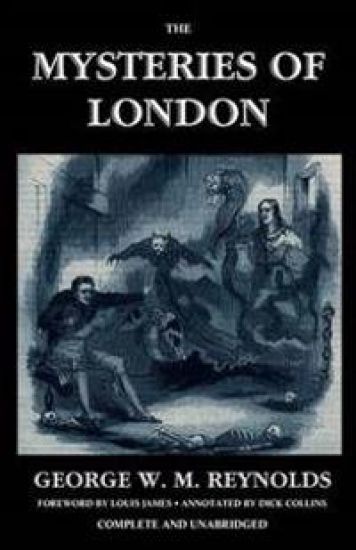
The Mysteries of London, Vol. I [Unabridged & Illustrated]
George W M Reynolds; Louis James
Valancourt Books
2012
pokkari
This inspiring survey challenges conventional ways of viewing the Victorian novel. Provides time maps and overviews of historical and social contexts. Considers the relationship between the Victorian novel and historical, religious and bibliographic writing. Features short biographies of over forty Victorian authors, including Wilkie Collins, Charles Dickens, George Eliot, and Robert Louis Stevenson. Offers close readings of over 30 key texts, among them Charlotte Brontë’s Jane Eyre (1847) and Bram Stoker’s Dracula (1897), as well as key presences, such as John Bunyan’s Pilgrim’s Progress (Pt 1, 1676, Pt 2, 1684). Also covers topics such as colonialism, scientific speculation, the psychic and the supernatural, and working class reading.
This inspiring survey challenges conventional ways of viewing the Victorian novel. Provides time maps and overviews of historical and social contexts. Considers the relationship between the Victorian novel and historical, religious and bibliographic writing. Features short biographies of over forty Victorian authors, including Wilkie Collins, Charles Dickens, George Eliot, and Robert Louis Stevenson. Offers close readings of over 30 key texts, among them Charlotte Brontë’s Jane Eyre (1847) and Bram Stoker’s Dracula (1897), as well as key presences, such as John Bunyan’s Pilgrim’s Progress (Pt 1, 1676, Pt 2, 1684). Also covers topics such as colonialism, scientific speculation, the psychic and the supernatural, and working class reading.