Kirjojen hintavertailu – 12 859 824 kirjaa ja 27 kauppaa

Kirjailija

Louis Loeb

Kirjat ja teokset yhdessä paikassa: 6 kirjaa, julkaisuja vuosilta 2002–2018, suosituimpiin kuuluu Reflection and the Stability of Belief. Vertaile teosten hintoja ja tarkista saatavuus suomalaisista kirjakaupoista.

6 kirjaa

Kirjojen julkaisuvuodet: 2002–2018.

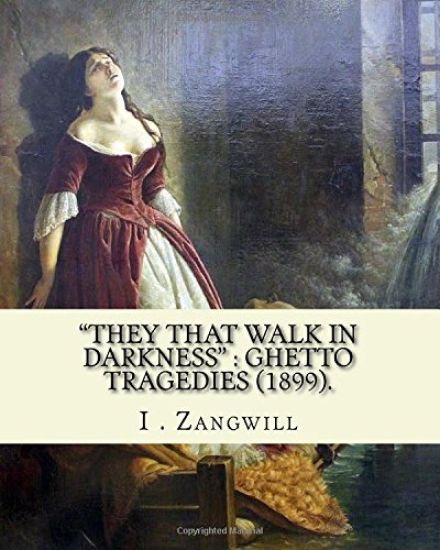
"They that walk in darkness": ghetto tragedies (1899).: By: I . Zangwill, Illustrated By: Louis Loeb (November 7, 1866 - July 12, 1909) was a Jewish
Louis Loeb (November 7, 186 - July 12, 1909) was a Jewish illustrator in the United States. In his time, he was one of the best known in his field. He was also a draftsman, a painter, and a lithographer. Biography edit] Born in Cuyahoga County, Ohio to Alexander Loeb, a dry goods merchant, Louis Loeb worked at a Cleveland lithography firm from age 14 onwards, 2] later taking evening classes in sketching at the Cleveland Art Club. 2] 4] In 1885, he worked at a lithography firm in New York City, with his evenings spent at the Art Students League. In 1889 he went to Paris to study, under Lefebvre, Constant, and G r me, giving up lithography. After three years he returned to New York, where in 1893 he started work for The Century Magazine as an illustrator. For the next few years, up until 1900, he was to travel to and from Europe, both for study and in the course of his work for The Century. During the remainder of his life, he stayed in the U. S., dying in Canterbury, New Hampshire................ Israel Zangwill (21 January 1864 - 1 August 1926) was a British author at the forefront of cultural Zionism during the 19th century, and was a close associate of Theodor Herzl. He later rejected the search for a Jewish homeland and became the prime thinker behind the territorial movement. Early life and education: Zangwill was born in London on 21 January 1864, in a family of Jewish immigrants from the Russian Empire. His father, Moses Zangwill, was from what is now Latvia, and his mother, Ellen Hannah Marks Zangwill, was from what is now Poland. He dedicated his life to championing the cause of people he considered oppressed, becoming involved with topics such as Jewish emancipation, Jewish assimilation, territorialism, Zionism, and women's suffrage. His brother was novelist Louis Zangwill. Zangwill received his early schooling in Plymouth and Bristol. When he was nine years old, Zangwill was enrolled in the Jews' Free School in Spitalfields in east London, a school for Jewish immigrant children. The school offered a strict course of both secular and religious studies while supplying clothing, food, and health care for the scholars; presently one of its four houses is named Zangwill in his honour. At this school he excelled and even taught part-time, eventually becoming a full-fledged teacher. While teaching, he studied for his degree from the University of London, earning a BA with triple honours in 1884. Writings: He had already written a tale entitled The Premier and the Painter in collaboration with Louis Cowen, when he resigned his position as a teacher owing to differences with the school managers and ventured into journalism. He initiated and edited Ariel, The London Puck, and did miscellaneous work for the London press. Zangwill's work earned him the nickname "the Dickens of the Ghetto." He wrote a very influential novel Children of the Ghetto: A Study of a Peculiar People (1892). The use of the metaphorical phrase "melting pot" to describe American absorption of immigrants was popularised by Zangwill's play The Melting Pot, 4] a success in the United States in 1909-10. When The Melting Pot opened in Washington D. C. on 5 October 1909, former President Theodore Roosevelt leaned over the edge of his box and shouted, "That's a great play, Mr. Zangwill, that's a great play." In 1912 Zangwill received a letter from Roosevelt in which Roosevelt wrote of the Melting Pot "That particular play I shall always count among the very strong and real influences upon my thought and my life...".........................

Via Crucis. a Romance of the Second Crusade ... Illustrated by Louis Loeb.

Via Crucis. a Romance of the Second Crusade ... Illustrated by Louis Loeb.

F Marion Crawford; Louis Loeb

British Library, Historical Print Editions
2011
pokkari
Title: Via Crucis. A romance of the Second Crusade ... Illustrated by Louis Loeb. Publisher: British Library, Historical Print EditionsThe British Library is the national library of the United Kingdom. It is one of the world's largest research libraries holding over 150 million items in all known languages and formats: books, journals, newspapers, sound recordings, patents, maps, stamps, prints and much more. Its collections include around 14 million books, along with substantial additional collections of manuscripts and historical items dating back as far as 300 BC. The GENERAL HISTORICAL collection includes books from the British Library digitised by Microsoft. This varied collection includes material that gives readers a 19th century view of the world. Topics include health, education, economics, agriculture, environment, technology, culture, politics, labour and industry, mining, penal policy, and social order. ++++The below data was compiled from various identification fields in the bibliographic record of this title. This data is provided as an additional tool in helping to insure edition identification: ++++ British Library Crawford, Francis Marion; Loeb, Louis; 1899. 401 p.; 8 . 012630.l.49.
Reflection and the Stability of Belief

Reflection and the Stability of Belief

Louis Loeb

Oxford University Press Inc
2010
sidottu
A unifying theme of Loeb's work is epistemological - that Descartes and Hume advance theories of knowledge that rely on a substantial 'naturalistic' component, adopitng one or another member of a cluster of psychological properties of beliefs as the goal of inquiry and the standard for assessing belief-forming mechanisms. Thus Loeb shows a surprising affinity between the epistemologies of the two figures -- surprising because they are often thought of as polar opposites in this respect. Descartes and Hume are unique in that their philosophical texts are accessible beyond just a narrow audience in the history of philosophy; their ideas continue to be a vital part of the field at large. This volume will thus appeal to advanced students and scholars not just in the history of early modern philosophy but in epistemology and other core areas of the discipline.
Reflection and the Stability of Belief

Reflection and the Stability of Belief

Louis Loeb

Oxford University Press Inc
2010
nidottu
A unifying theme of Loeb's work is epistemological - that Descartes and Hume advance theories of knowledge that rely on a substantial 'naturalistic' component, adopting one or another member of a cluster of psychological properties of beliefs as the goal of inquiry and the standard for assessing belief-forming mechanisms. Thus Loeb shows a surprising affinity between the epistemologies of the two figures -- surprising because they are often thought of as polar opposites in this respect. Descartes and Hume are unique in that their philosophical texts are accessible beyond just a narrow audience in the history of philosophy; their ideas continue to be a vital part of the field at large. This volume will thus appeal to advanced students and scholars not just in the history of early modern philosophy but in epistemology and other core areas of the discipline.
Stability and Justification in Hume's Treatise

Stability and Justification in Hume's Treatise

Louis Loeb

Oxford University Press Inc
2005
nidottu
David Hume's A Treatise of Human Nature is famous for its extreme skepticism. Louis Loeb argues that Hume's destructive conclusions have in fact obscured a constructive stage that Hume abandons prematurely. Working within a philosophical tradition that values tranquillity, Hume favors an epistemology that links justification with settled belief. Hume appeals to psychological stability to support his own epistemological assessments, both favorable regarding causal inference, and unfavorable regarding imaginative propensities. The theory's success in explaining Hume's epistemic distinctions gives way to pessimism, since Hume contends that reflection on beliefs is deeply destabilizing. So much the worse, Hume concludes, for placing a premium on reflection. Hume endorses and defends the position that stable beliefs of unreflective persons are justified, though they would not survive reflection. At the same time, Hume relishes the paradox that unreflective beliefs enjoy a preferred epistemic status and strains to establish it. Loeb introduces a series of amendments to the Treatise that secures a more positive result for justified belief while maintaining Hume's fundamental principles. In his review of Hume's applications of his epistemology, Loeb uncovers a stratum of psychological doctrine beyond associationism, a theory of conditions in which beliefs are felt to conflict and of the resolution of this uneasiness or dissonance. This theory of mental conflict is also essential to Hume's strategy for integrating empiricism about meaning with his naturalism. However, Hume fails to provide a general account of the conditions in which conflicting beliefs lead to persisting instability, so his theory is incomplete. Loeb explores Hume's concern with stability in reference to his discussions of belief, education, the probability of causes, unphilosophical probability, the belief in body, sympathy and moral judgment, and the passions, among other topics.
Stability and Justification in Hume's Treatise

Stability and Justification in Hume's Treatise

Louis Loeb

Oxford University Press Inc
2002
sidottu
The distinguished philosopher Louis Loeb examines the epistemological framework of Scottish philosopher David Hume, as employed in his celebrated work A Treatise of Human Nature. Loeb's project is to advance an integrated interpretation of Hume's accounts of belief and justification. His thesis is that Hume, in his Treatise, has a "stability-based" theory of justification which posits that his belief is justified if it is the result of a belief producing mechanism that engenders stable beliefs. But Loeb argues that the striking (if paradoxical) corollary to this theory is that no belief generating mechanism is fully stable - or fully justified - for a fully reflective person. This carefully argued and original interpretation of Hume makes sense of seemingly contradictory ideas and will provoke serious discussion among Hume scholars.