Kirjojen hintavertailu – 12 859 818 kirjaa ja 27 kauppaa

Kirjailija

Louis Menand

Kirjat ja teokset yhdessä paikassa: 16 kirjaa, julkaisuja vuosilta 2002–2025, suosituimpiin kuuluu The Metaphysical Club. Vertaile teosten hintoja ja tarkista saatavuus suomalaisista kirjakaupoista.

16 kirjaa

Kirjojen julkaisuvuodet: 2002–2025.

Six Walks in the Fictional Woods

Six Walks in the Fictional Woods

Umberto Eco; Louis Menand

HARVARD UNIVERSITY PRESS
2025
sidottu

Halvin toimitettuna 24,90 €

“Erudite, wide-ranging, and slyly humorous.” —The AtlanticOne of the great novelists and public intellectuals of our time gives a master class on the philosophy of fiction. Umberto Eco was fond of pointing out that all writing is narrative. He published his famed debut novel The Name of the Rose when he was forty-eight years old, yet he believed that everything he had written to that point—from treatises on semiotics to essays on mass culture—took the form of a story. To Eco, scholarship, much like fiction, was shaped by narrative. It was the stuff of life itself. Six Walks in the Fictional Woods, a collection of essays based on Eco’s 1992–1993 Norton Lectures at Harvard, illuminates fiction’s porous boundaries—in particular, the myriad ways that literary works conscript readers’ experiences and expectations. Fiction, says Eco, can offer metaphysical comfort by appealing to our desire for a smaller, more legible world, one that gives a definitive answer to the question of “whodunnit?” But it also makes demands of us, presupposing a model reader who possesses the cultural knowledge necessary to interpret the text, as well as a willingness to follow the never-quite-specified rules of the literary game. Whether he is dissecting grammatical ambiguities in Gérard de Nerval’s nineteenth-century romantic masterpiece Sylvie, studying the rhythms of Ian Fleming’s James Bond novels, or tracing the web of fraud and misattribution that produced the antisemitic conspiracy theory of The Protocols of the Elders of Zion, this is Eco at his very best: intellectually omnivorous, endlessly fascinated by hoaxes, and always an adept navigator of the narrative forests that surround us.
Free Love

Free Love

Robert Shaplen; Louis Menand

McNally Jackson Books
2024
nidottu
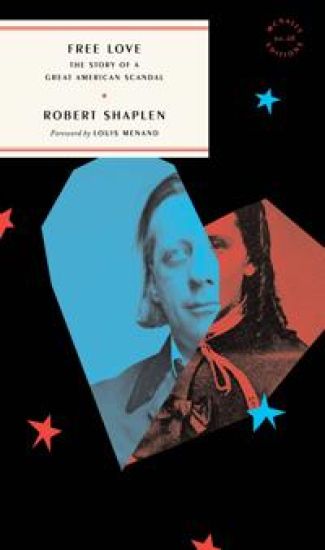
On the night of July 3, 1870, Elizabeth Tilton confessed to her husband that she’d had an affair with their pastor, Henry Ward Beecher. This secret would soon transfix America, for Beecher was the most famous preacher of the day, founder of the most fashionable church in Brooklyn Heights, a presidential hopeful, an influential supporter of Abolition, and a leader of the campaign for women’s suffrage. When Beecher tried to silence the Tiltons, it was a whisper network of suffragists, notably Susan B. Anthony and Elizabeth Cady Stanton, who spread news of the affair, and it was the radical Victoria Woodhull - an outspoken proponent of “free love” - who seized on it, as political dynamite, to blow up the myth of monogamy among the political elite. Her public accusations led to even more public trials, which shocked the country and divided the most progressive thinkers of the era. In 1953, the journalist Robert Shaplen revisited the Tilton-Beecher affair in a series of articles for the New Yorker, relying on 3,000 pages of contemporary accounts - court transcripts, love-letters, newspaper reports and illustrations, even political cartoons - to reanimate a scandal that shook the American reform movement and to expose a strand of America’s cultural DNA that remains recognisable today.
The Free World

The Free World

Louis Menand

HARPERCOLLINS PUBLISHERS
2022
nidottu

Halvin toimitettuna 23,70 €

Shortlisted for the PEN Hessell-Tiltman Prize 2022 Longlisted for the 2021 National Book Award for Nonfiction The Cold War was not just a contest of power. It was also about ideas, in the broadest sense – economic and political, artistic and personal. In The Free World, the acclaimed Pulitzer Prize–winning scholar and critic Louis Menand tells the story of American culture in the pivotal years from the end of World War II to Vietnam and stresses the rich flow of ideas across the Atlantic. How did elitism and an anti-totalitarian scepticism of passion and ideology give way to a new sensibility defined by experimentation and loving the Beatles? How was the ideal of ‘freedom’ applied to causes that ranged from anti-communism and civil rights to radical acts of self-creation via art and even crime? With the wit and insight familiar to readers of The Metaphysical Club, Menand takes us inside Hannah Arendt’s Manhattan, the Paris of Jean-Paul Sartre and Simone de Beauvoir and the post-war vogue for French existentialism, structuralism and post-structuralism. He also shows how Europeans played a vital role in promoting and influencing American art and thought, revealing how America’s once neglected culture became respected and adored. With unprecedented verve and range, this book offers a masterly account of the main characters and minor figures who played part in shaping the post-war world of art and thought.
The Free World: Art and Thought in the Cold War

The Free World: Art and Thought in the Cold War

Louis Menand

Picador USA
2022
nidottu

Halvin toimitettuna 24,30 €

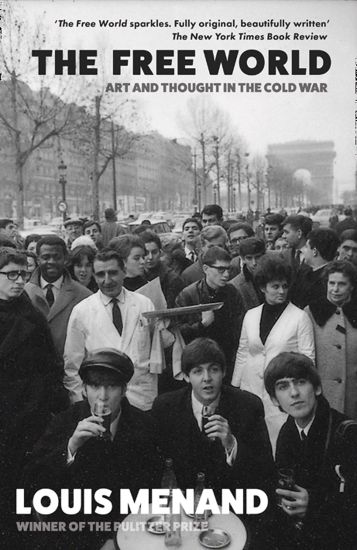
"An engrossing and impossibly wide-ranging project . . . In The Free World, every seat is a good one." --Carlos Lozada, The Washington Post "The Free World sparkles. Fully original, beautifully written . . . One hopes Menand has a sequel in mind. The bar is set very high." --David Oshinsky, The New York Times Book Review Named a most anticipated book of April by The New York Times, The Washington Post, and Oprah DailyIn his follow-up to the Pulitzer Prize-winning The Metaphysical Club, Louis Menand offers a new intellectual and cultural history of the postwar years. The Cold War was not just a contest of power. It was also about ideas, in the broadest sense--economic and political, artistic and personal. In The Free World, the acclaimed Pulitzer Prize-winning scholar and critic Louis Menand tells the story of American culture in the pivotal years from the end of World War II to Vietnam and shows how changing economic, technological, and social forces put their mark on creations of the mind. How did elitism and an anti-totalitarian skepticism of passion and ideology give way to a new sensibility defined by freewheeling experimentation and loving the Beatles? How was the ideal of "freedom" applied to causes that ranged from anti-communism and civil rights to radical acts of self-creation via art and even crime? With the wit and insight familiar to readers of The Metaphysical Club and his New Yorker essays, Menand takes us inside Hannah Arendt's Manhattan, the Paris of Jean-Paul Sartre and Simone de Beauvoir, Merce Cunningham and John Cage's residencies at North Carolina's Black Mountain College, and the Memphis studio where Sam Phillips and Elvis Presley created a new music for the American teenager. He examines the post war vogue for French existentialism, structuralism and post-structuralism, the rise of abstract expressionism and pop art, Allen Ginsberg's friendship with Lionel Trilling, James Baldwin's transformation into a Civil Rights spokesman, Susan Sontag's challenges to the New York Intellectuals, the defeat of obscenity laws, and the rise of the New Hollywood. Stressing the rich flow of ideas across the Atlantic, he also shows how Europeans played a vital role in promoting and influencing American art and entertainment. By the end of the Vietnam era, the American government had lost the moral prestige it enjoyed at the end of the Second World War, but America's once-despised culture had become respected and adored. With unprecedented verve and range, this book explains how that happened.
The New Yale Book of Quotations

The New Yale Book of Quotations

Louis Menand

Yale University Press
2021
sidottu
A revised, enlarged, and updated edition of this authoritative and entertaining reference book—named the #2 essential home library reference book by the Wall Street Journal “Shapiro does original research, earning [this] volume a place on the quotation shelf next to Bartlett's and Oxford's.”—William Safire, New York Times Magazine (on the original edition) “The most accurate, thorough, and up-to-date quotation book ever compiled.”—Bryan A. Garner, Los Angeles Review of Books Updated to include more than a thousand new quotations, this reader-friendly volume contains over twelve thousand famous quotations, arranged alphabetically by author and sourced from literature, history, popular culture, sports, digital culture, science, politics, law, the social sciences, and all other aspects of human activity. Contemporaries added to this edition include Beyoncé, Sandra Cisneros, James Comey, Drake, Louise Glück, LeBron James, Brett Kavanaugh, Lady Gaga, Lin-Manuel Miranda, Barack Obama, John Oliver, Nancy Pelosi, Vladimir Putin, Bernie Sanders, Donald Trump, and David Foster Wallace. The volume also reflects path-breaking recent research resulting in the updating of quotations from the first edition with more accurate wording or attribution. It has also incorporated noncontemporary quotations that have become relevant to the present day. In addition, The New Yale Book of Quotations reveals the striking fact that women originated many familiar quotations, yet their roles have been forgotten and their verbal inventions have often been credited to prominent men instead. This book’s quotations, annotations, extensive cross-references, and large keyword index will satisfy both the reader who seeks specific information and the curious browser who appreciates an amble through entertaining pages.
Free World

Free World

Louis Menand

HARPERCOLLINS PUBLISHERS
2021
sidottu
Longlisted for the 2021 National Book Award for Nonfiction The Cold War was not just a contest of power. It was also about ideas, in the broadest sense - economic and political, artistic and personal.
The Free World: Art and Thought in the Cold War

The Free World: Art and Thought in the Cold War

Louis Menand

Farrar, Straus and Giroux
2021
sidottu

Halvin toimitettuna 38,30 €

"An engrossing and impossibly wide-ranging project . . . In The Free World, every seat is a good one." --Carlos Lozada, The Washington Post "The Free World sparkles. Fully original, beautifully written . . . One hopes Menand has a sequel in mind. The bar is set very high." --David Oshinsky, The New York Times Book Review Editors' Choice One of The New York Times's 100 best books of 2021 One of The Washington Post's 50 best nonfiction books of 2021 A Mother Jones best book of 2021In his follow-up to the Pulitzer Prize-winning The Metaphysical Club, Louis Menand offers a new intellectual and cultural history of the postwar years The Cold War was not just a contest of power. It was also about ideas, in the broadest sense--economic and political, artistic and personal. In The Free World, the acclaimed Pulitzer Prize-winning scholar and critic Louis Menand tells the story of American culture in the pivotal years from the end of World War II to Vietnam and shows how changing economic, technological, and social forces put their mark on creations of the mind. How did elitism and an anti-totalitarian skepticism of passion and ideology give way to a new sensibility defined by freewheeling experimentation and loving the Beatles? How was the ideal of "freedom" applied to causes that ranged from anti-communism and civil rights to radical acts of self-creation via art and even crime? With the wit and insight familiar to readers of The Metaphysical Club and his New Yorker essays, Menand takes us inside Hannah Arendt's Manhattan, the Paris of Jean-Paul Sartre and Simone de Beauvoir, Merce Cunningham and John Cage's residencies at North Carolina's Black Mountain College, and the Memphis studio where Sam Phillips and Elvis Presley created a new music for the American teenager. He examines the post war vogue for French existentialism, structuralism and post-structuralism, the rise of abstract expressionism and pop art, Allen Ginsberg's friendship with Lionel Trilling, James Baldwin's transformation into a Civil Right spokesman, Susan Sontag's challenges to the New York Intellectuals, the defeat of obscenity laws, and the rise of the New Hollywood. Stressing the rich flow of ideas across the Atlantic, he also shows how Europeans played a vital role in promoting and influencing American art and entertainment. By the end of the Vietnam era, the American government had lost the moral prestige it enjoyed at the end of the Second World War, but America's once-despised culture had become respected and adored. With unprecedented verve and range, this book explains how that happened.
Autobiography and Recolections

Autobiography and Recolections

Louis Menand

Hansebooks
2017
pokkari
Autobiography and Recolections - of incidents connected with horticultural affairs, etc. from 1807 up to this day 1892 is an unchanged, high-quality reprint of the original edition of 1892. Hansebooks is editor of the literature on different topic areas such as research and science, travel and expeditions, cooking and nutrition, medicine, and other genres. As a publisher we focus on the preservation of historical literature. Many works of historical writers and scientists are available today as antiques only. Hansebooks newly publishes these books and contributes to the preservation of literature which has become rare and historical knowledge for the future.
Autobiography and Recollections of Incidents Connected with Horticultural Affairs, etc.
Autobiography and Recollections of Incidents Connected with Horticultural Affairs, etc. is an unchanged, high-quality reprint of the original edition of 1892. Hansebooks is editor of the literature on different topic areas such as research and science, travel and expeditions, cooking and nutrition, medicine, and other genres. As a publisher we focus on the preservation of historical literature. Many works of historical writers and scientists are available today as antiques only. Hansebooks newly publishes these books and contributes to the preservation of literature which has become rare and historical knowledge for the future.
The Marketplace of Ideas

The Marketplace of Ideas

Louis Menand

WW Norton Co
2011
nidottu
The publication of The Marketplace of Ideas has precipitated a lively debate about the future of the American university system: what makes it so hard for colleges to decide which subjects are required? Why are so many academics against the concept of interdisciplinary studies? From his position at the heart of academe, Harvard professor Louis Menand thinks he's found the answer. Despite the vast social changes and technological advancements that have revolutionized the society at large, general principles of scholarly organization, curriculum, and philosophy have remained remarkably static. Sparking a long-overdue debate about the future of American education, The Marketplace of Ideas argues that twenty-first-century professors and students are essentially trying to function in a nineteenth-century system, and that the resulting conflict threatens to overshadow the basic pursuit of knowledge and truth.
Discovering Modernism

Discovering Modernism

Louis Menand

Oxford University Press Inc
2007
nidottu
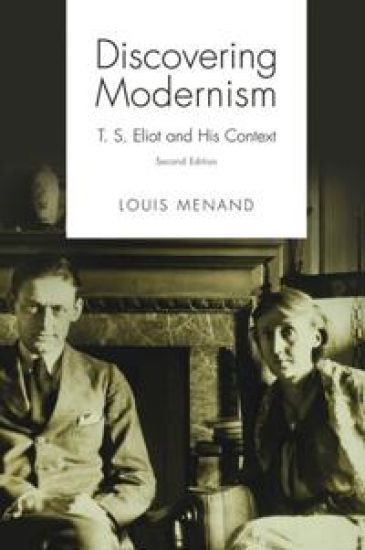
This reissue of Menand's classic intellectual history of T. S. Eliot and the singular role he played in the rise of literary modernism features an updated Afterword by the author, as well as a detailed critical appraisal of the progression of Eliot's career as a poet and critic. Menand shows how Eliot's early views on literary value and authenticity--and his later repudiation of those views--reflect the profound changes regarding the understanding of literature and its significance that occurred in the early part of the twentieth century. The new Afterword was adapted from Menand's critically lauded essay on Eliot in The Cambridge History of Literary Criticism, Volume Seven: Modernism and the New Criticism.
The Best American Essays

The Best American Essays

Louis Menand; Robert Atwan

Mariner Books
2004
nidottu
Since its inception in 1915, the Best American series has become the premier annual showcase for the country's finest short fiction and nonfiction. For each volume, a series editor reads pieces from hundreds of periodicals, then selects between fifty and a hundred outstanding works. That selection is pared down to the twenty or so very best pieces by a guest editor who is widely recognized as a leading writer in his or her field. This unique system has helped make the Best American series the most respected -- and most popular -- of its kind. Here you will find another "splendid array of unpredictable and delectable essays" (Booklist), chosen by the Pulitzer Prize-winning writer Louis Menand, another collection with "delights on every page" (Dallas Morning News). The Best American Essays once again earns its place as the liveliest and leading annual of its kind.
American Studies

American Studies

Louis Menand

Farrar, Strauss Giroux-3pl
2003
nidottu
At each step of this journey through American cultural history, Louis Menand has an original point to make: he explains the real significance of William James's nervous breakdown, and of the anti-Semitism in T. S. Eliot's writing. He reveals the reasons for the remarkable commercial successes of William Shawn's "New Yorker" and William Paley's CBS. He uncovers the connection between Larry Flynt's "Hustler" and Jerry Falwell's evangelism, between the atom bomb and the Scholastic Aptitude Test. He locates the importance of Richard Wright, Norman Mailer, Pauline Kael, Christopher Lasch, and "Rolling Stone" magazine. And he lends an ear to Al Gore in the White House as the Starr Report is finally presented to the public. Like his critically acclaimed bestseller, "The Metaphysical Club, American Studies" is intellectual and cultural history at its best: game and detached, with a strong curiosity about the political underpinnings of ideas and about the reasons successful ideas insinuate themselves into the culture at large. From one of our leading thinkers and critics, known both for his "sly wit and reportorial high-jinks and] clarity and rigor" ("The Nation"), these essays are incisive, surprising, and impossible to put down.
The Metaphysical Club

The Metaphysical Club

Louis Menand

Flamingo
2002
nidottu
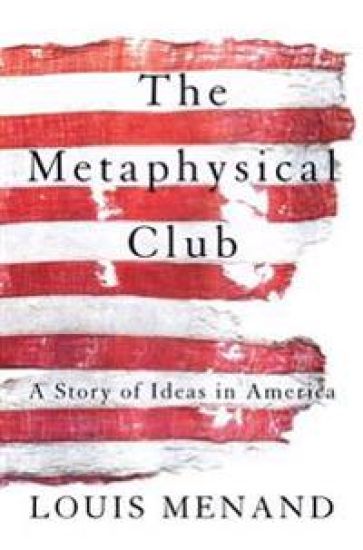
The Metaphysical Club was an informal group that met in Massachusetts, in 1872. The one thing we know that came out of it was an idea - an idea about ideas. This book is the story of that idea. It follows the evolution of the American mind during the period that formed the world we now inhabit.
The Metaphysical Club: A Story of Ideas in America

The Metaphysical Club: A Story of Ideas in America

Louis Menand

Farrar, Straus and Giroux
2002
nidottu

Halvin toimitettuna 24,80 €

The New Yorker staff writer Louis Menand's The Metaphysical Club is the winner of the Pulitzer Prize for History. A national bestseller and "hugely ambitious, unmistakably brilliant" (Janet Maslin, New York Times) book about the creation of modern American thought. The Metaphysical Club was an informal group that met in Cambridge, Massachusetts, in 1872, to talk about ideas. Its members included Oliver Wendell Holmes Jr., future associate justice of the United States Supreme Court; William James, the father of modern American psychology; and Charles Sanders Peirce, logician, scientist, and the founder of semiotics. The Club was probably in existence for about nine months. No records were kept. The one thing we know that came out of it was an idea--an idea about ideas. This book is the story of that idea. Holmes, James, and Peirce all believed that ideas are not things "out there" waiting to be discovered but are tools people invent--like knives and forks and microchips--to make their way in the world. They thought that ideas are produced not by individuals, but by groups of individuals--that ideas are social. They do not develop according to some inner logic of their own but are entirely dependent, like germs, on their human carriers and environment. And they thought that the survival of any idea depends not on its immutability but on its adaptability. The Metaphysical Club is written in the spirit of this idea about ideas. It is not a history of philosophy but an absorbing narrative about personalities and social history, a story about America. It begins with the Civil War and ends in 1919 with Justice Holmes's dissenting opinion in the case of U. S. v. Abrams--the basis for the constitutional law of free speech. The first four sections of the book focus on Holmes, James, Peirce, and their intellectual heir, John Dewey. The last section discusses some of the fundamental twentieth-century ideas they are associated with. This is a book about a way of thinking that changed American life."