Kirjojen hintavertailu – 12 859 828 kirjaa ja 27 kauppaa

Kirjailija

Louk Hagendoorn

Kirjat ja teokset yhdessä paikassa: 7 kirjaa, julkaisuja vuosilta 2000–2020, suosituimpiin kuuluu European Nations and Nationalism. Vertaile teosten hintoja ja tarkista saatavuus suomalaisista kirjakaupoista.

7 kirjaa

Kirjojen julkaisuvuodet: 2000–2020.

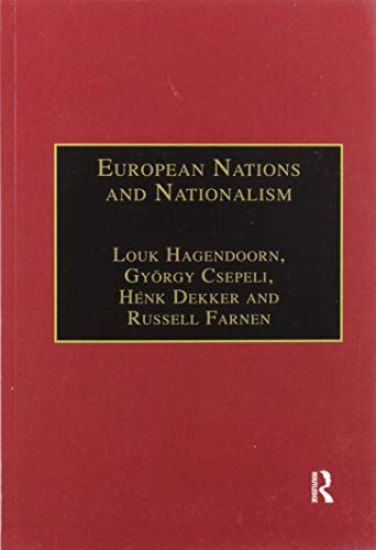
European Nations and Nationalism

European Nations and Nationalism

Louk Hagendoorn; György Csepeli; Russell Farnen

Routledge
2020
nidottu
This rich source book informs its reader in a comparative perspective about the political and social-economic past and present of fifteen Western, Central and Eastern European countries. This includes the economic and social aspects of the development of the nation state, descriptions of the current political structures and institutions, an account of the types of ethnic composition of the populations, definitions of citizenship and a background to the existing political parties and preferences. The countries involved are: the Russian Federation, Ukraine, Romania, Hungary, Slovakia, the Czech Republic, Poland, Germany, Sweden, The Netherlands, Belgium, Britain, France, Spain and Italy. The authors are scholars in the fields of nationalism and ethnic conflict and they were invited to write their country chapters along the lines of a common format, paying special attention to the notion of state and nation building processes, citizenship definitions and minority issues. This book is a comprehensive reference guide for students and scholars in the fields of social sciences, European studies, history and other related disciplines and generally to those who are interested in the past and present of any one of the large number of countries described.

Education and Racism

Education and Racism

Louk Hagendoorn; Shervin Nekuee

Routledge
2020
nidottu

Halvin toimitettuna 47,50 €

First published in 1999, this book gives an inventory of factors contributing to ethnic prejudice in seven countries and the role of formal education among them on the basis of national surveys. It appears that education is crucial in all the countries surveyed and contributes to more tolerant views of ethnic and national minorities in Western European countries, Poland and the United States. The positive effects of education, however, do not always counter the negative effects of personality characteristics and conservative values on ethnic prejudice. Moreover, the negative effects of less formal education may be reinforced by perceived economical competition of ethnic minorities and thereby further bolster prejudiced views of the less educated. This indicates that formal education alone is not sufficient to change prejudiced views. Other forms of socialization transmitting values leading to open-mindedness and the ability to secure one's economic position have to support the positive effects of formal education as well.
Education and Racism

Education and Racism

Louk Hagendoorn; Shervin Nekuee

Routledge
2018
sidottu
First published in 1999, this book gives an inventory of factors contributing to ethnic prejudice in seven countries and the role of formal education among them on the basis of national surveys. It appears that education is crucial in all the countries surveyed and contributes to more tolerant views of ethnic and national minorities in Western European countries, Poland and the United States. The positive effects of education, however, do not always counter the negative effects of personality characteristics and conservative values on ethnic prejudice. Moreover, the negative effects of less formal education may be reinforced by perceived economical competition of ethnic minorities and thereby further bolster prejudiced views of the less educated. This indicates that formal education alone is not sufficient to change prejudiced views. Other forms of socialization transmitting values leading to open-mindedness and the ability to secure one's economic position have to support the positive effects of formal education as well.
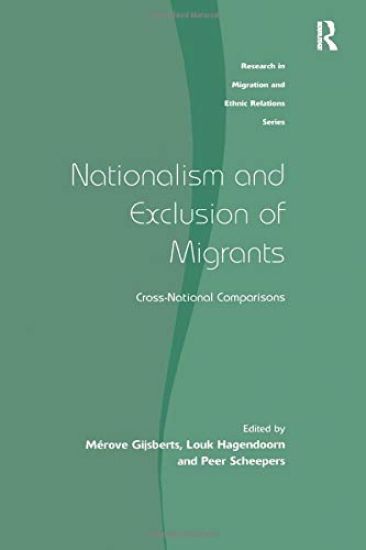
Nationalism and Exclusion of Migrants

Nationalism and Exclusion of Migrants

Mérove Gijsberts; Louk Hagendoorn

Routledge
2017
nidottu
The association of exclusionist and nationalist relations, termed ethnocentrism, has been previously explored within single-country contexts. Studies have shown that dispositional factors, such as social identity and personality traits, affect ethnocentric reactions and that attitudes differ between social categories. However, broader national and international explanations have been neglected in the literature. This book fills this major gap by providing a unique account of the relationship between nationalist attitudes and the exclusion of migrants across a range of European countries, the US, Canada and Australia. Drawing on a variety of comparative surveys, the authors assess whether ethnic exclusionist reactions and nationalist attitudes are indeed systematically related across countries, and whether variations in such attitudes reflect country-level as well as individual-level differences. The authors consider the multidimensionality of the concepts of nationalism and exclusionism as well as the empirical associations, and analyze the attitudes of both majority and minority groups within the countries studied.
When Ways of Life Collide

When Ways of Life Collide

Paul M. Sniderman; Louk Hagendoorn

Princeton University Press
2009
pokkari
In 2004, Dutch filmmaker Theo van Gogh was brutally murdered on a busy Amsterdam street. His killer was Mohammed Bouyeri, a twenty-six-year-old Dutch Moroccan offended by van Gogh's controversial film about Muslim suppression of women. The Dutch government had funded separate schools, housing projects, broadcast media, and community organizations for Muslim immigrants, all under the umbrella of multiculturalism. But the reality of terrorism and radicalization of Muslim immigrants has shattered that dream. In this arresting book, Paul Sniderman and Louk Hagendoorn demonstrate that there are deep conflicts of values in the Netherlands. In the eyes of the Dutch, for example, Muslims oppress women, treating them as inferior to men. In the eyes of Muslim immigrants, Western Europeans deny women the respect they deserve. Western Europe has become a cultural conflict zone. Two ways of life are colliding. Sniderman and Hagendoorn show how identity politics contributed to this crisis. The very policies meant to persuade majority and minority that they are part of the same society strengthened their view that they belong to different societies. At the deepest level, the authors' findings suggest, the issue that government and citizens need to be concerned about is not a conflict of values but a clash of fundamental loyalties.
Nationalism and Exclusion of Migrants

Nationalism and Exclusion of Migrants

Mérove Gijsberts; Louk Hagendoorn

Ashgate Publishing Limited
2004
sidottu
The association of exclusionist and nationalist relations, termed ethnocentrism, has been previously explored within single-country contexts. Studies have shown that dispositional factors, such as social identity and personality traits, affect ethnocentric reactions and that attitudes differ between social categories. However, broader national and international explanations have been neglected in the literature. This book fills this major gap by providing a unique account of the relationship between nationalist attitudes and the exclusion of migrants across a range of European countries, the US, Canada and Australia. Drawing on a variety of comparative surveys, the authors assess whether ethnic exclusionist reactions and nationalist attitudes are indeed systematically related across countries, and whether variations in such attitudes reflect country-level as well as individual-level differences. The authors consider the multidimensionality of the concepts of nationalism and exclusionism as well as the empirical associations, and analyze the attitudes of both majority and minority groups within the countries studied.
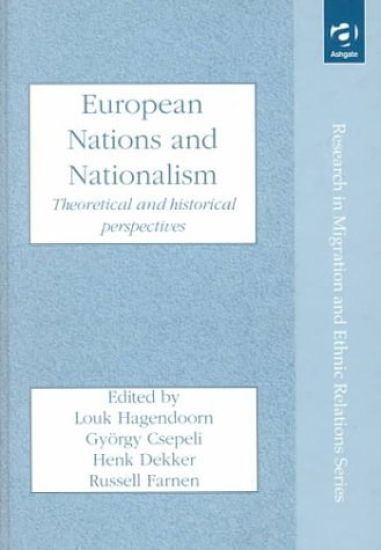
European Nations and Nationalism

European Nations and Nationalism

Louk Hagendoorn; György Csepeli; Russell Farnen

Ashgate Publishing Limited
2000
sidottu
This rich source book informs its reader in a comparative perspective about the political and social-economic past and present of fifteen Western, Central and Eastern European countries. This includes the economic and social aspects of the development of the nation state, descriptions of the current political structures and institutions, an account of the types of ethnic composition of the populations, definitions of citizenship and a background to the existing political parties and preferences. The countries involved are: the Russian Federation, Ukraine, Romania, Hungary, Slovakia, the Czech Republic, Poland, Germany, Sweden, The Netherlands, Belgium, Britain, France, Spain and Italy. The authors are scholars in the fields of nationalism and ethnic conflict and they were invited to write their country chapters along the lines of a common format, paying special attention to the notion of state and nation building processes, citizenship definitions and minority issues. This book is a comprehensive reference guide for students and scholars in the fields of social sciences, European studies, history and other related disciplines and generally to those who are interested in the past and present of any one of the large number of countries described.