Kirjojen hintavertailu – 12 859 829 kirjaa ja 27 kauppaa
Kirjailija
Lovi Raj Gupta
Kirjat ja teokset yhdessä paikassa: 7 kirjaa, julkaisuja vuosilta 2019–2024, suosituimpiin kuuluu Biomedical Sensors Data Acquisition with LabVIEW. Vertaile teosten hintoja ja tarkista saatavuus suomalaisista kirjakaupoista.
Getting Started for Internet of Things with Launch Pad and ESP8266 provides a platform to get started with the Ti launch pad and IoT modules for Internet of Things applications. The book provides the basic knowledge of Ti launch Pad and ESP8266 based customized modules with their interfacing, along with the programming. The book discusses the application of Internet of Things in different areas. Several examples for rapid prototyping are included, this to make the readers understand the concept of IoT. The book comprises of twenty-seven chapters, which are divided into four sections and which focus on the design of various independent prototypes. Section-A gives a brief introduction to Ti launch pad (MSP430) and Internet of Things platforms like GPRS, NodeMCU and NuttyFi (ESP8266 customized board), and it shows steps to program these boards. Examples on how to interface these boards with display units, analog sensors, digital sensors and actuators are also included, this to make reader comfortable with the platforms. Section-B discusses the communication modes to relay the data like serial out, PWM and I2C. Section-C explores the IoT data loggers and shows certain steps to design and interact with the servers. Section-D includes few IoT based case studies in various fields. This book is based on the practical experience of the authors while undergoing projects with students and partners from various industries.
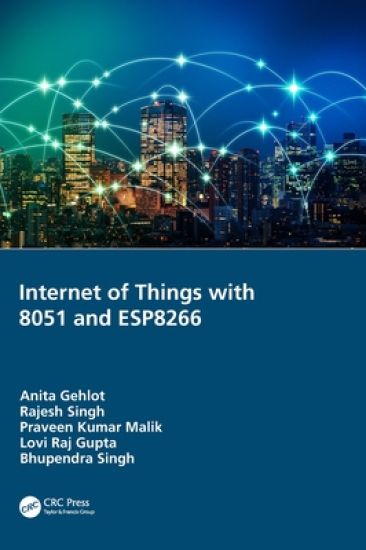
Internet of Things with 8051 and ESP8266 provides a platform to get started with the Internet of Things (IoT) with 8051. This book describes programming basics and how devices interface within designed systems. It presents a unique combination of 8051 with ESP8266 and I/O devices for IoT applications supported by case studies to provide the solutions to real-time problems. The programs and circuits have been tested on real hardware and explore different areas in IoT applications. Divided into four sections, it explains the customized boards for IoT applications followed by the means by which 8051 and ESP8266 interface with I/O devices. It spans levels from basic to advanced interfacing with special devices, server design, and data logging with different platforms. Features: Covers how I/O devices interface with 8051 and ESP8266 Explains the basic concepts of interfacing complexity using applications with examples Provides hands-on practice exercises with 8051 and ESP8266 for IoT applications Discusses both case studies and programming tests on real hardware during industrial and student projects Reviews the integration of smart devices with IoTInternet of Things with 8051 and ESP8266 is intended for senior undergraduate and graduate students in electrical and electronics engineering, but anyone with an interest in the professional curriculum of electrical and electronics engineering will find this book a welcome addition to their collection.
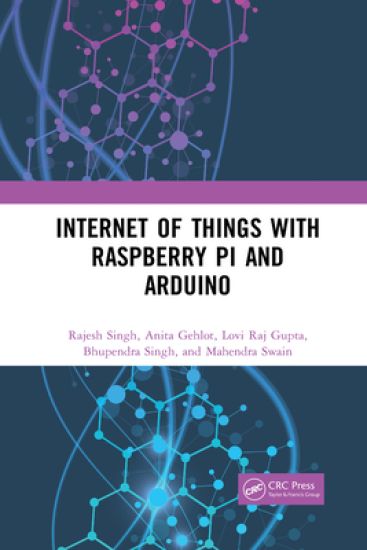
This book provides a platform to understand Internet of things with Raspberry Pi and the basic knowledge of the programming and interfacing of the devices and designed systems. It broadly covers introduction to Internet of Things and enabling technologies, interfacing with Raspberry Pi and Arduino and interfacing with Raspberry Pi GPIO. Internet of Things with Raspberry pi and Arduino is aimed at senior undergraduate, graduate students and professionals in electrical engineering, computer engineering including robotics.
Internet of Things with 8051 and ESP8266 provides a platform to get started with the Internet of Things (IoT) with 8051. This book describes programming basics and how devices interface within designed systems. It presents a unique combination of 8051 with ESP8266 and I/O devices for IoT applications supported by case studies to provide the solutions to real-time problems. The programs and circuits have been tested on real hardware and explore different areas in IoT applications. Divided into four sections, it explains the customized boards for IoT applications followed by the means by which 8051 and ESP8266 interface with I/O devices. It spans levels from basic to advanced interfacing with special devices, server design, and data logging with different platforms. Features: Covers how I/O devices interface with 8051 and ESP8266 Explains the basic concepts of interfacing complexity using applications with examples Provides hands-on practice exercises with 8051 and ESP8266 for IoT applications Discusses both case studies and programming tests on real hardware during industrial and student projects Reviews the integration of smart devices with IoTInternet of Things with 8051 and ESP8266 is intended for senior undergraduate and graduate students in electrical and electronics engineering, but anyone with an interest in the professional curriculum of electrical and electronics engineering will find this book a welcome addition to their collection.
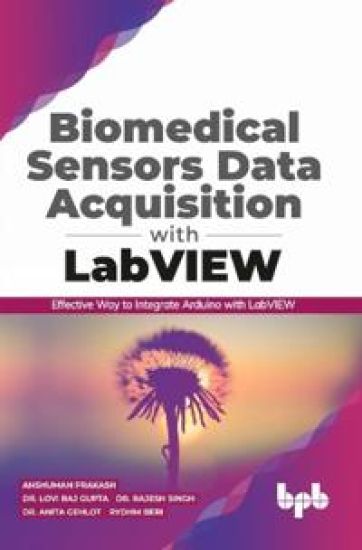
Explore and work with tools for Biomedical Data Acquisition and Signal Processing Key FeaturesGet familiar with the working of Biomedical Sensor Learn how to program Arduino with LabVIEW with ease Get familiar with the process of interfacing of analog sensors with Arduino Mega Use LabVIEW to build an ECG Patient Monitoring System Learn how to interface a simple GSM Module to Arduino Description Biomedical sensor data acquisition with LabVIEW provides a platform for engineering students to get acquainted with Arduino and LabVIEW programming. Arduino based projects would help to improve the standards of patient care and monitoring in hospitals and the standard of living in cities by implementing a variety of innovative ideas more directly. The goal of this book is to explore and illustrate the programming and interfacing of Arduino with biomedical sensors, communication modules, and LabVIEW GUI. The book begins with essential knowledge and gradually progresses towards the advanced level of comprehension. It starts with a Biomedical sensor-based project with a working model of LabVIEW GUI. It also gives a detailed overview of programming with Arduino IDE and LabVIEW. It covers Interface for Arduino (LIFA), which is a unique contribution that aids in the understanding of embedded systems. This book for high-level students who need application-based knowledge for developing some real-time patient monitoring systems using Arduino and LabVIEW. What will you learn Learn about the interfacing of Biomedical SensorsUnderstand how to create GUI with LabVIEWLearn about digital and analog sensor interfacing with Arduino Learn how to load the LabVIEW Interface for Arduino without FirmwareLearn how to Interface LabVIEW with Arduino Board using FirmwareWho this book is for This book is for Students/Professionals looking for a career in the growing field of Biomedical Sensors. This book is also for those who want to get familiar with the basics of E-Healthcare systems. Table of Contents 1. Introduction to Biomedical Signals 2. Introduction to Arduino Mega 3. Digital sensor interfacing with Arduino Mega4. Display device interfacing with Arduino Mega5. Analog sensor interfacing with Arduino Mega6. Introduction to interfacing Arduino and LabVIEW without Firmware7. GSR sensor module interfacing using Arduino 8. Blood Pressure Sensor Module 9. Respiratory (nasal airflow) sensor module 10. Temperature Sensor Module 11. Body Position Sensor Module12. Introduction to interfacing Arduino and LabVIEWFirmware13. ECG Sensor Module with Arduino14. EMG Sensor Module with Arduino15. Pulse Oximeter interface with Arduino About the Authors Anshuman Prakash has completed his M. Tech in Embedded systems specialization in wearable technology from University of Petroleum and Energy Studies, Dehradun, India. Dr. Lovi Raj Gupta is the Executive Dean, Faculty of Technology & Sciences, Lovely Professional University. He is a leading light in the field of Technical and Higher education in the country. Dr. Rajesh Singh is currently associated with Lovely Professional University as Professor with more than Sixteen years of experience in academics. Dr. Anita Gehlot is currently associated with Lovely Professional University as Associate Professor with more than twelve years of experience in academics. Rydhm Beri is working as an Assistant Professor in BBK DAV College for Women, Amritsar, since last three years and has 5 years of experience in the field of education.
This book provides a platform to understand Internet of things with Raspberry Pi and the basic knowledge of the programming and interfacing of the devices and designed systems. It broadly covers introduction to Internet of Things and enabling technologies, interfacing with Raspberry Pi and Arduino and interfacing with Raspberry Pi GPIO. Internet of Things with Raspberry pi and Arduino is aimed at senior undergraduate, graduate students and professionals in electrical engineering, computer engineering including robotics.
Getting Started for Internet of Things with Launch Pad and ESP8266 provides a platform to get started with the Ti launch pad and IoT modules for Internet of Things applications. The book provides the basic knowledge of Ti launch Pad and ESP8266 based customized modules with their interfacing, along with the programming. The book discusses the application of Internet of Things in different areas. Several examples for rapid prototyping are included, this to make the readers understand the concept of IoT. The book comprises of twenty-seven chapters, which are divided into four sections and which focus on the design of various independent prototypes. Section-A gives a brief introduction to Ti launch pad (MSP430) and Internet of Things platforms like GPRS, NodeMCU and NuttyFi (ESP8266 customized board), and it shows steps to program these boards. Examples on how to interface these boards with display units, analog sensors, digital sensors and actuators are also included, this to make reader comfortable with the platforms. Section-B discusses the communication modes to relay the data like serial out, PWM and I2C. Section-C explores the IoT data loggers and shows certain steps to design and interact with the servers. Section-D includes few IoT based case studies in various fields. This book is based on the practical experience of the authors while undergoing projects with students and partners from various industries.