Kirjojen hintavertailu – 12 903 725 kirjaa ja 27 kauppaa

Kirjailija

Low Sui Pheng

Kirjat ja teokset yhdessä paikassa: 21 kirjaa, julkaisuja vuosilta 2010–2021, suosituimpiin kuuluu Business Continuity Management in Construction. Vertaile teosten hintoja ja tarkista saatavuus suomalaisista kirjakaupoista.

21 kirjaa

Kirjojen julkaisuvuodet: 2010–2021.

Waste Reduction in Precast Construction

Waste Reduction in Precast Construction

Joy Ong; Low Sui Pheng

SPRINGER VERLAG, SINGAPORE
2021
nidottu
This book presents the adaptation of lean principles to the precast construction industry to eliminate or minimize construction wastes, by modeling the precast construction process influencing manpower requirements. This is done using the shared mental models theory to understand how the lean principles enable people to work together to complete the tasks and work together effectively as a team throughout the entire precast construction process from the design, production and logistics to installation stages. Besides the theoretical concepts, this proposed book also presents the practical aspects faced by contractors through the conduct of questionnaire surveys to understand how the implementation of lean principles and shared mental models will affect the occurrence of construction wastes and hence the changes in the total man days used during the precast construction process. This book also presents a neural network model for developing leading indicators that classify precast construction projects in accordance with the manpower changes achieved through the construct of lean principles and shared mental models. This is to help the construction industry to predict the risk of low construction productivity and enable effective lean implementation to optimize the manpower effort required.
Waste Reduction in Precast Construction

Waste Reduction in Precast Construction

Joy Ong; Low Sui Pheng

Springer Verlag, Singapore
2020
sidottu
This book presents the adaptation of lean principles to the precast construction industry to eliminate or minimize construction wastes, by modeling the precast construction process influencing manpower requirements. This is done using the shared mental models theory to understand how the lean principles enable people to work together to complete the tasks and work together effectively as a team throughout the entire precast construction process from the design, production and logistics to installation stages. Besides the theoretical concepts, this proposed book also presents the practical aspects faced by contractors through the conduct of questionnaire surveys to understand how the implementation of lean principles and shared mental models will affect the occurrence of construction wastes and hence the changes in the total man days used during the precast construction process. This book also presents a neural network model for developing leading indicators that classify precast construction projects in accordance with the manpower changes achieved through the construct of lean principles and shared mental models. This is to help the construction industry to predict the risk of low construction productivity and enable effective lean implementation to optimize the manpower effort required.

Managing Productivity in Construction

Managing Productivity in Construction

Low Sui Pheng; Chan Yue Meng

Routledge
2020
nidottu
First published in 1997, this volume joined the debate assessing the potential of the Just-In-Time management philosophy from the manufacturing industry for Singapore’s construction industry by examining the "off-site" prefabrication of precast concrete components in Singapore, in comparison with traditional management systems. In the wake of the 1991 Strategic Economic Plan of Singapore, which forecasted alarmingly low productivity in the local construction sector, the authors noted that construction in Japan was 35% more productive, whilst Finland was 75% better. Highlighting immense potential for the JIT approach, they explore the JIT philosophy, traditional systems, construction wastes and comparisons between construction and manufacturing.
Japanese Contractors in Overseas Markets

Japanese Contractors in Overseas Markets

Kazuhito Suzuki; Low Sui Pheng

Springer Verlag, Singapore
2019
sidottu
This book explores the differences in cultural attributes and management factors to enable managers working for Japanese contractors to reduce misunderstandings and misinterpretations when communicating with project team members from different cultural backgrounds. It focuses on Japanese contractors operating in Singapore, since the Singapore construction industry has, for many years, been one of the largest overseas construction markets for the top-5 Japanese contractors. Using Hofstede’s national cultural framework for the cultural studies in construction project management, it reveals various real-world management practices and discusses national cultural differences relating to managers working for Japanese contractors in Singapore as well as the communication weaknesses of current management practices and styles. The results presented provide useful lessons for Japanese contractors operating in Singapore, as well as other parts of the world, to bridge cultural and communication gaps.
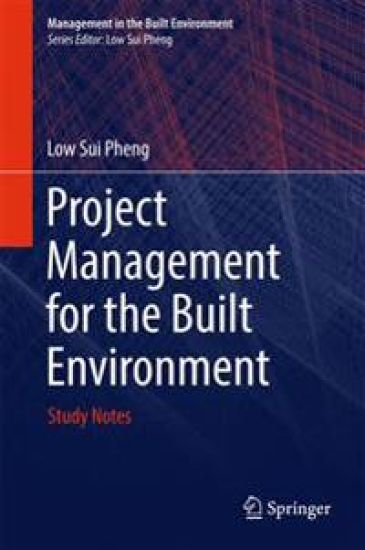
Project Management for the Built Environment

Project Management for the Built Environment

Low Sui Pheng

Springer Verlag, Singapore
2019
nidottu
This book presents the fundamentals of project management as applied in the built environment and more specifically for the construction industry. It presents the project management body of knowledge (PMBOK) using practical examples to show how various project management principles and concepts can be applied in practice. Providing study notes for students and aspiring project management professionals in the construction industry, each of the 13 chapters includes a set of comprehensive revision questions that allow readers to reflect on what they have learned. The book offers an introduction to what project management is all about as well as the project life cycles, stakeholders and organizations involved. It explains the project management processes and how these processes are applied in integration, scope, time, cost, quality, human resource, communications, risk and procurement management. It concludes with ethics and professional conduct in the project management profession.
Construction Quality and the Economy

Construction Quality and the Economy

Low Sui Pheng; Lau Shing Hou

Springer Verlag, Singapore
2019
sidottu
This book discusses the relationship between construction quality and the state of the Singapore national economy, and describes how construction quality is affected as contracting firms strategically manage issues relating to profitability and survivability during economic boom and bust cycles. Adopting a three-pronged approach to explain the key issues, the book first explains the effect of the state of the Singapore national economy (boom or bust) on the construction quality delivered by contracting firms. Secondly, it explains how contracting firms respond to the performance of the national economy through their dynamic bidding strategies, leading to significant quality trade-offs in some instances, especially when there is imprecise market information. Thirdly, it recommends various strategic measures that key stakeholders and government policy-makers can take to circumvent the quality trade-off in the construction industry when faced with dynamic fluctuations in the performance of the national economy. Although the book focuses on Singapore, it appeals to a global audience since countries worldwide (and their respective building-related stakeholders) face the same issues in terms of the time–cost–quality trade-off decision-making process involving the entire supply chain.
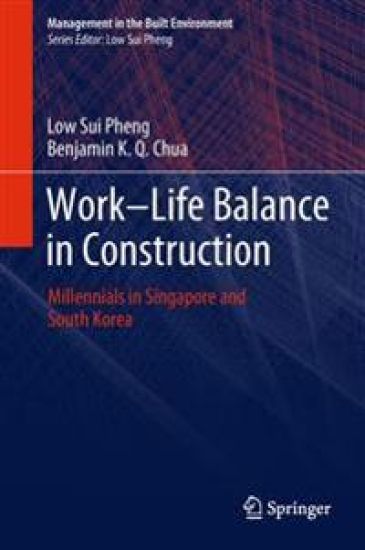
Work-Life Balance in Construction

Work-Life Balance in Construction

Low Sui Pheng; Benjamin K. Q. Chua

Springer Verlag, Singapore
2019
nidottu
The book presents the latest studies on the work–life balance of millennial (also known as Generation Y) building professionals in Singapore and South Korea. Its main goal is to compare and contrast the workplace attitudes of millennials, and to provide guidelines that help supervisors in the construction industry manage their employees’ expectations regarding work–life balance. Accordingly, it explains and links various principles regarding work–life conflicts, work–life enrichments and the work–life interface. Furthermore, the book introduces readers to coping strategies, a dimension that has not yet been explored substantially and has the potential to contribute significantly to the study and understanding of work–life balance. The book makes recommendations for the top management on assigning a capable leader to drive the changes in the organization, and on empowering the leader to implement effective strategies for promoting work–life balance, especially for the millennials who are now playing an increasing central role in the global construction sector.
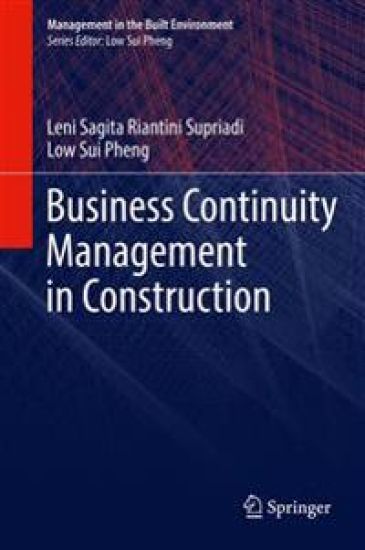
Business Continuity Management in Construction

Business Continuity Management in Construction

Leni Sagita Riantini Supriadi; Low Sui Pheng

Springer Verlag, Singapore
2018
nidottu
This book provides an understanding of Business Continuity Management (BCM) implementation for local/international construction operations, with a primary focus on Indonesian construction firms as an illustrative example. It reviews the whole spectrum of work relating to organizational culture (OC) and the institutional framework (IF) as one of the key ways for companies to evaluate and implement BCM in construction operations. Once readers have acquired a sound understanding of BCM, OC and IF linkages in construction firms, the lessons learned can be extended to other companies. This is facilitated through a systematic assessment framework presented in the book using a Knowledge Based Decision Support System (BCM-KBDSS), which allows these companies to evaluate their current status quo with respect to BCM, OC and IF, and then make informed decisions on how and to what extent BCM should be implemented in their operations. As such, the book offers a unique blend of theory and practice, ensuring readers gain a far better understanding of BCM implementation in the construction industry.
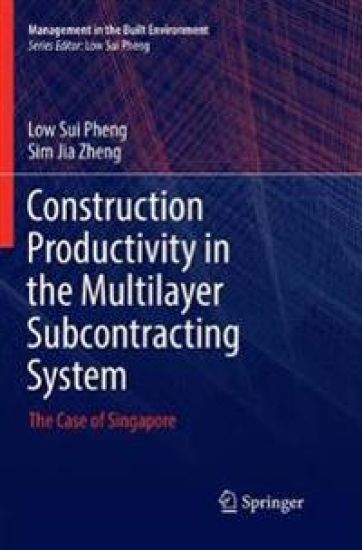
Construction Productivity in the Multilayer Subcontracting System

Construction Productivity in the Multilayer Subcontracting System

Low Sui Pheng; Sim Jia Zheng

Springer Verlag, Singapore
2018
nidottu
This book focuses on current subcontracting practices in the construction industry and their effects on Singapore’s construction productivity. It offers readers a better understanding of how the fragmentation of large and small firms in Singapore impacts construction productivity when operating under the commonly adopted multilayer subcontracting system (MLSS), which extends globally to the construction industries in other countries that have adopted the MLSS. The book also assesses the effectiveness of subcontracting practices in helping local contractors improve their construction productivity (and thereby improve the industry’s overall productivity). In closing, it provides recommendations on how the problems associated with the MLSS can best be addressed, and how its benefits can be capitalized on through organizational learning.
Managing Productivity in Construction

Managing Productivity in Construction

Low Sui Pheng; Chan Yue Meng

Routledge
2018
sidottu
First published in 1997, this volume joined the debate assessing the potential of the Just-In-Time management philosophy from the manufacturing industry for Singapore’s construction industry by examining the "off-site" prefabrication of precast concrete components in Singapore, in comparison with traditional management systems. In the wake of the 1991 Strategic Economic Plan of Singapore, which forecasted alarmingly low productivity in the local construction sector, the authors noted that construction in Japan was 35% more productive, whilst Finland was 75% better. Highlighting immense potential for the JIT approach, they explore the JIT philosophy, traditional systems, construction wastes and comparisons between construction and manufacturing.
Work-Life Balance in Construction

Work-Life Balance in Construction

Low Sui Pheng; Benjamin K. Q. Chua

Springer Verlag, Singapore
2018
sidottu
The book presents the latest studies on the work–life balance of millennial (also known as Generation Y) building professionals in Singapore and South Korea. Its main goal is to compare and contrast the workplace attitudes of millennials, and to provide guidelines that help supervisors in the construction industry manage their employees’ expectations regarding work–life balance. Accordingly, it explains and links various principles regarding work–life conflicts, work–life enrichments and the work–life interface. Furthermore, the book introduces readers to coping strategies, a dimension that has not yet been explored substantially and has the potential to contribute significantly to the study and understanding of work–life balance. The book makes recommendations for the top management on assigning a capable leader to drive the changes in the organization, and on empowering the leader to implement effective strategies for promoting work–life balance, especially for the millennials who are now playing an increasing central role in the global construction sector.
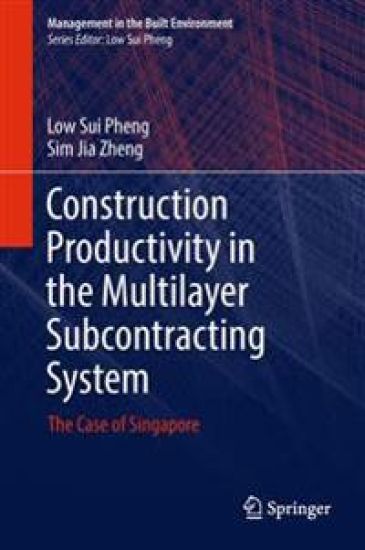
Construction Productivity in the Multilayer Subcontracting System

Construction Productivity in the Multilayer Subcontracting System

Low Sui Pheng; Sim Jia Zheng

Springer Verlag, Singapore
2018
sidottu
This book focuses on current subcontracting practices in the construction industry and their effects on Singapore’s construction productivity. It offers readers a better understanding of how the fragmentation of large and small firms in Singapore impacts construction productivity when operating under the commonly adopted multilayer subcontracting system (MLSS), which extends globally to the construction industries in other countries that have adopted the MLSS. The book also assesses the effectiveness of subcontracting practices in helping local contractors improve their construction productivity (and thereby improve the industry’s overall productivity). In closing, it provides recommendations on how the problems associated with the MLSS can best be addressed, and how its benefits can be capitalized on through organizational learning.
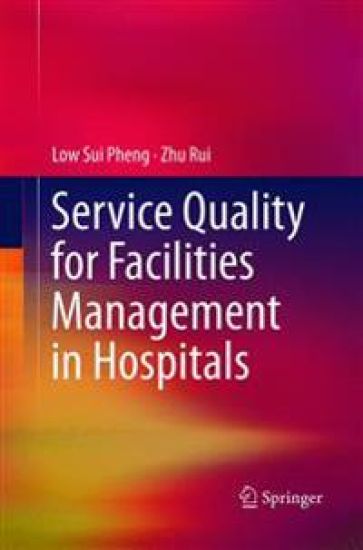
Service Quality for Facilities Management in Hospitals

Service Quality for Facilities Management in Hospitals

Low Sui Pheng; Zhu Rui

Springer Verlag, Singapore
2018
nidottu
This book examines the Facilities Management (FM) of hospitals and healthcare facilities, which are among the most complex, costly and challenging kind of buildings to manage. It presents and evaluates the FM service quality standards in Singapore’s hospitals from the patient’s perspective, and provides recommendations on how to successfully improve FM service quality and achieve higher patient satisfaction. The book also features valuable supplementary materials, including a checklist of 32 key factors for successful facilities management and another checklist of 24 service attributes for hospitals to achieve desirable service quality in connection with facilities management. The book adopts a unique approach of combining service quality and quality theory to provide a more holistic view of how FM service quality can be achieved in hospitals. It also integrates three instruments, namely the SERVQUAL model, the Kano model and the QFD model to yield empirical results from surveys for implementation in hospitals. Although the book was written from the perspective of FM service quality for hospitals, the findings and recommendations are also relevant for other non-healthcare sectors where appropriate lessons may also be drawn for FM and service quality in general. It will particularly benefit Quality Managers, Facilities Managers and Hospital Administrators.
Project Management for the Built Environment

Project Management for the Built Environment

Low Sui Pheng

Springer Verlag, Singapore
2017
sidottu
This book presents the fundamentals of project management as applied in the built environment and more specifically for the construction industry. It presents the project management body of knowledge (PMBOK) using practical examples to show how various project management principles and concepts can be applied in practice. Providing study notes for students and aspiring project management professionals in the construction industry, each of the 13 chapters includes a set of comprehensive revision questions that allow readers to reflect on what they have learned. The book offers an introduction to what project management is all about as well as the project life cycles, stakeholders and organizations involved. It explains the project management processes and how these processes are applied in integration, scope, time, cost, quality, human resource, communications, risk and procurement management. It concludes with ethics and professional conduct in the project management profession.
Business Continuity Management in Construction

Business Continuity Management in Construction

Leni Sagita Riantini Supriadi; Low Sui Pheng

Springer Verlag, Singapore
2017
sidottu
This book provides an understanding of Business Continuity Management (BCM) implementation for local/international construction operations, with a primary focus on Indonesian construction firms as an illustrative example. It reviews the whole spectrum of work relating to organizational culture (OC) and the institutional framework (IF) as one of the key ways for companies to evaluate and implement BCM in construction operations. Once readers have acquired a sound understanding of BCM, OC and IF linkages in construction firms, the lessons learned can be extended to other companies. This is facilitated through a systematic assessment framework presented in the book using a Knowledge Based Decision Support System (BCM-KBDSS), which allows these companies to evaluate their current status quo with respect to BCM, OC and IF, and then make informed decisions on how and to what extent BCM should be implemented in their operations. As such, the book offers a unique blend of theory and practice, ensuring readers gain a far better understanding of BCM implementation in the construction industry.
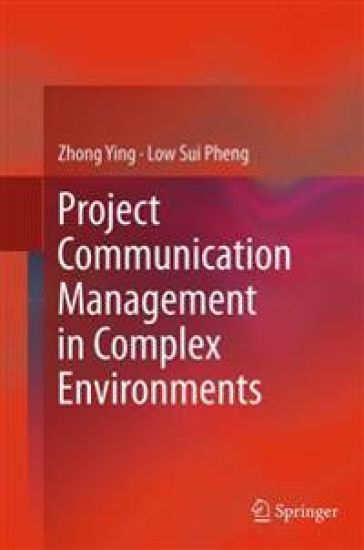
Project Communication Management in Complex Environments

Project Communication Management in Complex Environments

Zhong Ying; Low Sui Pheng

Springer Verlag, Singapore
2016
nidottu
This unique book that deals with project communication management in complex environments, taking a leaf from China’s experience with a major earthquake in Sichuan, would be a timely contribution to fill this lacuna. Readers would be able to understand how companies and organizations that are unprepared for crisis management would react to their detriment. The lessons provided in this book are the only one of its kind to highlight the lessons for companies and organizations to prepare themselves for successful project communication management through the complexity-informed framework. Although the book is written by two building professionals, the concepts and lessons presented are generic and equally applicable for businesses outside of the construction industry; for example, for airports, resorts, hotels, shipyards, etc.
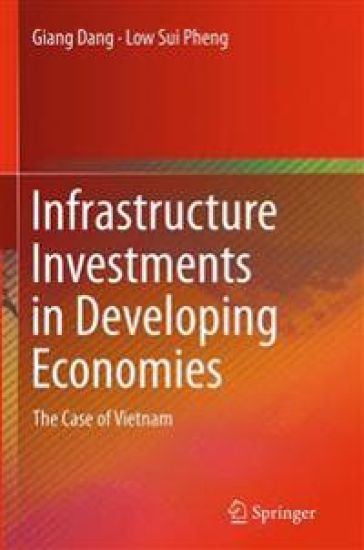
Infrastructure Investments in Developing Economies

Infrastructure Investments in Developing Economies

Giang Dang; Low Sui Pheng

Springer Verlag, Singapore
2016
nidottu
This book aims to provide knowledge on how infrastructure is planned and built in a typical developing country, and what key variables are there in the system limiting the efficient use of public investments in infrastructure. The book begins with a comprehensive literature review on construction and economic development, and trade and economic development. The focus of the book is on the case of Vietnam, with lessons drawn for other developing economies. The book employs the mixed use of data to provide a stronger basis for analysis and interpretation of related government policies. Based on the research findings, the book recommends significant capacity building work for Vietnam to develop capacities that would remove constraints on the efficient use of public investments in infrastructure. The general principles of significant capacity building work which are useful for policy implications are introduced in the book. Analysts, academics, public and private communities in developing countries can adopt the research findings as guiding principles to bring about changes in their current use of public investments in infrastructure, thus supporting their trade and economic growth in the long term.
Service Quality for Facilities Management in Hospitals

Service Quality for Facilities Management in Hospitals

Low Sui Pheng; Zhu Rui

Springer Verlag, Singapore
2016
sidottu
This book examines the Facilities Management (FM) of hospitals and healthcare facilities, which are among the most complex, costly and challenging kind of buildings to manage. It presents and evaluates the FM service quality standards in Singapore’s hospitals from the patient’s perspective, and provides recommendations on how to successfully improve FM service quality and achieve higher patient satisfaction. The book also features valuable supplementary materials, including a checklist of 32 key factors for successful facilities management and another checklist of 24 service attributes for hospitals to achieve desirable service quality in connection with facilities management. The book adopts a unique approach of combining service quality and quality theory to provide a more holistic view of how FM service quality can be achieved in hospitals. It also integrates three instruments, namely the SERVQUAL model, the Kano model and the QFD model to yield empirical results from surveys for implementation in hospitals. Although the book was written from the perspective of FM service quality for hospitals, the findings and recommendations are also relevant for other non-healthcare sectors where appropriate lessons may also be drawn for FM and service quality in general. It will particularly benefit Quality Managers, Facilities Managers and Hospital Administrators.
Infrastructure Investments in Developing Economies

Infrastructure Investments in Developing Economies

Giang Dang; Low Sui Pheng

Springer Verlag, Singapore
2014
sidottu
This book aims to provide knowledge on how infrastructure is planned and built in a typical developing country, and what key variables are there in the system limiting the efficient use of public investments in infrastructure. The book begins with a comprehensive literature review on construction and economic development, and trade and economic development. The focus of the book is on the case of Vietnam, with lessons drawn for other developing economies. The book employs the mixed use of data to provide a stronger basis for analysis and interpretation of related government policies. Based on the research findings, the book recommends significant capacity building work for Vietnam to develop capacities that would remove constraints on the efficient use of public investments in infrastructure. The general principles of significant capacity building work which are useful for policy implications are introduced in the book. Analysts, academics, public and private communities in developing countries can adopt the research findings as guiding principles to bring about changes in their current use of public investments in infrastructure, thus supporting their trade and economic growth in the long term.
Project Communication Management in Complex Environments

Project Communication Management in Complex Environments

Zhong Ying; Low Sui Pheng

Springer Verlag, Singapore
2013
sidottu
This unique book that deals with project communication management in complex environments, taking a leaf from China’s experience with a major earthquake in Sichuan, would be a timely contribution to fill this lacuna. Readers would be able to understand how companies and organizations that are unprepared for crisis management would react to their detriment. The lessons provided in this book are the only one of its kind to highlight the lessons for companies and organizations to prepare themselves for successful project communication management through the complexity-informed framework. Although the book is written by two building professionals, the concepts and lessons presented are generic and equally applicable for businesses outside of the construction industry; for example, for airports, resorts, hotels, shipyards, etc.