Kirjojen hintavertailu – 12 903 725 kirjaa ja 27 kauppaa
Kirjailija
Luc Ferry
Kirjat ja teokset yhdessä paikassa: 46 kirjaa, julkaisuja vuosilta 1990–2025, suosituimpiin kuuluu Opi elämään. Vertaile teosten hintoja ja tarkista saatavuus suomalaisista kirjakaupoista.
"I Den nya ekologiska ordningen granskar han den typ av frågor som Peter Singer blivit känd för - skall djur ha samma rättigheter som människor? - men också filosofin bakom den så kallade djupekologin, vars radikala ståndpunkt är att berg, skogar och sjöar ? i princip hela biosfären ? bör tilldelas samma juridika rättigheter som människan... I vinterns debatt om veganernas våldsdåd kunde man lägga märke till en egendomlig letargi i den svenska opinionen. En vanlig uppfattning - jag mötte den i alla fall privat - var att hela diskussionen sysslade med lustiga men perifera ting, att djuraktivisternas och Singers åsikter var så bisarra att kloka människor inte behövde befatta sig med dem. Läser man Ferry får man en annan bild. Hans kunskaper är heltäckande... Han beskriver en rörelse med stor spridning i Europa och Nordamerika och ger hisnande inblickar i hur jurister och filosofer på akademisk nivå nu söker vägar till en lagstiftning som skulle kunna rucka på människans rättsliga privilegier och utsträcka dem till djuren och/eller naturen. Ferrys kritik av Singer är skarp men bygger på respekt för dennes kompetens... Ferrys humanism är inget middagstal. Den vill bevara det som är kärnan i Rouseeaus och upplysningens frihetsbegrepp. Det som gör oss till människor är inte vår tillhörighet i en kultur, en religion eller ett språk utan vår förmåga att lösgöra oss från en sådan tillhörighet. Att upphöja djur och naturföremål till rättsliga subjekt vore att bryta med denna princip." /Leif Zern, Dagens Nyheter
This text offers a critique of the ideological roots of the "deep ecology" movement spreading throughout Germany, France and the United States. Traditional ecological movements, or "democratic ecology," seek to protect the environment of human societies. But another movement has become the refuge both of nostalgic counterrevolutionaries and of leftist illusions, namely "deep ecology." The human species is no longer at the centre of the world, but subject to a new god called Nature. For these purists, man can only soil the harmony of the universe. In order to secure natural equilibrium, the only solution is to grant rights to animals, to trees and to rocks. Ferry examines early European legal cases concerning the status and rights of animals and then demonstrates that German Romanticism embraced certain key ideas of the deep ecology movement concerning the protection of animals and the environment. Ferry deciphers the philosophical and political assumptions of a movement that threatens to infantalize human society by preying on the fear of the authority of a new theological-political order. Far from denying our "duty in relation to nature," this text cautions against the dangers of environmental claims and against the threat to democracy contained in the deep ecology doctrine when pushed to its extreme.
What is the common element linking the right to health care and the right of free speech, the right to leisure and the right of free association, the right to work and the right to be protected? Debates on the rights of man abound in the media today, but all too often they remain confused and fail to recognize the fundamental political conceptions on which they hinge. Several French theorists have recently attempted a new account of rights, one that would replace the discredited Marxist view of rights as mere formalities concealing the realities of class domination. In this final volume of Political Philosophy, Luc Ferry and Alain Renaut summarize these efforts and put forward their own set of arguments.
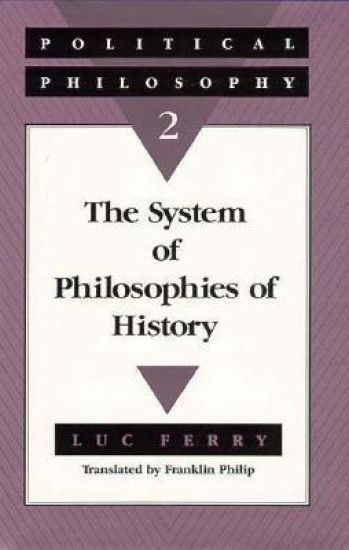
Because contemporary political philosophy owes a significant debt to the great nineteenth-century German philosophies of history, a sound knowledge of German Idealist philosophy is crucial to an understanding of our own time. In Political Philosophy 2, Luc Ferry provides not only a thorough introduction to German Idealism and its critics, but also an insightful look at contemporary political philosophy. Ferry begins this second volume of his ambitious three-volume Political Philosophy by considering both the structure and the potential political effects of the various philosophies of history born of German Idealism. He focuses on the key question of whether, and to what extent, the principle of reason may be said to govern the totality of the historically real. This leads to an examination of Hegel's criticism of the moral view of the world and to an assessment of the phenomenological criticism of Hegel put forth by Heidegger and Arendt.
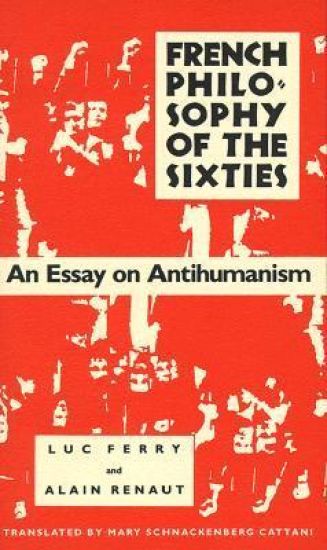
Since its publication in France in 1985, this critique of the main currents in contemporary French thought has prompted debate over the character of postmodern philosophy. Luc Ferry and Alain Renaut offer sociopolitical analysis of the May 1968 student uprising in France, explore the connection between the revolt and the rise of postmodern thought, and question whether student dissent was a genuine humanist reaction to conditions in France at that time. The book begins with a description of the style and intellectual structure of French philosophy in the 1960s, noting its hyperbolic use of themes borrowed from German thinkers, particularly Nietzsche, Heidegger, Marx and Freud. The authors then trace these themes in individual chapters on the writings of Foucault, Derrida, Bourdieu and Lacan, focusing on the philosophers' antagonism to the idea of self and their assertions that philosophy has come to its end. The book raises serious questions about the meaning of the 1960s, arguing that the philosophical movements that emerged from this turbulent decade in France are politically irresponsible. Ferry and Renaut offer a basis for understanding the defence of humanism and the democratic and liberal ideals it supports.