Kirjojen hintavertailu – 12 874 690 kirjaa ja 26 kauppaa

Kirjailija

Luca Crippa

Kirjat ja teokset yhdessä paikassa: 7 kirjaa, julkaisuja vuosilta 2010–2024, suosituimpiin kuuluu El Fotógrafo de Auschwitz / The Auschwitz Photographer. Vertaile teosten hintoja ja tarkista saatavuus suomalaisista kirjakaupoista.

7 kirjaa

Kirjojen julkaisuvuodet: 2010–2024.

El Fotógrafo de Auschwitz / The Auschwitz Photographer

El Fotógrafo de Auschwitz / The Auschwitz Photographer

Luca Crippa; Maurizio Onnis

Editorial Planeta Mexicana S.A. de C.V.
2024
nidottu
Basada en la impactante historia de Wilhelm Brasse, el prisionero 3444 que fotografi las atrocidades del Holocausto. Cuando en 1939 los nazis invadieron su natal Polonia, le exigieron a Wilhelm Brasse jurar lealtad a Hitler y unirse a la Wehrmacht. l se neg a convertirse en c mplice de los alemanes y fue enviado a Auschwitz como prisionero pol tico. Por ser un fot grafo profesional, las SS decidieron utilizarlo y le ordenaron registrar a trav s de su lente el funcionamiento interno del campo: inici tomando las fotograf as de identificaci n de los prisioneros cuando ingresaban, luego documentando los atroces experimentos m dicos de Josef Mengele, y finalmente fue forzado a capturar el horror de las c maras de gas. Entre 1940 y 1945, Brasse tom alrededor de cincuenta mil fotograf as. Su coraje y valor le impidieron quedarse quieto detr s de su c mara y decidi unirse al movimiento de resistencia del campo a pesar de que pon a en riesgo su vida: falsific documentos para los prisioneros y trat de hacer llegar al mundo exterior im genes que denunciaran los cr menes que estaban ocurriendo. ENGLISH DESCRIPTON The Nazis asked him to swear allegiance to Hitler, betraying his country, his friends, and everything he believed in. Delve into the poignant journey of Wilhelm Brasse, an unsung hero who risked everything to capture the harrowing truth of life within the infamous Auschwitz concentration camp. This meticulously researched historical narrative uncovers the remarkable story of Brasse, a prisoner compelled to work as the camp's official photographer. From behind the lens, he defied his oppressors, daring to immortalize the faces of those condemned to suffer. The result: an invaluable collection of photographs that bear witness to the atrocities committed during World War II. With masterful storytelling and vivid descriptions, The Auschwitz Photographer captures the bravery, the tragedy, and the enduring legacy of those who perished. This profound exploration of human spirit and the unbreakable power of art is an essential addition to any World War II history collection. Perfect for history enthusiasts, photography aficionados, and those seeking a deeper understanding of the Holocaust, The Auschwitz Photographer offers an indelible insight into the untold stories and indomitable strength of those who faced unimaginable adversity. Experience this compelling narrative that sheds light on a forgotten chapter of history, reminding us to remember and honor the lost souls whose voices can no longer be silenced.

Tyttö Kiovasta

Tyttö Kiovasta

Luca Crippa; Maurizio Onnis

Otava
2022
sidottu

Halvin toimitettuna 24,90 €

Pienen tytön painajainen Ukrainan sodan keskellä.10-vuotias Alisa asuu Kiovassa. Uutiset televisiossa muuttuvat päivä päivältä pelottavammiksi, mutta kukaan ei halua uskoa, että Venäjä olisi todella hyökkäämässä pääkaupunkiin. Ei edes tytön isoisä, joka on tarpeeksi vanha muistaakseen kertomukset toisesta maailmansodasta. Perhe keskustelee tästä kaikesta illalla 23.2.2022. Sitten valtava jyrinä kiirii halki yön. Alisan perheen tarina kertoo tuhansista muistakin perheistä. Se kertoo pelosta, pommeista ja pakolaisista, jotka matkustavat satoja kilometrejä puhelinnumero käden ihoon kirjoitettuna. Mutta pohjimmiltaan se kertoo toivosta, joka ei anna periksi julmuuksien ja kuoleman edessä.
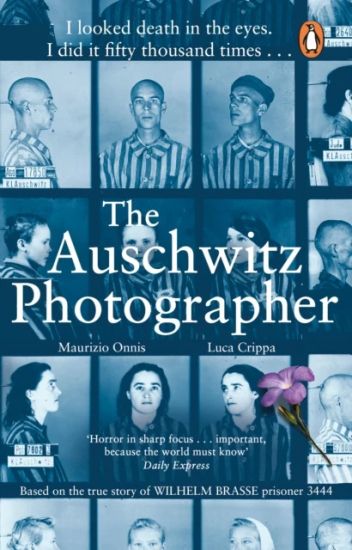
The Auschwitz Photographer

The Auschwitz Photographer

Luca Crippa; Maurizio Onnis

TRANSWORLD PUBLISHERS LTD
2021
pokkari

Halvin toimitettuna 20,90 €

Based on the powerful true story of Auschwitz prisoner number 3444 Wilhelm Brasse, whose photographs helped to expose the atrocities of the Holocaust.'Horror in sharp focus... important, because the world must know.' John Lewis-Stempel, Daily Express__________When Germany invaded Wilhelm Brasse's native Poland in 1939, he was asked to swear allegiance to Hitler and join the Wehrmacht. He refused. He was deported to Auschwitz concentration camp as political prisoner number 3444. A trained portrait photographer, he was ordered by the SS to record the inner workings of the camp. He began by taking identification photographs of prisoners as they entered the camp, went on to capture the criminal medical experiments of Josef Mengele, and also recorded executions. Between 1940 and 1945, Brasse took around 50,000 photographs of the horror around him. He took them because he had no choice. Eventually, Brasse's conscience wouldn't allow him to hide behind his camera. First he risked his life by joining the camp's Resistance movement, faking documents for prisoners, trying to smuggle images to the outside world to reveal what was happening. Then, when Soviet troops finally advanced on the camp to liberate it, Brasse refused SS orders to destroy his photographs. 'Because the world must know,' he said. For readers of The Librarian of Auschwitz and The Boy Who Followed His Father into Auschwitz, this powerful true story of hope and courage lies at the very centre of Holocaust history.__________'A remarkable tale of survival against the odds... an enthralling book.' The Sydney Morning Herald'Brasse has left us with a powerful legacy in images. Because of them we can see the victims of the Holocaust as human and not statistics.' Fergal Keane
The Auschwitz Photographer: The Forgotten Story of the WWII Prisoner Who Documented Thousands of Lost Souls
The Nazis asked him to swear allegiance to Hitler, betraying his country, his friends, and everything he believed in. He refused. Poland, 1939. Professional photographer Wilhelm Brasse is deported to Auschwitz-Birkenau and finds himself in a deadly race to survive, assigned to work as the camp's intake photographer and take "identity pictures" of prisoners as they arrive by the trainload. Brasse soon discovers his photography skills are in demand from Nazi guards as well, who ask him to take personal portraits for them to send to their families and girlfriends. Behind the camera, Brasse is safe from the terrible fate that so many of his fellow prisoners meet. But over the course of five years, the horrifying scenes his lens capture, including inhumane medical "experiments" led by Josef Mengele, change Brasse forever. Based on the true story of Wilhelm Brasse, The Auschwitz Photographer is a stark black-and-white reminder of the horrors of the Holocaust. This gripping work of World War II narrative nonfiction takes readers behind the barbed wire fences of the world's most feared concentration camp, bringing Brasse's story to life as he clicks the shutter button thousands of times before ultimately joining the Resistance, defying the Nazis, and defiantly setting down his camera for good.
Inside NAND Flash Memories

Inside NAND Flash Memories

Rino Micheloni; Luca Crippa; Alessia Marelli

Springer
2014
nidottu
Digital photography, MP3, digital video, etc. make extensive use of NAND-based Flash cards as storage media. To realize how much NAND Flash memories pervade every aspect of our life, just imagine how our recent habits would change if the NAND memories suddenly disappeared. To take a picture it would be necessary to find a film (as well as a traditional camera…), disks or even magnetic tapes would be used to record a video or to listen a song, and a cellular phone would return to be a simple mean of communication rather than a multimedia console. The development of NAND Flash memories will not be set down on the mere evolution of personal entertainment systems since a new killer application can trigger a further success: the replacement of Hard Disk Drives (HDDs) with Solid State Drives (SSDs). SSD is made up by a microcontroller and several NANDs. As NAND is the technology driver for IC circuits, Flash designers and technologists have to deal with a lot of challenges. Therefore, SSD (system) developers must understand Flash technology in order to exploit its benefits and countermeasure its weaknesses. Inside NAND Flash Memories is a comprehensive guide of the NAND world: from circuits design (analog and digital) to Flash reliability (including radiation effects), from testing issues to high-performance (DDR) interface, from error correction codes to NAND applications like Flash cards and SSDs.
Inside NAND Flash Memories

Inside NAND Flash Memories

Rino Micheloni; Luca Crippa; Alessia Marelli

Springer
2010
sidottu
Digital photography, MP3, digital video, etc. make extensive use of NAND-based Flash cards as storage media. To realize how much NAND Flash memories pervade every aspect of our life, just imagine how our recent habits would change if the NAND memories suddenly disappeared. To take a picture it would be necessary to find a film (as well as a traditional camera…), disks or even magnetic tapes would be used to record a video or to listen a song, and a cellular phone would return to be a simple mean of communication rather than a multimedia console. The development of NAND Flash memories will not be set down on the mere evolution of personal entertainment systems since a new killer application can trigger a further success: the replacement of Hard Disk Drives (HDDs) with Solid State Drives (SSDs). SSD is made up by a microcontroller and several NANDs. As NAND is the technology driver for IC circuits, Flash designers and technologists have to deal with a lot of challenges. Therefore, SSD (system) developers must understand Flash technology in order to exploit its benefits and countermeasure its weaknesses. Inside NAND Flash Memories is a comprehensive guide of the NAND world: from circuits design (analog and digital) to Flash reliability (including radiation effects), from testing issues to high-performance (DDR) interface, from error correction codes to NAND applications like Flash cards and SSDs.