

Kirjailija
Luca Ozzano
Kirjat ja teokset yhdessä paikassa: 4 kirjaa, julkaisuja vuosilta 2015–2024, suosituimpiin kuuluu The Masks of the Political God. Vertaile teosten hintoja ja tarkista saatavuus suomalaisista kirjakaupoista.
4 kirjaa
Kirjojen julkaisuvuodet: 2015–2024.
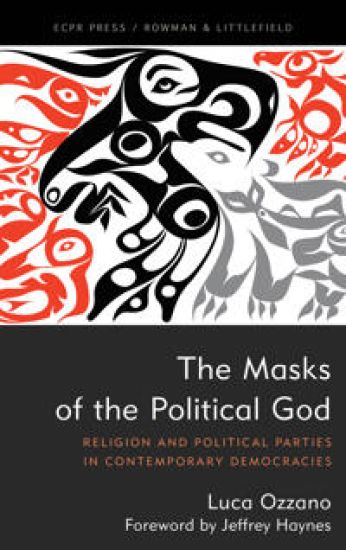
The book analyses the influence of religion on political parties and party politics in contemporary democracies. To do so, it compares five cases of democracies belonging to different geographic-cultural areas, and marked by different religious majorities: India, Israel, Italy, Turkey, and the US. The time span of the analysis is the period between 1980 (year which can be conventionally regarded as a turning point for the return of religion in the public and the political spheres at the global level), and the present day. Unlike most works on religion and parties, this book does not simply take into account officially “religious” parties, but all “religiously oriented parties” (with an influence of religion on party manifestos, constituencies and/or factions) even if they are officially secular. The theoretical framework is provided by the “cleavages theory”, which considers some relevant traumatic social events as the origin of specific kinds (or families) of political parties; and by a typology of religiously oriented parties dividing them into five categories: conservative, fundamentalist, progressive, nationalist, and camp party.
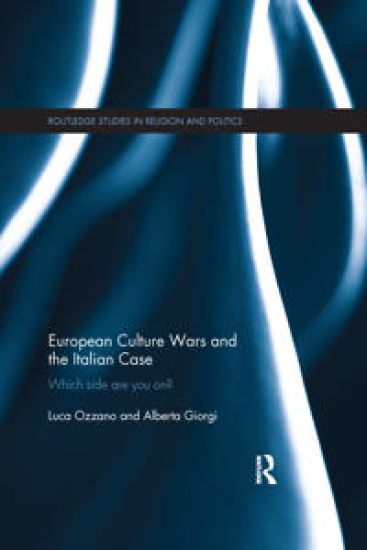
This book aims to understand the European political debate about contentious issues, framed in terms of religious values by religious and/or secular actors in 21st century. It specifically focuses on the Italian case, which, due to its peculiar history and contemporary political landscape, is a paradigmatic case for the study of the relationships between religion and politics. In recent years, a number of controversies related to religious issues have characterised the European public debate at both the EU and the national level. The ‘affaire du foulard’ in France, the referendum on abortion in Portugal, the recognition of same-sex marriages in many Western European States, the debate over bioethics and the regulation of euthanasia are only a few examples of contentious issues involving religion. This book aims to shed light on the interrelation between these different debates, as well as their broader meaning, through the analysis of the paradigmatic case of Italy. Italy summarizes and sometimes exasperates wider European trends, both because of the peculiar role traditionally played by the Vatican in Italian politics and for the rise, since the 1990s, of new political entrepreneurs eager to exploit ethical and civilizational issues. This work will be of great interest to scholars and students of a number of fields within the disciplines of political science, sociology and law, and will be useful for courses on religion and politics, political parties, social movements and civil society.

This book aims to understand the European political debate about contentious issues, framed in terms of religious values by religious and/or secular actors in 21st century. It specifically focuses on the Italian case, which, due to its peculiar history and contemporary political landscape, is a paradigmatic case for the study of the relationships between religion and politics. In recent years, a number of controversies related to religious issues have characterised the European public debate at both the EU and the national level. The ‘affaire du foulard’ in France, the referendum on abortion in Portugal, the recognition of same-sex marriages in many Western European States, the debate over bioethics and the regulation of euthanasia are only a few examples of contentious issues involving religion. This book aims to shed light on the interrelation between these different debates, as well as their broader meaning, through the analysis of the paradigmatic case of Italy. Italy summarizes and sometimes exasperates wider European trends, both because of the peculiar role traditionally played by the Vatican in Italian politics and for the rise, since the 1990s, of new political entrepreneurs eager to exploit ethical and civilizational issues. This work will be of great interest to scholars and students of a number of fields within the disciplines of political science, sociology and law, and will be useful for courses on religion and politics, political parties, social movements and civil society.