Kirjojen hintavertailu – 12 903 725 kirjaa ja 27 kauppaa

Kirjailija

Luca Tateo

Kirjat ja teokset yhdessä paikassa: 4 kirjaa, julkaisuja vuosilta 2016–2024, suosituimpiin kuuluu A Theory of Imagining, Knowing, and Understanding. Vertaile teosten hintoja ja tarkista saatavuus suomalaisista kirjakaupoista.

4 kirjaa

Kirjojen julkaisuvuodet: 2016–2024.

Fundamentals of Cultural Psychology

Fundamentals of Cultural Psychology

Luca Tateo

TAYLOR FRANCIS LTD
2024
nidottu
This innovative textbook is the ideal introduction to cultural psychology. It focuses on a holistic approach, which emphasizes that culture is created and shared by minds and society. Organized around short core concept chapters, the book encourages students to think critically about culture and the theories around it. Chapters explore what cultural psychology is and its forms of knowing, how cultural psychology can be used to understand higher psychological functions, and the human psyche as a whole. Each chapter contains definitions of key concepts, real-world examples from everyday human activities, reflection questions, short biographies of key figures relevant to cultural psychology, and chapter summaries. There are also links to video interviews from leading international scholars which provide critical reflections on core concepts in cultural psychology. This is the essential introductory book for students of cultural psychology, as well as cultural studies and anthropology. It will be useful for anyone looking to learn more about the history of ideas, the human mind, and its historical and material relationship with culture.
Fundamentals of Cultural Psychology

Fundamentals of Cultural Psychology

Luca Tateo

TAYLOR FRANCIS LTD
2024
sidottu
This innovative textbook is the ideal introduction to cultural psychology. It focuses on a holistic approach, which emphasizes that culture is created and shared by minds and society. Organized around short core concept chapters, the book encourages students to think critically about culture and the theories around it. Chapters explore what cultural psychology is and its forms of knowing, how cultural psychology can be used to understand higher psychological functions, and the human psyche as a whole. Each chapter contains definitions of key concepts, real-world examples from everyday human activities, reflection questions, short biographies of key figures relevant to cultural psychology, and chapter summaries. There are also links to video interviews from leading international scholars which provide critical reflections on core concepts in cultural psychology. This is the essential introductory book for students of cultural psychology, as well as cultural studies and anthropology. It will be useful for anyone looking to learn more about the history of ideas, the human mind, and its historical and material relationship with culture.
A Theory of Imagining, Knowing, and Understanding

A Theory of Imagining, Knowing, and Understanding

Luca Tateo

Springer Nature Switzerland AG
2020
nidottu
This is a book about imaginative work and its relationship with the construction of knowledge. It is fully acknowledged by epistemologists that imagination is not something opposed to rationality; it is not mere fantasy opposed to intellect. In philosophy and cognitive sciences, imagination is generally “delimiting not much more than the mental ability to interact cognitively with things that are not now present via the senses.” (Stuart, 2017, p. 11) For centuries, scholars and poets have wondered where this capability could come from, whether it is inspired by divinity or it is a peculiar feature of human mind (Tateo, 2017b). The omnipresence of imaginative work in both every day and highly specialized human activities requires a profoundly radical understanding of this phenomenon. We need to work imaginatively in order to achieve knowledge, thus imagination must be something more than a mere flight of fantasy. Considering different stories in the field of scientific endeavor, I will try to propose the idea that the imaginative process is fundamental higher mental function that concurs in our experiencing, knowing and understanding the world we are part of. This book is thus about a theoretical idea of imagining as constant part of the complex whole we call the human psyche. It is a story of human beings striving not only for knowledge and exploration but also striving for imagining possibilities.?
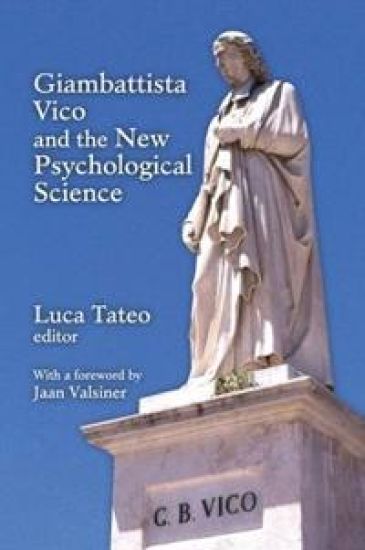
Giambattista Vico and the New Psychological Science

Giambattista Vico and the New Psychological Science

Luca Tateo; Jaan Valsiner

AldineTransaction
2016
sidottu
Giambattista Vico (1668–1744) was an Italian philosopher, rhetorician, and historian. As one of the great thinkers of the Enlightenment, he exerted tremendous influence on the social sciences. He was the first to stress cultural and linguistic dimensions in the development of both the human mind and social institutions. Although his ideas on the relationship between mind and culture and his epistemology have inspired the work of many scholars in psychology, his sizeable influence has been scarcely acknowledged. The volume is organized in two sections. The first locates Vico in his historical context and in the landscape of contemporary human and social sciences. The second part presents those of Vico's concepts that seem promising for the development of a new way of looking at psychological phenomena. In the book's conclusion, Luca Tateo gathers the ideas of the volume's contributors to suggest future development of the psychological sciences. This book aims to show how Vico's insights can inspire future research in the psychological sciences. It collects multidisciplinary contributions of leading international scholars that draw upon the thought of this original thinker. Collectively, the contributors remind us of the legacy and continuing influence of this inspiring historical figure.